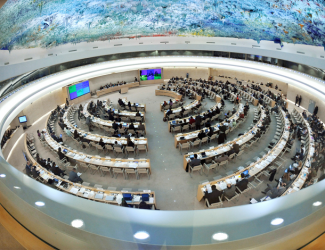
Jean-Marc Ferré | Flickr (CC BY-NC-ND 2.0)
A general view of participants at the 16th session of the Human Rights Council in Geneva, Switzerland.

Human Rights Council (HRC)

The Human Rights Council (HRC) is the key intergovernmental body within the United Nations system responsible for the promotion and protection of all human rights around the globe. It holds three regular sessions a year: in March, June and September. The Office of the UN High Commissioner for Human Rights (OHCHR) is the secretariat for the HRC.

The HRC works by:

  • Debating and passing resolutions on global human rights issues and human rights situations in particular countries

  • Examining complaints from victims of human rights violations or activist organizations on behalf of victims of human rights violations

  • Appointing independent experts (known as “Special Procedures”) to review human rights violations in specific countries and examine and further global human rights issues

  • Engaging in discussions with experts and governments on human rights issues

  • Assessing the human rights records of all UN Member States every four and a half years through the Universal Periodic Review

Learn more about the HRC


AWID works with feminist, progressive and human rights partners to share key knowledge, convene civil society dialogues and events, and influence negotiations and outcomes of the session.

With our partners, our work will:

◾️ Monitor, track and analyze anti-rights actors, discourses and strategies and their impact on resolutions

◾️ Raise awareness of the findings of the 2017 and 2021 OURs Trends Reports.

◾️Support the work of feminist UN experts in the face of backlash and pressure

◾️Advocate for state accountability
 
◾️ Work with feminist movements and civil society organizations to advance rights related to gender and sexuality.
 

Related Content

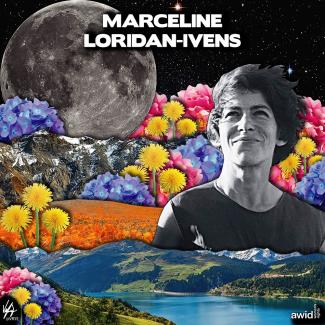
Marceline Loridan-Ivens

Born in 1928, Marceline worked as an actress, a screenwriter, and a director.

She directed The Birch-Tree Meadow in 2003, starring Anouk Aimee, as well as several other documentaries. She was also a holocaust survivor. She was just fifteen when she and her father were both arrested and sent to Nazi concentration camps. The three kilometres between her father in Auschwitz and herself in Birkenau were an insurmountable distance, which she writes about in one of her seminal novels “But You Did Not Come Back.”

In talking about her work, she once said: "All I can say is that everything I can write, everything I can unveil — it's my task to do it.”


Marceline Loridan-Ivens, France

L’économie solidaire

Définition

L'économie solidaire (qui inclut l'économie coopérative et l’économie du don) est un cadre alternatif qui adopte différentes formes dans divers contextes et qui est ouvert au changement continuel.

Ce cadre est fondé sur les principes suivants :

  • la solidarité, l’entraide et la coopération
  • l'équité dans toutes les dimensions
  • le bien-être social
  • la durabilité
  • la démocratie sociale et économique
  • le pluralisme

Dans une économie solidaire, les producteurs mettent en place des processus économiques qui sont intimement liés à leurs réalités, à la préservation de l'environnement et à la coopération mutuelle.

Le contexte

Selon la géographe féministe Yvonne Underhill-Sem, l'économie du don est un système économique dans lequel les biens et les services circulent entre les personnes sans accord explicite de leur valeur, ou sans impliquer de réciprocité ultérieure.

Derrière le don il y a la relation humaine, la bienveillance et l'attention portée à la nurturance* de toute la société, non seulement limitée à soi-même et aux proches. Il s’agit ici de la notion du collectif.

Par exemple, dans la région du Pacifique, cette approche comprend la collecte, la préparation et le tissage de ressources terrestres et marines pour fabriquer des tapis, des ventilateurs, des guirlandes et des objets de cérémonie. Elle comprend également l'élevage du bétail et le stockage des récoltes saisonnières.

Perspective féministe

Pour les femmes, les incitations à s’engager dans des activités économiques sont diverses et multiples, allant de la réalisation d’aspirations de carrière afin de gagner de l'argent pour une vie confortable à long terme, à gagner de l'argent pour joindre les deux bouts, à rembourser une dette ou encore à échapper aux corvées de la vie courante.

Pour s’adapter aux divers environnements au sein desquels les femmes travaillent, le concept d'économie solidaire est en développement permanent et est continuellement discuté et débattu.


Pour en savoir plus sur cette proposition :

Glossaire :

Nurturance : Nourriture et soins émotionnels et physiques donnés à quelqu'un.

Snippet - WITM Who should - PT

Quem deve realizar este inquérito?

O inquérito destina-se a grupos, organizações e movimentos que trabalham especificamente ou principalmente pelos direitos das mulheres, pessoas LBTQI+ e pela justiça de género, em todos os contextos, em todos os níveis e em todas as regiões. Se este for um dos pilares principais do seu grupo, da sua comunidade, da sua rede ou de qualquer outro tipo de organização, quer esteja registada ou não, seja nova ou já estabelecida, convidamo-lo a participar neste inquérito.

* De momento, não solicitamos respostas de indivídues ou de fundos feministas e de mulheres.

Perguntas Frequentes

Le Forum de l'AWID est-il maintenu à Taipei étant donné la situation liée au COVID-19 ?

L’AWID examine avec attention la situation mondiale liée au COVID-19, et considère à ce jour pouvoir poursuivre la planification initialement prévue pour le Forum.

Si la situation exige un changement, nous vous en informerons immédiatement..

Le 14ème Forum international de l’AWID devrait ainsi se tenir du 20 au 23 septembre 2021, à Taipei.

Plus d'information

Snippet - That Feminist Fire Logo (ES)

Texto en blanco que dice el título de nuestro podcast en español: Ese fuego feminista

FRMag - Ashawo Work na Work

"Ashawo Work na Work": Cómo lxs jóvenes feministas de Ghana están haciendo realidad los futuros feministas

por Fatima B. Derby

En 2017, la campaña de AWID #PracticaSolidaridad destacó cómo lxs jóvenes feministas podían construir un futuro feminista apoyándose mutuamente, participando en conversaciones interregionales entre ellxs, marchando en solidaridad con otrxs activistas y abriendo canales de colaboración entre los movimientos. (...)

Leer

< arte: «Let it Grow» [Déjalo crecer], Gucora Andu 

Dilma Ferreira Silva

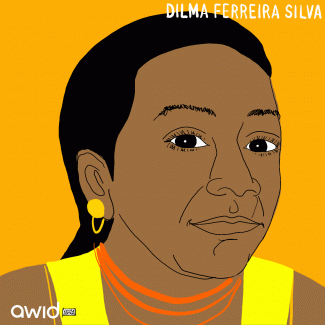
Dilma Ferreira Silva was a leading Amazonian rights activist who fought for decades for the rights of people affected by dams.

She herself was among the 32,000 people displaced by the Tucuruí, a mega-hydroelectric power plant, built in Brazil during the 1964-1985 military dictatorship.

In 2005 Dilma was invited to join the Movement of Dam-Affected Peoples in Brazil (MAB), and in 2006 she formed the women’s collective, eventually becoming regional coordinator of the movement.

In speaking about her activism, her colleagues commented:

“She stood out very fast because she was always very fearless in the struggle.” 

Dilma lived in the rural settlement of Salvador Allende,50 kilometers from Tucuruí, and dedicated her life to better protect communities and the land affected by the construction of mega projects. She was especially concerned with the gendered impacts of such projects and advocated for women’s rights.

At a national MAB meeting in 2011, Dilma spoke to women affected by the dams, saying:

“We are the real Marias, warriors, fighters who are there, facing the challenge of daily struggle”.

In the following years, Dilma organized grassroots MAD groups and worked with the community to form farming cooperatives that created a better distribution of food for the community. They improved the commercialization of fishing, and developed a cistern project for safe drinking water. She was also an advocate for farmers whose lands were being coveted by ‘grileiros’ (land grabbers). 

On 22nd March 2019, at the age of 48, Dilma, her husband and their friend were all brutally murdered. The three killings came as part of a wave of violence in the Amazon against the Movimento dos Trabalhadores Sem Terra (translates as ‘landless workers’ movement’), environmental and indigenous activists. 

Feminist propositions: Glossary of terms

Capitalism:

An economic system in which production and consumption patterns are based on profit using privately owned capital goods and wage labour. The system builds on individual wealth and capital accumulation at the lowest cost to the investor, with little regard for the societal costs and exploitation of the workforce - both paid and unpaid.

Commodification of land:

The conversion of land and activities related to it (like agriculture) into commodities that can be bought or sold for profit.

International Financial Institutions (IFIs):

Institutions (like the World Bank, International Monetary Fund, or regional development banks) that provide loans to countries lacking sufficient money to cover funding shortfalls or to finance development projects. Historically, the lending policies of these institutions have been determined by economically powerful Western countries and private enterprises. Loans to low-income countries in particular typically include conditionalities that prompt economic reforms in these countries to support neo-liberalism.

Neoliberalism:

A set of economic and political theories in which market forces, rather than governments, determine key aspects of the economy with governments acting to support globalized markets and the interests of capital. Neo-liberal economic policies typically include promotion of free trade, privatisation, reduced government spending on social programs, subsidies and tax exemptions for business, deregulation of financial sector and foreign investments, low taxes on the wealthy and corporations, flexible labour and weak environmental protection.

Patriarchy:

Refers to systemic and institutionalized male domination embedded in and perpetuated by cultural, political, economic and social structures and ideologies. Hetero-patriarchy in addition, is a patriarchal system that is also based on the belief that heterosexuality is the only normal and acceptable sexual orientation.

AWID Community Jobs board - ES

Bolsa de Empleos Comunitaria

¿Estás buscando trabajo? Una de las ventajas de unirse a la Comunidad AWID es tener acceso a nuestra bolsa de empleos co-creada por la comunidad. Podrás explorar nuevas oportunidades y también tendrás la oportunidad de compartir vacantes y convocatorias de propuestas con todos los miembros.

Pourquoi l’AWID a-t-elle décidé de changer le lieu du Forum de Bali à Taipei ?

Fin 2019, les événements en Indonésie - notamment les signes d’intensification de la militarisation et de reculs des droits LGBTQ – nous ont amené·e·s à questionner la capacité de l’AWID à maintenir un environnement sécurisé et accueillant pour les divers·es participant·e·s que nous voulons rassembler au Forum.

Après un examen attentif, la Direction de l’AWID a décidé en novembre 2019 de faire évoluer le lieu de tenue du 14ème Forum international de l’AWID, de Bali à Taipei.

Taipei dispose de fortes capacités logistiques et est accessible pour beaucoup de voyageurs·ses (avec une facilitation de procédure de visa électronique pour les conférences internationales).

Pour plus d’informations :


Snippet Forum Stories Download (EN)

FRMag - The Story of An Unhappy Tale

Histoire d’un conte non féérique

par Gabriela Estefanía Riera Robles

Juliana. Comme j’aimerais m’appeler Juliana! C’est un prénom plein de pouvoir et de présence, plein de force et de véhémence.  (...)

Lire

< illustration : «Born Fighters», par Borislava Madeit et Stalker Since

Molara Ogundipe

"Pero, ¿ fue el maestro alguna vez 
seducido por el poder?
¿Alguna vez se rompió
 un sistema con aceptación ?
¿Cuándo el JEFE te entregará el poder con amor?
¿En Jo'Burg, en Cancún o en la ONU? - Molara Ogundipe

En una entrevista, realizada en la Feria Internacional del Libro de Ghana de 2010, Molara Ogundipe se presentó con estas palabras "...Soy una nigeriana. He vivido, posiblemente, en todo el mundo, excepto en la Unión Soviética y China".

A través de los diferentes continentes y países, la profesora Ogundipe enseñó literatura comparada, escritura, género y filología inglesa, y utilizó la literatura como vehículo para la transformación social y el replanteamiento de las relaciones de género.

Molara Ogundipe, como pensadora, escritora, editora, crítica social, poeta y activista feminista, logró combinar el trabajo teórico con la creatividad y la acción práctica. Se la considera una de las principales voces críticas de los feminismos africanos, los estudios de género y la teoría literaria.  

Molara acuñó el concepto de "estiwanismo" a partir de las siglas STIWA (Social Transformations in Africa Including Women) [Transformaciones Sociales en África Incluyendo a las Mujeres], con el fin de reconocer la necesidad de “alejar la definición del feminismo y los feminismos en relación con Euro-América u otro lugar, y declamar lealtades o deslealtades". Con su obra fundamental, "Recreándonos Nosotras Mismas", de 1994, Molara Ogundipe (publicada bajo el nombre de Molara Ogundipe-Leslie) dejó tras de sí un inmenso cuerpo de conocimientos que descolonizó el discurso feminista y "re-centró a las mujeres africanas en sus completas y complejas narrativas... guiadas por una exploración de la liberación económica, política y social de las mujeres africanas y la restauración de la agencia femenina en las diferentes culturas de África".

Comentando los retos a los que se enfrentó como joven académica, dijo:

"Cuando empecé a hablar y escribir sobre el feminismo a finales de los años sesenta y en los setenta, se me veía como una chica buena y admirable que se había extraviado, una mujer cuya cabeza se había arruinado con un exceso de aprendizaje".

Molara Ogundipe se destacó por su liderazgo a la hora de combinar el activismo con el mundo académico; en 1977 fue una de las fundadoras de la Asociación de Mujeres en la Investigación y el Desarrollo, AAWORD (por sus siglas en inglés),. En 1982 fundó Mujeres en Nigeria, WIN (por sus siglas en inglés), con el fin de abogar por un acceso pleno a los "derechos económicos, sociales y políticos" para las mujeres nigerianas. Posteriormente, estableció y dirigió la Fundación Internacional para la Educación y el Monitoreo y pasó muchos años en el consejo editorial del periódico The Guardian.

Luego de haber crecido con el pueblo yoruba, sus tradiciones, cultura e idioma, dijo una vez:

"Creo que la celebración de la vida, de las personas que mueren después de una vida llena de logros, es uno de los aspectos más hermosos de la cultura yoruba".

El nombre de alabanza yoruba 'Oiki' de Molara era Ayike. Molara nació el 27 de diciembre de 1940 y falleció el 18 de junio de 2019 a la edad de 78 años, en Ijebu-Igbo, Estado de Ogun, Nigeria.
Key opposition actors

We are witnessing an unprecedented level of engagement of anti-rights actors in international human rights spaces. To bolster their impact and amplify their voices, anti-rights actors increasingly engage in tactical alliance building across sectors, regional and national borders, and faiths.


This “unholy alliance” of traditionalist actors from Catholic, Evangelical, Mormon, Russian Orthodox and Muslim faith backgrounds have found common cause in a number of shared talking points and advocacy efforts attempting to push back against feminist and sexual rights gains at the international level.

Holy See

  • Key activities: As the government of the Roman Catholic Church, the “Holy See” uses its unique status as Permanent Observer state at the UN to lobby for conservative, patriarchal, and heteronormative notions of womanhood, gender identities and “the family”, and to propagate policies that are anti-abortion and -contraception  

  • Based in: Vatican City, Rome, Italy.

  • Religious affiliations: Catholic

  • Connections to other anti-rights actors: US Christian Right groups; interfaith orthodox alliances; Catholic CSOs

Organization of Islamic Cooperation (OIC)

  • Key activities: Self-described as the “collective voice of the Muslim world”, the OIC acts as a bloc of states in UN spaces. The OIC attempts to create loopholes in human rights protection through references to religion, culture, or national sovereignty; propagates the concept of the “traditional family”; and contributes to a parallel but restrictive human rights regime (e.g. the 1990 Cairo Declaration on Human Rights in Islam).

  • Based in: Jeddah, Saudi Arabia

  • Religious affiliations: Muslim

  • Connections to other anti-rights actors: Ultra conservative State missions to the UN, such as Russia

World Congress of Families

  • Key activities: International and regional conferences; research and knowledge-production and dissemination; lobbying at the United Nations “to defend life, faith and family”

  • Based in: Rockford, Illinois, U.S.

  • Religious affiliation: Predominantly Catholic and Christian Evangelical

  • Connections to other anti-rights actors: Sutherland Institute, a conservative think-tank; the Church of Latter-Day Saints; the Russian Orthodox Church’s Department of Family and Life; the anti-abortion Catholic Priests for Life; the Foundation for African Culture and Heritage; the Polish Federation of Pro-Life Movements; the European Federation of Catholic Family Associations; the UN NGO Committee on the Family; and the Political Network for Values; the Georgian Demographic Society; parliamentarians from Poland and Moldova, etc; FamilyPolicy; the Russian Institute for Strategic Studies; and HatzeOir; C-Fam; among others

Center for Family and Human Rights (C-Fam)

  • Key activities: Lobbying at the United Nations, particularly the Commission of the Status of Women to “defend life and family”; media and information-dissemination (Friday Fax newsletter); movement building; trainings for conservative activists

  • Based in: New York and Washington D.C., U.S.

  • Religious affiliations: Catholic

  • Connections to other anti-rights actors: International Youth Coalition; World Youth Alliance; Human Life International; the Holy See; coordinates the Civil Society for the Family; the Family Research Council (U.S.) and other Christian/Catholic anti-rights CSOs; United States CSW delegation

Family Watch International

  • Key activities: Lobbying in international human rights spaces for “the family” and anti-LGBTQ and anti-CSE policies; training of civil society and state delegates (for example, ‘The Resource Guide to UN Consensus Language on Family Issues’); information dissemination; knowledge production and analysis; online campaigns

  • Based in: Gilbert, Arizona, U.S.

  • Religious affiliations: Mormon

  • Connections to other anti-rights actors: leader of the UN Family Rights Caucus; C-Fam; Jews Offering New Alternatives to Homosexuality (JONAH); the National Association for Research and Therapy of Homosexuality (NARTH); World Congress of Families; CitizenGo; Magdalen Institute; Asociación La Familia Importa; Group of Friends of the Family (25 state bloc)

World Youth Alliance

  • Key activities: Advocacy in international policy spaces including the United Nations, the European Union, and the Organization of American States for “the family”, against sexual and reproductive rights; training youth members in the use of diplomacy and negotiation, international relations, grassroots activities and message development; internship program to encourage youth participation in its work; regular Emerging Leaders Conference; knowledge production and dissemination

  • Based in: New York City (U.S.) with regional chapter offices in Nairobi (Kenya), Quezon City (The Philippines), Brussels (Belgium), Mexico City (Mexico), and Beirut (Lebanon)

  • Religious affiliations: primarily Catholic but aims for interfaith membership

  • Connections to other anti-rights actors: C-Fam; Human Life International; the Holy See; Campaign Life coalition

Russian Orthodox Church

  • Key Activities: The Russian Orthodox Church (ROC), capitalizing on its close links to the Russian state, has operated as a “norm entrepreneur” in human rights debates.  Russia and the ROC have co-opted rights language to push for a focus on “morality” and “traditional values”  as supposed key sources of human rights.  Russia led a series of “traditional values” resolutions at the Human Rights Council and has been at the forefront of putting forward hostile amendments to progressive resolutions in areas including maternal mortality, protection of civil society space, and the right to peaceful protest.

  • Connections to other anti-rights actors: Organization of Islamic Cooperation; Eastern European and Caucasus Orthodox churches, e.g. Georgian Orthodox Church; U.S. Christian Right including U.S. Evangelicals; World Congress of Families; Group of Friends of the Family (state bloc)


Other Chapters

Read the full report

Snippet - Join CSW69 Conversations Intro_FR

Rejoignez-nous en prenant part aux conversations #FreezeFascisms!

 (#BloquerLesFascismes) !

Alors que nous affrontons de multiples crises dans le monde entier, nos mouvements œuvrent sans relâche à construire une influence qui dépasse les structures de pouvoir traditionnelles. La vague de décrets présidentiels américains vise à nous intimider, mais aucune idéologie fasciste, quelle que soit son ampleur, ne peut effacer notre existence et notre résistance.

Nous vous invitons à rejoindre la campagne de solidarité pour dénoncer et résister aux forces fascistes qui sapent les mouvements féministes et de justice de genre dans vos communautés !

  • Déclenchez des conversations au sein d’un espace courageux : partagez vos initiatives de lutte et de résistance aux fascismes à votre échelle sur la plateforme de la Communauté AWID. Pas encore membre ? Rejoignez-nous ici. 
  • Soutenez les mouvements qui ont été touchés : relayez les collectes de fonds, les ressources disponibles, les efforts d’entraide en utilisant #FreezeFascisms #BloquerLesFascismes (nous sommes toujours sur X, Instagram, Facebook, LinkedIn, mais aussi sur Bluesky !
  • Mobilisez-vous autour d’alternatives : nous avons créé une communauté de pratiques à adopter pour des alternatives économiques féministes et un financement autonome. Inscrivez-vous pour en faire partie ici(en anglais)

Snippet AWID Forum Location Announcement Title (FR)

La date et le lieu du Forum de l’AWID ont été annoncés!

Film club - swana

You can now watch the AWID Feminist Film Club program “Feminist Embodiments of Hope and Power” - a film series on Feminist Realities from the SWANA region curated by Esra Ozban

WATCH