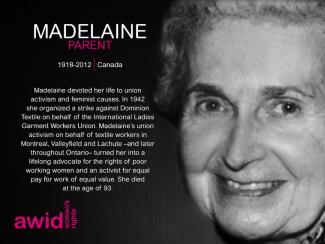
Madelaine Parent
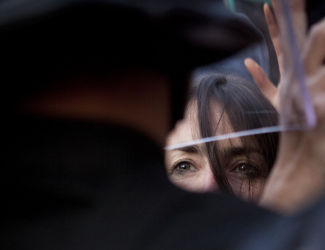
WHRDs are self-identified women and lesbian, bisexual, transgender, queer and intersex (LBTQI) people and others who defend rights and are subject to gender-specific risks and threats due to their human rights work and/or as a direct consequence of their gender identity or sexual orientation.
WHRDs are subject to systematic violence and discrimination due to their identities and unyielding struggles for rights, equality and justice.
The WHRD Program collaborates with international and regional partners as well as the AWID membership to raise awareness about these risks and threats, advocate for feminist and holistic measures of protection and safety, and actively promote a culture of self-care and collective well being in our movements.
WHRDs are exposed to the same types of risks that all other defenders who defend human rights, communities, and the environment face. However, they are also exposed to gender-based violence and gender-specific risks because they challenge existing gender norms within their communities and societies.
We work collaboratively with international and regional networks and our membership
We aim to contribute to a safer world for WHRDs, their families and communities. We believe that action for rights and justice should not put WHRDs at risk; it should be appreciated and celebrated.
Promoting collaboration and coordination among human rights and women’s rights organizations at the international level to strengthen responses concerning safety and wellbeing of WHRDs.
Supporting regional networks of WHRDs and their organizations, such as the Mesoamerican Initiative for WHRDs and the WHRD Middle East and North Africa Coalition, in promoting and strengthening collective action for protection - emphasizing the establishment of solidarity and protection networks, the promotion of self-care, and advocacy and mobilization for the safety of WHRDs;
Increasing the visibility and recognition of WHRDs and their struggles, as well as the risks that they encounter by documenting the attacks that they face, and researching, producing, and disseminating information on their struggles, strategies, and challenges:
Mobilizing urgent responses of international solidarity for WHRDs at risk through our international and regional networks, and our active membership.
 |
Human and ethnic-territorial rights Ensuring the defense of human rights and Nature’s rights through alliance-building with local, national, regional and global actors and organizations. |
 |
Sustainable development Ensuring all economic, cultural and environmental activities contribute to sustainable development, food security and income generation, while respecting the self-determination and self-government of Afro-descendant communities. |
 |
Education and training Carrying out training for women and empowering them to carry out women’s rights advocacy in different political, social and economic spaces. For more information, see here! |
Rachel est une experte en finance, avec plus de vingt ans d’expérience. Elle a supervisé des opérations financières et des projets pour des entités privées et publiques, des organisations à but non lucratif et des organisations non gouvernementales internationales. Comptable agréée et titulaire d’un master global en administration des affaires, elle est également membre de l’Institut sud-africain des comptables agréés. Pendant son temps libre, Rachel conçoit des œuvres d’art typographiques, elle aime voyager et passer du temps avec ses proches autour d’une bouteille de vin.
1 |
Brindar a lxs afiliadxs de AWID, sus aliados y donantes un análisis actualizado, potente, basado en evidencias y orientado a la acción acerca de las realidades de la dotación de recursos para los movimientos feministas y el estado actual del ecosistema de financiamiento feminista. |
2 |
Determinar y demostrar las oportunidades para cambiar hacia un mayor y mejor financiamiento para las organizaciones feministas, impugnar las falsas soluciones y desmantelar aquellas tendencias por las que el financiamiento omite u opera en contra de la justicia de género y las agendas interseccionales feministas. |
3 |
Expresar las perspectivas, propuestas y agendas feministas para dotar de recursos a la justicia. |
Paseando por el barrio del Raval en Barcelona, puede que te encuentres con Metzineres, una cooperativa feminista por y para mujerxs que consumen drogas y que sobreviven múltiples situaciones de vulnerabilidad.
Imagínate un lugar libre de estigma, donde lxs mujerxs puedan consumir drogas de manera segura. Un lugar que brinda seguridad, apoyo y acompañamiento a mujerxs cuyos derechos son sistemáticamente vulnerados por la guerra contra las drogas y que sufren violencia, discriminacion y represión como consecuencia.
Justo afuera de la entrada, lxs transeúntes y visitantes son recibidxs con una enorme pizarra que describe consejos, trucos, deseos y dibujos de personas que usan drogas. También hay un calendario que cuenta con una serie de actividades auto-gestionadas por la comunidad de Metzineres. Ya sean talleres de peluquería y cosmética, radio, teatro, comidas comunales ofrecidas a la comunidad o clases de defensa personal, ¡siempre hay algo que hacer!
La cooperativa proporciona sitios de consumo seguros, así como servicios que cubren las necesidades básicas de las personas. Hay camas, espacios de almacenamiento, duchas, baños, lavadoras y una pequeña terraza al aire libre donde la gente puede relajarse o hacer un poco de jardinería.
Metzineres opera dentro de un marco de reducción de daños, que intenta reducir las consecuencias negativas del uso de drogas. Pero la reducción de daños es mucho más que un conjunto de prácticas: es una política anclada en la justicia social, la dignidad y los derechos de las personas que consumen drogas.
Existen numerosas razones acerca de por qué tu respuesta a la encuesta ¿Dónde está el dinero? es importante. Entre otras cosas, tienes la oportunidad de compartir tu experiencia con la movilización de financiamiento para apoyar a tu organización, afirmar tu poder como especialista en cómo se mueve el dinero y a quién le llega, y contribuir a la promoción colectiva y continua ante los donantes para movilizar más y mejor financiamiento. Durante los últimos dos decenios, la investigación de AWID ¿Dónde está el dinero? ha demostrado ser un recurso clave para activistas y donantes. Con muchísimo entusiasmo, te invitamos a sumarte a AWID en su tercera edición para poner de relieve el estado real de la dotación de recursos, impugnar las falsas soluciones y señalar cómo el financiamiento necesita cambiar para que los movimientos prosperen y hagan frente a los complejos desafíos de nuestro tiempo.
Les soins comme fondations des économies
La pandémie du COVID-19 a mis en évidence la crise mondiale des soins et démontré les échecs du modèle économique dominant qui continue de détruire les services publics essentiels, les infrastructures sociales et les systèmes de soins dans le monde entier.
Cozinha Ocupaçao 9 Julho, de l’Association des Femmes Afro-Descendantes du Cauca du Nord (ASOM) et Metzineres ne sont que quelques exemples d'économies des soins qui se concentrent sur les besoins des personnes marginalisées et de la Nature, ainsi que sur le travail de soins, le travail reproductif, invisible et non rémunéré nécessaire pour assurer la pérennité de nos vies, de nos sociétés et de nos écosystèmes.
El enfoque principal de nuestro trabajo es mundial y trabajamos en estrecha colaboración con nuestra membresía y otras organizaciones de derechos de las mujeres y aliadxs del ámbito local, nacional y regional para que sus realidades nutran con información la labor que realizamos.
Non, nous reconnaissons l’importance cruciale de votre travail, mais nous ne collectons pas les participations de fonds féministes et de femmes à l’heure actuelle. Nous vous encourageons néanmoins à transmettre cette enquête à vos partenaires bénéficiaires et vos réseaux féministes.
Le Forum international de l'AWID est un rassemblement de quelque 2 000 leaders et militant-e-s pour les droits des femmes du monde entier. Ce Forum de l'AWID est la manifestation récurrente de ce type la plus importante au monde. Il a lieu chaque fois dans un pays du Sud différent.
Le Forum international de l'AWID est à la fois un événement communautaire mondial et un espace de transformation personnelle radicale. Rassemblement unique en son genre, le Forum réunira nos mouvements féministes, de défense des droits des femmes, de justice de genre, LBTQI+ et alliés, dans toute leur diversité et leur humanité, afin de nous connecter, nous apaiser et nous épanouir.
Rejoignez-nous à Bangkok, en Thaïlande et en ligne en décembre 2024.
For now, the survey on KOBO is available in Arabic, English, French, Portuguese, Russian and Spanish. You will have the chance to select your language of choice at the beginning of the survey.