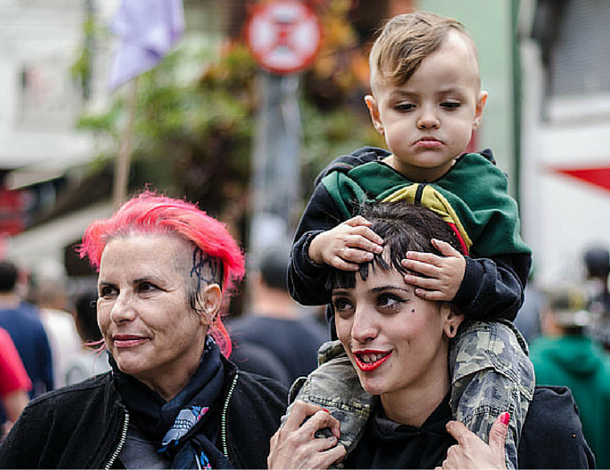
Flickr/Leonardo Veras (CC BY 2.0)

Special Focus

AWID is an international, feminist, membership organisation committed to achieving gender equality, sustainable development and women’s human rights

Protection of the Family

The Issue

Over the past few years, a troubling new trend at the international human rights level is being observed, where discourses on ‘protecting the family’ are being employed to defend violations committed against family members, to bolster and justify impunity, and to restrict equal rights within and to family life.

The campaign to "Protect the Family" is driven by ultra-conservative efforts to impose "traditional" and patriarchal interpretations of the family, and to move rights out of the hands of family members and into the institution of ‘the family’.

“Protection of the Family” efforts stem from:

  • rising traditionalism,
  • rising cultural, social and religious conservatism and
  • sentiment hostile to women’s human rights, sexual rights, child rights and the rights of persons with non-normative gender identities and sexual orientations.

Since 2014, a group of states have been operating as a bloc in human rights spaces under the name “Group of Friends of the Family”, and resolutions on “Protection of the Family” have been successfully passed every year since 2014.

This agenda has spread beyond the Human Rights Council. We have seen regressive language on “the family” being introduced at the Commission on the Status of Women, and attempts made to introduce it in negotiations on the Sustainable Development Goals.


Our Approach

AWID works with partners and allies to jointly resist “Protection of the Family” and other regressive agendas, and to uphold the universality of human rights.

In response to the increased influence of regressive actors in human rights spaces, AWID joined allies to form the Observatory on the Universality of Rights (OURs).  OURs is a collaborative project that monitors, analyzes, and shares information on anti-rights initiatives like  “Protection of the Family”.

Rights at Risk, the first OURs report, charts a map of the actors making up the global anti-rights lobby, identifies their key discourses and strategies, and the effect they are having on our human rights.   

The report outlines “Protection of the Family” as an agenda that has fostered collaboration across a broad range of regressive actors at the UN.  It describes it as: “a strategic framework that houses “multiple patriarchal and anti-rights positions, where the framework, in turn, aims to justify and institutionalize these positions.”
 

Related Content

ours chapter 3

Capítulo 3
Discursos anti-derechos

Los discursos anti-derechos continúan evolucionando. Además de utilizar argumentos relacionados con la religión, la cultura y la tradición, los actores antiderechos cooptan el lenguaje de la justicia social y los derechos humanos para ocultar sus verdaderas agendas y ganar legitimidad.

Leer más
 

Snippet - Take the quiz FR

Répondez au quiz 

Où est l’argent pour l’organisation des mouvements féministes ?

Que connaissez-vous du financement féministe ? Répondez au quiz de l’AWID Où est l’argent pour l’organisation des mouvements féministes ? pour tester vos connaissances 

Répondez au quiz en ligne Téléchargez et imprimez le quiz

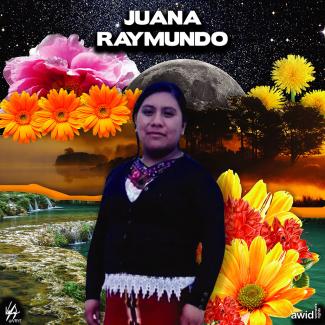
Juana Raymundo

Juana fue una indígena maya ixil, enfermera profesional y coordinadora del Comité de Desarrollo Campesino – CODECA de la microrregión de Nebaj Quiché.

El comité es una organización de derechos humanos formada por granjerxs indígenas dedicada a promover los derechos sobre la tierra y el desarrollo rural para las familias indígenas. Inicialmente, Juana se unió a CODECA como integrante de su rama juvenil, la Juventud de CODECA. Al momento de su muerte, había sido elegida para ser parte del Comité Ejecutivo del Movimiento de Liberación de los Pueblos (MLP).

Su cuerpo fue encontrado por lxs vecinxs, junto a un pequeño río en el camino cerca de Nebaj y Villa Acambalam, en Guatemala. Según CODECA, el cuerpo de Juana mostraba signos de tortura. 


Juana Raymundo, Guatemala

J’ai rédigé un article en rapport avec les droits des femmes et le développement. Comment puis-je le partager avec les membres de l’AWID ?

Does AWID provide scholarships to attend the Forum?

Our Access Fund will offer a limited number of scholarships to fund the participation of activists who cannot otherwise make it, and don’t have relationships with funders who could cover their participation. So if you have other possibilities, please explore them. We will do our best to offer as many scholarships as we can, and will share more information about this process and how to apply in early 2024.

Résumé : Identifiez les principaux groupes et réfutez leurs arguments

Résumé :

Identifiez les principaux groupes et réfutez leurs arguments

Décideur·se politique à l’ONU, vous souhaitez apprendre à repérer les principaux groupes et discours antidroits au sein de l’institution ? Vous êtes un·e féministe, à la recherche de contre-arguments éclairs ? Ce résumé vous propose les informations essentielles en 8 pages seulement.

Obtenir le résumé

WITM - Refreshed DATA SNAPSHOTS - EN

Data Snapshots

Our collective power, wisdom, and commitment have no boundaries, but our bank accounts do.

Data snapshots are based on the responses of 1,174 feminist, women’s rights, LGBTQI+, and allied organizations (hereafter referred to as “feminist and women's rights organizations”) from 128 countries to the Where is the Money for Feminist Organizing? survey.

Explore Data Snapshots

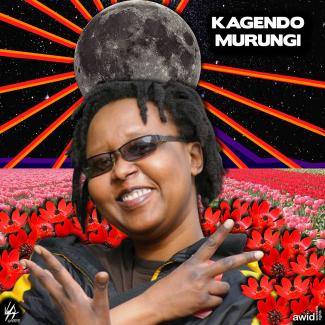
Kagendo Murungi

Sa famille et ses ami-e-s se souviennent de Kagendo comme d'une activiste, féministe, artiste et cinéaste africaine acharnée

Elle a consacré plus de 20 ans à défendre les droits et la dignité des personnes LGBTIQ d'Afrique et des personnes non conformes du genre. Les collègues de Kagendo se souviennent d'elle comme une personne à la personnalité joviale, à la conviction sans faille et qui aimait la vie. Kagendo est décédée de cause naturelle chez elle à Harlem le 27 décembre 2017.

L'écrivaine et activiste kényane, Shailja Patel, a commenté son décès en ces termes « Tout au long de sa vie, l'engagement de Kagendo à établir des liens entre toutes les formes d’oppressions et à montrer comment le colonialisme a favorisé l'homophobie sur le continent africain, a contribué à rapprocher le Kenya d’un pays où les personnes queer et les femmes indépendantes pourraient vivre et prospérer. »


Kagendo Murungi, Kenya

2005: Second High-level Dialogue takes place

Second High-level Dialogue on Financing for Development

  • The overall theme of the Second High-level Dialogue on Financing for Development, from 27-28 June 2005 was The Monterrey Consensus: status of implementation and tasks ahead. 
  • Apart from the traditional six roundtables on each of the individual chapters of the Monterrey Consensus, there was an informal interactive dialogue with the participation of a range of stakeholders including women’s rights groups.  
  • There was a call from ‘developing’ nations that global challenges and local needs and possibilities be taken into account when interacting with different groups including women, youth, people with disabilities etc. on the themes identified in the Monterrey consensus.  

¿Habrá encuentros regionales, temáticos o de otro tipo previos al Foro?

¡Creemos que sí! Todavía estamos en las etapas iniciales del proceso de planificación, así que mantente atentx mientras les vamos dando a estos planes.

Animation: Calling all Feminist Superheroes!

Animation:

Calling all Feminist Superheroes!

Follow our Superhero as she embarks on a quest to reclaim the narrative from anti-rights actors across the globe.

Watch animation

Snippet - COP30 - 6th International Rights of Nature Tribunal - EN

6th International Rights of Nature Tribunal: A New Pledge for Mother Nature

Where frontline organizers lead and corporations are held accountable.

📅 Tuesday, November 11, 2025
📍 Online and at the Universidade Federal do Pará, Belém

More info here

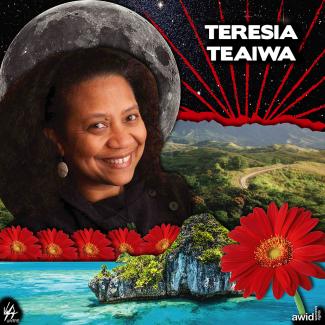
Teresia Teaiwa

Described by the Guardian as one of Kiribati’s national icons, Teresia was a fearless advocate who worked closely with feminist groups in Fiji.

She used her research to address the issues of feminism and gender in the Pacific, as well as being co-editor of the International feminist Journal of Politics. Her influence spanned the academic frontier as well as social justice movements in the Oceania region.


Teresia Teaiwa, Fiji

2011: el quinto Diálogo de Alto Nivel inicia las conversaciones sobre la Agenda de Desarrollo Post-2015

El Quinto Diálogo de Alto Nivel sobre la Financiación para el Desarrollo, realizado el 7 y 8 de diciembre de 2011, marcó el comienzo de las conversaciones en torno a la Agenda de Desarrollo Post-2015 y sus relaciones con la financiación para el desarrollo. Esta conferencia puso especial énfasis en incrementar la ayuda para financiar los ODM. En sus observaciones finales, el Presidente en Funciones de la Asamblea General pidió a los Estados Miembros que comenzaran a pensar en el marco para el desarrollo post-2015.

Je suis un bailleur de fonds ou un donateur individuel. Comment puis-je soutenir le Forum de l'AWID ?

Nous vous invitons à prendre contact avec nous pour trouver des moyens d’apporter un soutien significatif au Forum.

Snippet Kohl - Panel: Pleasure Across Borders

Panel Pleasure Across Borders

with Lindiwe Rasekoala, Lizzie Kiama, Jovana Drodevic, and Malaka Grant.

YOUTUBESOUNDCLOUD