Jean-Marc Ferré | Flickr (CC BY-NC-ND 2.0)
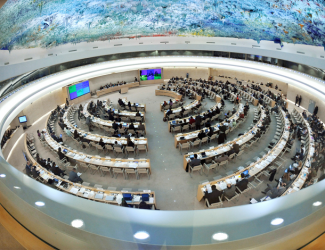
A general view of participants at the 16th session of the Human Rights Council in Geneva, Switzerland.

Special Focus

AWID is an international, feminist, membership organisation committed to achieving gender equality, sustainable development and women’s human rights

Human Rights Council (HRC)

The Human Rights Council (HRC) is the key intergovernmental body within the United Nations system responsible for the promotion and protection of all human rights around the globe. It holds three regular sessions a year: in March, June and September. The Office of the UN High Commissioner for Human Rights (OHCHR) is the secretariat for the HRC.

The HRC works by:

  • Debating and passing resolutions on global human rights issues and human rights situations in particular countries

  • Examining complaints from victims of human rights violations or activist organizations on behalf of victims of human rights violations

  • Appointing independent experts (known as “Special Procedures”) to review human rights violations in specific countries and examine and further global human rights issues

  • Engaging in discussions with experts and governments on human rights issues

  • Assessing the human rights records of all UN Member States every four and a half years through the Universal Periodic Review

Learn more about the HRC


AWID works with feminist, progressive and human rights partners to share key knowledge, convene civil society dialogues and events, and influence negotiations and outcomes of the session.

With our partners, our work will:

◾️ Monitor, track and analyze anti-rights actors, discourses and strategies and their impact on resolutions

◾️ Raise awareness of the findings of the 2017 and 2021 OURs Trends Reports.

◾️Support the work of feminist UN experts in the face of backlash and pressure

◾️Advocate for state accountability
 
◾️ Work with feminist movements and civil society organizations to advance rights related to gender and sexuality.
 

Related Content

¿Debería prepararme de alguna forma para responder la encuesta?

Dado que la encuesta ¿Dónde está el dinero? se centra en las realidades de la dotación de recursos para las organizaciones feministas, la mayoría de las preguntas indagan acerca del financiamiento de tu agrupación entre 2021 y 2023. Para responder la encuesta, necesitarás tener a mano cierta información como, por ejemplo, presupuestos anuales y las fuentes clave de financiamiento.

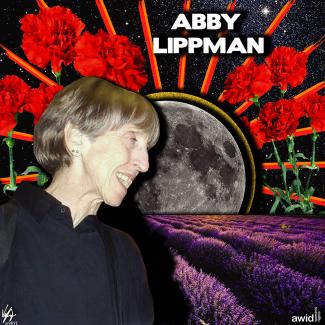
Abby Lippman

Abby was a pioneering feminist, human-rights activist and former McGill University epidemiologist.

Abby was renowned for championing social causes and for her insightful critiques of reproductive technologies and other medical topics. Specifically, she campaigned against what she called the "geneticization" of reproductive technologies, against hormone replacement therapy and for better, longer research before the approval of discoveries such as the vaccines against the human papillomavirus.

On the news of her passing, friends and colleagues described her fondly as an “ardent advocate” for women’s health.


Abby Lipman, Canada

Clone of Anuncio: Foro AWID 2024

Imagen con las palabras Anuncio del foro AWID 2024. Más informaciones próximamente. El fondo de la imagen es una fotografía tenue de la audiencia en el foro de 2016, con un efecto de color degradado que va de púrpura a amarillo de izquierda a derecha.

¡Es hora para el próximo Foro de AWID: en 2024!

Cuando miles de feministas se unen, creamos una fuerza arrolladora de solidaridad que tiene el poder de cambiar el mundo. El Foro de AWID será un momento para que descansemos y nos recuperemos juntas, nos conectemos más allá de las fronteras y descubramos nuevas y osadas direcciones estratégicas.

La fecha y el lugar se anunciarán el próximo año, tan pronto como podamos. Estamos emocionades y sabemos que ustedes también lo están. ¡Manténganse al tanto!

¡Asegúrate de seguirnos en las redes sociales y suscríbete a nuestra lista de correo para mantenerte al día!

Snippet FEA Lohana Berkins (ES)

Una de las líderes fundadoras de la cooperativa fue Lohana Berkins, activista, defensora y promotora de la identidad trans. Lohana jugó un papel crucial en la lucha por los derechos de las personas trans y travesti.

A través de su lucha se consiguió, entre muchas otras cosas, la aprobación de la Ley de Identidad de Género. Es una de las legislaciones más progresistas del mundo, garantizando derechos fundamentales a las personas trans y travestis. Ahora, las personas pueden cambiar sus nombres y géneros solo con una declaración jurada, y tener acceso a atención médica integral sin intervención/aprobación judicial o médica (Outright International, 2012).

Ma participation est-elle confidentielle?

Tout à fait. Vos réponses seront supprimées à la fin du processus de traitement et d’analyse des données. Elles ne seront utilisées qu’à des fins de recherche. Les données ne seront JAMAIS partagées en dehors de l’AWID et ne seront traitées que par le personnel de l’AWID et des consultant·es qui collaborent avec nous à la recherche WITM.

La confidentialité de votre vie privée et votre anonymat sont nos priorités. Notre politique de confidentialité est disponible ici.

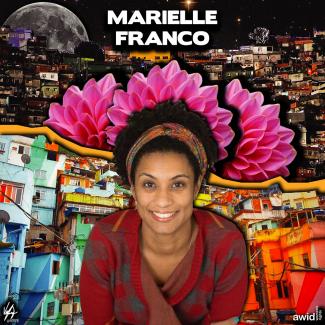
Marielle Franco

Marielle fue una política brasileña feminista lesbiana y activista por los derechos humanos.

Criticó abiertamente la brutalidad policial y las ejecuciones extrajudiciales. Su política declaradamente feminista, negra, centrada en las favelas, fue una fuente de esperanza para los grupos marginados de Río de Janeiro, gobernados actualmente por un gobierno municipal conservador y un intendente evangélico.

El 14 de marzo de 2018, después de dar un discurso en Río de Janeiro, Franco y su chofer fueron asesinados a balazos. A partir de la noticia de su muerte, multitudes se volcaron a las calles al grito de «¡Marielle presente!», en demanda de justicia.

En esta nota se puede leer más sobre Marielle y la situación en Brasil


Marielle Franco, Brasil

Merci

Merci de votre visite sur le site d'AWID. Pour plus d'informations sur AWID rendez-vous sur https://www.awid.org/fr

Snippet FEA Exclusion and Stigma (FR)

Une illustration d'un mégaphone en bleu marine. Des lignes représentant des ondes sonores sortent de l'extrémité du haut-parleur, en bordeaux.

L'EXCLUSION, LA STIGMATISATION ET LES ABUS INSTITUTIONNELS
auxquels les personnes trans et les travestis continuent de faire face au quotidien

How long is the survey open?

The survey is open until the end of August 2024. Please complete it within this timeframe to ensure your responses are included in the analysis.

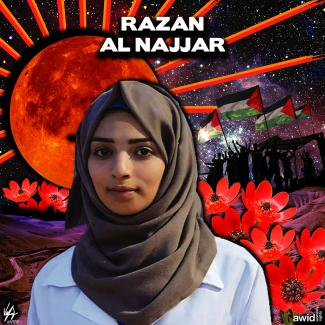
Razan Al-Najar

Razan était une infirmière palestinienne bénévole âgée de 21 ans.

Elle a été tuée par balle à l'est de la ville de Khan Younis, au sud de Gaza, alors qu'elle courait vers une clôture de la frontière fortifiée dans le but de porter secours à une victime.

Dans son tout dernier post sur Facebook, Razan avait déclaré : « J’y retourne et ne reculerai pas », ajoutant: « Frappez-moi de vos balles. Je n'ai pas peur ».


Razan Al-Najjar, Palestine

Building Feminist Economies

Building Feminist Economies is about creating a world with clean air to breath and water to drink, with meaningful labour and care for ourselves and our communities, where we can all enjoy our economic, sexual and political autonomy.


In the world we live in today, the economy continues to rely on women’s unpaid and undervalued care work for the profit of others. The pursuit of “growth” only expands extractivism - a model of development based on massive extraction and exploitation of natural resources that keeps destroying people and planet while concentrating wealth in the hands of global elites. Meanwhile, access to healthcare, education, a decent wage and social security is becoming a privilege to few. This economic model sits upon white supremacy, colonialism and patriarchy.

Adopting solely a “women’s economic empowerment approach” is merely to integrate women deeper into this system. It may be a temporary means of survival. We need to plant the seeds to make another world possible while we tear down the walls of the existing one.


We believe in the ability of feminist movements to work for change with broad alliances across social movements. By amplifying feminist proposals and visions, we aim to build new paradigms of just economies.

Our approach must be interconnected and intersectional, because sexual and bodily autonomy will not be possible until each and every one of us enjoys economic rights and independence. We aim to work with those who resist and counter the global rise of the conservative right and religious fundamentalisms as no just economy is possible until we shake the foundations of the current system.


Our Actions

Our work challenges the system from within and exposes its fundamental injustices:

  • Advance feminist agendas: We counter corporate power and impunity for human rights abuses by working with allies to ensure that we put forward feminist, women’s rights and gender justice perspectives in policy spaces. For example, learn more about our work on the future international legally binding instrument on “transnational corporations and other business enterprises with respect to human rights” at the United Nations Human Rights Council.

  • Mobilize solidarity actions: We work to strengthen the links between feminist and tax justice movements, including reclaiming the public resources lost through illicit financial flows (IFFs) to ensure social and gender justice.

  • Build knowledge: We provide women human rights defenders (WHRDs) with strategic information vital to challenge corporate power and extractivism. We will contribute to build the knowledge about local and global financing and investment mechanisms fuelling extractivism.

  • Create and amplify alternatives: We engage and mobilize our members and movements in visioning feminist economies and sharing feminist knowledges, practices and agendas for economic justice.


“The corporate revolution will collapse if we refuse to buy what they are selling – their ideas, their version of history, their wars, their weapons, their notion of inevitability. Another world is not only possible, she is on her way. On a quiet day, I can hear her breathing”.

Arundhati Roy, War Talk
Related Content

Snippet FEA The fight for a world full of workplaces (EN)

The fight for a world full of workplaces that are free from of all forms of discrimination, stigma and exclusion is  a worthy one. A world in which sex work is decriminalized and recognized as work is part of this.

A world where all workers have safe working conditions, dignified wages, and can enjoy the same rights like health care, pension pay, sick days, holidays, job security and more, no matter their gender, race, ethnicity, age or ability. Labor rights are feminist issues, and feminist unions play a key role in advancing the legal, labor and economic rights of all workers, especially migrant workers, domestic workers, informal workers and sex workers. These are folks who have most recently been disproportionately affected by the pandemic, its burdens of care, lockdowns, curfews and increased policing. Let us introduce you to the stories of feminists and union organizers that are fighting for better working conditions and better worlds for all.

Snippet - Intro WITM - AR

نكمل مشوار بناء الحشد الذي بدأناه قبل 20 عاماً لموارد أفضل وأكبر لحركات التغيير الاجتماعي بقيادة نسوية، تدعوكم/ن جمعية حقوق المرأة في التنمية لاستكمال استطلاعنا

" "أين التمويل للتنظيمات النسوية" (WITM)

لتعبئة الاستطلاع Tutorial

الرجاء اختيار اللغة المفضلة للإجابة على الاستطلاع في أقصى يمين الصفحة


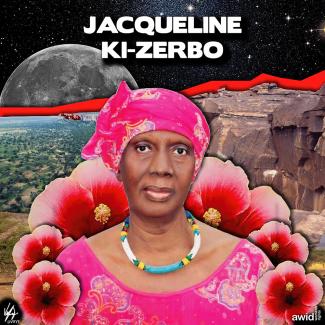
Jacqueline Coulibaly Ki-Zerbo

Jacqueline was a pioneering Malian/Burkinabe feminist, nationalist and educator.

She taught English in Senegal, before being recruited in 1961 as an English teacher at the Lycée Philippe Zinda Kaboré in Ouagadougou, Burkina Faso. Through her activism, she was involved in the popular uprising of January 3, 1966. Between 1961 and 1966, Jacqueline was also responsible for the trade union press, Voices of the Teachers. She was appointed as the head of the Normal Course for Young Girls (now known as Nelson Mandela High School) until 1974, and dedicated herself to girls’ education and advancing women’s rights.

In 1984 she was awarded the Paul G. Hoffmann Award for outstanding work in national and international development.


Jacqueline Coulibaly Ki-Zerbo, Mali/ Burkina Faso

Snippet FEA Georgia's minimum wage (ES)

El salario mínimo de Georgia se encuentra en un porcentaje inferior al de todos los países del mundo. Esta realidad afecta mayoritariamente a las mujeres.

El país no solo tiene una brecha salarial de género significativa, sino que las mujeres también trabajan más horas y más horas no reguladas antes de irse a casa para ocuparse de las tareas domésticas y de sus familias. No hay licencia por maternidad, no hay aumentos de salario por horas extras, no hay seguro de desempleo, y no hay licencias por enfermedad u otra protección social. Presionados por organizaciones occidentales, los partidos políticos oligárquicos georgianos han estado implementando reformas que están destruyendo el estado de bienestar, aumentando las medidas de austeridad y empeorando la explotación de lxs trabajadorxs, todo para los beneficios de grandes corporaciones que aplauden al país por su "facilidad para hacer negocios". Los medios de comunicación, cooptados por intereses privados y corporativos, están sesgados sobre estos temas o los silencian. La organización sindical sigue siendo una de las pocas opciones para luchar por los derechos humanos básicos y para hacer que el Estado y las empresas rindan cuentas ante las violaciones y persecuciones diarias y generalizadas contra lxs trabajadorxs, especialmente contra las mujeres.

Fuentes: Minimum-Wage y entrevista con Sopo Japaridze en Democracia Abierta

Snippet - WITM To make - RU

Сделать видимой сложность обеспечения ресурсами различных феминистских организаций