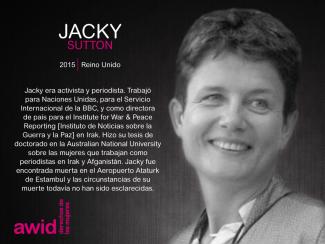
Jacky Sutton
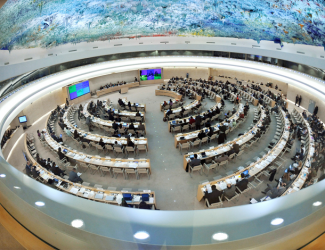
The Human Rights Council (HRC) is the key intergovernmental body within the United Nations system responsible for the promotion and protection of all human rights around the globe. It holds three regular sessions a year: in March, June and September. The Office of the UN High Commissioner for Human Rights (OHCHR) is the secretariat for the HRC.
Debating and passing resolutions on global human rights issues and human rights situations in particular countries
Examining complaints from victims of human rights violations or activist organizations on behalf of victims of human rights violations
Appointing independent experts (known as “Special Procedures”) to review human rights violations in specific countries and examine and further global human rights issues
Engaging in discussions with experts and governments on human rights issues
Assessing the human rights records of all UN Member States every four and a half years through the Universal Periodic Review
AWID works with feminist, progressive and human rights partners to share key knowledge, convene civil society dialogues and events, and influence negotiations and outcomes of the session.
Étant donnée la situation mondiale, notre Conseil d’administration a pris la décision difficile d’annuler le Forum, qui devait avoir lieu en 2021 à Taipei.
Isabel Cabanillas de la Torre fue una activista joven y una artista feminista muy querida de Ciudad Juárez, México, conocida por sus hermosos diseños evocadores de indumentaria pintada a manoen los que los ojos eran una característica emblemática de su trabajo. Sus murales transformaron los edificios abandonados y vacíos del centro de Ciudad Juárez, al sumarles vida y crítica política a sus paredes.
A través de su arte y de su activismo político, Isabel buscó llamar la atención sobre la violencia de género que se extendía por su ciudad natal. Colaboró como voluntaria con la red Mesa de Mujeres en el proyecto «Observatorio Ciudadano de Género», que monitoreaba la actuación de jueces, fiscales y defensorxs públicxs en casos de femicidios y otras violaciones a los derechos basadas en el género. Integró también «Hijas De Su Maquilera Madre», una colectiva feminista cuyo nombre alude a las hijas de madres que son trabajadoras de la maquila. Algunas de estas madres fueron las primeras víctimas de femicidio en Ciudad Juárez.
El último proyecto de Isabel (todavía en curso) fue una instalación artística para protestar contra una compañía canadiense que quería extraer cobre de los Médanos de Samalayuca.
El 18 de enero de 2020 Isabel fue atacada a balazos mientras volvía a su casa del centro de Ciudad Juárez en bicicleta, víctima, aparentemente, de un asesinato selectivo. Su cuerpo fue encontrado junto a su bicicleta.
El asesinato de Isabel desató una nueva ola de indignación contra los femicidios de la región: cientos de personas marcharon hacia el puente de la frontera entre EEUU y México, y lo bloquearon durante horas mientras cantaban «Ni una más», que es la protesta continua de las colectivas feministas contra los asesinatos de las mujeres en todo México. Solamente en 2019, 3.142 mujeres y niñas fueron asesinadas en el país; muchas de ellas fueron atacadas específicamente por su género.
Amaba andar en bicicleta.
«La bicicleta era un símbolo de libertad para ella. Simbolizaba ser libre en las calles.» - Marisol, amiga de Isabel
Jemimah Naburri-Kaheru is an accomplished international HR strategist with a profound impact within the Horn of Africa Region. Jemimah previously served as the Regional Human Resource and Office Manager at the Strategic Initiative for Women in the Horn of Africa (SIHA). Her influence extends to HR leadership for over 70 regional staff, as the organization experienced rapid growth with a 40% increase in annual revenues. Throughout her career, Jemimah has orchestrated successful recruitment efforts, introduced merit-based performance systems, and overseen employee relations and HR policies.. She played a pivotal role in supporting global workforce strategies. With an academic background in Development Studies from Makerere University (Uganda) and an ongoing MBA in Human Resource Management, Jemimah's commitment to professional development is evident. Her contribution to high-performance workforces and international HR leadership positions her as an invaluable asset to any global enterprise.

Modèles de gouvernance alternative comme moyens de sortir de la crise climatique.
📅 Mercredi 12 novembre 2025
📍 Seminario Mar Nossa Sra Da Assunção, Pará, Brésil
Site web en anglais

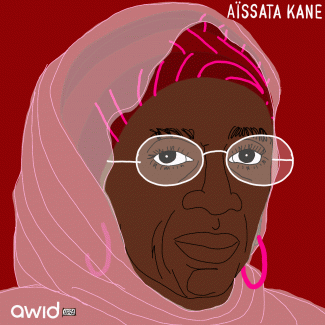
Aïssata Kane, surnommée affectueusement “Yaye Kadia” (Mère Kadia), a de tout temps été une féministe engagée dans la défense des droits des femmes africaines, et particulièrement mauritaniennes.
Au cours de sa carrière politique, en 1975, elle fut nommée ministre de la protection de la famille et des affaires sociales et travailla avec ardeur à l’amélioration du statut des femmes dans son pays; c’était la première fois qu'une femme occupait un tel poste.
Ce travail consista notamment à promouvoir l’éducation des filles et des femmes, à lutter contre la pratique du gavage sur les jeunes femmes, à faire pression pour l’inclusion d’une disposition sur les droits maritaux et à plaider en faveur de la création d’un quota de représentation féminine au Parlement.
“[Aïssata] a réalisé toutes ses passions avec humilité, courage et détermination. Elle ne voulait déranger personne avec ce combat qu’elle menait sur tous les fronts à la fois.” Ball Halimata Dem, la nièce d’Aïssata
Ayant fondé l'Union nationale des femmes de Mauritanie (UNFM), elle avait cocréé et publié pour elles le magazine Marienou, dédié à l’émancipation des femmes mauritaniennes. Aïssata dirigea également plusieurs organisations sous-régionales et locales, notamment en tant que présidente de l'Association internationale des femmes francophones (AIFF) et, en écologiste résolue, fut présidente de l'Association pour la protection de l'environnement en Mauritanie (APEM).
En 2018, on lui décerna le Prix de la Femme africaine pionnière. Ce prix honore son engagement à faire progresser le statut de la femme en Mauritanie et reconnaît son grand leadership et son sens de l'innovation.
Aïssata est décédée le 10 août 2019.
Brenda Salas Neves es une estratega feminista queer nacide y criade en los Andes del Sur. Elle trabaja en la organización para el cambio de narrativas y movilizar recursos para apoyar los movimientos de justicia racial y climática en todo el mundo. Ha producido proyectos mediáticos para potenciar el poder de la población migrante y alzarse contra la intervención militar estadounidense en toda América Latina, con Deep Dish TV y el Comité de Solidaridad con Centroamérica de Portland. Elle es une orgullose integrante del Proyecto Audre Lorde y egresade del movimiento de los United World Colleges (UWC).
por Karina Ocampo
A un rincón escondido de Chiapas, México, llegamos mujeres y disidencias sexuales para organizar nuestras acciones. (...)
< arte: «Proyecto fotográfico: La muerte sale por el Oriente», de Sonia Madrigal
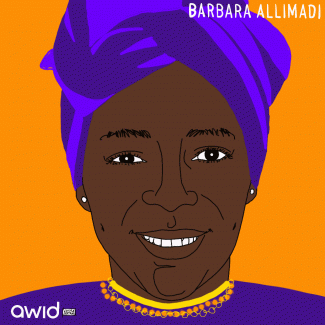
Barbara Allimadi was a political and human rights activist from Uganda. In 2012, she co-organized a protest against a televised police assault of Ingrid Turinawe, an opposition politician who had her breast squeezed by a police officer.
During the protest, Barbara, along with other fellow activists stripped to their bras in front of the Central Police Station in Kampala. This came to be known as the infamous ‘bra protest’ in Uganda.
“We settled on the bra protest. We thought it would be most appropriate for what had happened. It’s not like we were saying we don’t respect ourselves. We were disgusted by what had been done.” - Barbara Allimadi, 2013 (Daily Monitor)
With a Degree in Electronics and Communications Engineering from the London Metropolitan University, Barbara was a network engineer in the United Kingdom and an avid fan of reggae music. She returned to Uganda In 2007, when her mother passed away.
In 2019, she was appointed Coordinator for International and Diaspora Affairs at the Alliance for National Transformation (ANT), a political party launched that year by an opposition leader.
“We want security of life and property, not pain, injury and even death at the hands of security forces who are meant to protect us. Most importantly, we want a stable and enabling environment where we can realize our dreams and aspirations.” - Barbara Allimadi, ANT video
Barbara passed away on 27 April 2020.
“I was so proud of my sister for many things but in particular her fearless pursuit of peace, democracy, justice and equality in Uganda. At the height of her activism she led many marches on the streets of Kampala, to police stations, and Parliament.” - Doris Allimadi, Barbara’s sister
“It is with deep sadness that we have learnt of the untimely passing of Barbara Allimadi. She has been a valiant, relentless and courageous force for the liberation movement of Uganda. Our deepest condolences to her family. She will be sorely missed.” - Akina Mama wa Afrika (tweet on 28 April 2020)
“The passing on of Barbara is so sad for us and her entire family. She dedicated herself to fighting for justice, freedom and rights of others while serving in the civil society until she recently joined us at the party.” Maj Gen Mugisha Muntu, ANT national coordinator
“A beautiful, charming, funny, charismatic and inspirational sister. My children lost their aunty. Uganda lost a brave and courageous freedom fighter. Barbara once said, ‘As long as there is still breath in you, keep working towards your dreams.’” - Doris Allimadi, Barbara’s sister
Rachel es una profesional financiera con más de dos décadas de experiencia. Ha supervisado negocios y proyectos financieros para entidades privadas y públicas, organizaciones sin fines de lucro y organizaciones internacionales no gubernamentales. Es una contadora pública con una maestría global en administración de empresas, e integra el instituto sudafricano de contadores públicos. En su tiempo libre, Rachel diseña arte tipográfico, y disfruta de viajar y de pasar tiempo con familia y amigues con una botella de vino.
Nous vivons dans un monde où la destruction de la Nature alimente notre économie mondiale actuelle. Même en période de crise climatique, les gouvernements continuent d'encourager les industries agricoles à grande échelle à se développer. Ces activités empoisonnent la terre, menacent la biodiversité et détruisent la production alimentaire et les moyens de subsistance locaux. Pendant ce temps, alors que les femmes produisent la majorité de la nourriture dans le monde, elles ne possèdent presque aucune terre.
Et si nous percevions la terre et la Nature non pas comme une propriété privée à exploiter, mais comme une totalité avec laquelle vivre, apprendre et coexister harmonieusement ? Et si nous réparions nos relations avec la terre et adoptions des alternatives plus durables qui nourrissent à la fois la planète et ses communautés?
Nous Sommes la Solution (NSS) est l'un des nombreux mouvements dirigés par des femmes qui s'efforcent d'atteindre cet objectif.
Voici leur histoire.
Expose corporate capture. Understand false solutions. Build alternatives. Everything you need to run your own "Whose COP Is It?" campaign.
par Alejandra Laprea
Je vis dans le pays de l’impossible, où les bombes ne tombent pas alors que nous connaissons la guerre. (...)
illustration : « Entretejidas » (« Entrelacées »), par Surmercé >