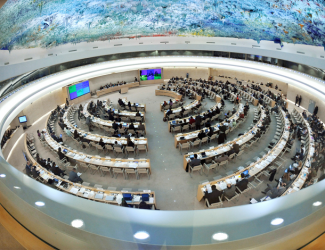
Jean-Marc Ferré | Flickr (CC BY-NC-ND 2.0)
A general view of participants at the 16th session of the Human Rights Council in Geneva, Switzerland.

Special Focus

AWID is an international, feminist, membership organisation committed to achieving gender equality, sustainable development and women’s human rights

Human Rights Council (HRC)

The Human Rights Council (HRC) is the key intergovernmental body within the United Nations system responsible for the promotion and protection of all human rights around the globe. It holds three regular sessions a year: in March, June and September. The Office of the UN High Commissioner for Human Rights (OHCHR) is the secretariat for the HRC.

The HRC works by:

  • Debating and passing resolutions on global human rights issues and human rights situations in particular countries

  • Examining complaints from victims of human rights violations or activist organizations on behalf of victims of human rights violations

  • Appointing independent experts (known as “Special Procedures”) to review human rights violations in specific countries and examine and further global human rights issues

  • Engaging in discussions with experts and governments on human rights issues

  • Assessing the human rights records of all UN Member States every four and a half years through the Universal Periodic Review

Learn more about the HRC


AWID works with feminist, progressive and human rights partners to share key knowledge, convene civil society dialogues and events, and influence negotiations and outcomes of the session.

With our partners, our work will:

◾️ Monitor, track and analyze anti-rights actors, discourses and strategies and their impact on resolutions

◾️ Raise awareness of the findings of the 2017 and 2021 OURs Trends Reports.

◾️Support the work of feminist UN experts in the face of backlash and pressure

◾️Advocate for state accountability
 
◾️ Work with feminist movements and civil society organizations to advance rights related to gender and sexuality.
 

Related Content

Devo fazer alguma preparação para responder ao inquérito?

Tendo em conta que o inquérito WITM foca-se nas realidades do financiamento de organizações feministas, a maioria das perguntas aborda o tópico do financiamento do seu grupo entre 2021-2023. Será preciso ter essas informações facilmente acessíveis para preencher o inquérito (por exemplo, os seus orçamentos anuais e as principais fontes de financiamento).

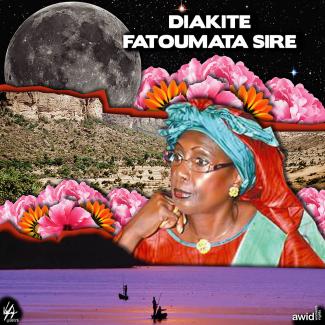
Diakite Fatoumata Sire

Diakite was actively involved in advocating for women in political and public life in Mali.

She worked to support training of women candidates in elections, and spoke out against the practice of Female Genital Mutilation (FGM). She was a strong proponent of reproductive health and rights. 


Diakite Fatoumata Sire, Mali

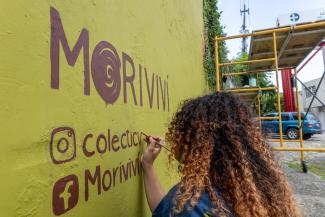
Colectivo Morivivi

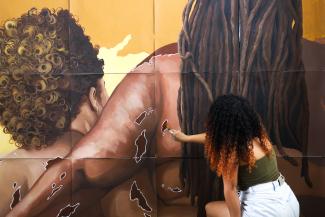
Colectivo Moriviví est un collectif artistique de femmes. Notre production artistique comprend du muralisme, du muralisme communautaire et des performances/actions de manifestation. Notre travail consiste à démocratiser l'art et à amener les récits des communautés portoricaines dans la sphère publique afin de créer des espaces où ils seront validés. Nous croyons qu’à travers l'artivisme, nous pouvons promouvoir la sensibilisation aux questions sociales et renforcer notre mémoire collective.

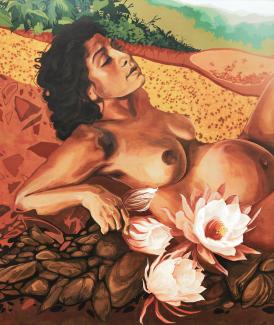
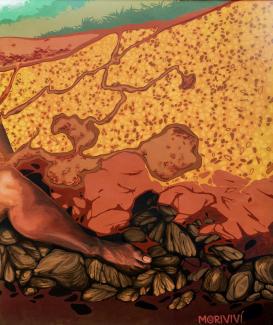
“Cacibajagua” 2017, Mural Project. Jiangxi, China
“Cacibajagua” 2017, Projet mural. Jiangxi, Chine
“Cacibajagua” 2017, Mural Project. Jiangxi, China
“Cacibajagua” 2017, Projet mural. Jiangxi, Chine
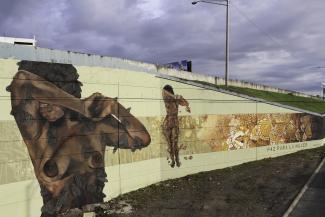
“Paz para la Mujer” 2015, collaboration with Coordinadora Paz para la Mujer Organization. Santurce,
“Paz para la Mujer” (“Paix pour la Femme”) 2015, collaboration avec l’organisation Paz para la Mujer. Santurce, Porto Rico


“Paz para la Mujer” 2015, collaboration with Coordinadora Paz para la Mujer Organization. Santurce, Puerto Rico
“Paz para la Mujer” (“Paix pour la Femme”) 2015, collaboration avec l’organisation Paz para la Mujer. Santurce, Porto Rico
Collectivo Moriri Artwork

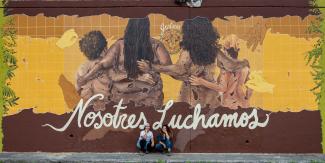
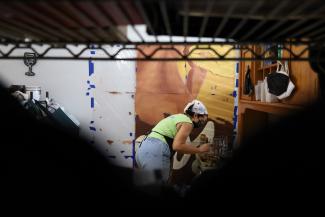
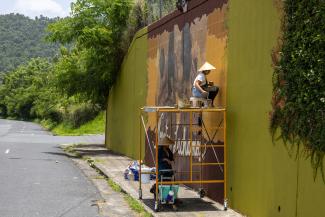
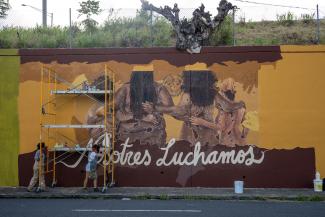
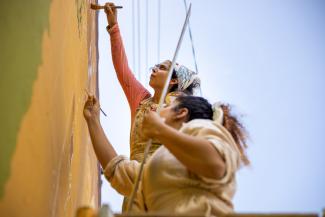
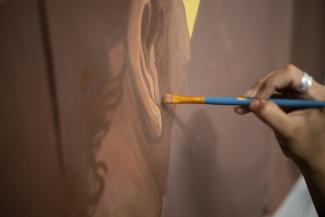
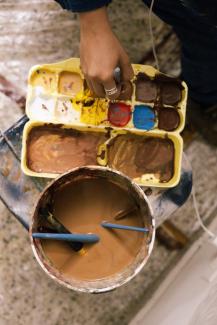
Dans le cadre de sa participation au Groupe de Travail d’Artistes d'AWID, le Colectivo Moriviví a réuni un groupe divers de membres, partenaires et personnel pour faciliter un processus collaboratif visant à imaginer, documenter et déterminer le contenu d'une fresque communautaire par le biais d'un processus de co-création en plusieurs étapes. Le projet a commencé par une conceptualisation à distance avec des féministes de différentes régions du monde réuni·e·s par l'AWID, avant d'évoluer vers sa re-contextualisation et sa réalisation à Porto Rico. Nous avons eu l'honneur de bénéficier de la contribution des artistes locaux·ales Las Nietas de Nonó(@lasnietasdenono), de la participation des femmes locales à la session de peinture communautaire, du soutien logistique de la municipalité de Caguas et du soutien supplémentaire du FRIDA | The Young Feminist Fund.
 
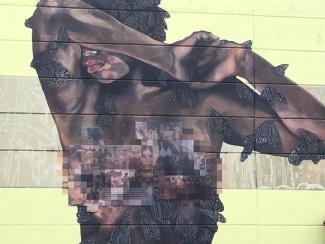
La fresque explore la transcendance des frontières en présentant les corps tels des cartes, dans une étreinte qui met en évidence l'intersection des différentes manifestations, pratiques et réalités féministes.
 
Nous remercions également Kelvin Rodríguez, qui a documenté et capturé les différentes étapes de ce projet à Porto Rico : 

Collectivo Moriri Artwork

À propos du Colectivo Morivivi 

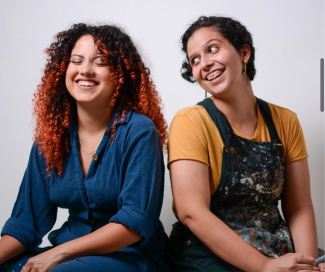
Colectivo Morivivi portrait
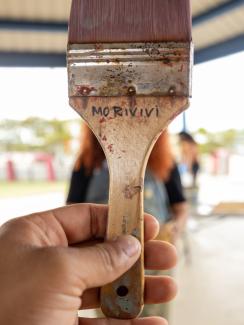
Moriviví est un collectif de jeunes femmes artistes qui travaille sur l'art public depuis Avril 2013. Basé·e·s à Porto Rico, nous sommes reconnu·e·s pour la création de fresques et d'arts dirigés par la communauté.
 
Le groupe a débuté dans les festivals d'art urbain locaux. Au fur et à mesure que notre travail devenait plus populaire, les organisations et les dirigeant.e.s communautaires ont commencé à nous contacter. Au départ, nous étions huit lycéen·ne·s qui voulaient peindre une fresque ensemble. Cependant, en huit ans de travail acharné, nous avons été confronté·e·s à de nombreux défis. Nous sommes aujourd’hui dans une période de transition. Au cours de l'année qui vient, nous souhaitons restructurer le collectif en interne. Notre objectif est d'ouvrir de nouvelles opportunités pour les collaborateurs·trices et d'étayer notre processus de prise de décisions par un nouveau système d'évaluation. À long terme, nous aspirons à devenir une école alternative de pratiques artistiques pour celles et ceux souhaitant s'immerger dans la production artistique communautaire.

Snippet FEA Unio Otras Photo 3 (EN)

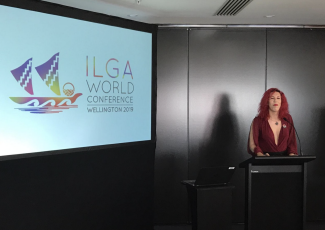
Photo of Sabrina Sanchez speaking next to a screen on Ilga World meeting

Membership why page - Kirthi Jayakumar quote

"I participated in a member-only activity and I was particularly moved to see how there was space for everyone to share and that there was no judgment whatsoever. The entire session was energetic and vibrant."

- Kirthi Jayakumar, Founder, The Gender Security Project, India 

هل مشاركتي سريّة؟

أكيد. سيتم محي اجوبتك بعد عملية معالجة المعطيات وتحليلها وسيتم استعمالها لأهداف بحثية فقط. لن تتم أبداً مشاركة المعطيات خارج AWID وسيتم معالجتها فقط عن طريق طاقم AWID والمستشارات/ين اللواتي/ اللذين يعملن/وا في مشروع "أين المال" معنا. خصوصيتكم/ن وسرّيتكم/ن هي في أعلى سلم أولوياتنا. سياسة الخصوصية متواجدة هنا.

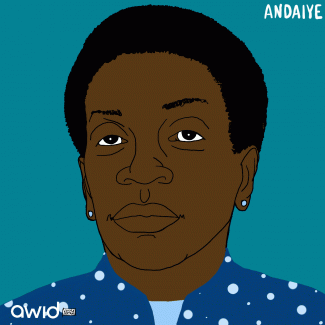
Andaiye

Andaiye in Swahili means ‘a daughter comes home’. Born Sandra Williams on 11 September 1942 in Georgetown, Guyana, she changed her name to ‘Andaiye’ in 1970 as the Black Power movements swept her country and the wider Caribbean region. 

Andaiye was seen as a transformative figure on the frontlines of the struggles for liberation and freedom. She was an early member and active in the leadership of the Working People’s Alliance (WPA), a socialist party in Guyana which fought against authoritarian rule and continued throughout her life to focus on justice for the working-class and rural women’s rights and on bridging ethnic barriers between Indo and Afro-Guyanese women. 

Andaiye was a founding member of Red Thread Women, an organization that advocated for women’s care work to be fairly remunerated, worked at the University of the West Indies and with CARICOM. Never afraid to challenge governments, she pointed out gender imbalances in state boards, laws that discriminated against sex workers, called for abortion rights in Jamaica and spoke out against trade agreements such as the Caribbean Single Market and Economy (CSME) that allowed for the free movement of women domestic migrant workers but did not give their children the same rights.  

Andaiye published several scholarly essays, wrote newspaper columns and also edited the last books of Walter Rodney, the Guyanese political activist and fellow WPA leader, who was assassinated in 1980. A cancer survivor, Andaiye was one of the founders of the Guyana Cancer Society and the Cancer Survivors’ Action Group. She also served on the executive of the Caribbean Association for Feminist Research and Action (CAFRA), as a Director of Help and Shelter and as Board Member of the Guyana National Commission on Women. She received a number of awards, including the Golden Arrow of Achievement in Guyana (the fourth highest national award).

Andaiye passed away on 31 May 2019 at the age of 77. The subsequent tributes that flowed in from activists, friends and those inspired by her life spoke eloquently to her amazing legacy and her beautiful humanity.

Here are but a few: 

“Andaiye had a profound effect on me...she was so many things, an educator, fighter, she taught me to be self-critical, to think more clearly, she taught me about survival, about incredible courage, about compassion, about going beyond external appearances and treating people as people and not being distracted by status, class, race...anything.”
- Peggy Antrobus, Feminist Activist, Author, Scholar, Barbados

“The kind of confident idealism Andaiye expressed, this willingness to confront the world and a stubborn belief that you could actually change it... That politics of hope...How else to honour her life, legacy and memory but to keep doing the work ethically and with ongoing self-critique? And to put women’s caring work at the center of it.”
- Tonya Haynes, Barbados

“I can hear her quip at our collective keening. So through the tears I can laugh. Deep bows to you beloved Andaiye, thank you for everything. Love and light for your spirit’s journey. Tell Walter and all the ancestors howdy.” - Carol Narcisse, Jamaica

Read more tributes to Andaiye
Anti-Rights Trends in Regional Human Rights Systems

Chapter 6

In the African Commission and the Inter-American System, anti-rights actors push essentialist notions of culture and gender to hamper progress on rights and undermine accountability. As we see, anti-rights actors are exerting influence in regional human rights systems, as well as international spaces. 

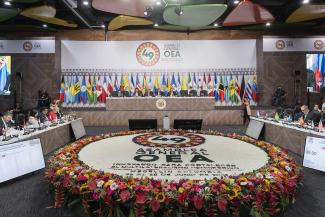
2019 JUN 27 Meeting of the Summit Implementation Review Group in Colombia
© Juan Manuel Herrera/OAS/Flickr
2019 JUN 27 Meeting of the Summit Implementation Review Group in Colombia

The African Commission on Human and Peoples' Rights has begun framing women’s and sexual rights as jeopardising its ability to deal with “real rights” and contrary to “African values”,   setting a worrying anti-rights precedent. The withdrawal of the Coalition of African Lesbians’ observer status is an example of this trend, and points to the way space for feminist, Pan-Africanist engagement is being stifled. 

In the Organization of American States (OAS) and the Inter-American Human Rights System, anti-rights strategies include the NGOization of religious groups, the use of secular discourses, and the co-optation of discrimination frameworks. Anti-rights influence has materialized in a number of ways, including the intimidation of trans activists and the blocking the introduction of progressive language in resolutions.

Table of Contents

  • Silencing Feminists in the African Human Rights System
  • Anti-rights Groups in Latin America: Organization of American States (OAS) General Assembly and the Inter-American Human Rights System
     

Read Full Chapter >

Snippet FEA Linda Porn Bio (ES)

Linda Porn es una otra heroína de la organización sindical feminista y del activismo de las trabajadoras sexuales a nivel nacional (en España) y transnacional.

Originaria de México, vive en España desde los años 2000. Es trabajadora sexual, activista, madre soltera y artista multidisciplinar.

Partiendo de estas diferentes identidades, utiliza la performance, el videoarte y el teatro para visibilizar las luchas en las intersecciones del transfeminismo, el trabajo sexual, la migración, el colonialismo y la maternidad. Combina el arte y el trabajo sexual mientras cuida a su hija como madre soltera.

Linda también pertenece a colectivos de trabajadoras sexuales que luchan por sus derechos, como el sindicato OTRAS y CATS Murcia. También cofundó el grupo 'Madrecitas' - que visibiliza y denuncia la violencia institucional racista contra las familias migrantes. Violencia de la que ella y su hija fueron objeto por ser trabajadora sexual y madre soltera migrante.

¡No te pierdas su trabajo artístico aquí!

Forum anchors (Forum page)

El Foro de AWID estará organizado alrededor de 6 tópicos interconectados. Estos «ejes» se centran en las realidades feministas.

Explora

Main image
new-witm-banner.png
Body

Как долго будет доступен опрос?

Опрос будет доступен до конца августа 2024 года. Пожалуйста, заполните его в течение этого срока, чтобы ваши ответы были включены в анализ.

Paula Andrea Rosero Ordóñez

"[Ella] era una persona que se caracterizaba por su arduo trabajo a favor de la defensa de los derechos humanos y la construcción de la paz en Nariño, especialmente en el municipio de Samaniego-Nariño". - Jorge Luis Congacha Yunda para Página10.

Paula Andrea Rosero Ordóñez fue abogada de primera instancia en la oficina del Ministerio Público en Samaniego, Nariño, la principal agencia de defensa de los derechos de la ciudadanía en Colombia.

Paula se  especializó en los derechos civiles y políticos, las  problemáticas de la impunidad y la justicia, y contribuyó a descubrir abusos de poder, incluida la corrupción. Paula participó también en proyectos para la consolidación de la paz en su ciudad natal, Samaniego, a través del Consejo Municipal de Paz y la Junta Municipal de Mujeres.

Paula recibió amenazas de muerte tras exponer el manejo irregular de los recursos y de denunciar actos de corrupción en el Hospital Lorencita Villegas del municipio nariñense. Fue asesinada el 20 de mayo de 2019, cuando dos hombres se acercaron y le dispararon a corta distancia. 

Suscríbete para recibir nuestras noticias

* indica un campo requerido
                  
                         
Seleccione los temas sobre los que desea recibir información:

Snippet FEA Principles of work Human Rights (FR)

Une personne parlant dans un haut-parleur.

DROITS HUMAINS