Organizing creatively, facing an increasing threat
Young feminist activists play a critical role in women’s rights organizations and movements worldwide by bringing up new issues that feminists face today. Their strength, creativity and adaptability are vital to the sustainability of feminist organizing.
At the same time, they face specific impediments to their activism such as limited access to funding and support, lack of capacity-building opportunities, and a significant increase of attacks on young women human rights defenders. This creates a lack of visibility that makes more difficult their inclusion and effective participation within women’s rights movements.
A multigenerational approach
AWID’s young feminist activism program was created to make sure the voices of young women are heard and reflected in feminist discourse. We want to ensure that young feminists have better access to funding, capacity-building opportunities and international processes. In addition to supporting young feminists directly, we are also working with women’s rights activists of all ages on practical models and strategies for effective multigenerational organizing.
Our Actions
We want young feminist activists to play a role in decision-making affecting their rights by:
Fostering community and sharing information through the Young Feminist Wire. Recognizing the importance of online media for the work of young feminists, our team launched the Young Feminist Wire in May 2010 to share information, build capacity through online webinars and e-discussions, and encourage community building.
Researching and building knowledge on young feminist activism, to increase the visibility and impact of young feminist activism within and across women’s rights movements and other key actors such as donors.
Promoting more effective multigenerational organizing, exploring better ways to work together.
Supporting young feminists to engage in global development processes such as those within the United Nations
Collaboration across all of AWID’s priority areas, including the Forum, to ensure young feminists’ key contributions, perspectives, needs and activism are reflected in debates, policies and programs affecting them.
Related Content
Defensoras del África subsahariana
En nuestro Tributo Virtual 2015 a las defensoras de derechos humanos que ya no están con nosotros/as recordamos a cuatro mujeres del África subsahariana, tres de las cuales fueron asesinadas por el trabajo que realizaban y/o por su identidad de género y orientación sexual. Sus muertes ponen en evidencia la violencia que suelen enfrentar las personas LGBT en la región y en el mundo. Únete a AWID para honrar a estas defensoras de derechos humanos, su trabajo y su legado, compartiendo los memes aquí incluidos con tus colegas, amistades y redes; y tuiteando las etiquetas #WHRDTribute y #16Días.
Por favor, haz click en cada imagen de abajo para ver una versión más grande y para descargar como un archivo.
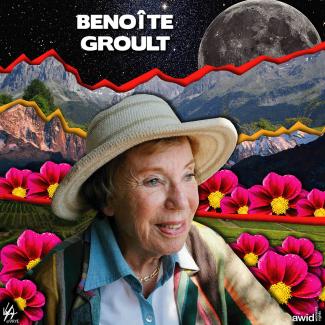
Benoîte fue una periodista, escritora y activista feminista francesa.
Benoîte publicó más de 20 novelas y numerosos ensayos sobre feminismo.
En 1975 se publicó su primer libro, Ainsi Soit-Elle (que podría traducirse «Como ella es»). En él analizaba la historia de los derechos de las mujeres, así como la misoginia y la violencia contra las mujeres.
En su último libro, Ainsi Soit Olympe de Gouges, analizaba los derechos de las mujeres durante la Revolución Francesa, centrándose en la pionera feminista francesa. Olympe de Gouges fue guillotinada en 1793 por desafiar la autoridad masculina; dos años antes había publicado una declaración sobre los derechos de las mujeres («Déclaration Des droits de la Femme et de la Citoyenne»).
Группы, организации и движения, работающие исключительно или главным образом в интересах женщин, девочек, гендерной справедливости, прав ЛГБТКИ+ людей во всех регионах и на всех уровнях, как недавно созданные, так и давно существующие.
Snippet FEA No feminist economies without feminist unions (FR)
Pas d’économies féministes sans syndicats féministes!
Par le biais de l'organisation syndicale, Sopo, Sabrina et Linda se battent non seulement pour les droits des femmes, des travailleur·euses essentiel·les, des travailleur·euses migrant·e·s et des travailleur·euses du sexe, mais pour les droits de tous·tes les travailleur·euses .
La lutte pour mettre fin à l'exploitation des travailleur·euses est une lutte féministe. C’est pourquoi il n’y a pas d’économies féministes sans syndicats féministes.
FRMag - The Triple (FR)
Les invalides en triple : parlons sexe, chéri !
par Nandini Tanya Lallmon
Olajumoke « Jay » Abdullahi et Kym Oliver sont des féministes révolutionnaires à plus d'un titre. (...)
Our individual and institutional members come from ALL regions of the world and 163 countries. Our latest members join us from France, South Sudan, the United Kingdom, and Lebanon. All of our members bring with them a rich and diverse array of perspectives, experiences, knowledge, energy and inspiration!
Did you know about our weekly member profiles?
One of the benefits of being an AWID member, is having your story featured on awid.org, in our newsletters which go out to 35,000 subscribers, and via our social media channels which have over 60,000 followers.
If you have any difficulties and require support with the sign-up process, please do not hesitate to contact us at membership@awid.org
What Our Members Say
"We have found AWID to be a very exciting network and we are involved in many of its platforms." - Engabu Za Tooro (AWID institutional member)
"I am looking forward to a fruitful engagement with the team. Feeling great. Thanks for accepting me as a member." - R. Chakraborty (AWID individual member)
"Thank you so much AWID, your work is tremendous. I really appreciated your efforts." - E. Khan (AWID individual member)
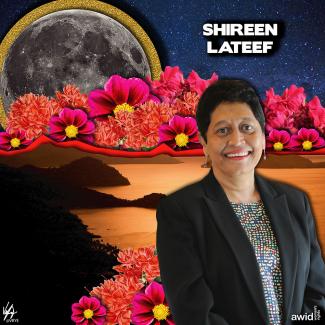
Figure inspirante pour de nombreux-ses féministes aux Fidji, Shireen était une alliée de poids du mouvement des femmes. Elle a plaidé sans relâche pour l'égalité de genre aux niveaux local et régional.
Ayant débuté sa carrière en tant que spécialiste de l’égalité de genre à la Banque asiatique de développement, elle a apporté des changements radicaux en matière d’égalité de genre aux politiques de l’institution. Sa recherche, intitulée « La règle des Danda : la violence domestique chez les Indo-Fidjiens », est l'une des premières recherches sur la violence domestique, le mariage et les femmes aux Fidji. Ce travail précurseur a servi de catalyseur pour la militance féministe dans ce domaine.
L’héritage de Shireen lui survit et beaucoup se souviennent de son influence, de son engagement et de son soutien au mouvement des femmes aux Fidji et dans le Pacifique.
O nosso grupo, organização e/ou movimento não recebeu ou mobilizou financiamento de financiadores externos. Devemos participar no inquérito?
Sim! Reconhecemos e valorizamos diferentes motivos pelos quais as feministas nos seus respetivos contextos não dispõem de financiamento externo: desde não serem elegíveis para se candidatar a subsídios e/ou receber dinheiro do exterior, até dependerem de recursos gerados autonomamente como uma estratégia política por si só. Queremos saber mais sobre vocês, independentemente da vossa experiência com financiamento externo.
Snippet FEA We are living in a world right (EN)
Even in times of climate crisis, governments continue to encourage large-scale agriculture industries to expand. These activities poison the land, threaten biodiversity, and destroy local food production and livelihoods. Meanwhile, while women produce the majority of our food in the world, they own almost none of the land.
What if we perceived land and Nature not as private property to exploit, but as a whole to live in, learn from, and harmoniously coexist with? What if we repaired our relationships with the land and embraced more sustainable alternatives that nurture both the planet and its communities?
Nous Sommes la Solution (We Are the Solution, NSS) is one of many women-led movements striving to do this. This is their story.
FRMag - Resistance from the Kitchen
Our arepa: Resistance from the Kitchen
by Alejandra Laprea
I live in a country of the impossible, where there are no bombs yet we are living in a war. (...)
artwork: “Entretejidas” [Interwoven women] by Surmercé >
7. Sintetiza los resultados de la investigación
Ahora que has analizado toda la información que recogiste — de la encuesta, las entrevistas, la investigación secundaria y otras fuentes que hayas utilizado — ya puedes generar el producto final.
En esta sección:
El producto final
1. Escribe con claridad
2. Consigue que tenga un aspecto atractivo
El producto final será un documento que resume, analiza y critica la información que obtuviste. Será lo que compartas con la audiencia cuando les presentes tu investigación y se la expliques.
En AWID por lo general elaboramos un informe escrito exhaustivo en el que analizamos cada conjunto de información y sintetizamos todos los resultados que encontramos, para luego generar productos más breves como infografías o resúmenes (que explicaremos en la sección siguiente, «Finalización y formato»).
1. Escribe con claridad
Organiza la información según cómo te gustaría contar la historia. Puedes respetar el orden de la encuesta. O reagrupar algunas preguntas para que la conclusión surja de manera fluida y siga una progresión lógica.
Adapta el lenguaje al público. Utiliza un lenguaje universal y evita las jergas o los términos demasiado técnicos.
La importancia de la edición
El trabajo de edición implica corregir el texto, garantizar que la redacción sea concisa, revisar que los datos proporcionados sean exactos, señalar las inconsistencias que se deben resolver, acomodar el texto para que fluya y posiblemente también sugerir títulos.
Lo ideal es que la persona que haga este trabajo entienda y conozca tu labor en cuanto a WITM pero que no haya participado directamente de la investigación, así puede aportar una perspectiva nueva.
2. Consigue que el producto tenga un aspecto atractivo
Utiliza la información recogida para generar gráficos y tablas. Estas herramientas visuales constituyen una forma atractiva de subrayar los principales resultados de la investigación y validar los análisis.
Busca imágenes relevantes que puedan ilustrar el informe.
Destaca las principales cifras y/o los testimonios de impacto.
Recuerda: Cuanto más accesible sea el producto, más personas querrán leerlo (y compartirlo).
Cuando llegues a este momento, ya habrás compilado toda la información, la habrás analizado y convertido en un producto final, que probablemente sea un informe extenso.
1. Pule los resultados
Antes de encarar los pasos siguientes deberías compartir el producto final con organizaciones, activistas y donantes que puedan comentarlo (lxs «consultorxs»).
Este es un momento excelente para pedirles que revisen lo siguiente:
¿Hay algo fundamental que esté ausente delanálisis del panorama actual del financiamiento y sus tendencias?
¿Hay algo fundamental que esté ausente de las conclusiones?
¿Hay alguna inexactitud en la información que necesite ser corregida?
¿Tienen alguna sugerencia general sobre cómo fortalecer el informe para que cumpla con las metas que habías mencionado en el marco de la investigación?
Una vez que hayas incorporado todos los comentarios de las personas a las que consultaste, asegúrate de que la persona a cargo de la edición vuelva a revisar el informe.
Con esto ya tendrás la versión final y completa del informe. Si quieres publicarlo en otros idiomas, ahora es el momento de enviarlo a traducir.
2. Facilita los comentarios
Es probable que las personas a las que consultes estén ocupadas con su trabajo habitual. Asegúrate de darles un plazo razonable para que te hagan llegar sus comentarios.
Pídeles comentarios breves y específicos, para que les resulte fácil responder. Si quieres, puedes simplemente copiar y pegar los puntos que mencionamos en la sección anterior.
Si vas a publicar el informe en varios idiomas, asegúrate de contar con personas que también puedan revisar las versiones finales traducidas de el/los producto/s.
Las personas que revisen el informe (lxs «consultorxs») te estarán haciendo un aporte significativo. Considera la posibilidad de otorgarles alguna forma de reconocimiento.
• 1 persona (o más) de investigación
• 1 Editor (editor web o si crea un producto en línea)
• Traductores (si ofrece encuesta en varios idiomas)
Recursos necesarios
• Lista de organizaciones de asesores, activistas y financiadores.
• Documento de Síntesis (sección de "marco de su investigación")
• Los resultados de su(s) encuesta(s)
• Preguntas de la entrevista
• Resultados de las entrevistas
• Los datos de la investigación secundaria
• Todos otros datos utilizados en el informe
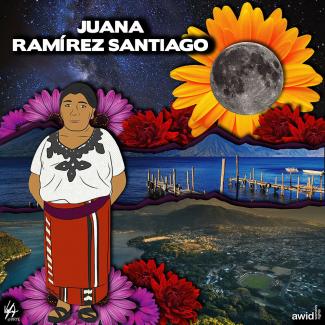
Juana was one of the founders and current Board Member of Red de Mujeres Ixiles de Nebaj, an Indigenous women’s rights organization that is a member of the Mesoamerican Initiative of WHRDs (IM-Defensoras).
She was also a midwife and a mother of 7 children. Juana had received death threats that were reported to the Prosecutor’s office. Juana is the third Indigenous WHRD murdered in the area during 2018. The Guatemala Ombudsman reports that a total of 20 HRDs were killed in the country this year.
Juana Ramírez Santiago was shot dead by unidentified attackers while crossing a bridge in Nebak, Quiché, Guatemala. Investigations to identify the perpetrators are ongoing.
حالياً سيتواجد الاستطلاع على منصة KOBO باللغات العربية، الإنجليزية، الفرنسية، البرتغالية، الروسية والاسبانية. ستكون لديكم/ن الفرصة لاختيار اللغة التي تريدون تعبئة الاستطلاع بها في بداية الاستطلاع.