Digna Ochoa
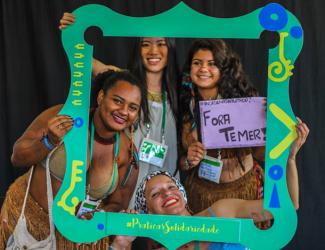
Young feminist activists play a critical role in women’s rights organizations and movements worldwide by bringing up new issues that feminists face today. Their strength, creativity and adaptability are vital to the sustainability of feminist organizing.
At the same time, they face specific impediments to their activism such as limited access to funding and support, lack of capacity-building opportunities, and a significant increase of attacks on young women human rights defenders. This creates a lack of visibility that makes more difficult their inclusion and effective participation within women’s rights movements.
AWID’s young feminist activism program was created to make sure the voices of young women are heard and reflected in feminist discourse. We want to ensure that young feminists have better access to funding, capacity-building opportunities and international processes. In addition to supporting young feminists directly, we are also working with women’s rights activists of all ages on practical models and strategies for effective multigenerational organizing.
We want young feminist activists to play a role in decision-making affecting their rights by:
Fostering community and sharing information through the Young Feminist Wire. Recognizing the importance of online media for the work of young feminists, our team launched the Young Feminist Wire in May 2010 to share information, build capacity through online webinars and e-discussions, and encourage community building.
Researching and building knowledge on young feminist activism, to increase the visibility and impact of young feminist activism within and across women’s rights movements and other key actors such as donors.
Promoting more effective multigenerational organizing, exploring better ways to work together.
Supporting young feminists to engage in global development processes such as those within the United Nations
Collaboration across all of AWID’s priority areas, including the Forum, to ensure young feminists’ key contributions, perspectives, needs and activism are reflected in debates, policies and programs affecting them.
Las entrevistas generan información en profundidad que no puedes obtener fácilmente de la encuesta. Mientras que la encuesta se centra sobre todo en información cuantificable y preguntas cerradas, las entrevistas son el espacio para las opiniones expertas de activistas y donantes, así como para las preguntas abiertas que pueden poner en contexto los resultados de la encuesta.
En esta sección
- Consejos generales
1. Antes de realizar las entrevistas
2. Durante las entrevistas- Entrevistas especializadas
1. Entrevistas con donantes
2. Entrevistas con organizaciones y activistas por los derechos de las mujeres- Resultados preliminares
Envía una nota conceptual a las personas que vas a entrevistar, explicando tus objetivos para la entrevista y para la investigación en general, así como una lista de preguntas.
Esto les permitirá prepararse para responder a las preguntas más complicadas y buscar información que tal vez no tengan a mano sin previo aviso.
No bases las preguntas en supuestos acerca de lo que saben las personas a las que entrevistas. Por el contrario, averigua primero qué saben, porque eso también te aportará información.
Las entrevistas con donantes te permitirán forjar vínculos más profundos con ellxs, lo que te será útil cuando hagas incidencia una vez concluida la investigación. También te ayudarán a conocer mejor los procesos de toma de decisiones de las financiadoras.
Preguntas sugeridas para las entrevistas con donantes:
Ver ejemplos de entrevistas con donantes
Las entrevistas con organizaciones y activistas por los derechos de las mujeres te ayudarán a conocer mejor las realidades sobre el terreno. También te permitirán profundizar tus vínculos con ellas y luego tal vez integrarlas al trabajo de incidencia, sobre todo para alentar la colaboración entre donantes y activistas.
Temas que sugerimos abordar durante las entrevistas con organizaciones y activistas por los derechos de las mujeres:
Ver ejemplos de entrevistas con organizaciones y activistas por los derechos de las mujeres
Te recomendamos analizar resultados preliminares durante toda la investigación WITM. Presentar los resultados preliminares te da la oportunidad de realizar más entrevistas y escuchar opiniones sobre el proceso de investigación y los resultados iniciales. Esas opiniones las puedes incorporar a la investigación en su formato final.
AWID organiza «reuniones de WITM» durante las que comparte los resultados preliminares de la encuesta y las entrevistas. En estas reuniones, activistas, organizaciones por los derechos de las mujeres y donantes pueden debatir y discutir los resultados, esclarecer el contexto, sentir la investigación como propia y hacer aportes para la versión final de la investigación.
Por ejemplo, en la Cumbre Mundial de la IFP sobre Filantropía Indígena (en inglés), se utilizó el Centro de Movilización de Recursos por los Derechos de las Mujeres Indígenas como espacio para presentar los resultados preliminares.
Ver la presentación de esa reunión (en inglés)
4. Recoge la información y analízala

• 1,5 - 3 meses
• 1 persona (o más) de investigación
• Lista de los donantes, organizaciones y activistas para las encuestas
• Preguntas preparadas
• Documento de Síntesis (que creó en la sección "Prepara el marco")
• Ejemplo de preguntas: Financiadores
• Ejemplo de preguntas: Activistas y organizaciones
4. Recoge la información y analízala
6. Realiza una investigación secundaria
Укрепить наш коллективный голос и влияние на увеличение и улучшение финансирования феминистских организаций, организаций по защите прав женщин, ЛГБТКИ+ и смежных организаций по всему миру
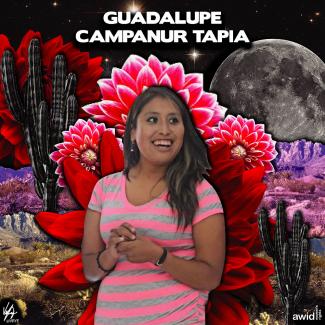
Guadalupe was an environmental activist involved in the fight against crime in Cherán, Mexico.
Guadalupe helped to overthrow the local government in April 2011 and participated in local security patrols including those in municipal forests. She was among the Indigenous leaders of Cherán, who called on people to defend their forests against illegal and merciless logging. Her work for seniors, children, and workers made her an icon in her community.
She was killed in Chilchota, Mexico about 30 kilometers north of her hometown of Cherá.
Umyra Ahmad es una feminista de Malasia con antecedentes en incidencia política internacional y regional y educación en derechos humanos. En AWID, trabaja en la incidencia de los derechos asociados con el género y la sexualidad en las Naciones Unidas. Antes de incorporarse, se desempeñaba como oficial de programa en International Women’s Rights Action Watch Asia y el Pacífico (IWRAW, Observatorio Internacional de los Derechos de las Mujeres), donde colaboró con organizaciones regionales, nacionales y de base en el uso de mecanismos de los órganos de tratados de las Naciones Unidas como herramientas para la rendición de cuentas de los Estados y el acceso a la justicia. En Malasia, trabaja con colectivos queer y de personas refugiadas y brinda apoyo en las tareas de coordinación de diferentes iniciativas de ayuda mutua.
Écoutez l'histoire ici :

Toute l'équipe de l'AWID vous remercie de nous avoir rejoint pour ces quatre jours d'apprentissage et de célébrations, pour envisager, rêver et co-créer nos Horizons féministes.
Nous avons été incroyablement inspiré-e-s et enthousiasmé-e-s par tout ce travail collectif que nous avons accompli ensemble !
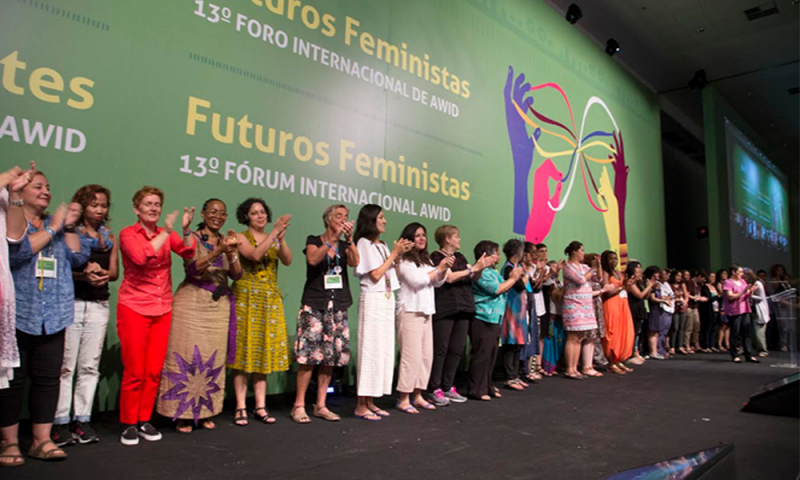
Bonne lecture !
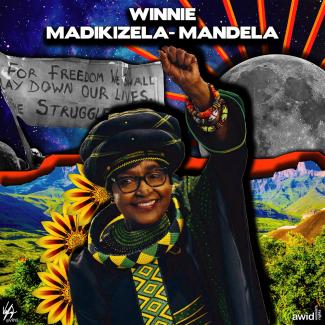
A Winnie la han descripto como una «militante agitadora» que luchó contra el régimen del apartheid en Sudáfrica.
Fue encarcelada numerosas veces y en varias ocasiones fue encerrada en celdas de aislamiento. Ma’Winnie, como la recuerdan afectuosamente, era conocida por hablar abiertamente sobre los desafíos que las mujeres negras enfrentaron durante y después del apartheid, habiendo sido ella misma sometida a esas brutalidades como madre, esposa y activista durante la lucha. Fue más allá del concepto erróneo que sostiene que el liderazgo está basado en el género, la clase o la raza. A pesar de haber sido una figura controvertida, es recordada por muchxs por su nombre en xhosa, «Nomzamo», que significa «la que soporta las pruebas».
Ma’Winnie sigue siendo una inspiración para muchxs, especialmente las jóvenes sudafricanas.
Su muerte incentivó un creciente movimiento bajo el lema: «Ella no murió, se multiplicó».
Joanne est une féministe africaine passionnée par le démantèlement des inégalités de genre sur le continent africain. Elle a travaillé avec un certain nombre d'organisations mondiales, de médias et de think tanks, dont entre autres Amnesty International, Wrthy, le Local Development Research Institute, la BBC et la East African Community (EAC). Elle siège au sein de plusieurs conseils d'administration, dont celui de Freely in Hope, une ONG basée au Kenya et en Zambie, qui souhaite outiller les survivant·e·s et les défenseur·e·s dans leur lutte contre les violences sexuelles, et celui de Msingi Trust, un mouvement d'activistes qui se réunissent à la croisée de la foi et des droits humains. Elle est titulaire d'un master en gestion d’affaires, d'un master en politiques publiques et d'une licence en droit. Elle est accro aux livres, avec un penchant pour la fiction.
Georgia's minimum wage is in the bottom percent of all countries in the world. This reality affects mostly women.
The country not only has a significant gender pay gap, but women also work longer, more unregulated hours before going home to take care of housework and their families. There is no maternity pay, no wage increase for overtime work, no unemployment insurance, and no pay for sick leave or other social protection. Pressured by Western organizations, Georgian oligarchic political parties have been implementing reforms that are destroying the welfare state, increasing austerity measures, and worsening worker exploitation - all for the benefits of big corporations which are applauding the country for its “ease of doing business”. Mass media, coerced by private and corporate interests, either remain silent or biased on these issues. Union organizing remains one of the very few options to fight for basic human rights, and for holding the State and corporations accountable in the face of daily, pervasive violations and persecutions, especially against women.
Sources: Minimum-Wage and Interview with Sopo Japaridze to OpenDemocracy

The search for alternative means of food production based on environmental sustainability is gaining ground across regions. This worldwide search comes with a common characteristic: the need to involve rural people and particularly women, building on their local priorities and knowledge by employing the principle of agroecology.
Agroecology is a way of practicing agriculture or using technologies that do not harm the environment. It proposes breaking with the hegemonic rural development model based on large landed estates and single-crop plantations that benefit mostly agricultural businesses and entrenches social exclusion.
In family farming, agroecology manifests as a resistance to the current development model and its social, cultural, environmental, and economic problems. It opposes the lack of the farmer’s financial capital autonomy; and it symbolizes a resistance to the current agribusiness model.
Efforts based solely on agroecology may not be sufficient to solve all problems of women’s marginalization and invisibility. A feminist perspective is then crucial to analyze the norms associated with the idea of family as currently constituted as the perfect institution, as well as with the condition of women’s subordination.
In simpler terms, it is important to include in this debate a reflection on socially constructed gender roles to advance the emancipatory potential of agroecology.

O objetivo principal do inquérito WITM é chamar a atenção para o estado financeiro dos diversos movimentos feministas, de direitos das mulheres, de justiça de género, de LBTQI+ e de aliados globalmente, e com base nisto, fortalecer ainda mais o argumento para transferir mais recursos de melhor qualidade e poder para os movimentos feministas.
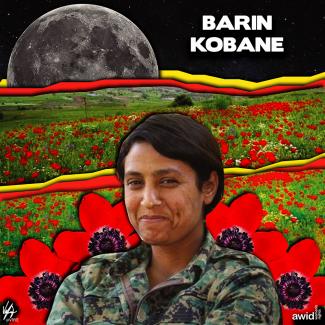
Barin était membre de l’unité de combat exclusivement féminine des Unités de protection du peuple kurde (YPG).
Elle a été tuée alors qu’elle était en service actif.
La journaliste libanaise Hifaa Zuaiter a écrit : « Barin représente tout ce que nous avons entendu à propos du courage des femmes kurdes et sa mort représente bien plus que le meurtre d’un-e rival-e ou une perte résultant d’une lutte politique ou ethnique. L’exhibition monstrueuse de sa dépouille par un groupe de rebelles syriens provient du fait qu’en tant que femme combattant sur un champ de bataille réservé aux hommes, elle a osé menacer l’hégémonie masculine ».
Veena Singh is a Fiji Islander, feminist, and woman of colour. Born and raised in a small rural town in Fiji, she draws strength from her rich mixed heritage (her mother is an Indigenous Fijian woman and her father is Fijian of Indian descent). Veena’s identity and lived experiences deeply inform her commitment to justice, equity, and inclusion. With over two decades of experience in human rights, gender equality, community development, and social inclusion, Veena is a passionate advocate for shifting power to create transformative change and for building an “economy of kindness”. Her work spans diverse areas including community development; women, peace and security; social policy; human rights; and policy advocacy.
Veena is deeply committed to advancing inclusion, peace and justice, sexual and reproductive health and rights (SRHR), climate justice, transitional justice, and human rights. She brings a wealth of experience working across grassroots networks, international organizations, and government institutions, always centering community and locally led approaches and feminist principles.
Outside of her ‘office life’, Veena is an environmental advocate, mental health champion, and writer. She is a mum to 11 cats, a saree wearer, and a lover of snail-mails and postcards. A thoughtful observer of feminist movements in Fiji and the Pacific, Veena is on a personal journey to “decolonise the mind and the self through radical self-reflection.” Above all, she is driven by a desire and dream to produce relatable, resonant writing that connects with the Pacific diaspora and amplifies voices from the margins.