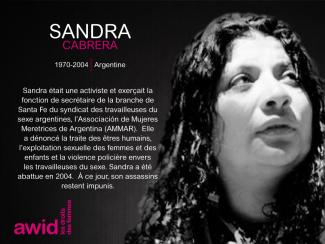
Sandra Cabrera
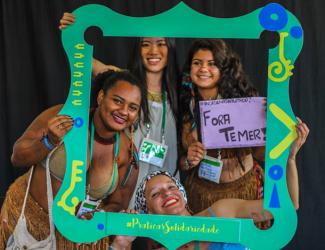
Young feminist activists play a critical role in women’s rights organizations and movements worldwide by bringing up new issues that feminists face today. Their strength, creativity and adaptability are vital to the sustainability of feminist organizing.
At the same time, they face specific impediments to their activism such as limited access to funding and support, lack of capacity-building opportunities, and a significant increase of attacks on young women human rights defenders. This creates a lack of visibility that makes more difficult their inclusion and effective participation within women’s rights movements.
AWID’s young feminist activism program was created to make sure the voices of young women are heard and reflected in feminist discourse. We want to ensure that young feminists have better access to funding, capacity-building opportunities and international processes. In addition to supporting young feminists directly, we are also working with women’s rights activists of all ages on practical models and strategies for effective multigenerational organizing.
We want young feminist activists to play a role in decision-making affecting their rights by:
Fostering community and sharing information through the Young Feminist Wire. Recognizing the importance of online media for the work of young feminists, our team launched the Young Feminist Wire in May 2010 to share information, build capacity through online webinars and e-discussions, and encourage community building.
Researching and building knowledge on young feminist activism, to increase the visibility and impact of young feminist activism within and across women’s rights movements and other key actors such as donors.
Promoting more effective multigenerational organizing, exploring better ways to work together.
Supporting young feminists to engage in global development processes such as those within the United Nations
Collaboration across all of AWID’s priority areas, including the Forum, to ensure young feminists’ key contributions, perspectives, needs and activism are reflected in debates, policies and programs affecting them.
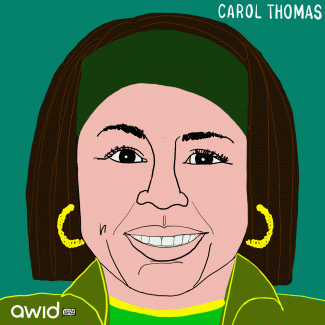
Carol Thomas was a trailblazer for women’s sexual and reproductive rights in South Africa. A gifted gynecologist and founder of the WomenSpace, she practiced and advocated for non-traditional ways of delivering healthcare to women, offering services that were high quality, empathetic and accessible.
“She entered into not only the joy of pregnancies and new babies, but the anxieties of infertility and premature deliveries and female cancers, the heartbreak of miscarriages and stillbirths.” Helen Moffett
Carol thought in new paradigms that centered the needs of women with the least access to services and rights in society:
“The prevailing socio-economic environment that we find ourselves in means that women bear a disproportionate burden of disease and unemployment…As a black, previously disadvantaged woman I have a good sense of what is happening in our communities.” - Carol Thomas
Carol’s innovative and multi-award-winning social venture “iMobiMaMa” used mobile kiosks and interactive technology to connect women directly with antenatal and reproductive health services, information and support in communities all over South Africa.
Carol supported women both in wanted and unwanted pregnancies, mentoring many nurses and doctors during her lifetime.
She was also described as the go-to gynecologist “for trans folks who could have affirming care. She got it right when so many did not have the language or pronouns. Her warm blankets, listening and saying just what you needed to hear was so comforting.” -Marion Lynn Stevens
Carol Thomas was described as being at the height of her professional career when she died on 12 April 2019 of complications following a double lung transplant.
The tributes that poured in following her unexpected death referred to her as many things:
“a role model, warrior woman, innovator, dynamic leader, mould-breaker, dynamo, brilliant scientist, compassionate doctor.”
Undoubtedly, Carol Thomas will be remembered and honored for being all of this and much more.
Apprenez-en davantage sur les prochains événements CSW69 co-organisés par l'AWID ci-dessous
Queremos agradecer al colectivo Amar.ela de mujeres feministas activistas y creativas que hicieron posible esta serie, y especialmente a Natalia Mallo (el pulpo del equipo) por su apoyo y acompañamiento en este viaje.
También extendemos nuestro más profundo agradecimiento y admiración a todos los colectivos y personas que participaron en este proyecto, y les agradecemos por compartir su tiempo, sabiduría, sueños e ilusiones con nosotrxs. Les agradecemos por hacer de este mundo un mundo más justo, feminista y sostenible.
Esperamos que sus historias inspiren al resto del mundo tanto como nos inspiran a nosotrxs.
por Émilie Herbert-Pontonnier
¿Se acuerdan de Esmeralda? La exótica heroína «gitana» nacida de la pluma del gigante literario francés, Víctor Hugo, y popularizada por los Estudios Disney con su Jorobado de Notre Dame. (...)
< arte: «Si las marronas lo permiten», Nayare Soledad Otorongx Montes Gavilan
Joanne is an African feminist who is passionate about dismantling gender inequalities on the African continent. Joanne has worked with a number of global organizations, media and think tanks including Amnesty International, Wrthy, Local Development Research Institute, BBC, East African Community (EAC) among others.She serves on a couple of boards including Freely in hope-an NGO based in Kenya and Zambia that seeks to equip survivors and advocates to lead in ending sexual violence and Msingi Trust-a movement of activists that meet at the confluence of faith and human rights. She has a Masters in Business Administration, Masters of Public Policy and a Bachelor of Laws. She is a book junkie with a penchant for fiction.
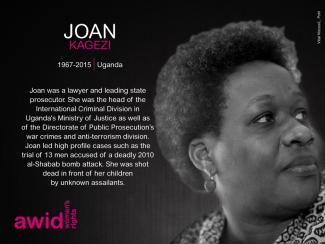
Mereani Naisua Senibici, también llamada "Sua", fue, durante mucho tiempo, integrante del movimiento de la Asociación Cristiana de Mujeres Jóvenes de Fiji (YWCA, por sus siglas en inglés).
Trabajó con diversos grupos de mujeres en entornos multirraciales, rurales y urbanos y se comprometió a apoyar y promover los derechos de las mujeres y las jóvenes.
En el YWCA de Lautoka, Sua trabajó con mujeres de ascendencia india, y se convirtió en una figura destacada en el desarrollo del deporte y de la participación de atletas mujeres y personas trans en Lautoka.
"Sua es muy querida por lxs integrantes del YWCA de Fiji, a causa de su dedicación y apoyo persistente a todo lo que la organización se ha esforzado por hacer". - Tupou Vere
Mereani formaba parte de House of Sarah [La Casa de Sarah] (HoS, por sus siglas en inglés ), una iniciativa de la Asociación de Mujeres Anglicanas (AAW), lanzada en 2009, que tenía por objetivos tanto sensibilizar sobre los problemas relacionados con la violencia de género, como brindar apoyo a las mujeres que sufren violencia. Mereani empezó como una voluntaria comprometida y ofreció apoyo a las mujeres de todo el Pacífico.
Mereani falleció en 2019.
"Una persona con don de gente y una trabajadora todoterreno en el empoderamiento de las mujeres y construcción de movimientos a nivel comunitario. Descansa en paz, Sua". - Tupou Vere
✉️ Sur inscription uniquement. Inscrivez-vous ici
📅 Mercredi 12 mars 2025
🕒 17.00h-19.00h EST
🏢 Chef's Kitchen Loft with Terrace, 216 East 45th St 13th Floor New York
Organisé par : Women Enabled International et AWID
par Siufung Law
« 97...! 98…! Où est 98? 98! Veuillez revenir dans la queue!... 99! 100...! » La gérante des coulisses a demandé sans relâche à chaque athlète de faire la queue dans les coulisses humides, en sueur et surpeuplées. (...)
< illustration : « Quand iels nous verront », par Lame Dilotsotlhe
María es diseñadora gráfica y comunicadora visual. Ha trabajado con ONG e instituciones por los derechos humanos como Profamilia y OXFAM. Como mujer del Sur Global, se siente especialmente atraída a usar sus competencias para trabajar con organizaciones que ayudan a proteger el bienestar, así como los derechos de millones de niñas y mujeres de América Latina.
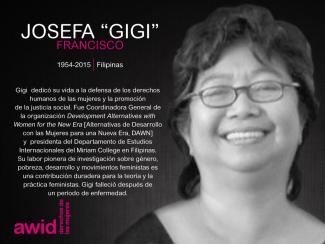
« La vie... c’est vivre dans la joie, se lever avec un but, sentir son énergie créative, répondre à son appel. » – Sylvia Robinson
Cet espace de performances créatrices foisonnantes rassemblait des initiatives d’éducation, d’engagement citoyen, d’arts, de services sociaux et spirituels et de pratiques de développement durable. Sylvia considérait cet endroit comme une maison où « il existe un équilibre et une synergie avec les activités dont les gens ont besoin pour entretenir la vie ».
Elle comptait également parmi les membres fondateur·trice·s du Georgia Avenue Community Development Taskforce, dans le nord-ouest de la capitale, un groupe de quartier actif dans le domaine de la justice sociale et de l’organisation qui veillait à ce que la communauté ait son mot à dire dans le redéveloppement et l’embourgeoisement du secteur.
« Nous demandons des logements abordables. Nous demandons que les petits commerces qui sont ici depuis longtemps ne soient pas balayés par de nouvelles enseignes. Nous demandons des espaces verts et des lieux où les gens peuvent se rencontrer. Nous demandons à ce que le paysage urbain soit amélioré, avec des rues en meilleur état et des éclairages publics. » – Sylvia Robinson, à propos du travail de la Taskforce
Avant de devenir organisatrice, et après avoir obtenu son diplôme en informatique, Sylvia avait travaillé dans le domaine des systèmes de contrôle du trafic aérien pendant plus d’une décennie. Elle s’est ensuite orientée vers le conseil relatif à la consommation d’alcool et de drogue, s’impliquant davantage dans le travail communautaire.
« Cette implication dans la communauté, c’était ma vocation. » – Sylvia Robinson
Née à Washington D.C. le 14 août 1961, Sylvia est décédée le 18 septembre 2017 après avoir lutté contre le cancer.
« L’esprit et l’héritage de Sylvia continueront d’inspirer cette communauté pour de nombreuses années. » – ECAC
Our collective presence disrupts institutional practices of exclusion in such spaces while supporting movements to organize around feminist alternatives to systems of oppression.
Join the conversations from March 10-21, 2025, as we collectively transform CSW69 into spaces for and about resistance and solidarity.
Leila est une dirigeante, défenseuse et conseillère féministe transnationale qui compte plus de 25 ans d'expérience dans la promotion des droits humains, de l'égalité des genres et de la santé et des droits sexuels et reproductifs, ainsi que de la justice au niveau local et mondial. Née en Algérie, Leila a fait ses études aux États-Unis, en France et au Maroc. Au cours de sa carrière professionnelle, elle a vécu et travaillé en Afrique, en Europe et aux États-Unis.
Elle a occupé le poste de vice-présidente des programmes au Fonds mondial pour les femmes (GFW) pendant plus de cinq ans, où elle a supervisé son octroi de subventions stratégiques, le renforcement des mouvements, le plaidoyer mondial et les collaborations philanthropiques. Au sein du GFW, elle a doublé le montant de ses subventions pour atteindre plus de 17 millions de dollars, a lancé son travail sur les mouvements et les crises féministes et axées sur le genre, a créé un programme pour les adolescentes dirigé par un conseil consultatif de filles et a dirigé son travail de plaidoyer philanthropique. Avant cela, elle a fait partie de l'équipe de direction d'Ipas de 2002 à 2016, où elle a publié de nombreux articles sur le droit à l'avortement et la justice, dirigé des actions de plaidoyer mondiales et établi des partenariats avec des groupes féministes travaillant sur l'autogestion, la mobilisation communautaire et la réduction de la stigmatisation autour de l'intégrité corporelle et des droits sexuels et reproductifs. Alors qu’elle était basée en Afrique du Nord, elle a cofondé une société de conseil féministe intersectionnelle, Strategic Analysis for Gender Equality (SAGE), qui travaillait sur les intersections entre l'économie, le genre et les droits sexuels et reproductifs, et a dirigé le travail national, régional et mondial sur le genre du bureau du Caire de la Fondation Ford pendant 5 ans.
Leila dispose d'une vaste expérience dans les domaines de l'éducation populaire, le plaidoyer, l'organisation à but non lucratif, le développement de conseils d'administration, la philanthropie et le suivi et l'évaluation. C'est une communicatrice compétente qui privilégie une approche intersectionnelle pour centrer et amplifier les voix et les expériences des personnes les plus marginalisées. Elle a reçu la bourse Op-ed Public Voices de la Fondation Ford et a été boursière Fulbright au Maroc. Ses publications couvrent un large éventail de sujets, notamment les approches féministes et décoloniales de la philanthropie, la promotion des droits humains des femmes dans les contextes majoritairement musulmans, les stratégies féministes visant à promouvoir la justice reproductive, la promotion du recours des femmes aux avortements autogérés et la lutte contre la stigmatisation et la discrimination.
Leila est actuellement coprésidente du conseil du Center for Constitutional Rights et membre du conseil de Highlander Research and Education. Elle fait également partie du conseil de responsabilité du Numun Feminist Technology Fund et du comité consultatif de la Plateforme des femmes défenseuses des droits humains d'Afrique. Elle a précédemment siégé aux conseils d'administration de SisterSong Women of Color Reproductive Justice Collective, du Réseau mondial des femmes pour les droits sur la reproduction, du Fonds mondial pour les femmes, du Safe Abortion Access Fund et du Reproductive Health Technologies Project. Elle a été élue trésorière et membre du comité exécutif du conseil d'administration de Prospera et a siégé au comité directeur du Fonds Fenomenal pendant quatre ans. Leila est titulaire d'une maîtrise en santé publique et d'une maîtrise en études sur la région du Moyen-Orient et de l'Afrique du Nord, a étudié le droit islamique au Maroc et a poursuivi des études doctorales en sociologie en France. Elle a étudié l'arabe et l'allemand et parle couramment le français et l'anglais.
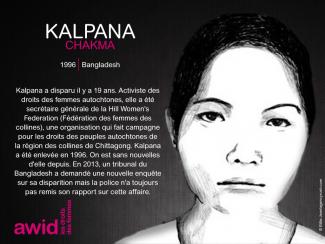
“I’m no adherent to the concept of the ‘Third World’. I make films so that people - no matter what race or color they are - can understand them. For me there are only exploiters and the exploited, that’s all. To make a film means to take a position.” - Sarah Maldoror
Her groundbreaking film and “revolutionary picture” Sambizanga (1972) follows Angolan militants’ anti-colonial liberation struggle, as well as captures a woman’s perspective in a historical moment she finds herself in.
“For many African filmmakers, cinema is a revolutionary tool, a political education to raise consciousness. It is inscribed in the evolution of a Third Cinema striving to decolonize thought and advocate radical changes in society.” - Sarah Maldoror
Throughout her career, Sarah - together with a number of African and Caribbean artists - co-founded (1956) the first Black theatre troupe in France. She made around 40 films, comprising important documentaries that amplify the lives and work of black artists, including her friend and poet Aimé Césaire who wrote to her:
“To Sarah Maldo
who, a camera in hand,
fights oppression, alienation
and flies in the face
of human bullshit.”
Sarah was also committed to giving African women more ownership of the filmmaking process. In an interview, she pointed out:
"African women must be everywhere. They must be in the images, behind the camera, in the editing room and involved in every stage of the making of a film. They must be the ones to talk about their problems."
Sarah left an incredibly powerful legacy to be carried forward.
Born 19 July 1929, Sarah passed away on 13 April 2020 from complications of the coronavirus.
Watch Sambizanga and read a film review in a 1973 New York Times article