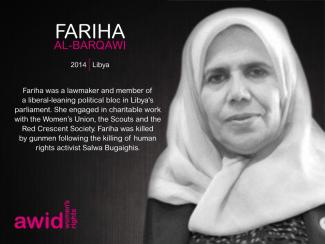
Fariha Al Berkawi
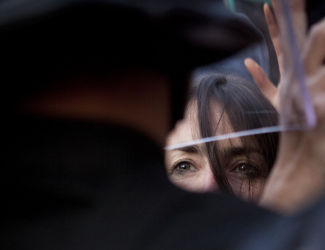
WHRDs are self-identified women and lesbian, bisexual, transgender, queer and intersex (LBTQI) people and others who defend rights and are subject to gender-specific risks and threats due to their human rights work and/or as a direct consequence of their gender identity or sexual orientation.
WHRDs are subject to systematic violence and discrimination due to their identities and unyielding struggles for rights, equality and justice.
The WHRD Program collaborates with international and regional partners as well as the AWID membership to raise awareness about these risks and threats, advocate for feminist and holistic measures of protection and safety, and actively promote a culture of self-care and collective well being in our movements.
WHRDs are exposed to the same types of risks that all other defenders who defend human rights, communities, and the environment face. However, they are also exposed to gender-based violence and gender-specific risks because they challenge existing gender norms within their communities and societies.
We work collaboratively with international and regional networks and our membership
We aim to contribute to a safer world for WHRDs, their families and communities. We believe that action for rights and justice should not put WHRDs at risk; it should be appreciated and celebrated.
Promoting collaboration and coordination among human rights and women’s rights organizations at the international level to strengthen responses concerning safety and wellbeing of WHRDs.
Supporting regional networks of WHRDs and their organizations, such as the Mesoamerican Initiative for WHRDs and the WHRD Middle East and North Africa Coalition, in promoting and strengthening collective action for protection - emphasizing the establishment of solidarity and protection networks, the promotion of self-care, and advocacy and mobilization for the safety of WHRDs;
Increasing the visibility and recognition of WHRDs and their struggles, as well as the risks that they encounter by documenting the attacks that they face, and researching, producing, and disseminating information on their struggles, strategies, and challenges:
Mobilizing urgent responses of international solidarity for WHRDs at risk through our international and regional networks, and our active membership.
Nous œuvrons à renforcer les répercussions et l’influence des organisations, mouvements et défenseur-euse-s des droits des femmes sur la scène internationale et à amplifier leur voix collective, en vue de la pleine réalisation de la justice de genre et des droits humains des femmes.
Manal Tamimi Palestine
Bubulina Moreno, Colombia
Karolina Więckiewicz, Poland
Anwulika Ngozi Okonjo, Nigeria
AWID works towards the realization of gender justice and women’s human rights worldwide. We work to strengthen the voices and impact of women’s rights advocates, organizations and movements. Our main Priority Areas relate to themes that are closely linked to dominant global trends.
These themes reflect growing challenges that negatively impact women’s rights worldwide.
Oui, s’il vous plaît. Le monde a changé depuis 2021, et nous vous invitons à proposer une activité qui reflète vos réalités et priorités d’aujourd’hui.
 |
Asamblea Placentera: Tejiendo Proyectos Feministas ColaborativosGhiwa Sayegh, Kohl: A Journal for Body and Gender Research De brujeria, chamanismo y otros conocimientos insurrectos contra el patriarcadoSofía Blanco Sixtos, Colectiva Feminista MAPAS |
Todos nuestros informes anuales estan disponibles en línea.
سيبدأ التسجيل أوائل العام 2024. وسنعلن عن تاريخ التسجيل المحدد ورسوم التسجيل قريبًا. سيتضمن التسجيل المشاركة في المنتدى، بالإضافة إلى الغداء والوجبات الخفيفة (يتم تقديم وجبة الإفطار في الفنادق)، وعشاء واحد في الموقع.
Contenido relacionado
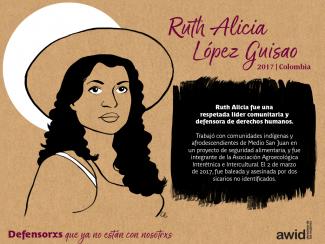
Front Line Defenders: Asesinato de la defensora de derechos humanos Ruth Alicia López Guisao

Second High-level Dialogue on Financing for Development
"نعم! يرجى قراءة الدعوة للمشاركة والتقدم هنا . الموعد النهائي هو 15 يناير 2024" .
For decades, feminist scholars and advocates have articulated important concepts related to gender to understand and challenge oppression and discrimination. Those concepts have now become the target of anti-rights actors who claim that oppressive patriarchal gender roles are “common sense”, strategically painting all other ideas, cultural norms, and forms of social life as a dangerous, conspirative ideology.
Read our Brief on “Gender Ideology” Narratives: A Threat To Human Rights