
Paola Barraza
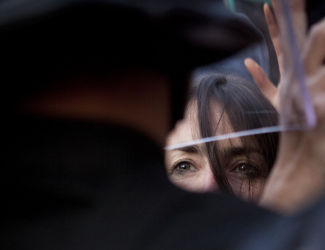
WHRDs are self-identified women and lesbian, bisexual, transgender, queer and intersex (LBTQI) people and others who defend rights and are subject to gender-specific risks and threats due to their human rights work and/or as a direct consequence of their gender identity or sexual orientation.
WHRDs are subject to systematic violence and discrimination due to their identities and unyielding struggles for rights, equality and justice.
The WHRD Program collaborates with international and regional partners as well as the AWID membership to raise awareness about these risks and threats, advocate for feminist and holistic measures of protection and safety, and actively promote a culture of self-care and collective well being in our movements.
WHRDs are exposed to the same types of risks that all other defenders who defend human rights, communities, and the environment face. However, they are also exposed to gender-based violence and gender-specific risks because they challenge existing gender norms within their communities and societies.
We work collaboratively with international and regional networks and our membership
We aim to contribute to a safer world for WHRDs, their families and communities. We believe that action for rights and justice should not put WHRDs at risk; it should be appreciated and celebrated.
Promoting collaboration and coordination among human rights and women’s rights organizations at the international level to strengthen responses concerning safety and wellbeing of WHRDs.
Supporting regional networks of WHRDs and their organizations, such as the Mesoamerican Initiative for WHRDs and the WHRD Middle East and North Africa Coalition, in promoting and strengthening collective action for protection - emphasizing the establishment of solidarity and protection networks, the promotion of self-care, and advocacy and mobilization for the safety of WHRDs;
Increasing the visibility and recognition of WHRDs and their struggles, as well as the risks that they encounter by documenting the attacks that they face, and researching, producing, and disseminating information on their struggles, strategies, and challenges:
Mobilizing urgent responses of international solidarity for WHRDs at risk through our international and regional networks, and our active membership.
Âurea Mouzinho est une organisatrice féministe dans le domaine de la justice économique. Originaire de Louanda en Angola, elle compte 10 ans de carrière dans la recherche, le subventionnement, le plaidoyer et le renforcement de mouvement pour les droits des femmes et la justice économique en Afrique et dans le Sud global. Actuelle responsable des programmes pour l’Afrique chez Thousand Currents, elle participe également au comité de rédaction de Feminist Africa et est membre d’Ondjango Feminista, un collectif féministe qu’elle a co-fondé en 2016. Tout juste maman d’un petit garçon Gémeaux, Ȃurea aime les journées tranquilles avec sa petite famille et les longues promenades sur la plage. Il lui arrive parfois de tweeter via son compte @kitondowe.
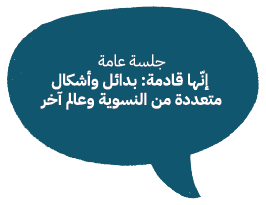
جلسة عامة | إنّها قادمة: بدائل وأشكال متعددة من النسوية وعالم آخر
مع د. فاندانا شيفا ود. ديلار ديريك ونانا أكوسوا هانسو
Una nómada de las culturas, nacida en Hong Kong y con raíces turco-paquistaníes, el amor de Fatima por la narración, ya sea su lectura o su creación conjunta, le infundió la pasión por el activismo de las comunicaciones. Formada en periodismo, ha trabajado durante siete años en los ámbitos de la comunicación digital y los medios de comunicación con ONG que brindan oportunidades educativas y asistencia jurídica a personas refugiadas y solicitantes de asilo, así como con el movimiento feminista musulmán, que aplica un enfoque feminista y de derechos para comprender y buscar la igualdad y la justicia en la tradición jurídica musulmana. Escribe con habitualidad artículos de opinión sobre asuntos feministas en el Sur Global.
Mediante la narración en esta era hiperdigital de las redes sociales, Fatima sigue colaborando con organizadores comunitaries y activistas de base para crear contenido audiovisual, a fin de tender puentes de comprensión hacia la liberación colectiva y la descolonización. Durante los días en que no trabaja, mira atentamente largometrajes feministas independientes de Irán, Marruecos y Pakistán, e interpreta poesía oral con sus camaradas de Kuala Lumpur.
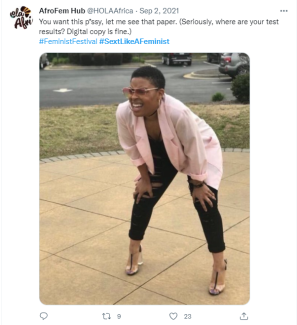
منجزاتك الأكاديمية جسر عبور نحو شهوتك الجنسيّة (جدّيًا، سلِّم الأوراق المطلوبة، الكترونية كانت أم ورقيّة)
Nana est militante féministe et chercheuse spécialisée dans les droits reproductifs et les politiques démographiques. Elle exerce ses activités en Égypte. Elle collabore avec Realizing Sexual and Reproductive Justice (RESURJ), siège au conseil consultatif de l’A Project au Liban et fait partie du comité communautaire de Mama Cash. Nana est diplômée d’un master en santé publique de l’Institut KIT et de l’Université Vrije d’Amsterdam. Son travail consiste à analyser et contextualiser les politiques démographiques nationales tout en documentant les questions liées à l’eugénisme contemporain, aux programmes d’aide internationale régressifs et aux régimes autoritaires. Auparavant, elle a collaboré avec la Fondation genevoise pour la formation et la recherche médicales, l’Initiative égyptienne pour les droits de la personne, ainsi qu’avec le Collectif féministe Ikhtyar au Caire.
Como parte de nuestro compromiso de lograr una interacción más profunda con artistas y la práctica de la creación conjunta de las Realidades Feministas, AWID colaboró con un para promover y fortalecer las agendas y realidades feministas en sus comunidades y movimientos a través de sus expresiones creativas. Nuestra intención en este punto es reunir a creativxs feministas en un espacio pujante y valiente donde puedan desarrollarse y vivir en libertad, y donde puedan romper las narrativas tóxicas para sustituirlas por alternativas transformadoras.
Esta exhibición reúne la obra de artistas y colectivos de todo el globo que están creando activamente la diferencia que queremos ver plasmada en el mundo. Entre estxs creativxs feministas se encuentran Upasana Agarwal, Nicole Barakat, Siphumeze Khundayi, Katia Herrera, Ali Chavez Leeds, el Colectivo Morivivi, Ika Vantiani, y lxs curadorxs detrás de la exhibición #MeToo en China. Sus voces se mantienen firmes en su rechazo a aceptar las limitaciones que impone el patriarcado, y para amplificar sus compromisos con las comunidades con las que trabajan. A su propio modo, cada obra de arte representa los actos cotidianos de resistencia, las historias e identidades que no se han narrado, las conexiones con la tierra y lo ancestral y, lo que es más importante, la solidaridad que existe en el interior de las luchas y los movimientos feministas y entre ellos. Estxs artistas se inspiran en y a la vez inspiran estrategias creativas de resistencia e iniciativas feministas que nos muestran cómo podemos vivir en un mundo más justo, un mundo que pone en el centro los cuidados y la sanación.
It is exactly the same process and same deadline. Please use the same form to submit your activity, whether it is in-person, online, or both (hybrid).
L’AWID a fait ses débuts en 1982 et s’est transformée au fil du temps.
Lire « From WID to GAD to Women's Rights: The First 20 Years of AWID » (disponible uniquement en anglais).
Cette édition du journal, en partenariat avec Kohl : a Journal for Body and Gender Research (Kohl : une revue pour la recherche sur le corps et le genre) explorera les solutions, propositions et réalités féministes afin de transformer notre monde actuel, nos corps et nos sexualités.
En síntesis, ¡sí! En este momento AWID está trabajando con un Comité de Accesibilidad, para garantizar que el Foro sea lo más accesible posible. También estamos realizando una auditoría de accesibilidad en la sede del Foro, los hoteles circundantes y el transporte. Antes de que se abra el proceso de inscripción incluiremos en esta sección información detallada sobre la accesibilidad del Foro de AWID. Mientras tanto, si tienes alguna pregunta por favor contáctanos.
We and cannot review funding proposals or requests.
We encourage you to browse our list of donors that may potentially fund your women's rights organizing.
More resources are available from the Priority Area “Resourcing Feminist Movements”
AWID, the Center for Women’s Global Leadership (CWGL), and the African Women's Development and Communication Network (FEMNET), offers this think piece to challenge mainstream understandings of development and put forward initial propositions for a feminist agenda for development, economic and gender justice.
Learn more about where this project comes from
These propositions are intended to be just that - proposals, to be discussed, debated, added to, taken apart, adapted, adopted, and even to inspire others.