Jean-Marc Ferré | Flickr (CC BY-NC-ND 2.0)
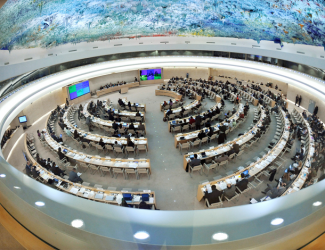
A general view of participants at the 16th session of the Human Rights Council in Geneva, Switzerland.

Human Rights Council (HRC)

The Human Rights Council (HRC) is the key intergovernmental body within the United Nations system responsible for the promotion and protection of all human rights around the globe. It holds three regular sessions a year: in March, June and September. The Office of the UN High Commissioner for Human Rights (OHCHR) is the secretariat for the HRC.

The HRC works by:

  • Debating and passing resolutions on global human rights issues and human rights situations in particular countries

  • Examining complaints from victims of human rights violations or activist organizations on behalf of victims of human rights violations

  • Appointing independent experts (known as “Special Procedures”) to review human rights violations in specific countries and examine and further global human rights issues

  • Engaging in discussions with experts and governments on human rights issues

  • Assessing the human rights records of all UN Member States every four and a half years through the Universal Periodic Review

Learn more about the HRC


AWID works with feminist, progressive and human rights partners to share key knowledge, convene civil society dialogues and events, and influence negotiations and outcomes of the session.

With our partners, our work will:

◾️ Monitor, track and analyze anti-rights actors, discourses and strategies and their impact on resolutions

◾️ Raise awareness of the findings of the 2017 and 2021 OURs Trends Reports.

◾️Support the work of feminist UN experts in the face of backlash and pressure

◾️Advocate for state accountability
 
◾️ Work with feminist movements and civil society organizations to advance rights related to gender and sexuality.
 

Related Content

Juana Raymundo

Membre de la communauté autochtone maya ixil, Juana était infirmière professionnelle et coordinatrice du Comité de développement des agriculteurs (CODECA)

CODECA est une organisation de défense des droits humains composée d'agriculteurs autochtones et vouée à la promotion des droits à la terre et du développement rural pour les familles autochtones dans la microrégion de Nebaj Quiché. Elle a d'abord rejoint le CODECA en tant que membre de la Juventud de CODECA (branche de la jeunesse). 

Au moment de son décès, elle venait d’être élue membre du Comité exécutif du Mouvement de libération des peuples (MLP).

Le corps de Juana a été retrouvé par des voisins au bord d’une petite rivière sur la route située près de Nebaj et du village d’Acambalam, au Guatemala. Selon le CODECA, son corps portait des traces de torture.
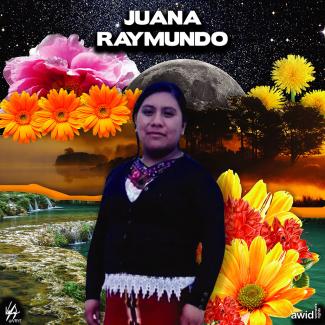

 

Juana Raymundo, Guatemala

Snippet Forum Stories Title

Historias de los Foros de AWID

Какую цель преследует опрос «Где деньги?»

Ключевая цель исследования – осветить финансовое положение различных феминистских движений, инициатив за права женщин, гендерную справедливость, ЛГБТКИ+ и смежных движений по всему миру и, основываясь на этом, еще больше усилить аргументы в пользу увеличения объема денежных средств и передачи власти феминистским движениям.

FRMag - Ghosts Of Girlhood

Les fantômes des jeunes filles

par Akua Antiwiwaa

J’ai une vieille photo, floue, devant les yeux. J’y suis vêtue tout de blanc, des perles nacrées attachées à mes cheveux, collés contre mes oreilles, à celles qui pendent de mes poignets. (...)

Lire

illustration : « Cultura Negra » (“Culture noire”), par Astrid Milena González Quintero >

Body

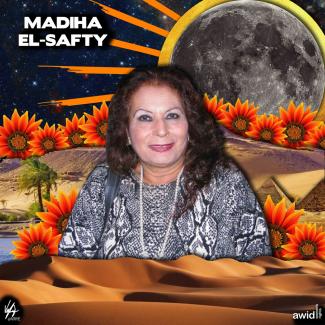
Madiha El Safty

Madiha was a prominent Professor of Sociology who actively engaged with civil society as an advocate for women’s rights in the Arab region.

She chaired the Alliance for Arab Women and was a member of the Committee on Civil Society and the Committee on the Development of Minia Governorate with the National Council for Women. She produced numerous papers that shed light on, and analyzed, gender inequalities and discrimination against women.

She is remembered fondly by colleagues, students and friends.


Madiha El Safty, Egypt

Snippet Forum Quoate Jac s m Kee, Malaysia (FR)

Il n'y a rien de tel que d'être dans un espace partagé, d'échanger des énergies corporelles, de regarder dans les yeux de quelqu'un et de tisser des liens, de voir le monde et de faire quelque chose ensemble. Des événements comme le Forum sont parmi les plus forts du mouvement féministe mondial...
- Jac s m Kee, Malaisie

هل يمكن أن تعبئ مجموعة واحدة الاستطلاع أكثر من مرة واحدة؟

كلا. نطلب فقط تعبئة استطلاع واحد لكل مجموعة.

Film club - Finding Sally

Finding Sally (2020) Amharic | English with English subtitles

A personal investigation into the mysterious life of the director's Aunt Sally, an Ethiopian aristocrat-turned-communist-rebel who disappeared after the revolution that lead to the overthrow of Emperor Haile Selassie.


Live Conversation with Tamara Dawit, the filmmaker of “Finding Sally

June 23 at 12:30pm EST on IG Live

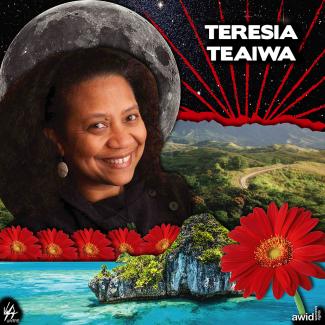
Teresia Teaiwa

Retratada en The Guardian como uno de los íconos nacionales de Kiribati, Teresia fue una valiente activista.

Trabajó estrechamente con los grupos feministas en Fiji y que puso sus investigaciones al servicio de las cuestiones feministas y de género en el Pacífico. Además, fue coeditora de la publicación International Feminist Journal of Politics. Su influencia se extendió desde la frontera académica hasta los movimientos por la justicia social en la región de Oceanía.


Teresia Teaiwa, Fiji

Why Bangkok?

Each Forum takes place in a different region, and it is time for the AWID Forum to come back to Asia! We visited many countries in the region, consulted feminist movements, and conducted detailed assessments of logistics, accessibility, safety, visas and more. Eventually, the AWID Board enthusiastically approved Bangkok, Thailand, as the best option. We are excited to come back to Bangkok, where we held the AWID Forum in 2005.

Могу ли я пройти опрос со своего телефона?

Да, доступ к опросу можно получить с помощью смартфона.

Snippet example from training video FRENCH

Big banner heading FRENCH

some text some text some text some text some text some text some text some text some text some text some text some text 

Call to action


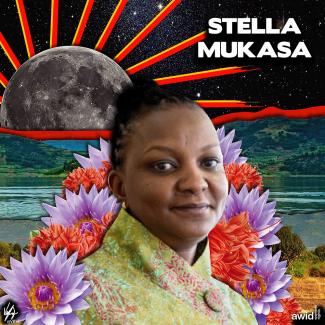
Stella Mukasa

Stella a commencé sa carrière au ministère du Genre et du Développement communautaire en Ouganda. Elle œuvrait auprès des décideurs-euses politiques, pour encourager des réformes législatives, dont celle de la Constitution ougandaise en 1995 qui a entériné certaines des réformes les plus progressives pour les femmes dans la région.

Elle était adorée dans la région tout entière pour ses incessants efforts pour la création et l’application de lois et politiques sensibles au genre. Elle a joué un rôle clé dans l’ébauche de la loi sur les violences domestiques en Ouganda. Elle a aussi contribué à une mobilisation importante en faveur de Constitutions sensibles au genre à la fois en Ouganda et au Rwanda.

Par son travail au Centre international de recherches sur les femmes (International Center for Research on Women, ICRW), elle a abordé les thématiques de la violence à l’égard des enfants. Stella s’est attachée à renforcer les organisations locales qui luttent contre les violences basées sur le genre. Conférencière en Droits genrés et loi à l’université Makerere, elle a également siégé aux conseils d’administration d’Akina Mama wa Afrika, ActionAid International Uganda et l’Open Society Initiative for Eastern Africa.


Stella Mukasa, Uganda