AWID Forum: Co-creating Feminist Futures

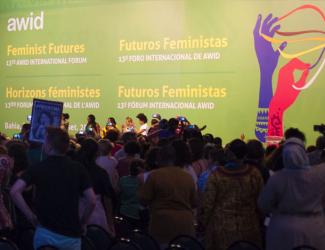
In September 2016, the 13th AWID international Forum brought together in Brazil over 1800 feminists and women’s rights advocates in a spirit of resistance and resilience.

This section highlights the gains, learnings and resources that came out of our rich conversations. We invite you to explore, share and comment!


What has happened since 2016?

One of the key takeaways from the 2016 Forum was the need to broaden and deepen our cross-movement work to address rising fascisms, fundamentalisms, corporate greed and climate change.

With this in mind, we have been working with multiple allies to grow these seeds of resistance:

And through our next strategic plan and Forum process, we are committed to keep developing ideas and deepen the learnings ignited at the 2016 Forum.

What happens now?

The world is a much different place than it was a year ago, and it will continue to change.

The next AWID Forum will take place in the Asia Pacific region (exact location and dates to be announced in 2018).

We look forward to you joining us!

About the AWID Forum

AWID Forums started in 1983, in Washington DC. Since then, the event has grown to become many things to many peoples: an iterative process of sharpening our analyses, vision and actions; a watershed moment that reinvigorates participants’ feminisms and energizes their organizing; and a political home for women human rights defenders to find sanctuary and solidarity.

Learn more about previous Forums

Related Content

เกี่ยวกับวีซ่า

เราตระหนักดีถึงอุปสรรคในทางปฏิบัติและความทุกข์ทางอารมณ์ในการเดินทางระหว่างประเทศ โดยเฉพาะอย่างยิ่งจากซีกโลกใต้ โดย AWID กำลังทำงานร่วมกับ TCEB (สำนักงานส่งเสริมการจัดประชุมและนิทรรศการของประเทศไทย) เพื่อสนับสนุนผู้เข้าร่วมฟอรัมในการขอวีซ่า ข้อมูลอื่นๆเกี่ยวกับการขอวีซ่าจะถูกนำเสนอในช่วงที่เปิดให้ลงทะเบียน รวมถึงสถานที่และวิธีการขอวีซ่า

María Verónica Reina

María was recognized globally for her extraordinary leadership in the disability community.

She represented the International Disability and Development Consortium during the negotiation of the United Nations Convention on the Rights of Persons with Disabilities (2001-2006).

Her work was devoted to the implementation of the goal of the Convention - realization of universal human rights by, for and with persons with disabilities for an inclusive, accessible and sustainable world.

In her words, her leadership was about “...serving the disability community, starting with small tasks that others may not wish to do”.

She passed away on October 27, 2017 in her hometown of Rosario, Argentina.

Read more about María Verónica Reina in her own words 
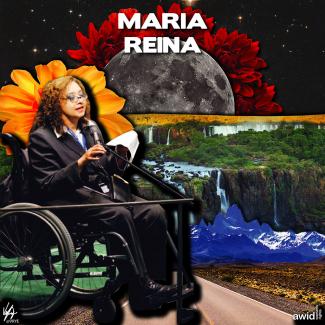


María Verónica Reina, Argentina

I am a women human rights defender (WHRD) and am currently under threat. Where can I go for help?

Snippet Love Letters from our Co-EDs and the Board (FR)

Lettres d'amour de notre Conseil d'Administration et des nos codirectrices exécutives

CFA 2023 - breadcrumbs Menu _ FAQ_en

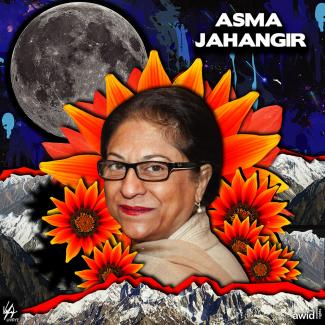
Asma Jahangir

Asma fue una destacada activista pakistaní por los derechos humanos, valiente crítica de la interferencia de los militares en la política, y firme defensora del estado de derecho.

Fue la fundadora y presidenta de la Human Rights Commission of Pakistan [Comisión de Derechos Humanos de Pakistán, un grupo independiente], y una de las administradoras del International Crisis Group. Obtuvo premios internacionales, y fue Relatora Especial de Naciones Unidas sobre derechos humanos y ejecuciones extrajudiciales.

Es recordada con afecto por sus colegas y amigxs de AWID

«Con su vida, Asma reescribió la historia que a muchas nos contaron, como mujeres. Asma cambió el mundo. Lo cambió en Pakistán, y lo cambió en nuestras imaginaciones.»


Asma Jahangir, Pakistan

2008: la Conferencia Internacional de Doha se lleva a cabo con resultados limitados

Conferencia Internacional de Seguimiento sobre la Financiación para el Desarrollo, Doha, Qatar

  • La Conferencia de Doha se propuso examinar la aplicación del Consenso de Monterrey. Retomó las seis áreas de la financiación para el desarrollo, pero los progresos sustantivos alcanzados fueron mínimos.
  • Si bien el Documento Final de Doha fue más allá que el de Monterrey en cuanto a la igualdad de género, tampoco avanzó lo suficiente. En su declaración, el WWG subrayó que los compromisos de la Declaración de Doha en materia de igualdad de género solo tendrán sentido si se abordan decididamente las cuestiones sistemáticas que subyacen a la pobreza y la distribución desigual de poder y recursos en la economía política global.
  • Además de la conferencia central, en Doha se desarrolló un foro paralelo de la sociedad civil organizado por el Doha NGO Group for Financing for Development [Grupo de ONG en Doha por la Financiación para el Desarrollo, DNG en inglés] que exigió cambios estructurales en la economía global, así como políticas que dieran prioridad a los derechos de los pueblos, respetaran y promovieran los derechos humanos.

Snippet FEA São Paulo City Center (EN)

São Paulo’s City Center

Source: Centro de população de rua da cidade de São Paulo

A woman sitting on the floor on a piece of cloth and a cup for change in front of her
   

Abandoned / Unoccupied Buildings

Illustration of an abandoned, run down building to depict the housing crisis

Population living in the streets 


31,000


40.000

Snippet - CSW68 - Follow the Money - ES

Seguir el dinero:

Flujos financieros ilícitos y agentes antiderechos

📅Lunes 11 de marzo
🕒4:30 p. m. - 6:00 p. m. EST

Organizan:AWID, IJSC y NAWI
🏢 Church Center de las Naciones Unidas, 777 United Nations Plaza, piso 11, Nueva York.
(Interpretación disponible en francés y español)

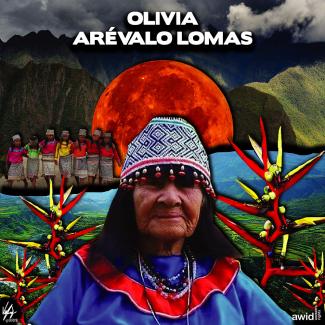
Olivia Arévalo Lomas

Olivia était la cheffe spirituelle des peuples autochtones Shipibo Konibo.

Sage femme et grand-mère autochtone, elle était connue pour sa préservation de la médecine traditionnelle et des chants sacrés de son peuple (les íkaros). Olivia Arévalo était une défenseure engagée en faveur des droits culturels et environnementaux de son peuple. L’assassinat d’Olivia s’est produit dans un contexte de conflit territorial entre la communauté Shipibo et les entreprises qui souhaitent s’accaparer leurs terres pour cultiver de l’huile de palme.

Les membres de sa communauté ont déclaré: « Sa mort est une agression contre toute la communauté Shipibo. Elle était la mémoire vivante de son peuple ».


Olivia Arévalo Lomas, Peru

2014: lacement du processus préparatoire de la 3ème Conférence sur le FdD

Lancement du processus préparatoire intergouvernemental de la troisième Conférence sur le financement du développement, octobre 2014

  • Un processus préparatoire, co-facilité par l’ambassadeur guyanais George Wilfred Talbot et l’ambassadeur norvégien Geir O. Pedersen, a été instauré pour mener des discussions préliminaires relatives à la troisième Conférence sur le FdD prévue en juillet 2015 à Addis Abeba, en Éthiopie.
  • Dans le cadre de ces préparations, deux séries de séances de fond informelles ont été organisées au siège  de l’ONU à New York  afin d’apporter des éléments d’information pouvant servir aux sessions de rédaction du futur document final.
  •  À cette occasion, le WWG sur le FdD a été réactivé dans le but d’intégrer les perspectives féministes et de défense des droits des femmes aux discussions et délibérations, avant et pendant la troisième Conférence sur le FdD. À l’heure actuelle, le groupe est co-animé par l’AWID, Development Alternatives with Women for a New Era (DAWN) et la Feminist Task Force (FTF).
  • Le WWG sur le FdD a prononcé deux déclarations  lors de la première série de sessions et présenté un document écrit lors de la seconde. Il a, dans les deux cas, souligné l’invisibilité des inégalités entre les genres dans ce processus préparatoire, tout comme celle de l’inclusion d’autres formes de discrimination et d’inégalité. Le travail du WWG met en lumière les rapports de pouvoir entre les genres et leurs points d’intersection avec d’autres catégories, telles que la race, le handicap, l’appartenance ethnique, l’âge, la richesse et l’identité sexuelle, ce qui accentue la répartition inégale des chances et des ressources dans toutes les sociétés de la planète.
  •  Les organisations de la société civile se sont dites inquiètes de l’étroitesse de l’espace qui leur a été accordé pour prendre part aux deux sessions de fond informelles. Elles ont notamment évoqué le risque que l’espace de participation de la société civile aux négociations portant sur le document final de janvier 2015 ne soit lui aussi limité.

Snippet FEA Occupation’s kitchen Instagram (EN)

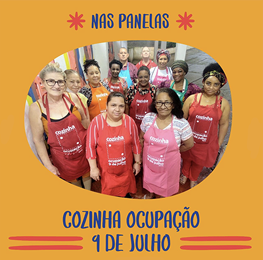
Campaña publicitaria de Ocupação 9 de Julho:

Photo of Cozinha Ocupação 9 de Julho team in aprons
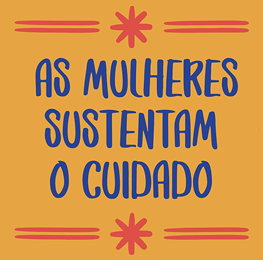
Yellow square that says "As mulheres sustentam o cuidado" or Women sustain care in Portuguese.
Yellow square that says "O cuidado sustenta a vida" or "Care sustains life" in Portuguese.
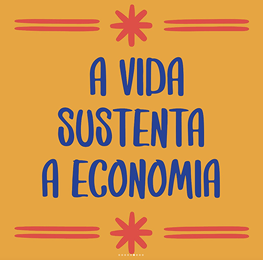
Yellow square that says "A vida sustenta a economia" or "Life sustains the economy" in Portuguese.
Yellow square that says: "Mas quen cuida das mulheres?" or "But who is taking care of women?" in Portuguese.
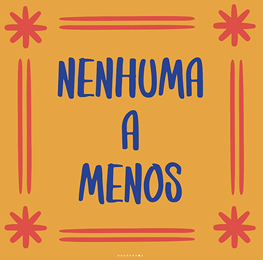
A yellow square that says "Nenhuma a menos" which translates to "Not another woman less"
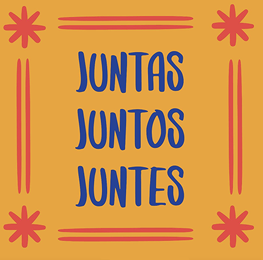
Yellow square that says "Juntas, Juntos, Juntes" which translates to "Together, together, together"
Yellow square announcing Sunday Lunch at the Occupation's Kitchen

Las Mujeres Sostienen el Cuidado | El Cuidado Sostiene la Vida | La vida Sostiene la Economía | ¿Quién Cuida a las Mujeres? | Ni Una Menos1 | Juntas, Juntos, Juntes | Almuerzo de Domingo

1Nenhuna a menos se traduce literalmente como "ni una menos" en español, un eslogan feminista famoso en América Latina que surgió en Argentina como respuesta a la creciente violencia de género.

Snippet - CSW68 - March 13 - ES

Día 3

13 de Marzo

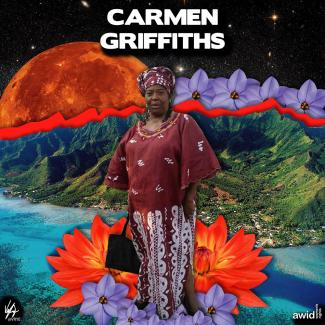
Carmen Griffiths

Carmen was the Head of the Construction Resource and Development Collective (CRDC) and was instrumental in supporting women’s involvement in the construction industry in Jamaica.

She also worked on issues of disaster preparedness for rural and urban women. She worked closely with women (especially single mothers) teaching them how to use hurricane straps and other technology to secure their homes. She worked in the area of water and sanitation and was a strong advocate for sustainable environmental management and development.

She was a part of the Huairou Commission and advocated for grassroots women on such issues as shelter, energy, and sustainable livelihoods.


Carmen Griffiths, Jamaica

July 2015

Women's Forum on Financing for Gender Equality

  • The Forum took place on 10 July 2015 in Addis Ababa and convened feminists, grassroots women, gender advocates, academics and representatives of women’s rights organizations/networks with specific inputs by UN representatives and other policy makers.
  • The objectives of the Women's Forum were to: share information on the state of play in the latest FfD negotiations; jointly analyze the FfD panorama and follow-up; build a common women’s rights positioning; and strategize on how to meaningfully and substantively engage from a feminist perspective at the Addis FfD Conference.
  • The Women's Forum was organized by the Women's Working Group on FfD, in collaboration with FEMNET, African Women's Development Fund (AWDF) and the Post 2015 Women's Coalition with support from UN Women.
  • Read the Women's Working Group reaction to the Addis Ababa Action Agenda

CSO FfD Forum

  • The CSO FfD Forum took place in Addis Ababa on 11-12 July 2015 and aimed to: inform participating CSOs on the state of play of the official process and coordinate civil society participation in the 3rd FfD Conference; develop a collective CSO Forum Declaration as well as the CSO messages for the FfD Conference Roundtables, the CSO FfD Group-led side events and any other opportunities that might emerge; and plan and organize future areas of CSO engagement on Financing for Development, beyond the 3rd FfD Conference.
  • Read the Declaration from the Addis Ababa Civil Society Forum on Financing for Development
  • For more information, please visit the CSO FfD Group's website or contact the Addis Ababa CSO Coordinating Group (addiscoordinatinggroup@gmail.com).

The Third UN International Conference on Financing for Development

  • The third Conference on Financing For Development took place in Addis Ababa, Ethiopia, from 13-16 July 2015 and focused on: assessing the progress made in the implementation of the 2002 Monterrey Consensus and the 2008 Doha Declaration; addressing new and emerging issues, including in the context of the recent multilateral efforts to promote international development cooperation. Taking into account: the current evolving development cooperation landscape; the interrelationship of all sources of development finance; the synergies between financing objectives across the three dimensions of sustainable development (economic, social and environmental); and the need to support the United Nations development agenda beyond 2015; and reinvigorating and strengthening the financing for development follow-up process.
  • The Addis Ababa Action Agenda was adopted on 15 July 2015 by Heads of State, Governments and High Representatives at the UN.
  • The feeling however from developing countries, CSOs and more specifically women's organisations was that the Addis Ababa Action Agenda failed to meet the target. The Women's Working Group expressed its strong disappointment and demanded structural changes in the global economic governance and development architecture. Read their reaction to the outcome document. Hundreds of civil society organizations and networks from around the world also expressed deep concerns and reservations. Read their response to the outcome document.

Snippet FEA LINES OF ACTION (FR)

Sur quoi travaillent-iels?
Illustration of a hand with a pencil writing on white paper

Droits humains et ethno-territoriaux

Assurer la défense des droits humains et des droits de la Nature par la construction d'alliances avec des acteur·rices et organisations locales, nationales, régionales et mondiales.

A person holding a plant in a pink pot in their hands

Développement Durable

Garantir que toutes les activités économiques, culturelles et environnementales contribuent au développement durable, à la sécurité alimentaire et à la génération de revenus, dans le respect de l'autodétermination et de l'autonomie gouvernementale des communautés afro-descendantes.

Three women sitting next to each other

Education and training

Former les femmes et leur donner les moyens d'exercer la défense de leurs droits dans différents espaces politiques, sociaux et économiques.

Pour plus d'informations, cliquez ici!