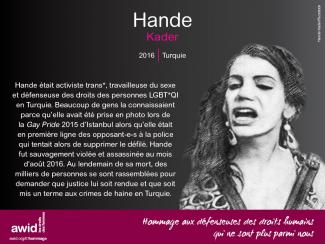
Hande Kader
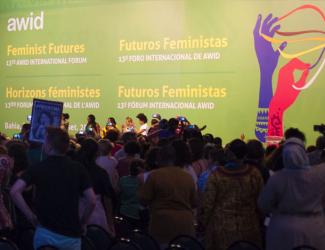
In September 2016, the 13th AWID international Forum brought together in Brazil over 1800 feminists and women’s rights advocates in a spirit of resistance and resilience.
This section highlights the gains, learnings and resources that came out of our rich conversations. We invite you to explore, share and comment!
One of the key takeaways from the 2016 Forum was the need to broaden and deepen our cross-movement work to address rising fascisms, fundamentalisms, corporate greed and climate change.
With this in mind, we have been working with multiple allies to grow these seeds of resistance:
And through our next strategic plan and Forum process, we are committed to keep developing ideas and deepen the learnings ignited at the 2016 Forum.
AWID Forums started in 1983, in Washington DC. Since then, the event has grown to become many things to many peoples: an iterative process of sharpening our analyses, vision and actions; a watershed moment that reinvigorates participants’ feminisms and energizes their organizing; and a political home for women human rights defenders to find sanctuary and solidarity.
Actualmente contamos en nuestra membresía con cientos de organizaciones destacadas e innovadoras que trabajan en temas relacionados con los derechos de las mujeres y el desarrollo. Los criterios de afiliación son los mismos que para las personas a título individual, aunque las cuotas y los beneficios son diferentes, con el fin de atender a las necesidades de las instituciones afiliadas.
Related Content
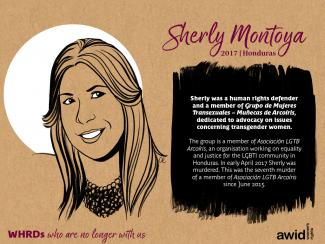
IM Defensoras: Hate crime against Sherly Montoya, LGTTBI defender and member of Transexual Women´s Group “Muñecas de Arcoiris”

En esta selección de películas encontrarán las voces de realizadoras que no solo se contentan con plasmar las realidades feministas que palpitan en cada rincón de este vasto y diverso territorio sino también trabajos que desde su gestación misma están cuestionando el para qué, quién y cómo se hace cine o audiovisual. Realizadoras o colectivos que entienden al cine como una herramienta de lucha, como algo más que imágenes que se disfrutan en una pantalla, que ven al cine y al audiovisual como instrumentos para potenciar una discusión o abrir un debate; en fin, como un recurso para la pedagogía popular y feminista.
يمكنك أن تتوقع جميع المواد الأساسية لورش العمل والعروض التقديمية: اللوحات الورقية، والأقلام والملاحظات اللاصقة، بالإضافة إلى أجهزة العرض والمعدات السمعية والبصرية. أي مواد إضافية تقع على عاتق منظمي/ات النشاط. سيكون الفريق اللوجستي التابع لجمعية حقوق المرأة في التنمية متاحًا للإجابة على الأسئلة وتقديم المشورة.
Contenido relacionado
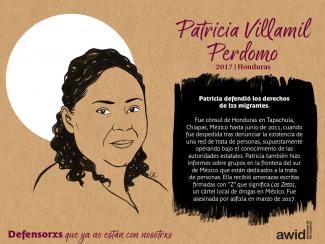
Proceso Digital: Asesinan abogada que fue candidata a diputada en primarias del Partido Nacional
Consulta nuestra Guía Superbreve para organizar Festivales Feministas y otros eventos globales en línea.
The Monterrey Conference on Financing for Development marked the beginning of discussions on the Financing for Development agenda.
Venez découvrir les économies féministes que nous ADORONS.
Quand nous parlons d'économie, nous parlons de comment nous organisons nos sociétés, nos foyers et nos lieux de travail. Comment vivons-nous ensemble? Comment est-ce que nous produisons la nourriture, organisons les soins, ou assurons notre santé et celle de nos communautés? L'économie concerne également la manière dont nous accédons et gérons les ressources, et nos relations avec les autres, avec nous-mêmes et avec la Nature.
Les féministes ont construit des alternatives économiques aux systèmes capitalistes d'exploitation depuis des lustres. Ces alternatives existent ici et maintenant, et elles sont les piliers des mondes plus justes et plus durables dont nous avons tant besoin et que nous méritons.
Nous sommes ravi·es de vous présenter certaines de ces alternatives économiques féministes et les collectifs à travers le monde qui nous inspirent.

Rejoignez la co-création du 15e Forum international de l’AWID à Bangkok, en Thaïlande.