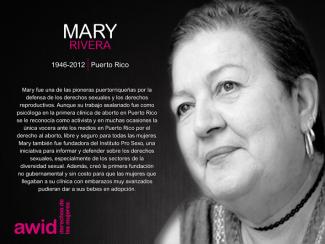
Mary Rivera
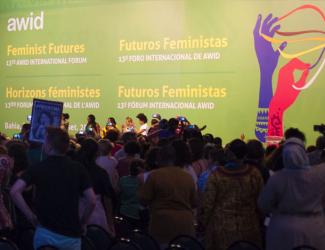
In September 2016, the 13th AWID international Forum brought together in Brazil over 1800 feminists and women’s rights advocates in a spirit of resistance and resilience.
This section highlights the gains, learnings and resources that came out of our rich conversations. We invite you to explore, share and comment!
One of the key takeaways from the 2016 Forum was the need to broaden and deepen our cross-movement work to address rising fascisms, fundamentalisms, corporate greed and climate change.
With this in mind, we have been working with multiple allies to grow these seeds of resistance:
And through our next strategic plan and Forum process, we are committed to keep developing ideas and deepen the learnings ignited at the 2016 Forum.
AWID Forums started in 1983, in Washington DC. Since then, the event has grown to become many things to many peoples: an iterative process of sharpening our analyses, vision and actions; a watershed moment that reinvigorates participants’ feminisms and energizes their organizing; and a political home for women human rights defenders to find sanctuary and solidarity.
Pendant des décennies, les universitaires et défenseur·euse·s féministes ont développé d’importantes notions liées au genre afin de comprendre et combattre l’oppression et la discrimination. Ces notions sont maintenant devenues la cible d’acteur·ice·s antidroits qui prétendent que les rôles de genre patriarcaux oppressifs relèvent du « bon sens », peignant stratégiquement toutes les autres idées, normes culturelles et formes de vie sociale comme une idéologie dangereuse et conspirationniste.
Lisez le dossier sur Les Discours Sur L’ « Idéologie Du Genre » : Une Menace Pour Les Droits Humains
เมื่อ AWID ถามตัวเองด้วยคำถามเดียวกัน เราเชื่อว่าไม่มีคำตอบง่ายๆสำหรับเรื่องนี้ สำหรับผู้เข้าร่วมจำนวนมาก AWID ฟอรัม อาจเป็นหนึ่งในการเดินทางระหว่างประเทศไม่กี่ทริปที่พวกเขาเคยทำในชีวิต การระบาของโรคโควิด19ได้ให้บทเรียนเราถึงความเป็นไปได้ต่างๆในการพบเจอกันรูปแบบอื่นๆที่ไม่ใช่ทางกายภาพ แต่ก็ให้บทเรียนเราถึงข้อจำกัดของพื้นที่เสมือนจริงสำหรับการสร้างการขบวนการด้วย ไม่มีรูปแบบใดที่เหมือนกับการเชื่อมต่อแบบตัวต่อตัว ขบวนการจำเป็นต้องมีการเชื่อมโยงข้ามพรมแดนเพื่อสร้างพลังร่วมในการเผชิญกับภัยคุกคามที่เรากำลังเผชิญหน้าอยู่ โดยเฉพาะอย่างยิ่งวิกฤตสภาพภูมิอากาศ เราเชื่อว่า AWID ฟอรัม ที่กำลังจะมาถึงสามารถเป็นพื้นที่เชิงกลยุทธ์ในการก่อให้เกิดพื้นที่สำหรับการสนทนาเหล่านี้ และทำให้เราได้สำรวจทางเลือกอื่นนอกเหนือจากการเดินทางระหว่างประเทศ การประชุมแบบผสม(ออนไลน์และกายภาพ)ของฟอรัมเป็นส่วนสำคัญของการสำรวจนี้
.

What if we reimagined ways of caring for our communities?
What if the economy was not about someone else’s profit but about care for our individual and collective wellbeing? These stories are about building communities of care with and for people who are historically and presently excluded, disenfranchised and dehumanized by both state and society. These are the stories of feminists centering care in the economy.
Primer Diálogo de Alto Nivel sobre la Financiación para el Desarrollo, 29 y 30 de octubre de 2003
Uno de los mecanismos de seguimiento de la Conferencia de Monterrey fueron los Diálogos de Alto Nivel sobre la Financiación para el Desarrollo organizados cada dos años por la Asamblea General de la ONU. En total, ya se realizaron ocho mesas redondas en las que se ha continuado el Diálogo acerca de distintos temas como los subsidios a la agricultura, el comercio, el alivio de la deuda y la financiación para los ODM. En todas ellas se prestó especial atención a los obstáculos estructurales que colocan en desventaja a las naciones ‘en desarrollo’.
Otros mecanismos de seguimiento a Monterrey son los siguientes:
Cuando lleguen al centro de São Paulo, verán el edificio de la Ocupação 9 de Julho, un sitio prominente en la lucha por la vivienda social y un importante espacio cultural. Este es el trabajo del Movimiento de Trabajadores Sin Hogar (Movimento dos Sem-Teto do Centro, MSTC), un movimiento de más de 2000 personas que actúa en el centro de la ciudad y convierte espacios abandonados en viviendas para trabajadorxs de bajos ingresos, niñxs, mujeres, adultos, ancianxs, migrantes y refugiadxs. En este edificio en particular, brindan comida y albergue a 122 familias.

📅 Mardi 12 mars
🕒 de 9 h à 17 h HNE
🏢 Armenian Cultural Center, 630 2e avenue, coin de la 35e rue
Asociación de Mujeres Afrodescendientes del Norte del Cauca (ASOM)
Informal interactive hearings with the business sector and civil society took place on 8 and 9 April 2015 respectively at UN headquarters in New York.
The survey is for groups, organizations and movements working specifically or primarily for the rights of women, LBTQI+ people and on gender justice in all contexts, at all levels, and in all regions. If this is one of the core pillars of your group, collective, network or any other type of organization - whether registered or not, newly formed or long-standing, we invite you to take this survey.

*At this time, we are not asking for responses from individuals or funders.
Learn more about the survey:
Consult the F.A.Q.