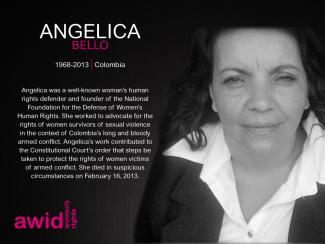
Angelica Bello
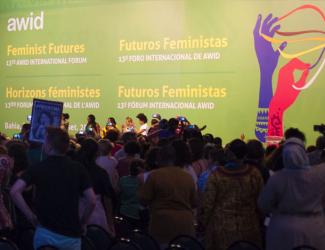
In September 2016, the 13th AWID international Forum brought together in Brazil over 1800 feminists and women’s rights advocates in a spirit of resistance and resilience.
This section highlights the gains, learnings and resources that came out of our rich conversations. We invite you to explore, share and comment!
One of the key takeaways from the 2016 Forum was the need to broaden and deepen our cross-movement work to address rising fascisms, fundamentalisms, corporate greed and climate change.
With this in mind, we have been working with multiple allies to grow these seeds of resistance:
And through our next strategic plan and Forum process, we are committed to keep developing ideas and deepen the learnings ignited at the 2016 Forum.
AWID Forums started in 1983, in Washington DC. Since then, the event has grown to become many things to many peoples: an iterative process of sharpening our analyses, vision and actions; a watershed moment that reinvigorates participants’ feminisms and energizes their organizing; and a political home for women human rights defenders to find sanctuary and solidarity.
The theme of the Fourth High-level Dialogue on Financing for Development, 23-24 March 2010: The Monterrey Consensus and Doha Declaration on Financing for Development: status of implementation and tasks ahead. It had four round tables on: the reform of the international monetary and financial systems; impact of the financial crisis on foreign direct investments; international trade and private flows; and the role of financial and technical development cooperation, including innovative sources of development finance, in leveraging the mobilization of domestic and international financial resources for development.
There was also the informal interactive dialogue involving various stakeholders that focused on the link between financing for development and achieving the Millennium Development Goals.
 |
 |
 |
 |
 |
 |
 |
 |
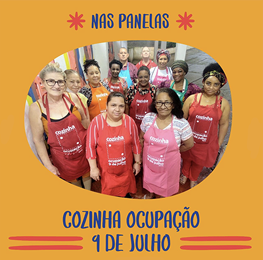
Les Femmes Maintiennent les Soins | Les Soins Soutiennent la Vie | La Vie Soutient l'Économie | Qui s'Occupe des Femmes ? | Pas Une de Moins1 | Ensemble | Déjeuner du Dimanche
1Nenhuna a menos se traduit littéralement par « pas une femme de moins » ou « ni una menos » en espagnol - un célèbre slogan féministe en Amérique latine qui a émergé en Argentine en réponse à l'augmentation de la violence sexiste.
نعم. نريد السماع منكم/ن دون أي علاقة ان حصلتم/ن على تمويل لثلاثة أعوام أو عامين أو عام واحد في السنوات 2021-2023.
Mridula fue una firme promotora de la salud de las mujeres en una época en la que el tema de la salud sexual y reproductiva de las mujeres se consideraba tabú en Fiji.
Mridula orientó los primeros trabajos del movimiento por los derechos de las mujeres en Fiji sobre derechos sexuales y reproductivos y, en septiembre de 1999, el Fondo de Población de las Naciones Unidas le otorgó un premio regional sobre salud y derechos reproductivos. Fue una activista férrea, comprometida e incansable y apasionada por la salud y el empoderamiento de las mujeres.
Fue una valiosa integrante del movimiento de mujeres y del movimiento feminista de Fiji y sus aportes se recordarán por siempre. Falleció en 2017 por causas naturales.

Difusión del Borrador Cero del Documento Final
Meet Clemencia Carabalí Rodallega, an extraordinary Afro-Colombian feminist.
She has worked relentlessly for three decades towards the safeguarding of human rights, women’s rights and peace-building in conflict areas on the Pacific Coast of Colombia.
Clemencia has made significant contributions to the fight for truth, reparations and justice for the victims of Colombia’s civil war. She received the National Award for the Defense of Human Rights in 2019, and also participated in the campaign of newly elected Afro-Colombian and long-time friend, vice-president Francia Marquez.
Although Clemencia has faced and continues to face many hardships, including threats and assassination attempts, she continues to fight for the rights of Afro-Colombian women and communities across the country.
Безусловно, эти вопросы являются необязательными, мы ценим ваше право сохранять конфиденциальность. Пожалуйста, заполните опрос независимо от того, указываете вы название вашей группы, организации и/или движения и контактные данные или нет.
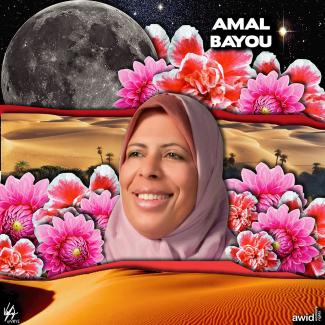
Amal était une femme politique et une parlementaire de premier plan en Libye.
Membre du corps professoral de l'Université de Benghazi de 1995 jusqu’à sa mort en 2017, elle militait par ailleurs au sein de la société civile et était membre de diverses initiatives sociales et politiques. Elle a aidé les familles des martyrs et des disparus et a été l'une des membres fondateurs-trices d'une initiative de jeunesse intitulée « Jeunesse de Benghazi en Libye ».
Lors des élections législatives de 2014, Amal avait été élue à la Chambre des représentants avec plus de 14 000 voix (le plus grand nombre de voix jamais obtenues aux élections de 2014). Amal restera dans les mémoires de beaucoup comme une femme politique qui a œuvré pour assurer un avenir meilleur dans l'un des contextes les plus difficiles et les plus conflictuels de la région.
Le processus de l’Organisation des Nations Unies (ONU) sur le financement du développement (FdD) vise à traiter différentes formes de financement du développement et de coopération pour le développement. Selon le Consensus de Monterrey, ce processus comporte six axes clés :
 |
 |
 |
 |
 |
|
|
|
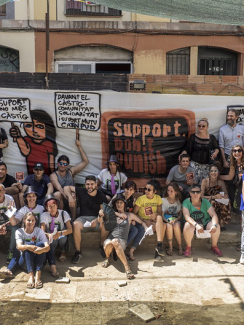
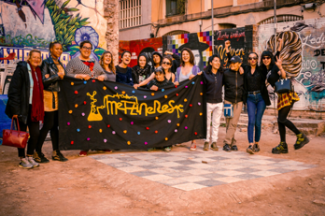
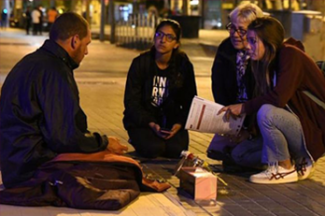
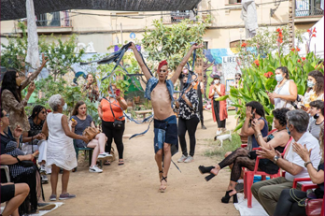
Activistas de Metzineres en acción |
Iremos analisar as respostas ao inquérito para obter informações e tendências, e iremos apresentar os resultados durante o 15.º Fórum Internacional da AWID em Bangkok, e online em dezembro de 2024. Registe-se para participar no Fórum aqui!
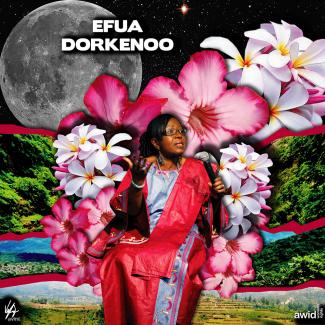
Affectionately known as “Mama Efua”, her work to end Female Genital Mutilation (FGM) movement spanned three decades and helped bring international attention and action to end this harmful practice.
In 1983 Efua co-founded FORWARD (The Foundation for Women’s Health, Research and Development), which became a leading organisation in the battle to raise awareness about FGM. Her 1994 book, “Cutting the Rose: Female Genital Mutilation,” is considered the first on FGM and, featured in Columbia University’s “Africa’s 100 Best Books for the 20th Century”.
Originally from Ghana and a nurse by training, Efua joined the WHO in 1995 and successfully pushed for FGM to go on the agendas of WHO member states. She also worked closely with the Nigerian government in formulating a comprehensive National Policy that laid the groundwork for Nigeria’s anti-FGM laws, still in place today.
Her ground breaking work culminated in an Africa-led campaign, “The Girl Generation,” which is committed to ending FGM within a generation. Efua demonstrated how one person can become the unifying voice for a movement, and her wise words - “shared identity can help bring activists from different backgrounds together with a common sense of purpose” – are more relevant than ever.
L'appel à propositions est maintenant fermé.
Nous avons lancé un Appel à activités le 19 novembre 2019 et la date limite de réception des propositions était le14 février 2020.
Trouvez d'autres moyens de vous engager sur le chemin du Forum
Vous pouvez suivre le travail de ces collectifs sur les réseaux sociaux et sites internet suivant:
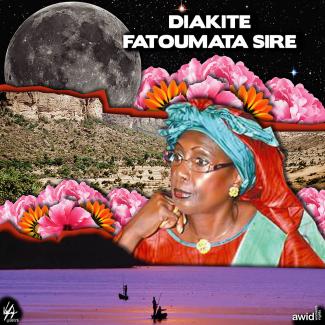
Diakite estuvo activamente comprometida con la defensa de las mujeres en la vida política y pública de Mali.
Trabajó para apoyar la capacitación de candidatas electorales y habló en contra de la práctica de la mutilación genital femenina (MGF). Fue una firme defensora de la salud y los derechos reproductivos.
我們一直努力確保論壇是由合作夥伴、運動和我們的優先群體共同來開發。
對於即將舉行的論壇,我們旨在加深和增強共同創造與合作的精神和實踐。我們還認識到有必要在多樣的聲音和體驗之間取得平衡,讓參與者和工作人員有調整呼吸、休息和享受一些空閒時間的空間。
該論壇將在以下方面有所不同: