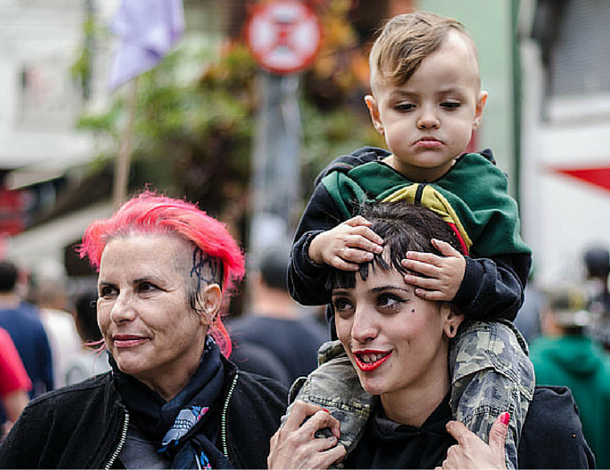
Flickr/Leonardo Veras (CC BY 2.0)

Protection of the Family

The Issue

Over the past few years, a troubling new trend at the international human rights level is being observed, where discourses on ‘protecting the family’ are being employed to defend violations committed against family members, to bolster and justify impunity, and to restrict equal rights within and to family life.

The campaign to "Protect the Family" is driven by ultra-conservative efforts to impose "traditional" and patriarchal interpretations of the family, and to move rights out of the hands of family members and into the institution of ‘the family’.

“Protection of the Family” efforts stem from:

  • rising traditionalism,
  • rising cultural, social and religious conservatism and
  • sentiment hostile to women’s human rights, sexual rights, child rights and the rights of persons with non-normative gender identities and sexual orientations.

Since 2014, a group of states have been operating as a bloc in human rights spaces under the name “Group of Friends of the Family”, and resolutions on “Protection of the Family” have been successfully passed every year since 2014.

This agenda has spread beyond the Human Rights Council. We have seen regressive language on “the family” being introduced at the Commission on the Status of Women, and attempts made to introduce it in negotiations on the Sustainable Development Goals.


Our Approach

AWID works with partners and allies to jointly resist “Protection of the Family” and other regressive agendas, and to uphold the universality of human rights.

In response to the increased influence of regressive actors in human rights spaces, AWID joined allies to form the Observatory on the Universality of Rights (OURs).  OURs is a collaborative project that monitors, analyzes, and shares information on anti-rights initiatives like  “Protection of the Family”.

Rights at Risk, the first OURs report, charts a map of the actors making up the global anti-rights lobby, identifies their key discourses and strategies, and the effect they are having on our human rights.   

The report outlines “Protection of the Family” as an agenda that has fostered collaboration across a broad range of regressive actors at the UN.  It describes it as: “a strategic framework that houses “multiple patriarchal and anti-rights positions, where the framework, in turn, aims to justify and institutionalize these positions.”
 

Related Content

¿Cuántas respuestas a la encuesta desean recoger?

Nuestra meta es alcanzar un total de 200 respuestas, prácticamente el doble de la cifra registrada en la última encuesta ¿Dónde está el dinero? de 2011.

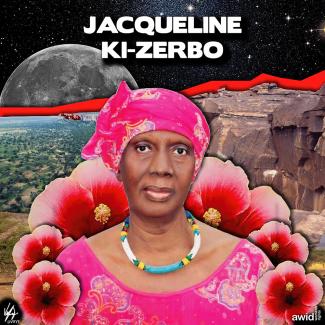
Jacqueline Coulibaly Ki-Zerbo

Jacqueline était une éducatrice malienne pionnière de la cause féministe et nationaliste.

Elle a d’abord enseigné l'anglais au Sénégal avant d'être recrutée en 1961 par le Lycée Philippe Zinda Kaboré à Ouagadougou, au Burkina Faso. Etant donné son engagement militant, elle a pris part au soulèvement populaire du 3 janvier 1966. Entre 1961 et 1966, Jacqueline était par ailleurs responsable de la presse syndicale, La voix des enseignants. Elle a été nommée directrice du Cours normal des jeunes filles (aujourd’hui connu sous le nom de lycée Nelson Mandela) jusqu'en 1974 et s'est consacrée à l'éducation des filles et à la promotion des droits des femmes.

En 1984, elle a reçu le prix Paul G. Hoffmann pour sa contribution remarquable en matière de développement national et international.


Jacqueline Coulibaly Ki-Zerbo, Mali/ Burkina Faso

Snippet FEA Get Involved 2 (FR)

Si vous êtes de passage à Sao Paulo, au Brésil, visitez l'Occupation 9 de Julho et prenez un repas collaboratif. Vous pouvez aussi acheter leurs produits dans leur boutique en ligne depuis l'étranger.

Visitez la boutique en ligne de l'Association des Femmes Afro-Descendantes du Cauca du Nord où vous pouvez trouver de superbes produits faits à la main.

Il existe plusieurs façons de soutenir Metzineres : vous pouvez faire un don financier, offrir du matériel et des services, proposer une formation, un atelier ou une activité (pour plus d'informations, cliquez ici).

No encontré la respuesta a mi pregunta aquí

Para preguntas adicionales, por favor escríbenos utilizando nuestro formulario de contacto. Selecciona «14o Foro de AWID» como asunto de mensaje.

Contáctanos


Snippet - WITM FAQ - FR

Foire aux questions - FAQ

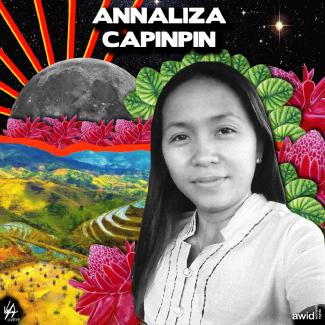
Annaliza Dinopol Gallardo Capinpin

Known as “Ate Liza,” Annaliza was the president of the Agrarian Reform Council for Mindanao Pioneers, an umbrella group in Tacurong City, Philippines.

A loved mother of four, teacher and community leader, Annaliza is remembered by her community as “she who leads when no one wants to lead, she who talks when no one wants to talk, she who stood with courage to help the agrarian reform beneficiaries to own lands.”

Annaliza was shot dead by unknown assailants in front of the Sultan Kudarat State University (SKSU) while on her way to Salabaca National High School in Esperanza.

Her family have said “Naghihintay pa rin kami ng hustisya para sa kanya” (we are still waiting justice for her).


Snippet FEA EoS The Ivy (FR)

An illustration of a vine with vine like leaves in neon with purple background

Le lierre
Communauté et quartier

¿Por qué AWID eligió Taipéi como ubicación del Foro?

Consideramos a  Taipéi como el mejor lugar de la región Asia-Pacífico para construir ese espacio seguro y rebelde destinado a nuestra comunidad feminista global.

Taipéi ofrece un cierto grado de estabilidad y seguridad para la diversidad de participantes que convocamos al Foro. Tiene también capacidad logística, y resulta accesible para muchxs viajerxs (con la facilitación de un trámite de visa electrónico para conferencias internacionales).

El Foro es bien recibido por el movimiento feminista local, que está muy interesado en interactuar con feministas de todo el mundo.

Lee más sobre nuestras consideraciones para elegir Taipéi

Snippet - WITM to claim - AR

لتجسيد قوتكم/ن كخبيرات عن وضع التمويل للحركات النسوية

Sitios web asociados a AWID

Conexión Joven Feminista 

Una comunidad en línea desarrollada para y por las jóvenes feministas que trabajan por los derechos humanos de las mujeres, la igualdad de género y la justicia social en todo el mundo.

Visita la página

Fondo de Jóvenes Feministas 

FRIDA: proporciona financiamiento a iniciativas lideradas por jóvenes feministas. Busca fortalecer la capacidad de las organizaciones de jóvenes feministas para obtener recursos para su trabajo e incrementar los compromisos de donantes y aliados con la dotación de fondos para el activismo joven feminista.

Visita la página

El Observatorio de la Universalidad de los Derechos (OURs)

En esta plataforma podrás encontrar información y recursos sobre cómo proteger la universalidad de los derechos en espacios internacionales y regionales de derechos humanos.

Visita la página (en inglés)

Directorio Virtual de Respuestas Urgentes para las Mujeres Defensoras de los Derechos Humanos 

Sitio obligado para conocer las respuestas urgentes emprendidas para proteger a las defensoras de los derechos humanos y encontrar herramientas y recursos en apoyo del trabajo y el bienestar de las defensoras.

Visita la página

IM-Defensoras 

La Iniciativa Mesoamericana de Mujeres Defensoras de Derechos Humanos es una iniciativa regional creada para prevenir, responder, documentar y dar a conocer todos los casos de violencia ejercida contra las defensoras de los derechos humanos en la región mesoamericana.

Visita la página

Coalición Internacional de Mujeres Defensoras de los Derechos Humanos  

La Coalición es una red de recursos y promoción para la protección y el apoyo a las mujeres defensoras de los derechos humanos en todo el mundo.

Visita la página (en inglés)

La Coalición de Mujeres Post-2015 

Una coalición de organizaciones feministas, por los derechos de las mujeres, por las mujeres y el desarrollo, y de organizaciones de base y por la justicia social que trabajan para interpelar y dar nuevo marco la agenda global para el desarrollo.

Visita la página (en inglés)

Grupo Mayor de Mujeres sobre el Desarrollo 

El rol del Grupo consiste en garantizar una participación pública efectiva de los grupos no gubernamentales de mujeres en los procesos normativos de la ONU sobre el desarrollo sostenible, la agenda posterior a 2015 y los asuntos ambientales. 

Visita la página (en inglés)

Grupo de Mujeres sobre Financiamiento para el Desarrollo 

Una alianza de organizaciones y redes de mujeres que promueve el avance de la igualdad de género, el empoderamiento de las mujeres y sus derechos humanos en los procesos de la ONU referidos al financiamiento para el desarrollo.

Visita la página (en inglés)

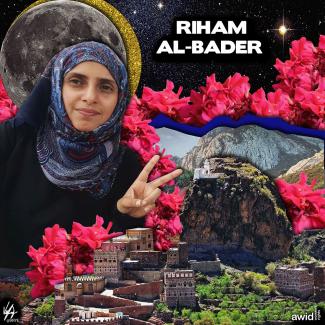
Riham Al-Bader

Riham fue una abogada y activista comprometida con el registro y denuncia de las violaciones de derechos en Yemen.

Trabajó junto a otrxs activistas en el suministro de agua y alimentos para la población civil atrapada por las milicias huzíes en las afueras de la ciudad de Taiz.

Riham fue asesinada en febrero de 2018 pero todavía no se confirmó si la mató un francotirador o si fue alcanzada por los disparos de una aeronave. No se ha imputado a nadie por su homicidio.


Riham Al Bader, Yemen

Snippet FEA We are living in a world (EN)

We are living in a world where the destruction of Nature fuels our current global economy.

Even in times of climate crisis, governments continue to encourage large-scale agriculture industries to expand. These activities poison the land, threaten biodiversity, and destroy local food production and livelihoods. Meanwhile, while women produce the majority of our food in the world, they own almost none of the land.

What if we perceived land and Nature not as private property to exploit, but as a whole to live in, learn from, and harmoniously coexist with? What if we repaired our relationships with the land and embraced more sustainable alternatives that nurture both the planet and its communities?

Nous Sommes la Solution (We Are the Solution, NSS) is one of many women-led movements striving to do this. This is their story.

Snippet - WITM Survey will remain open - RU

Опрос будет открыт до 31 июля 2024 года

Пройти опрос!

Пожалуйста выберите язык, на котором вы хотите отвечать на вопросы в правом верхнем углу страницы

Если вы хотите узнать больше, присоединяйтесь к нашей встрече участников исследования «Где деньги?», которая пройдет 27 мая, понедельник, в 9:00 UTC – с синхронным переводом на французский и английский языки. 14:00 UTC – с синхронным переводом на испанский и английский языки.

Становиться участником (in English).

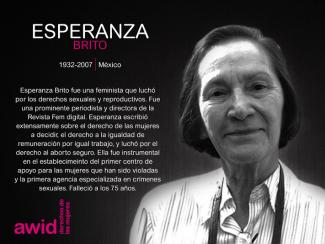
Courageous WHRDs in the Media

These 21 Women Human Rights Defenders (WHRDs) worked as journalists and more widely in the media sector in Mexico, Colombia, Fiji, Libya, Nepal, United States, Nicaragua, Philippines, Russia, Germany, France, Afghanistan, and the United Kingdom. 17 of them were murdered and in one case the cause of death is still unclear. On this World Press Freedom Day, please join us in commemorating the life and work of these women by sharing the images below with your colleagues, friends and networks using the hashtags #WPFD2016 and #WHRDs.

The contributions of these women were celebrated and honoured in our Tribute to Women Human Rights Defenders (WHRDs) Who Are No Longer With Us.


Please click on each image below to see a larger version and download as a file


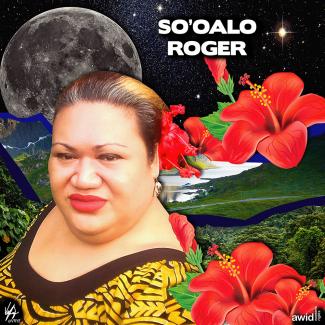
So'oalo Roger

So'oalo était une fervente défenseure des droits humains, notamment en ce qui concerne les droits de la communauté LGBTQI dans le Pacifique.

Elle était membre de la Samoa Fa’afafine Association (SFA) et militait avec passion pour la reconnaissance d’un troisième genre dans le pays insulaire. Sous sa direction, la SFA a fait pression pour la reconnaissance du bien-fondé des droits de la communauté des fa’afafine et leur respect.

Elle a également été une pionnière dans l’articulation des liens entre les droits humains, l’exploitation des fa’afafines à Samoa et dans le Pacifique et la santé, le bien-être et la sécurité de la communauté LGBTQI.

Inspirante et visionnaire, on se souviendra de son dévouement admirable au service des droits de sa communauté.


So'oalo Roger, Samoa

Snippet FEA Agroecology And Food (EN)

AGROECOLOGY AND FOOD SOVEREIGNTY AS RESISTANCE

Today, large-scale industrial food production uses single-crop plantations, genetically modified organisms and other pesticides that destroy the land and knowledge of local communities.

Agroecology is a resistance to corporate-driven agriculture. It prioritizes smaller scale agriculture, multiple crops and diversified food production, and the centering of local knowledge and practices. Agroecology goes hand-in-hand with demands for food sovereignty, or the “right of peoples to healthy and culturally appropriate food produced through ecologically sound and sustainable methods, and their right to define their own food and agriculture systems”(Via Campesina, Declaration of Nyéléni).

The role of women, indigenous and rural communities and people of color from the Global South is absolutely essential when it comes to food systems. Feminist agroecologists are working to dismantle oppressive gender roles and systems of patriarchy embedded within food production. As shown by the heroines of NSS, they are generating a liberatory agroecology by strengthening community resilience, empowering women peasants and farmers, and preserving local traditions, territories, and knowledge of food-producing communities.