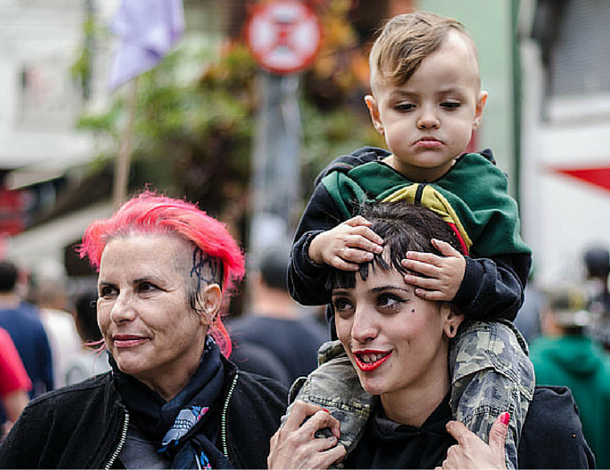
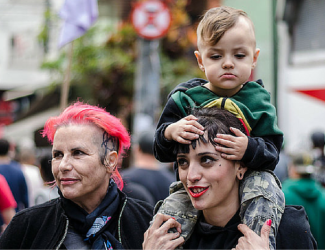
Flickr/Leonardo Veras (CC BY 2.0)

Protection of the Family

The Issue

Over the past few years, a troubling new trend at the international human rights level is being observed, where discourses on ‘protecting the family’ are being employed to defend violations committed against family members, to bolster and justify impunity, and to restrict equal rights within and to family life.

The campaign to "Protect the Family" is driven by ultra-conservative efforts to impose "traditional" and patriarchal interpretations of the family, and to move rights out of the hands of family members and into the institution of ‘the family’.

“Protection of the Family” efforts stem from:

  • rising traditionalism,
  • rising cultural, social and religious conservatism and
  • sentiment hostile to women’s human rights, sexual rights, child rights and the rights of persons with non-normative gender identities and sexual orientations.

Since 2014, a group of states have been operating as a bloc in human rights spaces under the name “Group of Friends of the Family”, and resolutions on “Protection of the Family” have been successfully passed every year since 2014.

This agenda has spread beyond the Human Rights Council. We have seen regressive language on “the family” being introduced at the Commission on the Status of Women, and attempts made to introduce it in negotiations on the Sustainable Development Goals.


Our Approach

AWID works with partners and allies to jointly resist “Protection of the Family” and other regressive agendas, and to uphold the universality of human rights.

In response to the increased influence of regressive actors in human rights spaces, AWID joined allies to form the Observatory on the Universality of Rights (OURs).  OURs is a collaborative project that monitors, analyzes, and shares information on anti-rights initiatives like  “Protection of the Family”.

Rights at Risk, the first OURs report, charts a map of the actors making up the global anti-rights lobby, identifies their key discourses and strategies, and the effect they are having on our human rights.   

The report outlines “Protection of the Family” as an agenda that has fostered collaboration across a broad range of regressive actors at the UN.  It describes it as: “a strategic framework that houses “multiple patriarchal and anti-rights positions, where the framework, in turn, aims to justify and institutionalize these positions.”


Related Content

Dorothy Masuka

“I didn’t plan to be a singer, singing planned to be in me.” - Dorothy Masuka (interview with Mail & Guardian)

Dorothy Masuka, born 1935 in Bulawayo (then Southern Rhodesia, now Zimbabwe), grew up in South Africa to become a well-known songwriter, composer, jazz singer and activist, a fervent advocate of the struggle against apartheid. Called “an architect of the discourse of popular African liberation music”, Dorothy often sang about politics in indigenous African languages and throughout her work she confronted the racist policies of the South African government.

One such song titled “Dr. Malan” (named after the pro-apartheid politician D.F. Malan) was banned. She went on to record “Lumumba” (1961), a song about the assassination of the anti-colonial leader Patrice Lumumba. Dorothy’s work and activism attracted the attention of the Special Branch of the South African police and she was forced into a political exile that would span over three decades. Throughout this time, she worked with pro-independence groups including the African National Congress. In 1992, as apartheid started to crumble and Nelson Mandela was released from prison, she returned to South Africa. 

Some of her other work includes the first song she recorded in 1953 entitled “Hamba Notsokolo”, a hit in the 1950s and a valued classic. She also wrote “El Yow Phata Phata”, a song that was adapted by Miriam Makeba, making “Pata, Pata” popular internationally.

Rooted in resistance, Dorothy’s music and activism were intertwined, leaving a magnificent and inspiring legacy. She was also widely known as “Auntie Dot”. 

On 23 February 2019 at the age of 83, Dorothy passed away in Johannesburg due to ill health. 


Watch Dorothy Masuka in an interview with Mail & Guardian

Listen to some of her music:

Hamba Nontsokolo
El Yow Phata Phata
 

What is at stake for women’s rights?

Development financing has specific threats and opportunities for women's and all people’s human rights. Transformative development financing and policies can make an important contribution to the systemic changes that are needed to ensure the respect, protection and fulfillment of women’s human rights.

2015 is an important year for the FfD process. The Third International Conference on FfD took place from 13-16 July 2015 in Addis Ababa, Ethiopia and governments are finalising the post-2015 development agenda including agreements on how the new Sustainable Development Goals will be financed

The current stage of the FfD process is an important opportunity to establish a financing framework that will ensure effective financing for the implementation of the post 2015 agenda and the Sustainable Development Goals (SDGs). It is also an opportunity to address the structural conditions, and systemic changes needed, for the full implementation of other agendas and commitments such as Human Rights Conventions, and the Beijing Platform for Action.

Over the last 13 years, women’s rights and feminist organizations have actively engaged in the FfD process.

Snippet - WCFM Content Body - EN

Feminist and gender justice movements continue to be chronically underfunded in the face of global funding cuts and freezes, and rising fascisms. Growing resource scarcity has impacted the most vulnerable communities, particularly in Global South regions with progressively closing civic spaces. 


In response to these challenges, we collaborated with Impactmapper to co-create a comprehensive resource that combines two powerful tools to strengthen the funding ecosystem for social justice movements.

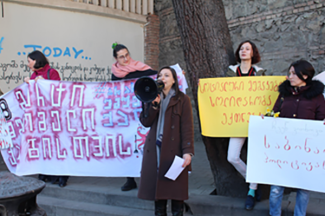
Snippet FEA Workers demonstrations in Georgia 1 (FR)

Quatre personnes avec des affiches lors d'une manifestation et, au milieu, une femme avec un mégaphone qui parle.

Here are your report and infographics: Toward a feminist funding ecosystem

Esther Mwikali

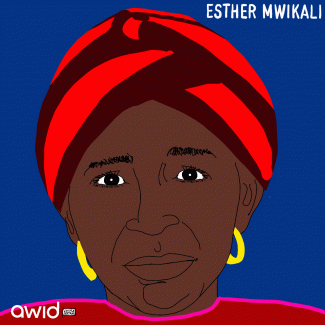
El hogar de Esther Mwikali estaba en la aldea de Mithini, en el condado de Murang'a, Kenya. Esther fue una defensora del derecho a la tierra destacada y valorada que investigó los abusos contra okupas de tierras reclamadas por magnates. La investigación de la que participó Esther incluyó también violaciones del derecho a la tierra cometidas por personas con poder en Makuyu.

Luego de que Esther faltara a una de las reuniones de la aldea, un grupo de búsqueda  salió a rastrear a Esther. El 27 de agosto de 2019, dos días después de su desaparición, el cuerpo de Esther fue encontrado en una granja cerca de su casa, con signos de tortura. Esther había sido brutalmente asesinada.

"El trabajo de Esther por evitar el desalojo de lxs integrantes de las comunidades de las tierras reclamadas por magnates era conocido por todxs. Para lxs activistas locales no existía ninguna duda de que su asesinato estaba relacionado con las luchas en la zona por el acceso a la tierra; un trágico recordatorio de la alarmante frecuencia con que se llevan a cabo las ejecuciones extrajudiciales en Kenia."- Global Wittness Report, Julio 2020

"Asociamos la muerte de Mwikali con las luchas locales por el derecho a la tierra,  y exigimos al Gobierno que investigue el asunto sin demora." - James Mburu, portavoz de lxs okupas.

"Es necesario tomar medidas con respecto a las personas que presuntamente han amenazado a lxs ocupantes ilegales, incluida la familia de Mwikali". - Alice Karanja, Coalición Nacional de Defensorxs de Derechos Humanos

"El impacto de su trabajo y su tenacidad permanecerán vivos en Kenia durante décadas. El CJGEA consuela a las personas afligidas y pide justicia". - Comunicado de prensa del Centro para la Justicia y la Acción Gubernamental (CJGEA, por sus siglas en inglés), 13 de septiembre de 2019

什麼時候/如何提交會議場次提案?

論壇活動提案現已截止。

我們於2019年11月19日開放論壇活動提案,提案的截止日期是2020年2月14日。

認識其他參與論壇的方法 (In English)

Snippet2 - WCFM Registration status - EN

Clipboard icon

Registration status:

Search for funders based on their requirements for groups to be registered.

Snippet FEA Workers demonstrations in Georgia 2 (EN)

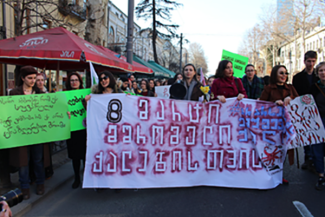
The photo shows a demonstration where a crowd of people is holding a banner in Georgian that reads as follows: “8th of March for worker women”.

Cláusula de exención de responsabilidad: Comunicaciones con el equipo de AWID

Si has recibido correos electrónicos de integrantes del equipo de AWID, nos gustaría que tengas presente lo siguiente:

  • La información contenida en esta comunicación es confidencial y está destinada exclusivamente la persona que lo recibe.

  • Esta comunicación podría contener información que es propiedad de la Asociación para los Derechos de las Mujeres y el Desarrollo (AWID, por sus siglas en inglés). Esta información no puede reproducirse ni diseminarse  ni parcialmente ni  en su totalidad sin el consentimiento escrito de AWID.

  • AWID no garantiza que la información aquí contenida sea completa o correcta. Esta comunicación no es una oferta para elaborar ningún tipo de acuerdo y no es una confirmación de ningún acuerdo descrito en este documento, a menos que el contexto indique claramente lo contrario.

  • AWID no está actuando en calidad de asesora de ningún acuerdo que pueda surgir de este documento, y esta comunicación no constituye una recomendación, guía o propuesta para elaborar un acuerdo.

  • AWID no garantiza o asegura los resultados esperados de cualquier acuerdo. Esta comunicación puede contener puntos de vista y opiniones que pueden no corresponderse con aquellos de AWID.

  • No tendrá derecho a utilizar la información contenida en esta comunicación con fines de llegar a cualquier tipo de propuesta de acuerdo u otro. 

Stacey Park Milbern

« Je n’y connais pas grand-chose sur la spiritualité ou sur ce qui se passe lorsqu’on meurt, mais ma vie de queer crip coréenne me laisse penser que notre esprit corporel terrestre n’est qu’une petite partie du tout. En ne considérant pas nos ancêtres, nous choisissons de ne voir qu’un aperçu de qui nous sommes. » - Stacey Park Milbern

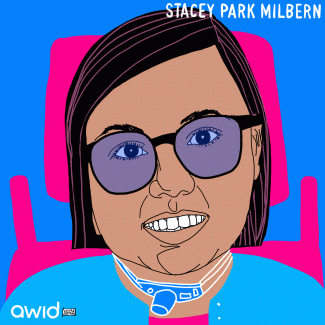
Stacey Park Milbern s’identifiait comme une femme de couleur, queer, handicapée et précurseure. Leader, mobilisatrice historique et fortement respectée dans le mouvement pour les droits des personnes handicapées et la justice, elle défendait également les droits de nombreuses autres communautés, et non seulement celles auxquelles elle appartenait. L’activisme de Stacey s’appuyait fortement sur ses expériences à l’intersection du genre, du handicap, de la sexualité et de la race. 

Stacey a cofondé avec quelques ami·e·s le club de culture sur la justice liée au handicap, un groupe de travail en soutien aux diverses communautés, notamment les plus vulnérables, aidant entre autres les personnes sans-abri à accéder aux ressources durant la pandémie de COVID-19.  

Elle a également coproduit une campagne impactante pour le documentaire « Crip Camp » de Netflix. Elle était membre du conseil d’administration de la WITH Foundation et a dirigé plusieurs organisations aux niveaux local, régional et national. Stacey écrivait joliment et vigoureusement : 

« Mes ancêtres sont des personnes déchirées de leurs amours par la guerre et les déplacements. C’est grâce à elleux que je connais le pouvoir de construire un foyer avec tout ce que l’on trouve, peu importe l’endroit et les personnes qui sont avec nous. Mes ancêtres sont des queers qui vivaient au Sud américain. Grâce à elleux, j’ai compris l’importance des relations, des lieux et d’une vie vécue en grand, même lorsque cela peut être dangereux. Tou·te·s mes ancêtres connaissent le désir. Ce désir est souvent notre espace de connexion... » - Stacey Park Milbern

Elle est née à Séoul, en Corée, a grandi en Caroline du Nord et continué son parcours dans la région de la baie de San Francisco. Stacey est décédée à la suite de complications chirurgicales le jour de son 33ème anniversaire, le 19 mai 2020. 


Lisez un essai écrit par Stacey Park Milbern (en anglais)
Écoutez un entretien avec Stacey Park Milbern (en anglais)
#StaceyTaughtUs : enregistrez votre histoire pour le projet Disability Visibility  

Hommages : 

« Beaucoup de gens le diraient : c’était une leader. Elle couvrait tous les aspects de ce rôle. Vous savez, parfois il y a des conduites de premier rang, de milieu ou de l’arrière. Et elle était d’une certaine façon capable de mener tous ces rangs. »  - Andraéa LaVant, activiste pour les droits des personnes handicapées

« Perdre Stacey au moment où nos communautés ont le plus besoin de son leadership est une réelle épreuve, surtout dans un contexte où sa force, sa vision et son cran étaient de plus en plus reconnus dans des milieux autres que ceux du handicap, lui offrant des leviers plus importants pour faire progresser le travail de toute une vie… Nous n’aurons pas la chance de savoir où son leadership charismatique nous aurait mené·e·s. Mais une chose est sûre : ce que Stacey nous a donné, en un temps relativement court, continuera de bénéficier à d’autres dans les prochaines années. »  - Disability Rights Education and Defense Fund (Fonds de défense et d’éducation sur les droits liés au handicap)

我什麼時候可以註冊論壇?

我們會盡快宣布。敬請關注!

sinppet-annual-budget-size-4-4

Key factors impacting 
budget size

→Region
→Level of organizing
→Registration status
→Priorities and Agendas


Read and download the insights here

Snippet FEA Workers Persecution S4 (ES)

Un agente de la ley con equipo antidisturbios rosa sosteniendo un palo

PERSECUCIÓN DE LOS TRABAJADORES

Llamado a todxs lxs artistas y activistas creativxs a reunirse en una nueva comunidad slack

Nuestros pensamientos acompañan a las numerosas personas de todo el mundo que se ven más afectadas por las repercusiones de la pandemia global del COVID-19, en especial, en las comunidades marginalizadas que han sido oprimidas históricamente.

Esta es una invitación destinada a artistas y activistas creativxs que quieran reunirse en un espacio virtual para conectarse, construir comunidad y apoyarse mutuamente en estos tiempos difíciles. Con este objetivo, hemos creado una comunidad de Slack nueva, para compartir en forma segura pensamientos, aprendizajes, trucos de vida, recursos, consejos, temores y ansiedades, recordatorios esperanzadores y alegres, y para charlar en general sobre cómo estamos.

Únete a nosotros en Slack

Después de completar el formulario, le enviaremos una invitación personal a la comunidad.


Sobre esta comunidad:

Para quienes Slack es una herramienta nueva, y después de que se inscriban, les daremos sesiones y materiales de orientación.

Dado que aquí estamos trabajando en tres idiomas (inglés, español y francés), te pedimos que escribas en el idioma que te resulte más cómodo y utilices herramientas de traducción en línea (Google Translate u otras) para participar de las conversaciones.

Crear conjuntamente espacios amigables y seguros:

Lee la Pautas comunitarias 

La creación conjunta de nuestras realidades feministas comienza con nosotrxs mismxs y con cómo nos tratamos mutuamente. Nos esforzamos por crear y proteger espacios seguros para nuestras comunidades, tanto en línea como en forma presencial. También creemos que los espacios seguros y amigables son de propiedad y creación conjuntas. Esperamos que nuestrxs integrantes actúen de manera ética, responsable y consistente con los valores de AWID, y asuman la responsabilidad colectiva de garantizar una atmósfera de respeto y solidaridad recíprocos.

Disparadores semanales: 

Como parte de nuestras conversaciones en curso, en Slack ofreceremos disparadores semanales, para facilitar el diálogo e inspirar los procesos artísticos en forma amable. Este puede ser un proceso introspectivo, pero para aprovechar al máximo esta comunidad, lxs invitamos a interactuar con lxs demás integrantes y compartir ideas, como parte de nuestras discusiones . La intención es invitar a la gente a responder de manera libre y gradual, escribiendo o produciendo arte como mejor lo sientan.

Esperamos mantener conversaciones relevantes y oportunas con ustedes, y, por lo tanto, apreciaremos tus sugerencias y comentarios. En general, los temas estarán centrados en las experiencias y perspectivas de artistas, escritorxs y creadorxs,que generarán un espacio donde lxs integrantes puedan describir e imaginar el clima global actual (y el que vendrá) a través de la lente de las realidades feministas.


Únete a nosotros en Slack
La Revista de las Realidades Feministas

La Revista de las Realidades Feministas

Les presentamos una inspiradora selección de historias e imágenes poderosas de transformación y resistencia creadas por activistas, escritorxs y artistas feministas de todo el mundo.

Explora la Revista