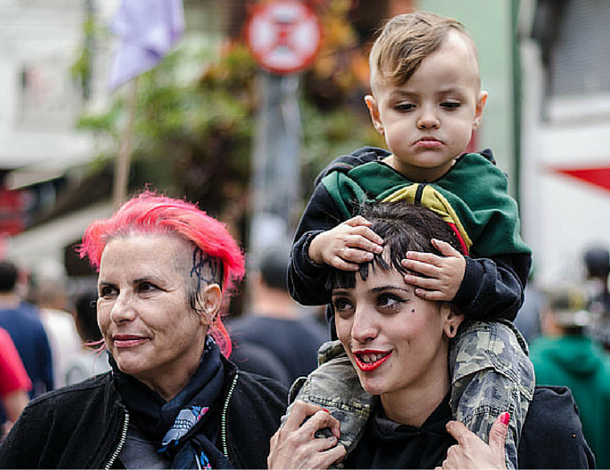
Flickr/Leonardo Veras (CC BY 2.0)

Protection of the Family

The Issue

Over the past few years, a troubling new trend at the international human rights level is being observed, where discourses on ‘protecting the family’ are being employed to defend violations committed against family members, to bolster and justify impunity, and to restrict equal rights within and to family life.

The campaign to "Protect the Family" is driven by ultra-conservative efforts to impose "traditional" and patriarchal interpretations of the family, and to move rights out of the hands of family members and into the institution of ‘the family’.

“Protection of the Family” efforts stem from:

  • rising traditionalism,
  • rising cultural, social and religious conservatism and
  • sentiment hostile to women’s human rights, sexual rights, child rights and the rights of persons with non-normative gender identities and sexual orientations.

Since 2014, a group of states have been operating as a bloc in human rights spaces under the name “Group of Friends of the Family”, and resolutions on “Protection of the Family” have been successfully passed every year since 2014.

This agenda has spread beyond the Human Rights Council. We have seen regressive language on “the family” being introduced at the Commission on the Status of Women, and attempts made to introduce it in negotiations on the Sustainable Development Goals.


Our Approach

AWID works with partners and allies to jointly resist “Protection of the Family” and other regressive agendas, and to uphold the universality of human rights.

In response to the increased influence of regressive actors in human rights spaces, AWID joined allies to form the Observatory on the Universality of Rights (OURs).  OURs is a collaborative project that monitors, analyzes, and shares information on anti-rights initiatives like  “Protection of the Family”.

Rights at Risk, the first OURs report, charts a map of the actors making up the global anti-rights lobby, identifies their key discourses and strategies, and the effect they are having on our human rights.   

The report outlines “Protection of the Family” as an agenda that has fostered collaboration across a broad range of regressive actors at the UN.  It describes it as: “a strategic framework that houses “multiple patriarchal and anti-rights positions, where the framework, in turn, aims to justify and institutionalize these positions.”


Related Content

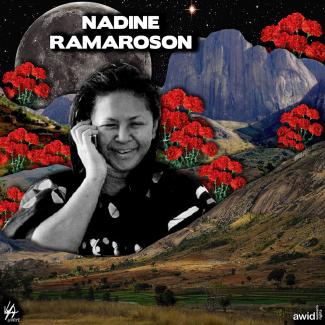
Nadine Ramaroson

Nadine was a role model to many for her work supporting women and the most vulnerable in her community. She was committed to helping the poor and homeless in particular.

Though her death was reported as an accident, the Ramaroson family, led by her father, André Ramaroson led an investigation that pointed to evidence that she had been murdered. She is reported to have died in a fatal accident occurred between Soanierano - Ivongo and Ste Marie - a story that has been refuted by her family.

She received numerous death threats for her bold political positions. Her case remains in court in Antananarivo (the capital of Madagascar). 


Nadine Ramaroson, Madagascar

Snippet FEA Principles of Work S4 (EN)

Four hands holding each other.

HORIZONTALITY

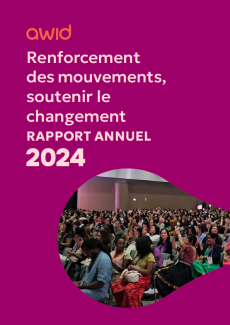
2024: Renforcement des mouvements, soutenir le changement

La montée de la droite dans nombre de pays et le déluge de coupes dans les financements frappent durement la société civile de la Majorité mondiale ; le génocide en cours à Gaza, l’intensification des conflits violents au Soudan, la crise climatique à de nombreux endroits de notre planète : nous faisons face à des fascismes qui reviennent en force et un ordre mondial de l’impunité.

Téléchargez le rapport annuel 2024


Renforcement des mouvements, soutenir le changement RAPPORT ANNUEL

Ensemble, nous pouvons construire un monde où la justice, la libération et la bienveillance ne sont pas des aspirations, mais des réalités.

Téléchargez le rapport annuel 2024

“Where is the Money for Women’s Rights?" AWID’s WITM Toolkit (landing page intro)

A new edition of the Where is the Money?  research is underway.

Learn more.

A Do-it-Yourself Research Methodology

AWID offers the WITM Toolkit to support individuals and organizations who want to conduct their own research on funding trends for a particular region, issue or population by adapting AWID’s research methodology.


AWID’s WITM Toolkit builds on 10 years research experience. AWID’s WITM research and WITM Toolkit is a political and practical demonstration of the resources and steps it takes to conduct solid action-research.

Learn more about the context around the WITM research methodology

The Resourcing Feminist Movements team also offers technical and political support before and during the research process. Review the toolkit and contact us at fundher@awid.org if you need more information.

Snippet - WITM Our objectives - PT

Os nossos objetivos da pesquisa WITM:

1

Fornecer a membres da AWID, parceires do movimento e financiadores uma análise atualizada, robusta, baseada em fatos e orientada para a ação das realidades do financiamento de movimentos feministas e do estado atual do ecossistema do financiamento feminista.

2

Identificar e demonstrar oportunidades para transferir mais recursos de maior qualidade para a organização feminista, expor soluções falsas e interromper tendências que fazem com que o financiamento não seja bem-sucedido e/ou se mova contra a justiça de género e objetivos feministas interseccionais.

3

Articular visões, propostas e objetivos feministas para a justiça no financiamento.

Participe da Pesquisa!

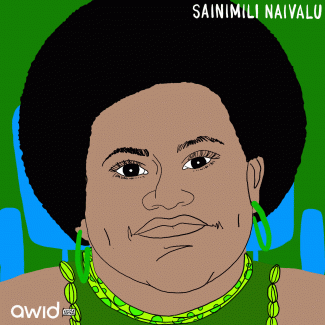
Sainimili Naivalu

“I’ve witnessed discrimination on the streets, being teased on the streets and verbally abused on the streets. I have also made numerous friends and have met a lot of people. There may be dangers out there but I am a survivor and this is where I will be for now.”
- Sainimili Naivalu

Sainimili Naivalu was a feminist and disability rights activist from the village of Dakuibeqa on Beqa Island, Fiji.

She demanded policy makers and stakeholders provide disability friendly policies and services such as the construction of ramps in towns and cities to increase accessibility. Physical barriers were not the only ones she strived to change. From her own experience, she knew that more difficult changes need to take place in social and economic spheres. Many of the challenges disabled people face are rooted in attitudes that carry discrimination and stigma. 

A survivor and a fighter, Sainimili contributed to co-creating feminist realities that foster inclusion and shift attitudes towards disabled people. As a member of the Spinal Injury Association of Fiji (SIA) and through Pacific Disability Forum’s Pacific Enable project she attended the International Labour Organisation “Start Your Business” training in Suva, enabling her to transform her ideas into her own business. She was an entrepreneur at the Suva Market Stall 7, offering manicure services, as well as running SIA’s women’s market stall selling handicrafts, sulus and artifacts. Sainimili’s plan was to expand her business and become a major employer of disabled people.

In addition to her activism, she was also a table tennis medalist and youth champion. 

A vivacious personality, Sainimili was one of a kind. You would always know that Sainimili is in a room because her laughter and her stories would be the first thing that you would notice.
- Michelle Reddy

Sainmili passed away in 2019. 

Snippet FEA No feminist economies without feminist unions (ES)

¡No hay economías feministas sin sindicatos feministas!

A través de la organización laboral y sindical, Sopo, Sabrina y Linda no solo luchan por los derechos de lxs mujeres, lxs trabajadorxs esenciales, lxs trabajadorxs migrantes y lxs trabajadores sexuales, sino por los derechos de todxs lxs trabajadorxs.

La lucha para acabar con la explotación de lxs trabajadores es una lucha feminista, y nos muestra que no hay economías feministas sin sindicatos feministas.

Inna Michaeli

Biography

Inna es una activista y socióloga feminista queer. Posee muchos años de profundo compromiso con las luchas feministas y LGBTQI+, la educación en política y en procesos de organización de y para las mujeres migrantes, así como por la liberación de y la solidaridad con Palestina. Se incorporó a AWID en 2016 y cumplió diferentes funciones, la más reciente como Directora de Programas. Reside en Berlín (Alemania), creció en Haifa (Palestina/Israel), nació en San Petersburgo (Rusia), y ha puesto todo ese recorrido geográfico político y de resistencia a los colonialismos pasados y presentes al servicio del activismo feminista y la solidaridad transnacional.

Inna es autora de Women's Economic Empowerment: Feminism, Neoliberalism, and the State (Empoderamiento económico de las mujeres: Feminismo, neoliberalismo y Estado. Palgrave Macmillan, 2022), basado en la tesis que le valió un doctorado de la Universidad Humboldt de Berlín. Como académica, impartió cursos sobre globalización, producción de conocimientos, identidad y pertenencia. Inna posee una maestría en Estudios Culturales de la Universidad Hebrea de Jerusalén. Integra la Junta de Jewish Voice for a Just Peace in the Middle East (Voces Judías por una Paz Justa en Medio Oriente, Alemania) y, con anterioridad, fue miembro de la Junta de +972 Advancement of Citizen Journalism (+972 Avance del Periodismo Ciudadano). Antes, Inna trabajó con la Coalición de Mujeres por la Paz y es una apasionada de la movilización de recursos para el activismo de base.

Position
Codirectora Ejecutiva
Add to stories
Off

FRMag - Las Triple (ES)

Las Triple Cripples: ¡hablemos de sexo, nena!

por Nandini Tanya Lallmon

Olajumoke «Jay» Abdullahi y Kym Oliver son feministas revolucionarias en más de un sentido.  (...)

Leer

arte: «Bloomed» [En flor], de Titash Sen >

AWID Community Jobs board - FR

Bourse d'emploi communautaire

Êtes-vous à la recherche d'un emploi? L'un des avantages de rejoindre la Communauté de l'AWID est d'avoir accès à notre tableau d'offres d'emploi organisé par la communauté. Vous aurez l'occasion d'explorer de nouvelles opportunités et vous aurez également la possibilité de partager des postes vacants et des appels à propositions avec tous les membres.

Sylvia Rivera

Sylvia Rivera fue activista por los derechos civiles, travesti y trabajadora sexual.

Conocida como la Drag Queen de color de Nueva York, Sylvia fue feroz e incansable en su voluntad por cambiar las cosas, y en su defensa de  quienes quedaron marginadxs y excluidxs cuando el movimiento por los "derechos de la comunidad gay"  se volvió predominante en los Estados Unidos, a principios de los 70.

En 1973, durante un conocido discurso por el día de Christopher Street, Sylvia gritó en medio de la multitud de integrantes de la comunidad LGBT:

"Todos ustedes me dicen, anda y esconde la cola entre las patas.
No voy a seguir aguantando esta mierda.
Me han golpeado.
Me han roto la nariz.
Me han metido en la cárcel.
He perdido mi trabajo.
He perdido mi departamento
por la liberación gay, ¿y todos ustedes me tratan así?
¿Qué carajo les pasa a todos ustedes?
¡Piensen en eso!"

En 1969, a la edad de 17 años, Sylvia participó en los emblemáticos disturbios de Stonewall, al lanzar, presuntamente, el segundo cóctel molotov para protestar por la redada policial en este bar gay de Manhattan. Siguió siendo una figura central en los levantamientos posteriores, organizando mítines y luchando contra la brutalidad policial.

En 1970, Sylvia trabajó junto con Marsha P. Johnson para establecer Street Transvestite Action Revolutionaries [Acción Travesti Callejera Revolucionaria] (S.T.A.R., por sus siglas en inglés), un colectivo político y una organización que establecería proyectos de apoyo mutuo para las personas trans que vivían en la calle, aquellxs que luchaban contra la drogadicción, las que estaban encarceladas y, en particular, para las personas trans de color  que vivían en la pobreza.

Desafiante de las etiquetas, Silvia vivió la vida de una manera que retaba a las personas del movimiento de liberación gay a pensar de manera diferente. Ella dijo:

"Me fui de casa a los 10 años, en 1961.  Hice la calle en la 42. El inicio de los años 60 no era un buen momento para lxs drag queens, los chicos afeminados o los chicos que usaban maquillaje como nosotrxs. En ese entonces nos golpeaba la policía, y todo el mundo. Yo no salí realmente como drag queen hasta finales de los 60, cuando se arrestaba a lxs drag queens, qué degradación había. Recuerdo que la primera vez que me arrestaron, ni siquiera estaba vestida totalmente en drag. Estaba caminando y los policías me arrebataron de la calle. La gente ahora quiere llamarme lesbiana porque estoy con Julia, y yo digo: "No. Soy sólo yo. No soy lesbiana". Estoy cansada de que me etiqueten. Ni siquiera me gusta la etiqueta transgénero. Estoy cansada de vivir con etiquetas. Sólo quiero ser quien soy. Soy Sylvia Rivera. 

A través de su activismo y su coraje, Sylvia ofreció un espejo que reflejaba todo lo que estaba mal en la sociedad, pero también la posibilidad de transformación. Sylvia nació en 1951 y falleció en 2002.
Snippet FEA We are living in a world left (FR)

Nous vivons dans un monde où la destruction de la Nature alimente notre économie mondiale actuelle.

Margo Okazawa-Rey

Biography

Dre. Margo Okazawa-Rey est titulaire de la Chaire Barbara Lee pour le leadership des femmes et professeure invitée en études sur les femmes, le genre et la sexualité et en politique publique au Mills College à Oakland, en Californie. Elle est également professeure émérite à la San Francisco State University.

Ses principaux domaines de recherche et d’activisme au cours des 25 dernières années sont le militarisme, les conflits armés et la violence à l’égard des femmes, analysés de manière intersectionelle. Professeure Okazawa-Rey siège au conseil consultatif international de Du Re Bang à Uijongbu en Corée du Sud, au Conseil international de PeaceWomen Across the Globe à Berne, en Suisse, et est co-présidente du conseil du Highlander Research and Education Centre à New Market, Tennessee aux États-Unis.

Ses publications récentes incluent « Nation-izing » Coalition and Solidarity Politics for US Anti-militarist Feminists (en presse) ; « No Freedom without Connections: Envisioning Sustainable Feminist Solidarities » (2018) dans Feminist Freedom Warriors : Genealogies, Justice, Politics, and Hope, Chandra Talpade Mohanty et Linda Carty (ed.) ; Between a Rock and Hard Place: Southeast Asian Women Confront Extractivism, Militarism, and Religious Fundamentalisms (2018) ; à « Liberal Arts Colleges Partnering with Highlander Research and Education Center : Intergenerational Learning for Student Campus Activism and Personal Transformation, » numéro spéciale de Feminist Formations (Feminist Social Justice Pedagogy, (2018).

Position
Présidente
Add to stories
Off

FRMag - Roots of Love and Resilience

Kunyit Asam : Les racines de l’amour et de la résilience

par Prinka Saraswati

Les cycles menstruels sont généralement d’une durée de 27 à 30 jours. Pendant cette période, les règles elles-mêmes ne durent que 5 à 7 jours. L’épuisement, les sautes d’humeur et les crampes sont le résultat de l’inflammation qui se produit alors. (...)

Lire

< illustration : « Mouvement féministe », Karina Tungari

Snippet - CSW69 Image - EN

Image promoting AWID's participation at CSW69

Cynthia Cockburn

Cynthia Cockburn était une sociologue, écrivaine, universitaire, photographe et militante pour la paix féministe.

Elle a étudié les aspects genrés de la violence et du conflit et fait d’importantes contributions au mouvement pacifiste en explorant les thèmes de la masculinité et de la violence, ainsi que par son activisme local et international.

Ayant introduit une analyse féministe aux questions de militarisation et de guerre, Cynthia figurait parmi les universitaires dont les écrits et analyses illustraient la manière dont la violence basée sur le genre joue un rôle essentiel dans la perpétuation de la guerre. Travaillant en étroite collaboration avec des activistes pacifistes dans des pays en conflit, ses conclusions portaient sur des contextes aussi divers que l’Irlande du Nord, la Bosnie-Herzégovine, Israël et la Palestine, la Corée du Sud, le Japon, l’Espagne et le Royaume-Uni. Sa recherche et ses écrits universitaires ont permis d’éclairer le fait que la violence soit vécue selon un continuum de temps et d’échelle, et perçue très différemment lorsque l’on y applique le prisme du genre.

Elle disait que « [l]e genre nous aide à voir la continuité, la connexion entre les évènements de violence ».

Cynthia a pu mettre ses recherches en pratique grâce à son activisme local et international auprès de mouvements pour la démilitarisation, le désarmement et la paix. Elle a aidé à lancer le camp de femmes pour la paix de Greenham Common, qui prônait le désarmement nucléaire universel en Grande-Bretagne, ainsi que participé à la mise en place de la branche londonienne des Women in Black. Au fil des ans, Cynthia a organisé et participé à des veillées hebdomadaires locales et à la chorale politique Raised Voices, interprétant et écrivant certaines des paroles des chansons. Elle fut également active au sein du groupe Women’s International League for Peace and Freedom (WILPF), du Forum des socialistes féministes européennes et de Women Against Fundamentalism.

« Cynthia émettait une lumière féministe, tissait les communautés féministes entre elles, entonnait des chants de paix, écoutait, écoutait, écoutait, observait les oiseaux – et suspendait le flot de circulation. Je lui serai toujours reconnaissante et redevable, l’« autre » Cynthia. » – Cynthia Enloe

Cynthia est née en juillet 1934 et s’est éteinte en septembre 2019, à l’âge de 85 ans.

Snippet - That Feminist Fire Podcast Trailer (ES)