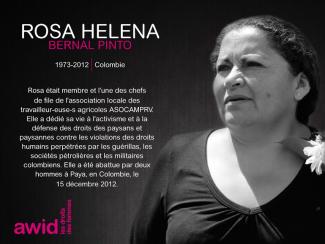
Rosa Helena Bernal Pinto
Over the past few years, a troubling new trend at the international human rights level is being observed, where discourses on ‘protecting the family’ are being employed to defend violations committed against family members, to bolster and justify impunity, and to restrict equal rights within and to family life.
The campaign to "Protect the Family" is driven by ultra-conservative efforts to impose "traditional" and patriarchal interpretations of the family, and to move rights out of the hands of family members and into the institution of ‘the family’.
Since 2014, a group of states have been operating as a bloc in human rights spaces under the name “Group of Friends of the Family”, and resolutions on “Protection of the Family” have been successfully passed every year since 2014.
This agenda has spread beyond the Human Rights Council. We have seen regressive language on “the family” being introduced at the Commission on the Status of Women, and attempts made to introduce it in negotiations on the Sustainable Development Goals.
AWID works with partners and allies to jointly resist “Protection of the Family” and other regressive agendas, and to uphold the universality of human rights.
In response to the increased influence of regressive actors in human rights spaces, AWID joined allies to form the Observatory on the Universality of Rights (OURs). OURs is a collaborative project that monitors, analyzes, and shares information on anti-rights initiatives like “Protection of the Family”.
Rights at Risk, the first OURs report, charts a map of the actors making up the global anti-rights lobby, identifies their key discourses and strategies, and the effect they are having on our human rights.
The report outlines “Protection of the Family” as an agenda that has fostered collaboration across a broad range of regressive actors at the UN. It describes it as: “a strategic framework that houses “multiple patriarchal and anti-rights positions, where the framework, in turn, aims to justify and institutionalize these positions.”
El Foro Internacional de AWID es una reunión de 2.000 líderes de derechos de las mujeres y activistas de todo el mundo. El Foro AWID es el evento recurrente más grande de su tipo, y cada Foro tiene lugar en un país diferente en el Sur global.
El Foro Internacional de AWID es un evento de la comunidad global y, al mismo tiempo, un espacio para una transformación personal radical. Es un encuentro único: el Foro reúne a los movimientos feministas, por los derechos de las mujeres, por la justicia de género, LBTQI+ y aliados, en toda nuestra diversidad y humanidad, para conectarnos, sanar y florecer.
Únete a nosotrxs en Bangkok, Tailandia, y de manera virtual, en diciembre de 2024.
سيقدم صندوق الوصول الخاص بنا عددًا محدودًا من المنح الدراسية لتمويل مشاركة النشطاء/ الناشطات الذين/ اللواتي لا يستطيعون القيام بذلك، وليس لديهم/ن علاقات مع الممولين/ات الذين/ اللواتي يمكنهم/ن تغطية مشاركتهم/ن. لذلك إذا كان لديك احتمالات أخرى، يرجى استكشافها. سنبذل قصارى جهدنا لتقديم أكبر عدد ممكن من المنح الدراسية، وسنشارك المزيد من المعلومات حول هذه العملية وكيفية التقديم لاحقًا في أوائل العام 2024.
Facebook: @AWIDWomensRights
Instagram: @awidwomensrights
Twitter ES: @awid_es
LinkedIn: Association for Women's Rights in Development (AWID)
La Conférence de Monterrey sur le financement du développement a marqué le début des discussions sur les questions relatives au financement du développement.
Pour en savoir plus sur les six axes de Monterrey et sur les mécanismes de suivi de la conférence : Gender Issues and Concerns in Financing for Development (en anglais), par Maria Floro, Nilufer Çagatay, John Willoughby et Korkut Ertürk (INSTRAW, 2004).
نعم من فضلك. لقد تغير العالم منذ عام 2021 ونحن ندعوك لتقديم مقترح يعكس واقعك وأولوياتك الحالية.
The theme of the Fourth High-level Dialogue on Financing for Development, 23-24 March 2010: The Monterrey Consensus and Doha Declaration on Financing for Development: status of implementation and tasks ahead. It had four round tables on: the reform of the international monetary and financial systems; impact of the financial crisis on foreign direct investments; international trade and private flows; and the role of financial and technical development cooperation, including innovative sources of development finance, in leveraging the mobilization of domestic and international financial resources for development.
There was also the informal interactive dialogue involving various stakeholders that focused on the link between financing for development and achieving the Millennium Development Goals.
เราจับตาดูเรื่องนี้และความเสี่ยงอื่นๆอย่างระมัดระวัง และจะนำเสนอข้อมูลด้านสุขภาพและความปลอดภัยที่คลอบคลุมเมื่อมีการเปิดให้ลงทะเบียน เพื่อให้คุณสามารถตัดสินใจได้อย่างมีข้อมูล มากกว่านั้นการจัดประชุมแบบสองรูปแบบ(ออนไลน์และกายภาพ)ถูกออกแบบให้ให้เกิดการมีส่วนร่วมอย่างมีความหมายสำหรับผู้เข้าร่วมที่เลือกจะไม่เดินทาง หรือผู้เข้าร่วมที่ไม่สามารถเดินทางได้
Difusión del Borrador Cero del Documento Final
Contenido relacionado
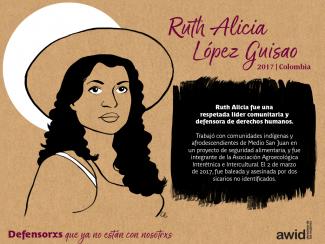
Front Line Defenders: Asesinato de la defensora de derechos humanos Ruth Alicia López Guisao
Co-create the The 15th AWID International Forum in Bangkok, Thailand.
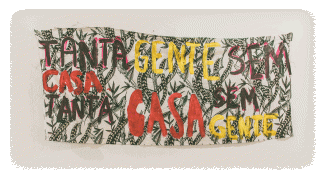
Nació en Bahía, la parte noreste de Brasil. Es inmigrante, activista social y madre de 8 hijxs.
Carmen experimentó la falta de vivienda a los 35 años, después de migrar sola a São Paulo. Esto la llevó a convertirse en una feroz defensora de las comunidades vulnerables, marginalizadas e invisibilizadas más afectadas por la crisis de la vivienda. Eventualmente se convirtió en una de las fundadoras del MSTC en 2000.
Como organizadora política visionaria y líder actual del MSTC, el trabajo de Carmen ha puesto al descubierto la crisis de la vivienda de la ciudad y ha inspirado a otrxs sobre diferentes formas de organizar y gestionar las ocupaciones.
Se mantuvo firme al frente de varias ocupaciones. Uno de ellos es la Ocupación 9 de Julho, que ahora sirve como escenario para la democracia directa y un espacio donde todxs pueden ser cuidadxs, escuchadxs, apreciadxs y trabajar juntos.
Carmen ha sido celebrada durante mucho tiempo por su audacia al devolver la vida a edificios abandonados en el corazón de São Paulo.
¡Si quieres saber más sobre Carmen, puedes seguir su cuenta de Instagram!
Le processus de l’Organisation des Nations Unies (ONU) sur le financement du développement (FdD) vise à traiter différentes formes de financement du développement et de coopération pour le développement. Selon le Consensus de Monterrey, ce processus comporte six axes clés :