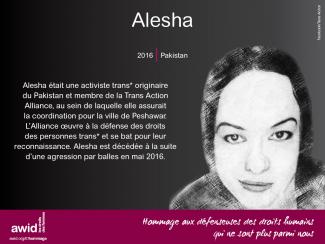
Alesha
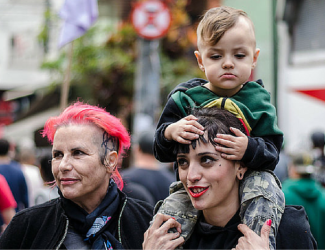
Over the past few years, a troubling new trend at the international human rights level is being observed, where discourses on ‘protecting the family’ are being employed to defend violations committed against family members, to bolster and justify impunity, and to restrict equal rights within and to family life.
The campaign to "Protect the Family" is driven by ultra-conservative efforts to impose "traditional" and patriarchal interpretations of the family, and to move rights out of the hands of family members and into the institution of ‘the family’.
Since 2014, a group of states have been operating as a bloc in human rights spaces under the name “Group of Friends of the Family”, and resolutions on “Protection of the Family” have been successfully passed every year since 2014.
This agenda has spread beyond the Human Rights Council. We have seen regressive language on “the family” being introduced at the Commission on the Status of Women, and attempts made to introduce it in negotiations on the Sustainable Development Goals.
AWID works with partners and allies to jointly resist “Protection of the Family” and other regressive agendas, and to uphold the universality of human rights.
In response to the increased influence of regressive actors in human rights spaces, AWID joined allies to form the Observatory on the Universality of Rights (OURs). OURs is a collaborative project that monitors, analyzes, and shares information on anti-rights initiatives like “Protection of the Family”.
Rights at Risk, the first OURs report, charts a map of the actors making up the global anti-rights lobby, identifies their key discourses and strategies, and the effect they are having on our human rights.
The report outlines “Protection of the Family” as an agenda that has fostered collaboration across a broad range of regressive actors at the UN. It describes it as: “a strategic framework that houses “multiple patriarchal and anti-rights positions, where the framework, in turn, aims to justify and institutionalize these positions.”
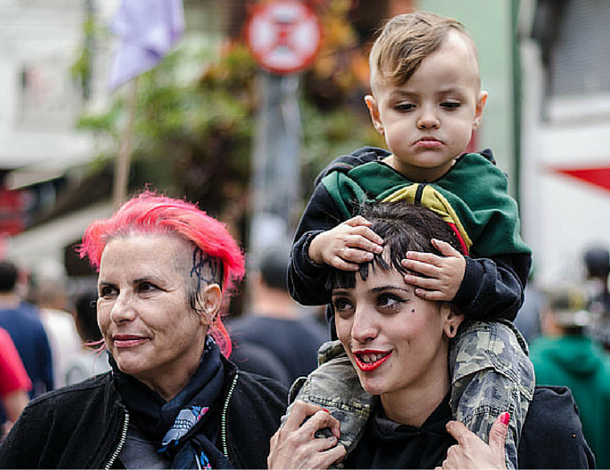
Una nómada de las culturas, nacida en Hong Kong y con raíces turco-paquistaníes, el amor de Fatima por la narración, ya sea su lectura o su creación conjunta, le infundió la pasión por el activismo de las comunicaciones. Formada en periodismo, ha trabajado durante siete años en los ámbitos de la comunicación digital y los medios de comunicación con ONG que brindan oportunidades educativas y asistencia jurídica a personas refugiadas y solicitantes de asilo, así como con el movimiento feminista musulmán, que aplica un enfoque feminista y de derechos para comprender y buscar la igualdad y la justicia en la tradición jurídica musulmana. Escribe con habitualidad artículos de opinión sobre asuntos feministas en el Sur Global.
Mediante la narración en esta era hiperdigital de las redes sociales, Fatima sigue colaborando con organizadores comunitaries y activistas de base para crear contenido audiovisual, a fin de tender puentes de comprensión hacia la liberación colectiva y la descolonización. Durante los días en que no trabaja, mira atentamente largometrajes feministas independientes de Irán, Marruecos y Pakistán, e interpreta poesía oral con sus camaradas de Kuala Lumpur.

Nana est militante féministe et chercheuse spécialisée dans les droits reproductifs et les politiques démographiques. Elle exerce ses activités en Égypte. Elle collabore avec Realizing Sexual and Reproductive Justice (RESURJ), siège au conseil consultatif de l’A Project au Liban et fait partie du comité communautaire de Mama Cash. Nana est diplômée d’un master en santé publique de l’Institut KIT et de l’Université Vrije d’Amsterdam. Son travail consiste à analyser et contextualiser les politiques démographiques nationales tout en documentant les questions liées à l’eugénisme contemporain, aux programmes d’aide internationale régressifs et aux régimes autoritaires. Auparavant, elle a collaboré avec la Fondation genevoise pour la formation et la recherche médicales, l’Initiative égyptienne pour les droits de la personne, ainsi qu’avec le Collectif féministe Ikhtyar au Caire.
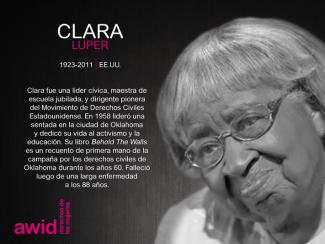
Kay Thi Win, Asia Pacific Network of Sex Workers (APNSW)
Thin Pa Pa Htun, Aye Myanmar Association
Xiao Shuang, Northeast Transgender Support Network
Cathy Ketepa, Friends Frangipani Inc. PNG
Rajeshwari Prajapati, Society for Women Awareness Nepal (SWAN)
L’AWID a fait ses débuts en 1982 et s’est transformée au fil du temps.
Lire « From WID to GAD to Women's Rights: The First 20 Years of AWID » (disponible uniquement en anglais).
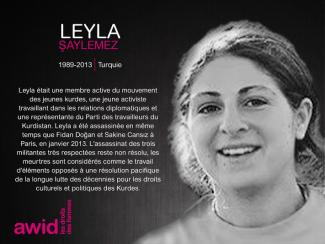
Dans le cadre de notre engagement à nouer des liens plus profonds avec des artistes via nos pratiques de co-création de Réalités Féministes, AWID a collaboré avec un Groupe de Travail Artistique visant à faire progresser et à renforcer les programmes et réalités féministes, dans les communautés et mouvements via l’expression créative. Notre intention ici est de rassembler des féministes créatifs·ves dans un espace puissant et audacieux pour grandir et vivre librement, et briser les récits toxiques en les remplaçant par des alternatives transformatrices.
We and cannot review funding proposals or requests.
We encourage you to browse our list of donors that may potentially fund your women's rights organizing.
More resources are available from the Priority Area “Resourcing Feminist Movements”
Todos nuestros informes anuales estan disponibles en línea.
If your activity is accepted, you will be contacted by the AWID team to assess and respond to interpretation and accessibility needs.
For decades, feminist scholars and advocates have articulated important concepts related to gender to understand and challenge oppression and discrimination. Those concepts have now become the target of anti-rights actors who claim that oppressive patriarchal gender roles are “common sense”, strategically painting all other ideas, cultural norms, and forms of social life as a dangerous, conspirative ideology.
Read our Brief on “Gender Ideology” Narratives: A Threat To Human Rights