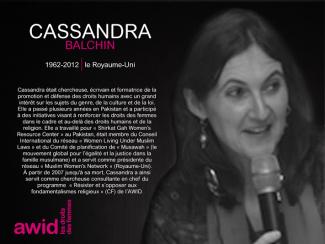
Cassandra Balchin
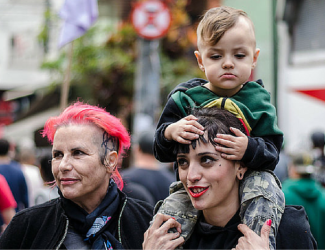
Over the past few years, a troubling new trend at the international human rights level is being observed, where discourses on ‘protecting the family’ are being employed to defend violations committed against family members, to bolster and justify impunity, and to restrict equal rights within and to family life.
The campaign to "Protect the Family" is driven by ultra-conservative efforts to impose "traditional" and patriarchal interpretations of the family, and to move rights out of the hands of family members and into the institution of ‘the family’.
Since 2014, a group of states have been operating as a bloc in human rights spaces under the name “Group of Friends of the Family”, and resolutions on “Protection of the Family” have been successfully passed every year since 2014.
This agenda has spread beyond the Human Rights Council. We have seen regressive language on “the family” being introduced at the Commission on the Status of Women, and attempts made to introduce it in negotiations on the Sustainable Development Goals.
AWID works with partners and allies to jointly resist “Protection of the Family” and other regressive agendas, and to uphold the universality of human rights.
In response to the increased influence of regressive actors in human rights spaces, AWID joined allies to form the Observatory on the Universality of Rights (OURs). OURs is a collaborative project that monitors, analyzes, and shares information on anti-rights initiatives like “Protection of the Family”.
Rights at Risk, the first OURs report, charts a map of the actors making up the global anti-rights lobby, identifies their key discourses and strategies, and the effect they are having on our human rights.
The report outlines “Protection of the Family” as an agenda that has fostered collaboration across a broad range of regressive actors at the UN. It describes it as: “a strategic framework that houses “multiple patriarchal and anti-rights positions, where the framework, in turn, aims to justify and institutionalize these positions.”
Hakima Abbas, AWID
"We're using the tools that we have to share our resistance, strategies and continue to build our power to take action and create new brave and just worlds."
ถ้ากลุ่มหรือองค์กรของคุณได้รับการสนับสนุนเงินทุน คุณสามารถพูดคุยกับแหล่งทุนของคุณได้ตั้งแต่ตอนนี้หากพวกเค้าสามารถสนับสนุนการเดินทางและการเข้าร่วมของคุณได้ หลายองค์กรวางแผนงบประมาณปีหน้าในปี 2566 จึงเป็นการดีกว่าหากสามารถพูดคุยกับพวกเค้าก่อนภายในปีนี้
Nous ne pouvons pas examiner les propositions ou les demandes de financement.
Nous vous invitons à consulter notre liste de bailleurs fonds pouvant potentiellement financer votre organisation pour les droits des femmes
Voir notre liste de bailleurs de fonds (en anglais)
Plus de ressources sont disponible depuis la page de Domaine prioriataire Ressources des mouvements féministes
Tonya Haynes, CAISO
Angelique V. Nixon, CAISO

เป็นกระบวนการเดียวกันและกำหนดเวลาเดียวกันทุกประการ โปรดใช้แบบฟอร์มเดียวกันนี้ในการส่งกิจกรรมของคุณ ไม่ว่าจะเป็นกิจกรรมที่จัดแบบพบกันทางกายภาพ ทางออนไลน์ หรือทั้งสองแบบ (ไฮบริด)
Naike Ledan
Semi Kaefra Alisha Fermond, Trans Rights Activist ACIFVH
Natalie Desrosiers
Fédorah Pierre-Louis
มี! ขณะนี้พวกเรากำลังค้นหานวัตกรรมทางเทคโนโลยีที่จะช่วยให้เกิดการเชื่อมต่อและการเข้าร่วมอย่างมีความหมาย
Te recomendamos buscar asesoría legal y ponerte en contacto con un refugio para mujeres o un centro de referencia en tu área.
Las "HotPeachPages" son un recurso en línea que ofrece enlaces a albergues para mujeres en todo el mundo. AWID no puede dar fe de la exactitud o la calidad de las instituciones que aparecen en esos listados, pero podría ser un buen lugar por donde empezar si no conoces organizaciones en tu zona.
In this selection of films you will find the voices of filmmakers who are not content with simply recording the feminist realities that palpitate in every corner of this vast and diverse territory. These are works that from their very conceptualization are questioning for what, by whom, and how films and videos are made. They understand film to be an instrument of struggle, something more than images to be enjoyed on a screen. These are individual or collective filmmakers who see film and video making as an instrument to promote discussion, open a debate, and thus serve as a resource for popular and feminist pedagogies.
Le Groupe de travail des femmes sur le financement du développement (Women's Working Group on Financing for Development – WWG on FfD) , une alliance composée d’organisations et de réseaux de défense des droits des femmes, a été créée en octobre 2007 pour mener, dans le cadre des processus des Nations Unies sur le FdD, des activités de plaidoyer en faveur de l’égalité de genre, de l’autonomisation des femmes et des droits humains.
Troisième Dialogue de haut niveau sur le financement du développement, 23-25 octobre 2007
Contenido relacionado
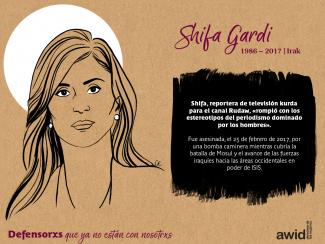
El Mundo: Una bomba mata en Mosul a una reportera de la TV kurda
Check Out our Super Short Guide To Organising Global Feminist Festivals And Online Events!
