Organizing creatively, facing an increasing threat
Young feminist activists play a critical role in women’s rights organizations and movements worldwide by bringing up new issues that feminists face today. Their strength, creativity and adaptability are vital to the sustainability of feminist organizing.
At the same time, they face specific impediments to their activism such as limited access to funding and support, lack of capacity-building opportunities, and a significant increase of attacks on young women human rights defenders. This creates a lack of visibility that makes more difficult their inclusion and effective participation within women’s rights movements.
A multigenerational approach
AWID’s young feminist activism program was created to make sure the voices of young women are heard and reflected in feminist discourse. We want to ensure that young feminists have better access to funding, capacity-building opportunities and international processes. In addition to supporting young feminists directly, we are also working with women’s rights activists of all ages on practical models and strategies for effective multigenerational organizing.
Our Actions
We want young feminist activists to play a role in decision-making affecting their rights by:
Fostering community and sharing information through the Young Feminist Wire. Recognizing the importance of online media for the work of young feminists, our team launched the Young Feminist Wire in May 2010 to share information, build capacity through online webinars and e-discussions, and encourage community building.
Researching and building knowledge on young feminist activism, to increase the visibility and impact of young feminist activism within and across women’s rights movements and other key actors such as donors.
Promoting more effective multigenerational organizing, exploring better ways to work together.
Supporting young feminists to engage in global development processes such as those within the United Nations
Collaboration across all of AWID’s priority areas, including the Forum, to ensure young feminists’ key contributions, perspectives, needs and activism are reflected in debates, policies and programs affecting them.
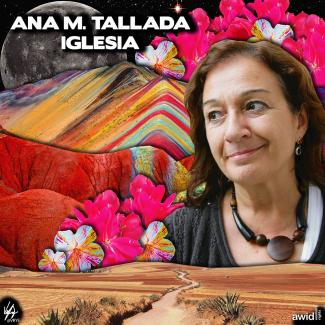
Ana était un ardente défenseure des droits des femmes et travaillait avec un large éventail de femmes au sein d’organisations de terrain ainsi que dans le secteur privé.
Elle croyait en la construction de ponts entre les secteurs. Ana était membre du Réseau national de promotion de la femme (RNPM) et participait activement à l'élaboration de nombreux programmes sociaux traitant de questions telles que la santé et les droits sexuels et reproductifs.
Pleasure Garden Exhibition
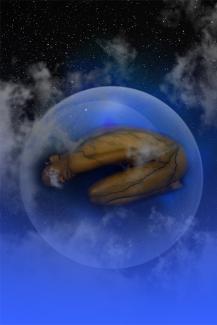
The artwork is a photography and illustration collaboration between Siphumeze and Katia during lockdown. The work looks at black queer sex and plesure narratives, bondage, safe sex, toys, mental health and sex and many more. It was created to accompany the Anthology Touch.
Mental HealthSex and SpirtualityOrgasm
About the Artists:
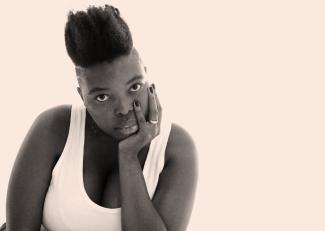
Siphumeze Khundayi is an art-maker, photographer and facilitator interested in creative ways of bringing together dialogue and artistic practice in relation to African Queer identity.
She is creative director of HOLAAfrica! a pan-Africanist womanist online collective.
Her solo and collaborative performance work has been featured in a number of festivals and theatre spaces such as Ricca Ricca Festival in Japan
She directed two Naledi nominated productions in 2017 and 2018. She directed a show that won a Standard Bank Ovation award in 2020.
As a photographer she was part of a group exhibition titled Flowers of my Soul in Italy organised by the Misfit Project. Produced three publications for HOLAAfrica and was published in and provided the cover for volume two: As You Like of the Gerald Kraak Anthologies.
Katia Herrera is a 21-year-old Digital visual artist from the noisy city of Santo Domingo in the Dominican Republic. Despite Herrera being a self-proclaimed introvert, her artwork is remarkably loud in a world trying to quiet black voices. With titles like Black Woman, You Own the Moon, Earth Goddess, Forever, and Universe Protector, Herrera’s legacy will be marked by her passion for highlighting the endurance and perseverance of black folks of old and present to contrast the narrative that black skin should only be associated with slavery.
One of her most lovely and vivaciously titled works, Universe Protector, portrays the black soul as a divine entity full of strength, power, and greatness. In her youth, her love of graphic design was stimulated by her parents’ artistry and the Photoshop they had downloaded on their computer for their professional photography.
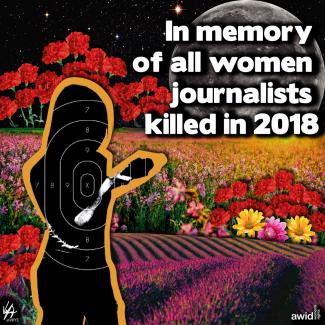
Just like women have learned to avoid dark streets for their safety, women journalists are forced to avoid reporting certain stories as a result of online harassment.
The physical, sexual and online abuse that has become a part of their daily work lives should never be normalized.
Harassment is not part of the job description and should be called out and challenged at every turn to ensure these important voices are not silenced.
This tribute to journalists was made on behalf of IFEX
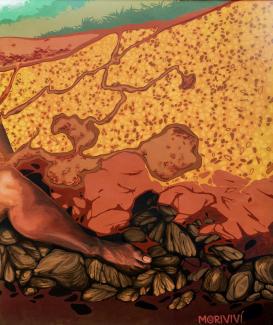
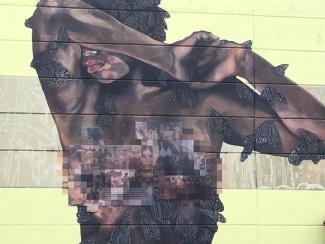
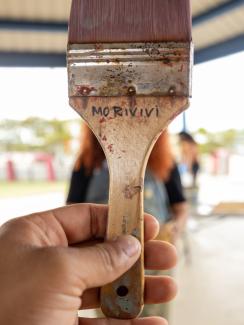
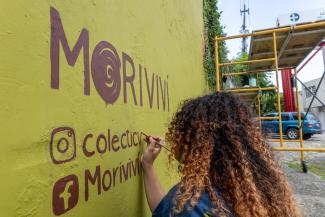
Colectivo Morivivi
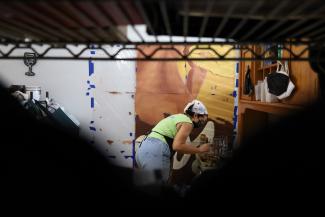
El Colectivo Moriviví es una colectiva de solo mujeres. Nuestra producción artística consiste en muralismo, muralismo comunitario y acciones/performances de protesta. Nuestro trabajo tiene como objetivo democratizar el arte y llevar a la esfera pública las narrativas de las comunidades de Puerto Rico, para generar espacios en donde sean validadas. Creemos que, a través del artivismo, podemos promover conciencia sobre temas sociales y fortalecer nuestra memoria colectiva.
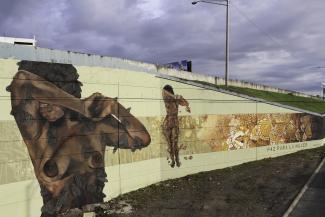
“Cacibajagua” 2017, proyecto de mural, Jiangxi, China“Cacibajagua” 2017, proyecto de mural, Jiangxi, China“Paz para la Mujer” 2015, colaboración con la organización Coordinadora Paz para la Mujer, Santurce, Puerto Rico
“Paz para la Mujer” 2015, colaboración con la organización Coordinadora Paz para la Mujer, Santurce, Puerto Rico
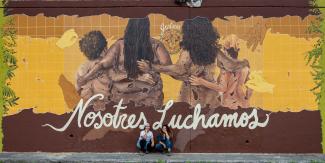
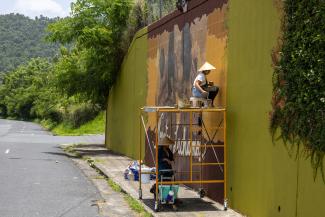
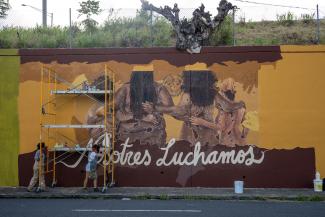
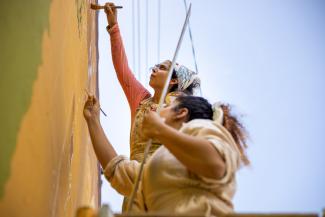
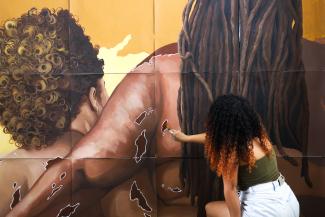
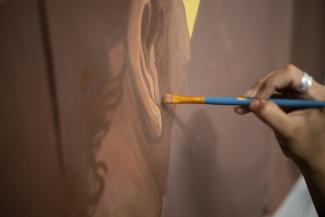
En el marco de su participación en el Grupo de Trabajo Artístico de AWID, el Colectivo Moriviví convocó a un grupo diverso de afiliadxs, asociadxs y personal de AWID y facilitó un proceso colaborativo de imaginación, configuración y decisión sobre el contenido para la creación de un mural comunitario, a través de un proceso de creación conjunta en múltiples etapas. El proyecto comenzó con una conceptualización remota con feministas de diferentes zonas del planeta reunidxs por AWID, y luego evolucionó hacia su recontextualización y realización en Puerto Rico. Nos honra haber contado con la contribución de las artistas locales Las Nietas de Nonó (@lasnietasdenono), la participación de mujeres locales en la Sesión de Pintura Comunitaria, el apoyo logístico de la Municipalidad de Caguas, y el apoyo adicional al colectivo, brindado por FRIDA Young Feminist Fund.
El mural explora la trascendencia de las fronteras, al presentar cuerpos como un mapa en un abrazo que realza la intersección de las distintas manifestaciones, prácticas y realidades feministas.
Agradecemos también a Kelvin Rodríguez, quien documentó y captó las diferentes etapas de este proyecto en Puerto Rico:
Sobre el Colectivo Moriviví
Moriviví es un colectivo de jóvenes artistas mujeres que trabajan en arte público desde abril de 2013. Con sede en Puerto Rico, hemos obtenido reconocimiento por la creación de murales y de arte comunitario.
El grupo se inició en festivales locales de arte urbano. A medida que nuestro trabajo se fue haciendo más conocido, algunas organizaciones y líderes comunitarias comenzaron a contactarnos. Al principio éramos solo ocho estudiantes de secundaria que querían pintar juntas un mural. Y en estos ocho años de duro trabajo hemos enfrentado muchos desafíos. Ahora estamos en un período de transición. Queremos reestructurar internamente el colectivo durante el próximo año. Nuestro objetivo es abrir nuevas oportunidades de colaboración y respaldar nuestro proceso de toma de decisiones con un nuevo sistema de evaluación. Aspiramos, en el largo plazo, a convertirnos en una escuela alternativa para la práctica artística, destinada a aquellas personas interesadas en sumergirse en la producción de arte comunitario.
Posso compartilhar o inquérito com outras pessoas?
Claro que sim! Encorajamo-lo a compartilhar a ligação do nosso inquérito com as suas redes. Quanto mais perspetivas diversas recolhermos, melhor será a nossa compreensão do cenário financeiro para a organização feminista.
Snippet - That Feminist Fire Logo (EN)
FRMag - Ashawo Work na Work
“Ashawo Work na Work”: How Young Ghanaian Feminists Are Making Feminist Futures A Reality
by Fatima B. Derby
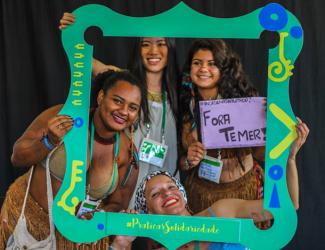
In 2017, the AWID #PracticeSolidarity campaign highlighted how young feminists could build feminist futures by showing up for one another, being in cross-regional conversations with one another, marching in solidarity with other activists and collaborating between movements. (...)
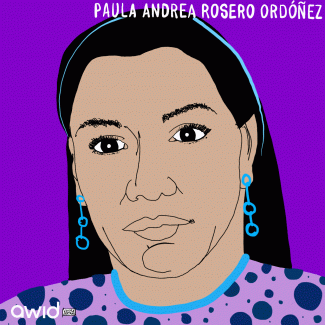
“[She] was a person who was characterized by her hard work in favor of the defense of human rights and the construction of peace in Nariño, especially in the municipality of Samaniego-Nariño.” - Jorge Luis Congacha Yunda for Página10
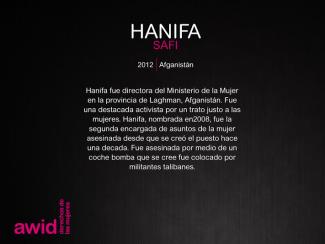
Paula Andrea Rosero Ordóñez was a trial lawyer in the office of the Public Ministry in Samaniego, Nariño, the main agency defending citizens’ rights in Colombia.
She focused on civil and political rights, issues of impunity and justice, and contributed to uncovering the abuse of power, including corruption. She also participated in peacebuilding projects in her hometown Samaniego, such as the Municipal Peace Council and the Municipal Women’s Board.
Paula received death threats after exposing the irregular handling of resources and complaining about acts of corruption at the Lorencita Villegas Hospital in the Nariñense municipality. She was murdered on 20 May 2019, when two men approached and shot her at close range.
Tactiques, stratégies et impacts des antidroits
Chapitre 5
Les antidroits ont adopté une double stratégie : outre leurs attaques ouvertes sur le système multilatéral, ils et elles sapent les droits humains depuis l’intérieur. Leur implication vise à prendre le contrôle des processus, instaurer des normes régressives et fragiliser la redevabilité.
Leur implication dans les sphères des droits humains a un but essentiel : saper le système et sa capacité à respecter, protéger et assurer les droits humains de tout un chacun, et à tenir les États membres pour responsables de leurs enfreintes. Certaines tactiques antidroits en dehors de l’ONU visent à la délégitimer, exercer des pressions politiques pour limiter son financement ou se retirer d’accords internationaux sur les droits humains. Les acteur·rice·s antidroits gagnent cependant en influence au sein même de l’ONU. Leurs tactiques de l’intérieur incluent la formation de délégué·e·s, la dénaturation de cadres relatifs aux droits humains, la dilution de la substance d’accords sur les droits humains, l’infiltration de comités d’ONG, la demande du statut ECOSOC sous un nom neutre, l’infiltration des espaces des jeunes et la pression pour que des acteur·rice·s antidroits occupent des postes clés.
Sommaire
L’institutionnalisation des antidroits dans les mécanismes de l’ONU
Le retrait et la délégitimation
L’appauvrissement des standards relatifs aux droits humains
La prise de contrôle : création d’un cadre des droits humains parallèle
Exercice : Oui, ils et elles sont fort·e·s, mais nous aussi!
Exercice : Tenir les gouvernements pour responsables
Tengo la convicción de que las mujeres empoderadas dotan de empoderamiento a otras mujeres, y es por ello que la he pasado tan bien como afiliada de AWID. Todo lo que sé y lo que entiendo de feminismo e interseccionalidad se ha ampliado gracias a los contactos que tuve como parte del Equipo de la Calle de la Comunidad AWID. Espero que más mujeres se sumen y compartan temas e ideas que ayuden a otras mujeres. - Loyiso Lindani, Sudáfrica.
Snippet Forum Stories Gen Intro (FR)
Que représentent les Forums de l’AWID pour celles et ceux qui y ont assisté ? Quelle est cette magie qui opère lorsque des féministes du monde entier se rassemblent pour célébrer, élaborer des stratégies, apprendre et partager leurs joies ?
L’AWID s’est entretenue avec plus de quarante participant·es aux Forums pour connaître le récit de leur transformation personnelle en tant qu’activistes, celle de leur organisation et des mouvements auxquels elles et ils appartiennent. Elles et ils nous ont également dit ce que nous devrions conserver et renforcer pour les prochains Forums, ce qui distingue les Forums de l’AWID, et ce que nous pouvons améliorer.
Ce rapport contient des enseignements et d’inestimables conseils pour toute personne prévoyant d’organiser des rassemblements régionaux et thématiques en personne, et pour nous-mêmes alors que nous planifions le 15e Forum international de l’AWID.