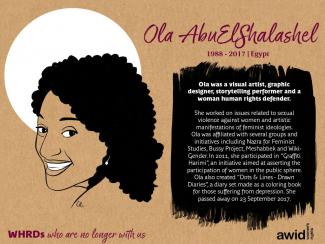
Ola AbuElShalashel
- Category
- Civil & Political Rights
- Date of death / disappearance
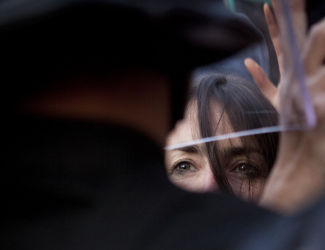
WHRDs are self-identified women and lesbian, bisexual, transgender, queer and intersex (LBTQI) people and others who defend rights and are subject to gender-specific risks and threats due to their human rights work and/or as a direct consequence of their gender identity or sexual orientation.
WHRDs are subject to systematic violence and discrimination due to their identities and unyielding struggles for rights, equality and justice.
The WHRD Program collaborates with international and regional partners as well as the AWID membership to raise awareness about these risks and threats, advocate for feminist and holistic measures of protection and safety, and actively promote a culture of self-care and collective well being in our movements.
WHRDs are exposed to the same types of risks that all other defenders who defend human rights, communities, and the environment face. However, they are also exposed to gender-based violence and gender-specific risks because they challenge existing gender norms within their communities and societies.
We work collaboratively with international and regional networks and our membership
We aim to contribute to a safer world for WHRDs, their families and communities. We believe that action for rights and justice should not put WHRDs at risk; it should be appreciated and celebrated.
Promoting collaboration and coordination among human rights and women’s rights organizations at the international level to strengthen responses concerning safety and wellbeing of WHRDs.
Supporting regional networks of WHRDs and their organizations, such as the Mesoamerican Initiative for WHRDs and the WHRD Middle East and North Africa Coalition, in promoting and strengthening collective action for protection - emphasizing the establishment of solidarity and protection networks, the promotion of self-care, and advocacy and mobilization for the safety of WHRDs;
Increasing the visibility and recognition of WHRDs and their struggles, as well as the risks that they encounter by documenting the attacks that they face, and researching, producing, and disseminating information on their struggles, strategies, and challenges:
Mobilizing urgent responses of international solidarity for WHRDs at risk through our international and regional networks, and our active membership.
This is a French article
- created from the French site

Sauf si vous avez des problèmes d’accessibilité et/ou que vous répondez aux questions de l’enquête dans une autre langue, nous vous encourageons fortement à utiliser KOBO pour une collecte et une analyse standardisées des données WITM.
我們屆時會於網站上公告徵選結果。
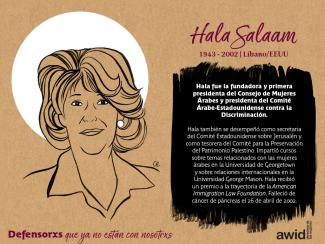
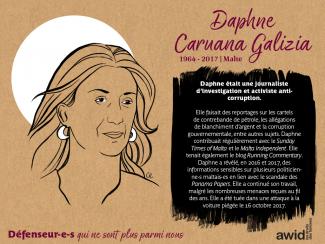
Notre hommage en ligne met à l’honneur cinq défenseuses des droits humains assassinées au Moyen-Orient ou en Afrique du Nord. Ces défenseuses étaient avocates ou militantes et ont œuvré pour les droits des femmes ou pour les droits civils. Leur mort met en évidence les conditions de travail souvent difficiles et dangereuses dans leurs pays respectifs. Nous vous invitons à vous joindre à nous pour commémorer la vie, le travail et l’activisme de ces femmes. Faites circuler ces mèmes auprès de vos collègues et amis ainsi que dans vos réseaux et twittez en utilisant les hashtags #WHRDTribute et #16Jours.
S'il vous plaît cliquez sur chaque image ci-dessous pour voir une version plus grande et pour télécharger comme un fichier


“Los saberes y prácticas indígenas siempre han apoyado la soberanía alimentaria, y ese saber está en manos de las mujeres […] El ecofeminismo para mí es el respeto por todo lo que tenemos a nuestro alrededor” -
Yes, we invite you to share more on issues that are important to you by responding to the open question(s) at the end of the survey.
您若持有下列國家的護照,可免簽入境台灣到台北參與論壇活動(請留意持免簽可停留的天數各國不同):
安道爾、澳大利亞、奧地利、比利時、保加利亞、汶萊、加拿大、智利、克羅埃西亞、賽普勒斯、捷克、丹麥、愛沙尼亞、 史瓦濟蘭、芬蘭、法國、德國、希臘、瓜地馬拉、海地、宏都拉斯、匈牙利、冰島、愛爾蘭、以色列、義大利、日本*、韓國、拉脫維亞、列支頓斯登、立陶宛、盧森堡、馬爾他、馬歇爾群島、摩納哥、荷蘭、紐西蘭、尼加拉瓜、挪威、帛琉、巴拉圭、菲律賓、波蘭、葡萄牙、羅馬尼亞、俄國、聖馬利諾、斯洛伐克、斯洛維尼亞、西班牙、瑞典、瑞士、吐瓦魯、英國、美國、梵蒂岡城國、貝里斯、多明尼加、馬來西亞、諾魯、聖克里斯多福及尼維斯、聖塔露西亞、聖文森和格瑞納丁、新加坡。
未持有上述國家護照的人士來台北須申請簽證。
請留意:
在您完成論壇註冊手續後,無論您國籍為何,應會收到與論壇參與相關的一組號碼,用於申請來台灣的電子簽證。
論譠開放報名的時間我們會另行通知。
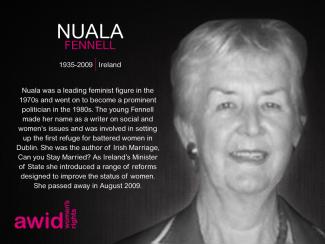
In our 2015 Online Tribute to Women Human Rights Defenders No Longer With Us we are commemorating four women from Sub-Saharan Africa, three of whom were murdered due to their work and/or who they were in their gender identity and sexual orientation. Their deaths highlight the violence LGBT persons often face in the region and across the globe. Please join AWID in honoring these women, their activism and legacy by sharing the memes below with your colleagues, networks and friends and by using the hashtags #WHRDTribute and #16Days.
Please click on each image below to see a larger version and download as a file


Un lieu de travail n'a pas à fonctionner sur la base de la concurrence et du profit. Un lieu de travail ne devrait pas exploiter les gens au profit d’autrui. C’est pourquoi les communautés marginalisées en dehors des économies formelles construisent des modèles coopératifs alternatifs basés sur l'autonomie, la coopération, la coresponsabilité, l'autogestion et la solidarité.
Les lieux de travail et coopératives autogérés par les travailleur·euses ont toujours offert d'autres moyens de générer des opportunités d'emploi, des revenus, une sécurité sociale et des épargnes, tout en distribuant les revenus de manière plus communautaire, durable et sûre.
Mais le coopérativisme c'est bien plus qu'une opportunité d'emploi: c'est la réalisation des rêves et la construction d’économies féministes basées sur la solidarité et l'entraide. C'est la création d’un monde où nos vies, notre travail et nos communautés comptent.
Voici l'histoire de la Coopérative Textile Nadia Echazú, la première coopérative créée et dirigée par et pour les personnes travesti et trans en Argentine.
Los datos se procesarán para fines estadísticos y así arrojar luz sobre el estado de la dotación de recursos para los movimientos feministas de todo el mundo, y solo se exhibirán de forma desglosada. AWID no divulgará información acerca de ninguna organización en particular ni publicará información que permita identificar a una organización por su ubicación o características sin el consentimiento acreditado de dicha organización.

In 2013, we published three global reports. These reports confirm that women’s rights organizations are doing the heavy lifting to advance women’s rights and gender equality by using diverse, creative and long-term strategies, all while being underfunded.
Our 2010 global survey showed that the collective income of 740 women’s organizations around the world totaled only USD 104 million. Compare this with Greenpeace International, one organization with a 2010 budget of USD 310 million1. Imagine the impact these groups could have if they were able to access all the financial resources they need and more?
AWID’s WITM research has catalyzed increased funding for women’s rights organizing. WITM research was a driving force behind the Catapult crowdfunding platform, which has raised USD 6.5 million for women’s rights. The Dutch Government cited WITM research as a reason for its unprecedented MDG 3 Fund of EU 82 million. WITM research has also led to the creation of several new funds: FRIDA – The Young Feminist Fund, the Indigenous Women’s Fund, Fundo Elas, the Mediterranean Women’s Fund and the Rita Fund.
While the WITM research has shed important light on the global funding landscape, AWID and partners have identified the need to dig deeper, to analyze funding trends by region, population and issue. In response, organizations are now using AWID’s WITM research methodology to do their own funding trends analyses. For example, in November 2013, Kosova Women’s Network and Alter Habitus – Institute for Studies in Society and Culture published Where is the Money for Women’s Rights? A Kosovo Case Study.
At the same time, AWID continues to collaborate with partners in Where is the Money for Indigenous Women’s Rights (with International Indigenous Women’s Forum and International Funders for Indigenous Peoples) and our upcoming Where is the Money for Women’s Rights in Brazil? (with Fundo Elas).
Several organizations have also conducted their own independent funding trends research, deepening their understanding of the funding landscape and politics behind it. For example, the South Asian Women’s Fund was inspired by AWID’s WITM research to conduct funding trends reports for each country in South Asia, as well as a regional overview. Other examples of research outside of AWID include the collaboration between Open Society Foundations, Mama Cash, and the Red Umbrella Fund to produce the report Funding for Sex Workers Rights, and the first-ever survey on trans* and intersex funding by Global Action for Trans* Equality and American Jewish World Service.