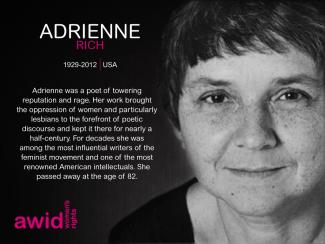
Adrienne Rich
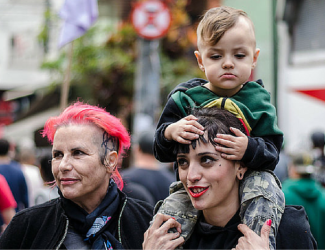
Over the past few years, a troubling new trend at the international human rights level is being observed, where discourses on ‘protecting the family’ are being employed to defend violations committed against family members, to bolster and justify impunity, and to restrict equal rights within and to family life.
The campaign to "Protect the Family" is driven by ultra-conservative efforts to impose "traditional" and patriarchal interpretations of the family, and to move rights out of the hands of family members and into the institution of ‘the family’.
Since 2014, a group of states have been operating as a bloc in human rights spaces under the name “Group of Friends of the Family”, and resolutions on “Protection of the Family” have been successfully passed every year since 2014.
This agenda has spread beyond the Human Rights Council. We have seen regressive language on “the family” being introduced at the Commission on the Status of Women, and attempts made to introduce it in negotiations on the Sustainable Development Goals.
AWID works with partners and allies to jointly resist “Protection of the Family” and other regressive agendas, and to uphold the universality of human rights.
In response to the increased influence of regressive actors in human rights spaces, AWID joined allies to form the Observatory on the Universality of Rights (OURs). OURs is a collaborative project that monitors, analyzes, and shares information on anti-rights initiatives like “Protection of the Family”.
Rights at Risk, the first OURs report, charts a map of the actors making up the global anti-rights lobby, identifies their key discourses and strategies, and the effect they are having on our human rights.
The report outlines “Protection of the Family” as an agenda that has fostered collaboration across a broad range of regressive actors at the UN. It describes it as: “a strategic framework that houses “multiple patriarchal and anti-rights positions, where the framework, in turn, aims to justify and institutionalize these positions.”
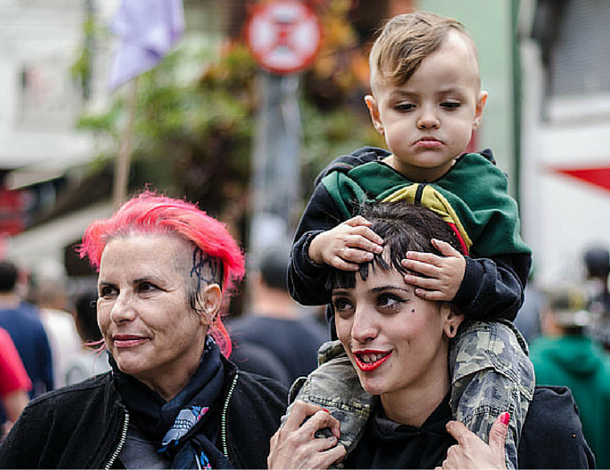

Ester Lopes est une danseuse et une écrivaine dont les recherches portent sur le corps, le genre, la race et les rapports de classe. Elle est professeure de Pilates et enseigne l’art. Ester est diplômée en théâtre contemporain – processus créatifs (à la FAINC) et en danse et conscience du corps (à l’USCS). Parmi ses spécialisations musicales figurent le chant populaire et les percussions. Elle a suivi une formation à Novos Brincantes avec Flaira Ferro, Mateus Prado et Antonio Meira à l’Institut Brincante en 2015 et 2016.
With over ten years of finance experience, Lucy has devoted her career to for profit and furthering nonprofit missions. She also worked and volunteered at non-for-profit organizations. From the fast-paced world of Finance, Lucy has passion for staying tuned with tech skills in the finance field. Lucy joined AWID in 2014. During her spare time she enjoys music, traveling, and variety sports.
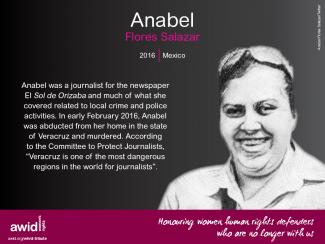
Kasia viene apoyando la labor de los movimientos feministas y por la justicia social desde hace 15 años. Antes de sumarse a AWID, se lideró las acciones de política e incidencia ActionAid y Amnistía Internacional, a la vez que participaba en procesos de organización feministas y de distintas agrupaciones por la justicia social en Polonia, en pro del acceso al aborto y contra la violencia en las fronteras europeas. Es una apasionada del financiamiento para la movilizaciónfeminista en toda su audacia, riqueza y diversidad. Reparte su tiempo entre Varsovia y su aldea comunitaria de trabajo artesanal en el bosque. Le encanta tomar saunas y adora con locura a su perro Wooly.
“Now might be a good time to rethink what a revolution can look like. Perhaps it doesn’t look like a march of angry, abled bodies in the streets. Perhaps it looks something more like the world standing still because all the bodies in it are exhausted—because care has to be prioritized before it’s too late.”
- Johanna Hedva (https://getwellsoon.labr.io/)
Hospitals are institutions, living sites of capitalism, and what gets played out when somebody is supposed to be resting is a microcosm of the larger system itself.
Institutions are set out to separate us from our care systems – we find ourselves isolated in structures that are rigidly hierarchical, and it often feels as if care is something done to us rather than given/taken as part of a conversation. Institutional care, because of its integration into capitalist demand, is silo-ed: one person is treating your leg and only your leg, another is treating your blood pressure, etc.
Photographer Mariam Mekiwi had to have surgery last month and documented the process. Her portraits of sanitized environments – neon white lights, rows after rows of repetitive structures – in a washed-out color palette reflect a place that was drained of life and movement. This was one of the ways Mariam kept her own spirit alive. It was a form of protest from within the confines of an institution she had to engage with.
The photos form a portrait of something incredibly vulnerable, because watching someone live through their own body’s breakdown is always a sacred reminder of our own fragility. It is also a reminder of the fragility of these care systems, which can be denied to us for a variety of reasons – from not having money to not being in a body that’s considered valuable enough, one that’s maybe too feminine, too queer or too brown.
Care experienced as disembodied and solitary, that is subject to revocation at any moment, doesn’t help us thrive. And it is very different from how human beings actually behave when they take care of each other. How different would our world look like if we committed to dismantling the current capitalist structures around our health? What would it look like if we radically reimagined it?
Faye est une féministe panafricaine passionnée, engagée dans les mouvements pour les droits des femmes, la justice raciale, les droits des migrant·e·s et des travailleur·euse·s, et la justice environnementale. Son activisme s'appuie sur l'héritage de la lutte contre l'apartheid en Afrique du Sud et de ses suites au Zimbabwe.
En 2019, Faye rejoint l'AWID en tant que Directrice des Finances, des Opérations et du Développement. Elle s’est efforcée de garantir que l’AWID respecte les principes et les valeurs féministes dans toutes ses opérations. Elle y apporte plus de 20 années d’expérience en leadership féministe, en stratégie et autres aspects du développement organisationnel et financier.
Faye est membre engagée du conseil d'administration de Urgent Action Fund-Africa et d'autres organisations de défense des droits des femmes. Auparavant, elle a occupé des postes de responsable des finances et des opérations chez Pediatric Adolescent Treatment for Africa et JASS - Just Associates Inc. en Afrique australe. Elle a également occupé des postes de direction chez International Computer Driving Licence (ICDL) en Afrique centrale et australe. Elle est titulaire d'une licence en sciences comptables de l'Université d'Afrique du Sud ainsi que membre du Southern African Institute for Business Accountants.

|
Editorial Team Design and Illustration Communications Strategist
Translation Manager AWID’s Team |
Arabic Translators English to Spanish Proofreaders Proofreaders Portuguese to English Proofreader |
Elina is a young afro-Dominican intersectional feminist and human rights lawyer, committed to use her voice and skills to build a more just, empathic and inclusive world. She started Law school at 16, convinced it would give her the tools to understand and promote social justice. After a J.D. in the Dominican Republic, she pursued an LL.M. in Public International Law and Human Rights in the UK as a Chevening Scholar. She was the only Latinx-Caribbean woman in her class, graduating with honours.
Elina has worked at the intersection of human rights, gender, migration and policy, from government, grassroots collectives and international organizations. She helped litigate cases on gender-based violence before the Inter-American Court of Human Rights. As a member of the Youth Advisory Panel of UNFPA, she contributed to strengthening sexual and reproductive rights in the Dominican Republic. She co-led Amnesty International’s first campaign on sex workers’ rights in the Americas, developing strong partnerships with sex-worker led organizations and using Amnesty’s position to amplify women human rights defenders and sex workers’ voices.
Elina is part of Foro Feminista Magaly Pineda and the Global Shapers Community. She speaks Spanish, French and English. Thanks to her diverse background, Elina brings strong governance and strategic planning skills, substantive expertise on the United Nations and regional human rights mechanisms and her bold determination to keep AWID as an inclusive organization for all women, especially young and Caribbean feminists. With these offerings, joins a global sisterhood of feminist badasses, where she can keep nurturing her feminist leadership and never again feel alone in her path.
المضيفة: نحن نميل إلى الاعتقاد أنّ التعبير عن الرغبة يقتصر على العلاقة الحميمة داخل غرفة النوم وعلى علاقاتنا الشخصيّة. ولكن هل يمكننا أيضًا اعتبار هذا النوع من التعبير كبُنية، أو ممارسة أيديولوجيّة توجّه عملنا، وما نحن عليه، وكيف سنكون في هذا العالم؟
Jessica es une artista activista queer de Toronto (Canadá), aunque actualmente reside en Bulgaria. Posee más de 15 años de experiencia de trabajo en la respuesta al VIH en las intersecciones del género y el VIH con poblaciones clave (trabajadoras/es sexuales, mujeres que usan drogas, comunidades LGBTQI, personas privadas de su libertad y, desde luego, personas que viven con el VIH). A Jessica le encanta la construcción de movimientos y pensar, organizar y trazar estrategias para intervenciones artísticas. Un divertido proyecto que comenzó en 2013 fue LOVE POSITIVE WOMEN, en el que participan más de 125 agrupaciones y organizaciones comunitarias de todo el mundo. Este tiene lugar cada año entre el 1 y el 14 de febrero para celebrar a las mujeres que viven con el VIH en sus comunidades.
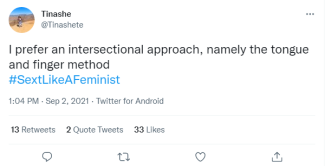
أفضّل المقاربة التقاطعيّة لما تشتمل عليه من مداعبة ممنهجة باللسان والأصابع
Sí, por favor. El mundo ha cambiado desde 2021, y te invitamos a proponer una actividad que refleje tus realidades y prioridades actuales.
Âurea Mouzinho est une organisatrice féministe dans le domaine de la justice économique. Originaire de Louanda en Angola, elle compte 10 ans de carrière dans la recherche, le subventionnement, le plaidoyer et le renforcement de mouvement pour les droits des femmes et la justice économique en Afrique et dans le Sud global. Actuelle responsable des programmes pour l’Afrique chez Thousand Currents, elle participe également au comité de rédaction de Feminist Africa et est membre d’Ondjango Feminista, un collectif féministe qu’elle a co-fondé en 2016. Tout juste maman d’un petit garçon Gémeaux, Ȃurea aime les journées tranquilles avec sa petite famille et les longues promenades sur la plage. Il lui arrive parfois de tweeter via son compte @kitondowe.