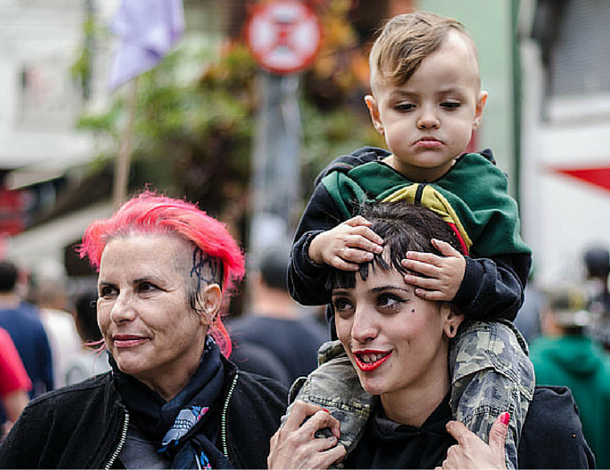
Flickr/Leonardo Veras (CC BY 2.0)

Special Focus

AWID is an international, feminist, membership organisation committed to achieving gender equality, sustainable development and women’s human rights

Protection of the Family

The Issue

Over the past few years, a troubling new trend at the international human rights level is being observed, where discourses on ‘protecting the family’ are being employed to defend violations committed against family members, to bolster and justify impunity, and to restrict equal rights within and to family life.

The campaign to "Protect the Family" is driven by ultra-conservative efforts to impose "traditional" and patriarchal interpretations of the family, and to move rights out of the hands of family members and into the institution of ‘the family’.

“Protection of the Family” efforts stem from:

  • rising traditionalism,
  • rising cultural, social and religious conservatism and
  • sentiment hostile to women’s human rights, sexual rights, child rights and the rights of persons with non-normative gender identities and sexual orientations.

Since 2014, a group of states have been operating as a bloc in human rights spaces under the name “Group of Friends of the Family”, and resolutions on “Protection of the Family” have been successfully passed every year since 2014.

This agenda has spread beyond the Human Rights Council. We have seen regressive language on “the family” being introduced at the Commission on the Status of Women, and attempts made to introduce it in negotiations on the Sustainable Development Goals.


Our Approach

AWID works with partners and allies to jointly resist “Protection of the Family” and other regressive agendas, and to uphold the universality of human rights.

In response to the increased influence of regressive actors in human rights spaces, AWID joined allies to form the Observatory on the Universality of Rights (OURs).  OURs is a collaborative project that monitors, analyzes, and shares information on anti-rights initiatives like  “Protection of the Family”.

Rights at Risk, the first OURs report, charts a map of the actors making up the global anti-rights lobby, identifies their key discourses and strategies, and the effect they are having on our human rights.   

The report outlines “Protection of the Family” as an agenda that has fostered collaboration across a broad range of regressive actors at the UN.  It describes it as: “a strategic framework that houses “multiple patriarchal and anti-rights positions, where the framework, in turn, aims to justify and institutionalize these positions.”


Related Content

Leila Hessini

Biography

Leila is a transnational feminist leader, strategist, and advisor with over 25 years of organizing, advocacy and philanthropic experience advancing human rights, gender equality, and sexual and reproductive rights and justice.  She was born in Algeria and educated in the U.S., France, and Morocco; over her professional career, she has lived and worked in forty countries across Africa, Europe, Latin America and Asia.  Leila currently serves as a Senior International Fellow at the Asfari Institute for Civil Society and Citizenship at the American University of Beirut in Lebanon and as Senior Strategist for various feminist movements and organizations as well as the the Urgent Action Fund-Africa and Trust Africa on an initiative on Reimagining Feminist and Pan-African Philanthropies.
 
From 2017-2023, Leila held the position as Vice-President of Programs at Global Fund for Women where she oversaw its strategic grantmaking, movement-strengthening, global advocacy and philanthropic collaborations. At GFW, she doubled its grantmaking to over $17 million, launched its feminist and gender-based movements and crises work, created an adolescent girls program led by a girls’ advisory council and led its philanthropic advocacy work.  Prior to that she served on the senior leadership team of Ipas from 2002 to 2016 where she published extensively on abortion rights and justice, lead global advocacy efforts and partnered with feminist groups working on self-management, community strategies and stigma reduction around bodily integrity and sexual and reproductive rights.
 
Leila is currently researching shifts in the philanthropic sector including recognizing non-institutional practices of giving resources in the Global South and efforts to decolonize practices in the Global North.  She has written extensively on the political nature of veiling across North Africa and the Middle East, abortion practices in majority Muslim contexts and feminist approaches to sexual and reproductive health, rights and justice.
 
Leila holds an MPH in public health and a MA in Middle Eastern and North African Studies, studied Islamic law in Morocco and pursued doctoral studies in sociology in France. She studied Arabic and speaks French and English fluently.  She is a mother of two feminist young women, an avid scuba diver, mountain bike rider, skier, and outdoor enthusiast.

Position
Treasurer
Add to stories
Off

What measures to protect public health and contain risks of Covid19 outbreak will be in place?

We are monitoring this and other risks carefully, and will publish comprehensive health and safety information when the registration opens, so you could make an informed decision. In addition, the hybrid format is designed to provide a meaningful engagement experience to the participants who will prefer not to travel or are not able to travel.

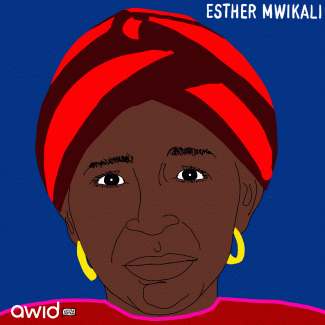
Esther Mwikali

Esther Mwikali’s home was in Mithini village, Murang’a County, Kenya. A prominent and valued land rights activist, she looked into abuses against squatters who are living on land claimed by tycoons. The investigation Esther was part of also involved land rights’ violations in Makuyu by powerful individuals.

After failing to attend a village meeting, a search party went looking for Esther. On 27 August 2019, two days after her disappearance, her body was found on a farm near her homestead, displaying signs of torture. She was brutally murdered. 

“Esther was renowned for her work to prevent community members being evicted from land claimed by tycoons. Local activists had no doubt her murder was related to the area’s ongoing land struggles, a tragic reminder of the alarming regularity with which extra-judicial killings are routinely carried out in Kenya,” - Global Witness Report, July 2020

“We associate Mwikali’s death with land struggles around here. We are asking the Government to investigate the matter without delay.” - James Mburu, spokesperson for the squatters

“Action should be taken on individuals who are alleged to have threatened the squatters including Mwikali's family.” - Alice Karanja, National Coalition of Human Rights Defenders

“The impact of her work and tenacity will remain alive in Kenya for decades. CJGEA consoles with the bereaved and it calls for justice.” - Center for Justice and Governmental Action (CJGEA) Press Release, 13 September 2019

Nos droits en danger - OURs 2021 résumé

Nos droits en danger : il est temps d’agir

Un réseau complexe et mouvant d’acteur·rice·s antidroits exerce aujourd’hui une influence croissante dans les espaces internationaux et nationaux, ainsi qu’au niveau des politiques locales. Les antidroits pénètrent les espaces multilatéraux de collaboration entre pays, dans le but de les transformer et les saboter de l’intérieur. C’est en s’appropriant le langage des droits et de la justice pour travestir leurs véritables intentions qu’ils et elles parviennent à acquérir une certaine légitimité.

Ce rapport est le deuxième d’une série sur les droits humains, produite par l’Observatoire sur l’universalité des droits (OUR). Outre une analyse des principales parties antidroits, de leurs discours, stratégies et impacts, ce rapport inclut des nouvelles féministes pleines d’inspiration et des exercices de renforcement des connaissances qui nous permettront d’assurer notre résistance collective.

Lire le rapport 

Les conséquences sur nos droits sont déjà importantes, mais il est encore possible de réagir. Nous pouvons toutes et tous participer à la résistance face aux programmes antidroits et récupérer nos droits.

Rejoignez l’appel à l’action collective dès aujourd’hui!

Signer l’appel à l’action

WITM - Refreshed INFOGRAPHIC 3 FR

Comment les féministes s’autofinancent ?

Les organisations féministes et de défense des droits des femmes ne dépendent pas uniquement des financements institutionnels, elles s’autofinancent. Nos mouvements sont animés par la passion, la solidarité, l’engagement politique et le soin collectif.
Ces ressources autonomes et autogénérées sont souvent invisibles dans les budgets, mais elles sont le pilier de notre action collective.

 Explorez les données sur l’autofinancement

Fatima Qureshi

Biography

Culturellement nomade, née à Hong Kong et enracinée dans un héritage turco-pakistanais, l'amour de Fatima pour les récits - tant pour les lire que pour les cocréer - a alimenté sa passion pour l'activisme à travers la communication. Forte de sa formation en journalisme, Fatima a travaillé pendant 7 ans dans les domaines de la communication numérique et médiatique avec des ONG qui offrent des opportunités d'éducation et de l’aide juridique aux réfugié·e·s et demandeur·se·s d'asile, ainsi qu'avec le mouvement féministe musulman qui applique une perspective féministe et fondée sur les droits dans la compréhension et la quête d’égalité et de justice au sein de la tradition juridique musulmane. Elle rédige régulièrement des tribunes sur les questions féministes dans les pays du Sud.

Grâce à la narration dans cette ère ultra digitale des réseaux sociaux, Fatima continue de collaborer avec des animateur·rice·s communautaires et des activistes de terrain pour créer du contenu audiovisuel dans le but de cultiver des ponts de compréhension vers la libération collective et la décolonisation. Les jours où elle ne travaille pas, elle regarde attentivement des films féministes indépendants venant d’Iran, du Maroc et du Pakistan, et les autres jours elle interprète de la poésie orale avec ses camarades à Kuala Lumpur.

Position
Responsable des communications numériques et des partenariats de l'ICM
Add to stories
Off

Diferentes personas de mi organización planean asistir al Foro. ¿Hay algún descuento para grupos en el Foro?

AWID no ofrece descuentos para grupos, pero sí ofrece descuentos en la inscripción a sus afiliadxs. (Haz clic aquí para obtener más información sobre cómo sumarte a la membresía)

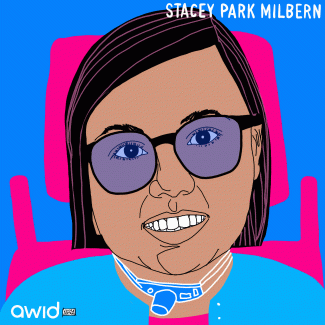
Stacey Park Milbern

"No sé mucho sobre la espiritualidad o lo que sucede cuando morimos, pero mi vida de coreana crip queer me hace pensar que nuestros cuerpos terrenales son sólo una fracción de lo que somos, y no considerar a nuestros antepasadxs es quedarse con solo un atisbo de lo que somos". - Stacey Park Milbern 

Stacey Park Milbern fue una mujer autodefinida como queer, con discapacidad y de color, además de una pionera. Líder y organizadora respetada y de amplia trayectoria en el movimiento por los derechos y la justicia para las personas con discapacidad, también defendió los derechos de muchas otras comunidades, y no solo los de la suya propia. El activismo de Stacey tenía raíces poderosas en su experiencia personal con las intersecciones del género, la discapacidad, la sexualidad y la raza.

Stacey, junto con algunxs amigxs, co-creó el Club de Cultura de Justicia para la Discapacidad, un grupo dedicado a apoyar a varias comunidades, especialmente aquellas más vulnerables, que, entre otras cosas, está ayudando a las personas sin hogar a acceder a recursos durante la pandemia del COVID-19.

También fue coproductora de una campaña con mucho impacto para el documental de Netflix "Crip Camp", integrante de la junta directiva de la Fundación WITH, y dirigió organizaciones a nivel local, estatal y nacional. Stacey escribió además de manera hermosa y poderosa:

"Mis antepasadxs son personas forzosamente separadas de sus amores a causa de la guerra y el desplazamiento. Es gracias a ellxs que hoy conozco el poder de construir un hogar con lo que tienes, dondequiera que estés, con quien quiera que estés. Mis antepasadxs son queers que vivieron en el sur de América. Es gracias a ellxs que entiendo la importancia de las relaciones, del lugar y de vivir la vida al máximo, aunque sea peligroso. Todxs mis antepasadxs conocen el anhelo. El anhelo es a menudo nuestro lugar de conexión..." - Stacey Park Milbern

Stacey nació en Seúl, Corea, y creció en Carolina del Norte, para después continuar con su viaje en el área de la bahía de San Francisco. Stacey falleció por complicaciones de una cirugía en su cumpleaños número 33, el 19 de mayo de 2020.


Para leer un ensayo de Stacey Park Milbern (en inglés)
Para escuchar una entrevista con Stacey Park Milbern (en inglés)
#StaceyTaughtUs: Record your story for the Disability Visibility Project (en inglés)

Tributos:

"Ella fue, como mucha gente diría, una líder nata. En cierta medida, ella lo abarcó todo. ¿Sabes? Ella supo liderar desde la primera línea, desde el medio y también desde atrás.  Era capaz de hacer todo eso de alguna manera." - Andraéa LaVant, activista por los derechos de las personas con discapacidad.

"Qué golpe perder a Stacey cuando nuestras comunidades necesitan de su liderazgo más que nunca, y en un momento en que su fuerza, perspicacia y agallas estaban recibiendo un mayor reconocimiento, más allá de los círculos de las personas con discapacidad, y le ofrecían una plataforma mayor para avanzar con el trabajo de su vida... No tendremos la suerte de aprender hasta dónde su carismático liderazgo nos habría llevado. Pero, sin ningún tipo de dudas: Lo que Stacey nos dio, en un tiempo relativamente corto, continuará beneficiando a otrxs en los próximos años". - Fondo de Educación y Defensa de los Derechos de las Personas con Discapacidad (DREDF, por sus siglas en inglés).
ours chapter 6

Chapter 6
Anti-Rights Trends in Regional Human Rights Systems

In the African Commission and the Inter-American System, anti-rights actors push essentialist notions of culture and gender to hamper progress on rights and undermine accountability. As we see, anti-rights actors are exerting influence in regional human rights systems, as well as international spaces.

Read more

Snippet - COP30 - Radical Democracy - EN

Démocratie radicale et justice climatique - le débat absent de la COP30

Modèles de gouvernance alternative comme moyens de sortir de la crise climatique.

📅 Mercredi 12 novembre 2025
📍 Seminario Mar Nossa Sra Da Assunção, Pará, Brésil

Plus d'infos ici

Site web en anglais

Faten Nabhan

Add to stories
Off

Je n’ai encore jamais voyagé. Que devrais-je savoir ?

Ayant conscience des nombreuses difficultés que les déplacements impliquent, nous vous fournirons davantage d’informations et de détails sur les modalités de voyage jusqu’à Bangkok lorsque les Inscriptions ouvriront, au début de l’année prochaine.

Llamado a la acción: ¡Basta de infiltración antiderechos en la ONU!

Llamado a la acción

¡Basta de infiltración antiderechos en la ONU!

¿Quieren sumarse al creciente número de personas que le están diciendo «basta» a la infiltración de lxs actores anti-derechos en la ONU?

Suma tu nombre

Snippet - COP30 - Resistance Hubs Section Title - EN

Resistance Hubs for Climate Justice

Who are AWID's members?

A dynamic network of people around the world, AWID members are researchers, academics, students, educators, activists, business people, policy-makers, development practitioners, funders, and more. Our members - of every age - are those who make AWID a unique global feminist association.

Membership with AWID is open to anyone who shares our values

We offer different types of memberships geared to income level and whether you are an individual or an organization. Currently we have over 5000 members, individual and institutional, from 164 countries.

Our members are an important part of our work

We collaborate for advocacy on specific issues, members vote in elections for our Board, and can also participate in and contribute to our Priority Areas through webinars, surveys, or urgent actions, for example.

Our institutional membership draws from a broad range of organizations interested in advancing gender justice and women’s human rights, including women’s rights organizations, from the local to the global levels, grassroots networks, major international institutions, government departments, university programs and more. 63% of our members are from the global South and 38% are under the age of 30.

Learn more about our membership

How about climate justice, is this really the time for so many international flights?

Asking ourselves the same question, we believe there are no simple answers. For many participants the AWID Forum might be one of the few international trips they undertake in their life. The pandemic taught us the possibilities but also the limitations of virtual spaces for movement-building: there is nothing like in-person connection. Movements need cross-border connections to build our collective power in the face of the threats we face, notably the climate crisis. We believe that the upcoming AWID Forum can be a strategic space to hold these conversations and to explore alternatives to international travel. The hybrid element of the Forum is an important part of this exploration.

Ghiwa Sayegh Snippet

Ghiwa-Sayegh - un recorrido por el festival

Ghiwa Sayegh es una anarcoescritora queer, editora independiente y archivista. Es la editora fundadora de Kohl, una revista para la investigación sobre cuerpo y género, y la cofundadora de Intersectional Knowledge Publishers. Posee una maestría en estudios de género de Université Paris 8 Vincennes, Saint-Denis. Le apasionan la teoría queer, las circulaciones transnacionales y las historias imaginadas o desconocidas. Sus influencias son Audre Lorde y Sara Ahmed.