
Teresa De Anda
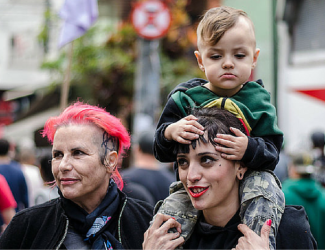
Over the past few years, a troubling new trend at the international human rights level is being observed, where discourses on ‘protecting the family’ are being employed to defend violations committed against family members, to bolster and justify impunity, and to restrict equal rights within and to family life.
The campaign to "Protect the Family" is driven by ultra-conservative efforts to impose "traditional" and patriarchal interpretations of the family, and to move rights out of the hands of family members and into the institution of ‘the family’.
Since 2014, a group of states have been operating as a bloc in human rights spaces under the name “Group of Friends of the Family”, and resolutions on “Protection of the Family” have been successfully passed every year since 2014.
This agenda has spread beyond the Human Rights Council. We have seen regressive language on “the family” being introduced at the Commission on the Status of Women, and attempts made to introduce it in negotiations on the Sustainable Development Goals.
AWID works with partners and allies to jointly resist “Protection of the Family” and other regressive agendas, and to uphold the universality of human rights.
In response to the increased influence of regressive actors in human rights spaces, AWID joined allies to form the Observatory on the Universality of Rights (OURs). OURs is a collaborative project that monitors, analyzes, and shares information on anti-rights initiatives like “Protection of the Family”.
Rights at Risk, the first OURs report, charts a map of the actors making up the global anti-rights lobby, identifies their key discourses and strategies, and the effect they are having on our human rights.
The report outlines “Protection of the Family” as an agenda that has fostered collaboration across a broad range of regressive actors at the UN. It describes it as: “a strategic framework that houses “multiple patriarchal and anti-rights positions, where the framework, in turn, aims to justify and institutionalize these positions.”
¿Tienes preguntas sobre el Foro de AWID o sobre las actividades relacionadas? ¡Tenemos respuestas!
Patience is a global human resources professional with over a decade of experience in human resources (HR) management in the not-for-profit sector. Patience previously worked at Mercy Corps as the Global HR Officer for Africa supporting the full employee life cycle for expatriates in the Eastern and Southern African region and provided HR technical guidance to Human Resources leaders in country offices within the African region. Before joining the global people team, she was the Country Human Resources and Safeguarding Focal Point, she was part of the senior management team leading on all human resources and safeguarding matters. Prior to Mercy Corps she led the HR and Operations department at SNV Netherlands Development Organization and was a member of the country management team. She also has HR Consultancy experience which she gained while she was still studying for her BSc Honors degree in Human Resource Management. She has a passion for HR, loves working with people and she takes wellbeing and safeguarding as her core values and in her professional work. As someone who loves sports, you can also find Patience at the basketball court, the tennis court or on the soccer field.
Are you job hunting? One of the perks of joining the AWID Community, is getting access to our community curated jobs board. You'll get to explore new opportunities, and you will also have the chance to share vacancies and call for proposals with all members.
“But when was the master
ever seduced from power?
When was a system ever broken
by acceptance?
when will the BOSS hand you power with love?
At Jo’Burg, at Cancun or the U.N?
– Molara Ogundipe
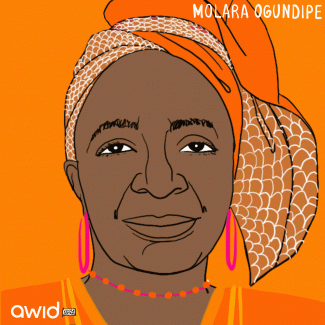
Across the different continents and countries, Professor Ogundipe taught comparative literature, writing, gender, and English studies using literature as a vehicle for social transformation and re-thinking gender relations.
A feminist thinker, writer, editor, social critic, poet, and activist Molara Ogundipe succeeded in combining theoretical work with creativity and practical action. She is considered to be one of the leading critical voices on African feminism(s), gender studies and literary theory.
Molara famously coined the concept of “stiwanism’ from the acronym STIWA – Social Transformations in Africa Including Women recognizing the need to move “away from defining feminism and feminisms in relation to Euro-America or elsewhere, and from declaiming loyalties or disloyalties.”
In her seminal work ‘Re-creating Ourselves’ in 1994, Molara Ogundipe (published under Molara Ogundipe-Leslie) left behind an immense body of knowledge that decolonized feminist discourse and “re-centered African women in their full, complex narratives...guided by an exploration of economic, political and social liberation of African women and restoration of female agency across different cultures in Africa.”
In speaking about the challenges she faced as a young academic she said:
”When I began talking and writing feminism in the late sixties and seventies, I was seen as a good and admirable girl who had gone astray, a woman whose head has been spoilt by too much learning".
Molara Ogundipe stood out for her leadership in combining activism and academia; in 1977 she was among the founding members of AAWORD, the Association of Women in Research and Development. In 1982 she founded WIN (Women In Nigeria) to advocate for full “economic, social and political rights” for Nigerian women. She then went on to establish and direct the Foundation for International Education and Monitoring and spent many years on the editorial board of The Guardian.
Growing up with the Yoruba people, their traditions, culture, and language she once said :
“I think the celebration of life, of people who pass away after an achieved life is one of the beautiful aspects of Yoruba culture.”
Molara’s Yoruba ‘Oiki’ praise name was Ayike. She was born on 27 December 1940 and at the age of 78, Molara passed away on 18 June 2019 in Ijebu-Igbo, Ogun State, Nigeria.

Les Réalités féministes consistent en une invitation chaleureuse et bienveillante, une sorte d’acte de préservation et de soins massifs (versus un soin individuel), une invitation à archiver et à faire l’inventaire de tout le travail réalisé, sous peine de le voir disparaître. (...)
Durante sus 38 años de carrera, Debbie Stothard ha trabajado con diferentes comunidades y activistas para involucrar en los derechos humanos y la justicia a los Estados, organizaciones intergubernamentales y otras partes interesadas a lo largo de Asia, África, Europa y las Américas. Su trabajo está enfocado en las prioridades temáticas de las empresas y en los derechos humanos, en la prevención de las atrocidades y en el liderazgo de las mujeres. Por ello, ha sido facilitadora o persona de referencia en casi 300 eventos de capacitación durante los últimos 15 años. La mayoría fueron talleres orientados a las bases, desarrollados en el terreno, centrados en la incidencia en derechos humanos, alfabetización económica, en empresas y derechos humanos, y en justicia transicional y prevención de las atrocidades. Su trabajo en justicia transicional y prevención de las atrocidades ha estado enfocado principalmente en Burma/Myanmar, aunque también ha proveído asesoramiento para responder a situaciones de otros países alrededor del mundo.
Entre 1981 y 1996, Debbie trabajó como periodista especializada en crímenes, activista estudiantil, analista política, académica, consejera de gobierno y proveedora de comida en Malasia y Australia, mientras era voluntaria en causas de derechos humanos. En 1996, fundó ALTSEAN-Burma, que encabezó una variedad de programas de innovación y empoderamiento en derechos humanos. Entre ellos, el programa intensivo permanente de liderazgo de ALTSEAN para diferentes mujeres jóvenes de Burma, que, durante los últimos 22 años, ha ayudado a fortalecer y ampliar el liderazgo de las mujeres en las zonas afectadas por el conflicto. Se desempeñó como integrante de la Junta de la Federación Internacional de Derechos Humanos (FIDH) durante 9 años como secretaria general adjunta (2010-2013) y secretaria general (2013-2019), durante los cuales promovió la misión y el perfil de la FIDH en, aproximadamente, 100 reuniones y conferencias por año.
Mientras atravesamos las múltiples crisis globales, los movimientos infatigablemente construimos el poder más allá de las estructuras de poder tradicionales. La ola de órdenes ejecutivas que ha emitido la presidencia de los EE.UU. tiene la intención de amedrentarnos, pero no hay ideología fascista capaz de borrar nuestra existencia y resistencia.
Te invitamos a formar parte de la campaña de construcción de solidaridad para poner al descubierto y resistir a las fuerzas fascistas que socavan los movimientos feministas y por la justicia de género en tu contexto.
Yamile Guerra fue una conocida abogada, líder comunitaria y activista política de la región colombiana de Santander.
Trabajó activamente para resolver las disputas entre comunidades locales y empresas promotoras, y abogó contra la apropiación ilegal de las tierras. Yamile ocupó varios cargos políticos, entre ellos la Secretaría General del Gobierno de Santander en Bogotá, y se presentó también a la Alcaldía de Bucaramanga. En los últimos años de su vida, Yamile se volvió cada vez más activa en las causas medioambientales contra los desarrollos urbanos, particularmente, en la defensa de los humedales biodiversos de Santurbán contra los desarrollos urbanos, una región que abastece de agua dulce a casi 2 millones de personas .
Según su familia y amigxs, Yamile recibía amenazas de muerte a diario y había pedido protección a las autoridades.
"Ella era muy consciente de este problema [litigio de tierras] y manifestó repetidamente que se sentía insegura". - Alixon Navarro Muñoz, periodista y amigo de la familia Guerra.
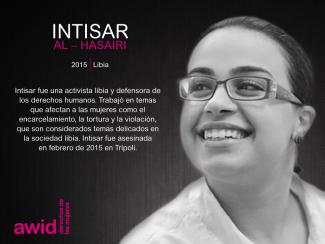
El 20 de julio de 2019, Yamile fue asesinada a tiros por dos hombres en Floridablanca, Santander. Acababa de terminar de discutir con ellos por una disputa de tierras. Un sospechoso fue arrestado más tarde por su asesinato y admitió haber recibido un pago por llevar a cabo su asesinato. Según varios informes, o Yamile fue la tercera integrante de su familia en ser asesinada a causa de las disputas por tierras. El padre de Yamile, Hernando Guerra, había sido asesinado también varios años antes.
El asesinato de Yamile forma parte de una ola de violencia y asesinatos sistemáticos contra cientos de activistas sociales y defensorxs de los derechos humanos en Colombia. Según el Instituto de Estudios para el Desarrollo y la Paz (INDEPAZ), en el momento de la muerte de Yamile, más de 700 líderes comunitarios y activistas de derechos humanos habían sido asesinadxs desde que el país firmó un acuerdo de paz en agosto de 2016. La mayoría de ellxs fueron asesinadxs por enfrentar el tráfico ilegal de drogas y las operaciones mineras. Las personas indígenas, afrocolombianas y las mujeres defensoras de derechos humanos son lxs activistas que corren mayor riesgo.
Menos de una semana después de la muerte de Yamile, miles de colombianxs marcharon por pueblos y ciudades sosteniendo fotos en blanco y negro de activistas que habían sido asesinadxs, en las pancartas se podía leer: "Sin líderes no puede haber paz" y "No más derramamientos de sangre".
Yamile Guerra tenía solo 42 años en el momento de su asesinato.
by Prinka Saraswati
The menstrual cycle usually lasts between 27 and 30 days. During this time, the period itself would only go on for five to seven days. During the period, fatigue, mood swings, and cramps are the result of inflammation. (...)
< artwork: “Feminist Movement” by Karina Tungari
Simone has 20 years’ experience working in management support and administration in non-profit organizations, in particular post-graduate medical education and ICT training. She has qualifications in Management Support and Paralegal studies. She is based in South Africa, enjoys traveling and is an amateur Genealogist.
✉️ Requiere inscripción previa. Regístrate aquí
📅 Martes 11 de marzo de 2025
🕒 De 06:00 a 08:00 p. m.,
🏢 Chef's Kitchen Loft with Terrace, 216 East 45th St 13th Floor New York
Organiza: AWID
Binta Sarr était une activiste pour la justice sociale, économique, culturelle et politique, en plus d’avoir occupé le poste d’ingénieure hydraulique au Sénégal. Après 13 années de service, celle-ci a choisi de quitter le fonctionnariat pour travailler auprès de femmes rurales et marginalisées.
Cet engagement a donné lieu à la création de l’Association pour la promotion des femmes sénégalaises (APROFES), un mouvement de base auquel est venu se greffer une organisation fondée par Binta en 1987. L’une de ses approches était la formation au leadership, non seulement dans le cadre d’activités économiques mais également en lien avec les droits des femmes et leur accès à des fonctions décisionnelles.
“« Les populations à la base doivent s’organiser, se mobiliser, assumer le contrôle citoyen et exiger une gouvernance démocratique dans tous les secteurs de l’espace public. La priorité des mouvements sociaux doit aller au-delà de la lutte contre la pauvreté et être axée sur des programmes de développement articulés et cohérents en adéquation avec les principes des droits humains, tout en prenant en compte leurs besoins et leurs préoccupations tant au niveau national, sous régional que dans une perspective d’intégration africaine et mondiale. » – Binta Sarr
Ancrée dans la conviction de Binta, à savoir que les changements essentiels dans le statut des femmes nécessitent la transformation des attitudes masculines, APROFES a adopté une approche interdisciplinaire et s’est appuyée sur la radio, les séminaires et le théâtre populaire, offert une éducation publique innovante et apporté un soutien culturel aux actions de sensibilisation. Sa troupe de théâtre populaire a créé des pièces sur le thème des castes dans la société sénégalaise, de l’alcoolisme et de la violence conjugale. Binta et son équipe ont également pris en compte l’interconnexion essentielle entre la communauté et le monde élargi.
« Pour APROFES, il s’agit d’étudier et de prendre en compte les interactions entre le micro et le macro, le local et le mondial, ainsi que les différentes facettes du développement. De l’esclavage à la colonisation, le néo-colonialisme et la marchandisation du développement humain, qui représentent la majeure partie des ressources d’Afrique et du Tiers-Monde (pétrole, or, minéraux et autres ressources naturelles), demeurent sous le contrôle des cartels financiers et autres multinationales qui dominent ce monde mondialisé. » – Binta Sarr
Binta était également l’une des membres fondatrices de la section féminine de l’Association culturelle et sportive Magg Daan, et a reçu des mentions élogieuses de la part du gouverneur régional et du ministre de l’Hydrologie pour sa « dévotion aux populations rurales ».
Née en 1954 dans la petite ville de Guiguineo, Binta est décédée en septembre 2019.
« La perte est incommensurable, la douleur est lourde et profonde mais nous allons résister pour ne pas pleurer Binta; nous allons garder l’image de son large sourire en toutes circonstances, pour résister et nous inspirer d’elle, maintenir, consolider et développer son œuvre... » – Page Facebook de l’APROFES, 24 septembre 2019
« Adieu, Binta! Nul doute que ton immense héritage sera préservé. » – Elimane FALL, président de l’ACS Magg-Daan
por Dr. Pragati Singh
En 2019, fui invitada por la BBC para hablar en la 100 Women Conference en Delhi, India. El tema era «El futuro del amor, las relaciones, y las familias». El público presente en el gran salón consistía mayoritariamente en jóvenes indixs: estudiantes universitarixs, profesionales, activistas, etc. (...)
arte: «Angels go out at night too» [Los ángeles también salen de noche], Chloé Luu >
Khaoula Ksiksi es una apasionada defensora de la justicia, la equidad y la liberación. Como asesora de género, igualdad, diversidad e inclusión, trabaja en diferentes programas humanitarios y contextos de crisis para que la inclusión sea una realidad, no una mera política. Colabora con diferentes equipos para luchar contra la opresión estructural mediante herramientas audaces y transformadoras basadas en experiencias reales.
Su activismo comenzó al frente del movimiento antirracista de Túnez. Con Mnemty, contribuyó a impulsar la primera ley antidiscriminación del país, lo que forzó un examen de conciencia nacional sobre la injusticia racial. Más tarde fue cofundadora de Voices of Black Tunisian Women (Voces de las Mujeres Negras de Túnez), que tiene por objetivo ampliar el liderazgo de las mujeres negras, construir redes de solidaridad y exigir su visibilidad en una sociedad que a menudo las silencia.
Khaoula es también miembro fundadora de Falgatna, un movimiento queer-feminista radical que lucha por los derechos relativos a la orientación sexual, la identidad y la expresión de género y las características sexuales (SOGIESC, por sus siglas en inglés) y apoya a las comunidades LGBTQI+ mediante acciones directas, la resistencia digital y una militancia enfocada en las personas sobrevivientes.
Anteriormente, lideró proyectos feministas y de justicia climática regionales de la Fundación Rosa Luxemburgo en África del Norte y África occidental.
El corazón de su trabajo abriga una convicción bien arraigada: nadie es libre hasta que todes seamos libres. Su activismo es tanto una lucha como una carta de amor a su gente, a sus comunidades y al mundo que merecemos.