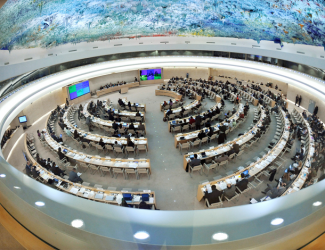
Human Rights Council (HRC)
The Human Rights Council (HRC) is the key intergovernmental body within the United Nations system responsible for the promotion and protection of all human rights around the globe. It holds three regular sessions a year: in March, June and September. The Office of the UN High Commissioner for Human Rights (OHCHR) is the secretariat for the HRC.
The HRC works by:
-
Debating and passing resolutions on global human rights issues and human rights situations in particular countries
-
Examining complaints from victims of human rights violations or activist organizations on behalf of victims of human rights violations
-
Appointing independent experts (known as “Special Procedures”) to review human rights violations in specific countries and examine and further global human rights issues
-
Engaging in discussions with experts and governments on human rights issues
-
Assessing the human rights records of all UN Member States every four and a half years through the Universal Periodic Review
AWID works with feminist, progressive and human rights partners to share key knowledge, convene civil society dialogues and events, and influence negotiations and outcomes of the session.
With our partners, our work will:
◾️ Raise awareness of the findings of the 2017 and 2021 OURs Trends Reports.
◾️Support the work of feminist UN experts in the face of backlash and pressure
◾️Advocate for state accountability
◾️ Work with feminist movements and civil society organizations to advance rights related to gender and sexuality.
Related Content
Faith Kandaba
Snippet FEA Agroecology And Food (EN)
AGROECOLOGY AND FOOD SOVEREIGNTY AS RESISTANCE |
Today, large-scale industrial food production uses single-crop plantations, genetically modified organisms and other pesticides that destroy the land and knowledge of local communities. |
Agroecology is a resistance to corporate-driven agriculture. It prioritizes smaller scale agriculture, multiple crops and diversified food production, and the centering of local knowledge and practices. Agroecology goes hand-in-hand with demands for food sovereignty, or the “right of peoples to healthy and culturally appropriate food produced through ecologically sound and sustainable methods, and their right to define their own food and agriculture systems”(Via Campesina, Declaration of Nyéléni).
The role of women, indigenous and rural communities and people of color from the Global South is absolutely essential when it comes to food systems. Feminist agroecologists are working to dismantle oppressive gender roles and systems of patriarchy embedded within food production. As shown by the heroines of NSS, they are generating a liberatory agroecology by strengthening community resilience, empowering women peasants and farmers, and preserving local traditions, territories, and knowledge of food-producing communities.
Nos solicitan el nombre de la agrupación, organización o movimiento que está respondiendo la encuesta, así como nuestra información de contacto, ¿por qué?
Solicitamos estos datos para facilitar el análisis de las respuestas, para evitar duplicaciones y para contactar a su organización en caso de que no hayan podido completar el cuestionario o de que tengan dudas u otras preguntas. Puedes consultar más detalles acerca de cómo utilizamos la información personal que recolectamos a través de nuestro trabajo aquí.
July 2015
Women's Forum on Financing for Gender Equality
- The Forum took place on 10 July 2015 in Addis Ababa and convened feminists, grassroots women, gender advocates, academics and representatives of women’s rights organizations/networks with specific inputs by UN representatives and other policy makers.
- The objectives of the Women's Forum were to: share information on the state of play in the latest FfD negotiations; jointly analyze the FfD panorama and follow-up; build a common women’s rights positioning; and strategize on how to meaningfully and substantively engage from a feminist perspective at the Addis FfD Conference.
- The Women's Forum was organized by the Women's Working Group on FfD, in collaboration with FEMNET, African Women's Development Fund (AWDF) and the Post 2015 Women's Coalition with support from UN Women.
- Read the Women's Working Group reaction to the Addis Ababa Action Agenda
- The CSO FfD Forum took place in Addis Ababa on 11-12 July 2015 and aimed to: inform participating CSOs on the state of play of the official process and coordinate civil society participation in the 3rd FfD Conference; develop a collective CSO Forum Declaration as well as the CSO messages for the FfD Conference Roundtables, the CSO FfD Group-led side events and any other opportunities that might emerge; and plan and organize future areas of CSO engagement on Financing for Development, beyond the 3rd FfD Conference.
- Read the Declaration from the Addis Ababa Civil Society Forum on Financing for Development
- For more information, please visit the CSO FfD Group's website or contact the Addis Ababa CSO Coordinating Group (addiscoordinatinggroup@gmail.com).
The Third UN International Conference on Financing for Development
- The third Conference on Financing For Development took place in Addis Ababa, Ethiopia, from 13-16 July 2015 and focused on: assessing the progress made in the implementation of the 2002 Monterrey Consensus and the 2008 Doha Declaration; addressing new and emerging issues, including in the context of the recent multilateral efforts to promote international development cooperation. Taking into account: the current evolving development cooperation landscape; the interrelationship of all sources of development finance; the synergies between financing objectives across the three dimensions of sustainable development (economic, social and environmental); and the need to support the United Nations development agenda beyond 2015; and reinvigorating and strengthening the financing for development follow-up process.
- The Addis Ababa Action Agenda was adopted on 15 July 2015 by Heads of State, Governments and High Representatives at the UN.
- The feeling however from developing countries, CSOs and more specifically women's organisations was that the Addis Ababa Action Agenda failed to meet the target. The Women's Working Group expressed its strong disappointment and demanded structural changes in the global economic governance and development architecture. Read their reaction to the outcome document. Hundreds of civil society organizations and networks from around the world also expressed deep concerns and reservations. Read their response to the outcome document.
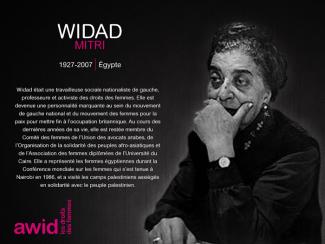
Widad Mitri
Leidiane Drosdoski Machado
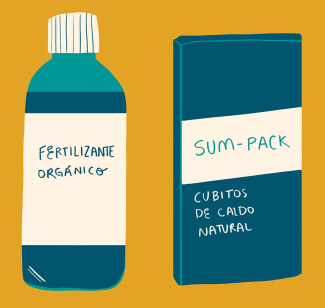
Snippet FEA Bio fertilizer and Sum-Pack (ES)

Pendant combien de temps l’enquête reste-t-elle ouverte?
Elle est ouverte jusqu’à la fin août 2024. Merci d’y répondre avant cette date butoir, afin que vos réponses soient incluses dans l’analyse.
¿Cuál es el tema del 14° Foro Internacional de AWID?
El tema del 14° Foro Internacional de AWID es «Realidades feministas: nuestro poder en acción».
Entendemos las realidades feministas como los diferentes modos de existir y ser que nos muestran lo que es posible, a pesar de los sistemas de poder dominantes, y en desafío y resistencia contra ellos. Entendemos estas realidades feministas como recuperaciones y corporizaciones de esperanza y poder, multidimensionales, dinámicas, y arraigadas en contextos y momentos históricos específicos.
Clotilde Marquez Cruz
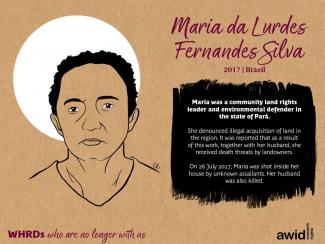
Maria da Lurdes Fernandes Silva
Snippet FEA FEMINIST COOPERATIVISM (FR)
Coopérativisme
Féministe
Quand le travail et
la solidarité vont de pair
Snippet - WITM Who should - RU
КОМУ СТОИТ ПРОЙТИ ЭТОТ ОПРОС?
Опрос предназначен для групп, организаций и движений, работающих исключительно или главным образом по вопросам защиты прав женщин, ЛГБТКИ+, гендерной справедливости во всех контекстах, на всех уровнях и во всех регионах. Если одно из этих направлений является основным видом деятельности вашей группы, коллектива, сети или любого другого типа организации – независимо от того, зарегистрирована она или нет, недавно создана или существует уже давно, мы приглашаем вас принять участие в этом опросе.

* На данном этапе мы не ожидаем ответов от частных лиц или женских и феминистских фондов.
Узнайте больше об опросе:
загляните в часто задаваемые вопросы
¿En qué será diferente este Foro?
Siempre hemos trabajado para garantizar que nuestros Foros sean desarrollados conjuntamente con nuestrxs afiliadxs, los movimientos, y nuestros colectivos prioritarios.
Para el Foro 2020 queremos profundizar y fortalecer este espíritu y esta práctica de creación conjunta y colaboración. También reconocemos la necesidad de mejorar el equilibrio entre la inclusión de muchas voces y experiencias y el espacio para que lxs participantes y el equipo respiren, se tomen una pausa, y disfruten de un poco de tiempo de inactividad.
Este Foro será diferente en cuanto a que:
- Tendremos muchas menos actividades organizadas, porque queremos que la gente tenga tiempo para relacionarse y hablar entre sí, experimentar, procesar, etc. Es fundamental que sepas que puedes venir al Foro, participar y ser muy activx, y no facilitar ninguna actividad organizada (o «sesión»).
- Tendremos Espacios Abiertos (al menos una tarde entera sin ninguna actividad organizada), y también espacios físicos disponibles durante todo el Foro para que la gente organice sus propias reuniones.
- Tendremos un Comité de Contenido y Metodología compuesto por feministas de distintas regiones con experiencia en metodologías participativas, para apoyar al equipo de AWID y a quienes lideren actividades en el Foro en el uso de formatos creativos e interesantes para las actividades del Foro.
Digna Ochoa
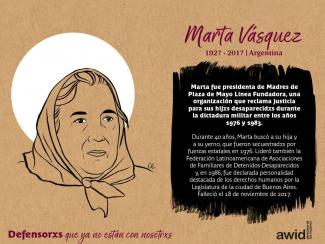
Marta Vásquez
Snippet FEA trans and travesti people in Argentina (EN)

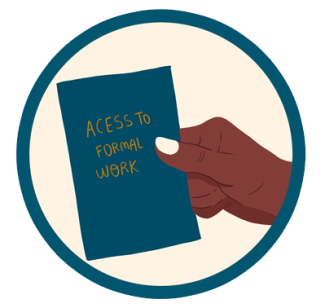
Only 18% of trans and travesti people in Argentina have access to formal work.
Snippet - WITM To make - PT

Para dar ênfase à complexidade do financiamento de várias formas de organização feminista;
¿Cómo puedo financiar mi participación en el Foro de AWID? Muchxs activistas no podrán costearse el Foro: ¿AWID está haciendo algo para brindar asistencia?
Por favor consulta la página «Financiamiento» para obtener algunas ideas sobre cómo puedes financiar tu participación en el próximo Foro. Esto incluye el limitado apoyo que AWID podrá brindar.