Susana Chavez
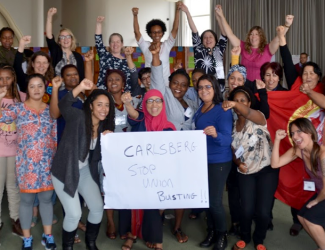
Women human rights defenders (WHRDs) worldwide defend their lands, livelihoods and communities from extractive industries and corporate power. They stand against powerful economic and political interests driving land theft, displacement of communities, loss of livelihoods, and environmental degradation.
Extractivism is an economic and political model of development that commodifies nature and prioritizes profit over human rights and the environment. Rooted in colonial history, it reinforces social and economic inequalities locally and globally. Often, Black, rural and Indigenous women are the most affected by extractivism, and are largely excluded from decision-making. Defying these patriarchal and neo-colonial forces, women rise in defense of rights, lands, people and nature.
WHRDs confronting extractive industries experience a range of risks, threats and violations, including criminalization, stigmatization, violence and intimidation. Their stories reveal a strong aspect of gendered and sexualized violence. Perpetrators include state and local authorities, corporations, police, military, paramilitary and private security forces, and at times their own communities.
AWID and the Women Human Rights Defenders International Coalition (WHRD-IC) are pleased to announce “Women Human Rights Defenders Confronting Extractivism and Corporate Power”; a cross-regional research project documenting the lived experiences of WHRDs from Asia, Africa and Latin America.
"Women Human Rights Defenders confronting extractive industries: an overview of critical risks and Human Rights obligations" is a policy report with a gender perspective. It analyses forms of violations and types of perpetrators, quotes relevant human rights obligations and includes policy recommendations to states, corporations, civil society and donors.
"Weaving resistance through action: Strategies of Women Human Rights Defenders confronting extractive industries" is a practical guide outlining creative and deliberate forms of action, successful tactics and inspiring stories of resistance.
The video “Defending people and planet: Women confronting extractive industries” puts courageous WHRDs from Africa, Asia, and Latin America in the spotlight. They share their struggles for land and life, and speak to the risks and challenges they face in their activism.
Challenging corporate power: Struggles for women’s rights, economic and gender justice is a research paper outlining the impacts of corporate power and offering insights into strategies of resistance.
AWID acknowledges with gratitude the invaluable input of every Woman Human Rights Defender who participated in this project. This project was made possible thanks to your willingness to generously and openly share your experiences and learnings. Your courage, creativity and resilience is an inspiration for us all. Thank you!
Somente no caso de problemas de acessibilidade e/ou se realizar o inquérito noutro idioma; caso contrário, encorajamo-lo a utilizar o KOBO para a recolha e análise padronizadas de dados do WITM.
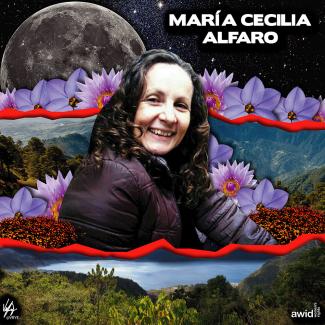
Most of María’s life was devoted to incorporating a feminist and gender perspective in institutional and organizational work, and capacity building in Latin America.
As a child, María had a strong interest in art, communication, nature, literature, and the achievement of justice, especially for women and marginalized groups.
María was committed to sexual and reproductive rights and was a member of the National Board for Integral Education in Sexuality. She is remembered by those who loved her as a “passionate and restless fighter” with a strong commitment to women’s and children’s rights.

هنالك 47 سؤال في الاستطلاع، منها 27 سؤال اجباري* والعشرين الباقين هي أسئلة اختيارية. أغلب الأسئلة هي أسئلة متعددة الخيارات. ندعوكم/ن للإجابة على جميع الأسئلة.
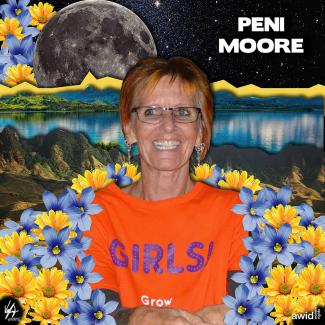
Peni fue una filósofa feminista radical, poeta, escritora, dramaturga y compositora.
Como primera coordinadora del movimiento por los derechos de las mujeres de Fiji, dejó un legado atravesado por su profundo compromiso con los derechos humanos de las mujeres, la justicia y la paz. La dedicación de Peni a la justicia social, económica y ecológica y su sobresaliente trabajo le valieron el respeto local e internacional. Fue una de las primeras participantes de los movimientos feministas hegemónicos en Fiji en trabajar junto a las personas LGBTQI como una verdadera aliada y brindó asistencia práctica durante la creación del movimiento de trabajadorxs sexuales.
Sus colegas la describen como una persona formidable y una líder con visión para el cambio. Inspiró a muchxs con su creatividad y coraje. Su trabajo significó una plataforma para que las personas sean escuchadas, adquieran nuevas habilidades y abran nuevos caminos tanto personales como comunitarios.
Nous comptons actuellement parmi nos membres plusieurs centaines d’organisations parmi les plus connues et novatrices. Les critères d’adhésion sont les mêmes que pour les personnes, mais les cotisations diffèrent et les services proposés tentent de répondre à leurs besoins particuliers.
Margarita Salas, AWID
Nazik Abylgaziva, Labrys
Amaranta Gómez Regalado, Secretariado Internacional de Pueblos Indígenas frente al VIH/sida, la Sexualidad y los Derechos Humanos
Cindy Weisner, Grassroots Global Justice Alliance
Lucineia Freitas, Movimento Sem Terra

Данные будут обработаны в статистических целях, чтобы осветить состояние ресурсного обеспечения феминистских движений во всем мире, и представлены будут только в обобщенном виде. AWID не будет публиковать информацию о конкретных организациях или отображать информацию, которая позволила бы идентифицировать организации по их местоположению или характеристикам, без их согласия.
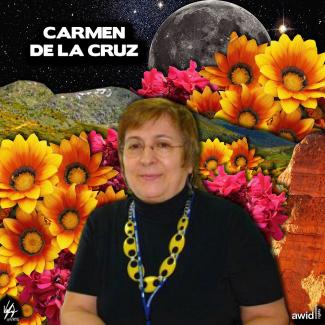
Carmen a consacré sa carrière à la défense des droits des femmes au sein de diverses ONG, ainsi qu’au sein des Nations Unies.
Elle a enseigné dans plusieurs universités espagnoles et latino-américaines et publié de nombreux articles et rapports sur les femmes, le genre et la paix dans les pays en développement. Ses écrits et ses réflexions critiques ont touché toute une génération de jeunes femmes.
Son dernier mandat auprès du centre régional du Programme des Nations Unies pour le développement (PNUD) de l'Amérique latine, fut comme responsable du département de mise en pratique des politiques de genre, lors duquel elle a soutenu de très précieuses initiatives en faveur de l'égalité de genre et des droits fondamentaux des femmes.
The AWID international Forum is a gathering of 2,000 women’s rights leaders and activists from around the world. The AWID Forum is the largest recurring event of its kind, and every Forum takes place in a different country in the global South.
The AWID International Forum is both a global community event and a space of radical personal transformation. A one-of-a-kind convening, the Forum brings together feminist, women’s rights, gender justice, LBTQI+ and allied movements, in all our diversity and humanity, to connect, heal and thrive.
When people come together on a global scale, as individuals and movements, we generate a sweeping force.
Join us in Bangkok, Thailand and online in December 2024.
Não. Tem por base a história de 20 anos da AWID de mobilizar mais financiamento de maior qualidade para mudanças sociais lideradas por feministas e é a terceira edição do nosso inquérito “Onde está o dinheiro para organização feminista?”. O nosso objetivo é repetir o inquérito WITM a cada 3 anos.
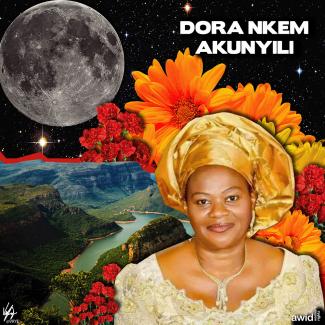
Dora was born in Benue State, Nigeria. She was a globally acclaimed pharmacist, technocrat, erudite scholar and community leader.
Dora’s revolutionary work created a paradigm shift in the Nigerian public service when she served as Director General of National Agency for Food and Drugs Administration and Control (NAFDAC) from 2001-2008. She spearheaded reforms in policy and regulatory enforcement that radically reduced the measure of fake drugs that plagued the Nigerian pharmaceutical sector during her tenure.
Having exemplified the reality of a courageous, competent woman who challenged the ills of a dominantly patriarchal society and drove change, she became an icon for women’s empowerment. She was appointed the Minister of Information and Communication between 2008 and 2010.
She died after a battle with cancer and is survived by her husband, six children and three grandchildren.
La Conferencia de Monterrey sobre la Financiación para el Desarrollo marcó el comienzo de las conversaciones acerca de una agenda de Financiación para el Desarrollo.
Para saber más sobre los seis temas centrales de Monterrey los mecanismos de seguimiento a esta conferencia, consulta Género y financiación para el desarrollo, de Maria Floro, Nilufer Çagatay, John Willoughby y Korkut Ertürk (INSTRAW, 2004).
Facebook: @AWIDWomensRights
Instagram: @awidwomensrights
Twitter ENG: @awid
LinkedIn: Association for Women's Rights in Development (AWID)