Related Content
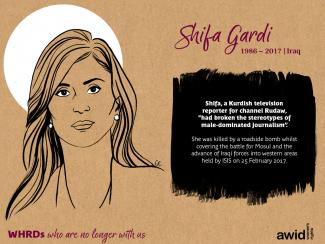
Al Jazeera: Shifa Gardi: Tributes paid to reporter killed in Mosul
BBC News: Mosul Battle: Kurdish reporter Shifa Gardi killed in Iraq
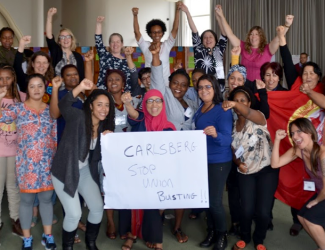
Women human rights defenders (WHRDs) worldwide defend their lands, livelihoods and communities from extractive industries and corporate power. They stand against powerful economic and political interests driving land theft, displacement of communities, loss of livelihoods, and environmental degradation.
Extractivism is an economic and political model of development that commodifies nature and prioritizes profit over human rights and the environment. Rooted in colonial history, it reinforces social and economic inequalities locally and globally. Often, Black, rural and Indigenous women are the most affected by extractivism, and are largely excluded from decision-making. Defying these patriarchal and neo-colonial forces, women rise in defense of rights, lands, people and nature.
WHRDs confronting extractive industries experience a range of risks, threats and violations, including criminalization, stigmatization, violence and intimidation. Their stories reveal a strong aspect of gendered and sexualized violence. Perpetrators include state and local authorities, corporations, police, military, paramilitary and private security forces, and at times their own communities.
AWID and the Women Human Rights Defenders International Coalition (WHRD-IC) are pleased to announce “Women Human Rights Defenders Confronting Extractivism and Corporate Power”; a cross-regional research project documenting the lived experiences of WHRDs from Asia, Africa and Latin America.
"Women Human Rights Defenders confronting extractive industries: an overview of critical risks and Human Rights obligations" is a policy report with a gender perspective. It analyses forms of violations and types of perpetrators, quotes relevant human rights obligations and includes policy recommendations to states, corporations, civil society and donors.
"Weaving resistance through action: Strategies of Women Human Rights Defenders confronting extractive industries" is a practical guide outlining creative and deliberate forms of action, successful tactics and inspiring stories of resistance.
The video “Defending people and planet: Women confronting extractive industries” puts courageous WHRDs from Africa, Asia, and Latin America in the spotlight. They share their struggles for land and life, and speak to the risks and challenges they face in their activism.
Challenging corporate power: Struggles for women’s rights, economic and gender justice is a research paper outlining the impacts of corporate power and offering insights into strategies of resistance.
AWID acknowledges with gratitude the invaluable input of every Woman Human Rights Defender who participated in this project. This project was made possible thanks to your willingness to generously and openly share your experiences and learnings. Your courage, creativity and resilience is an inspiration for us all. Thank you!
Related Content
Al Jazeera: Shifa Gardi: Tributes paid to reporter killed in Mosul
BBC News: Mosul Battle: Kurdish reporter Shifa Gardi killed in Iraq
Como podrás o no saber, AWID está celebrando su 40º aniversario en 2022 y, para festejarlo, se eligieron los lemas «Reunir, sembrar e irrumpir». En honor a esta ocasión, hemos invitado a lxs afiliadxs, aliadxs y al personal de AWID a escribir sus propias «Cartas de Amor a los Movimientos Feministas». En conjunto, hemos encendido una constelación de movimientos feministas. Nos mantengamos cerca mientras forjamos el viaje y seguimos reuniéndonos, sembrando y desmantelando.
Nota sobre nuestra Colección de Cartas de Amor
Todas estas cartas de amor fueron escritas por activistas que están compartiendo sus diversas experiencias en los movimientos feministas. Algunas pueden incluir contenido delicado o complejo sobre abuso sexual, violencia sexual, conflictos, exclusión, entre otras piezas potencialmente perturbadoras o provocadoras. Aunque las cartas están llenas de amor, cuídate al leerlas.
📅Lundi 11 mars
🕒16 h 30 - 18 h HNE
Organisateurs : AWID, IJSC et NAWI
🏢 Church Center des Nations Unies, 777 United Nations Plaza, New York, 11e étage
(Interprétation en français et en espagnol disponible)
Contenido relacionado
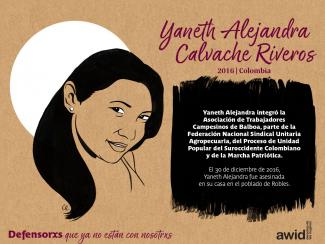
C.R.I.C Consejo Regional Indígena del Cauca: Cauca: Denuncian Nuevo Homicidio de una Defensora de Derechos Humanos

Further drafting sessions on the Addis Ababa outcome document
Learn more from the CSO Hitchhiker’s Guide
Et si nous ré-imaginons différentes manières de prendre soin de nos communautés?
Et si l'économie n'était pas basée sur le profit d’une petite élite mais sur notre bien-être individuel et collectif, et celui de la Nature?
Les histoires que vous allez découvrir portent sur les collectifs créés par et pour les personnes historiquement et actuellement exclues, privées de leurs droits et déshumanisées par l'État et la société.
Voici les histoires des féministes qui centrent les soins dans l’économie.
Jour 3

A geopolitical Analysis of Financing for Development, de Regions Refocus 2015 y Third World Network (TWN) con DAWN
Zero Draft Language Map, de Regions Refocus
Addis Ababa financing conference: Will the means undermine the goals? de RightingFinance
It is a community hub, where one can take courses and train in creative income-generation activities like local hairdressing, cooking and artmaking. Children can also enjoy cultural and educational activities. The MSTC doesn't work alone. It collaborates with institutions and art collectives to produce cultural, athletic and educational experiences, alongside critical access to health care. Since its inception, this participatory project has been led and carried out by mostly women, under the leadership of Afro-Brazilian activist Carmen Silva, who was once a homeless person herself.
Thanks to our global feminist community! From May to August 2024, nearly 1,200 organizations working for Women's rights, gender justice, and LBTQI+ equality shared their experiences in the WITM survey. The results offer a unique picture of how feminist movements are resourced and where gaps remain.
Related content
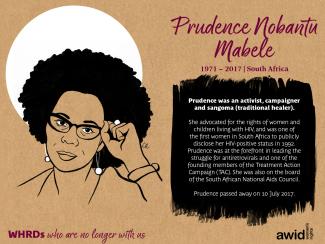
African Women's Development Fund: Remembering a Warrior: Prudence Mabele
BBC: Prudence Mabele: The life of the South African HIV campaigner
Mail and Guardian: The Pied Piper of the broken-hearted: HIV activist Prudence Mabele
Face2Face Africa: Prudence Mabele, 1st Black SA Woman To Reveal HIV Positive Status Dies At 46
Ms. Prudence Mabele - I'm committed to respond to HIV! (Video)
AWLN Interview with Prudence Mabele of South Africa (Video)
Sangoma: Why I take ARVs (Video)
Dans le cadre de notre engagement en faveur de l’accessibilité dans tous les aspects du Forum de l’AWID, nous acceptons les formats audio/vidéo pour tous les individus/organisations/groupes qui ne peuvent soumettre de candidature écrite. Si vous décidez d’envoyer votre proposition sous format audio/vidéo, nous vous prions de bien vouloir répondre aux questions dans le même ordre, telles que détaillées dans le Formulaire de proposition d’activité.
Pour soumettre un fichier audio/vidéo, merci de nous contacter via notre formulaire de contact en choisissant « Proposition d'activité » comme sujet de votre message.
La organización comunitaria de mujeres negras en la región del Norte del Cauca en Colombia se remonta al pasado colonial del país, que está marcado por el racismo, el patriarcado y el capitalismo que sustentaron la esclavitud como un medio para explotar los ricos suelos de la región.
Estas organizadoras son las heroínas de un amplio movimiento por la autonomía negra, que lucha por el uso sostenible de los bosques y los recursos naturales de la región como elementos vitales para su cultura y sustento.
Durante 25 años, la Asociación de Mujeres Afrodescendientes del Norte del Cauca (ASOM) se ha dedicado a impulsar la organización de mujeres afrocolombianas en el Norte del Cauca. Se establecieron en 1997 como respuesta a las continuas violaciones de derechos humanos, la ausencia de políticas públicas, el manejo inadecuado de los recursos naturales y la falta de oportunidades para las mujeres en el territorio.
Han forjado la lucha para asegurar los derechos étnico-territoriales, para poner fin a la violencia contra las mujeres y obtener el reconocimiento del papel de las mujeres en la construcción de la paz en Colombia.

To build feminist-realities centered evidence on how money moves and who it is reaching