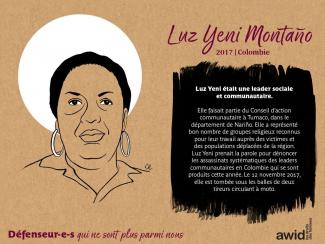
Luz Yeni Montaño
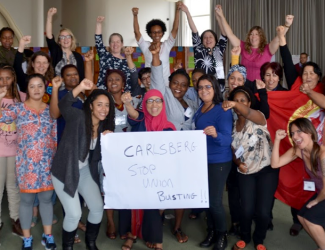
Women human rights defenders (WHRDs) worldwide defend their lands, livelihoods and communities from extractive industries and corporate power. They stand against powerful economic and political interests driving land theft, displacement of communities, loss of livelihoods, and environmental degradation.
Extractivism is an economic and political model of development that commodifies nature and prioritizes profit over human rights and the environment. Rooted in colonial history, it reinforces social and economic inequalities locally and globally. Often, Black, rural and Indigenous women are the most affected by extractivism, and are largely excluded from decision-making. Defying these patriarchal and neo-colonial forces, women rise in defense of rights, lands, people and nature.
WHRDs confronting extractive industries experience a range of risks, threats and violations, including criminalization, stigmatization, violence and intimidation. Their stories reveal a strong aspect of gendered and sexualized violence. Perpetrators include state and local authorities, corporations, police, military, paramilitary and private security forces, and at times their own communities.
AWID and the Women Human Rights Defenders International Coalition (WHRD-IC) are pleased to announce “Women Human Rights Defenders Confronting Extractivism and Corporate Power”; a cross-regional research project documenting the lived experiences of WHRDs from Asia, Africa and Latin America.
"Women Human Rights Defenders confronting extractive industries: an overview of critical risks and Human Rights obligations" is a policy report with a gender perspective. It analyses forms of violations and types of perpetrators, quotes relevant human rights obligations and includes policy recommendations to states, corporations, civil society and donors.
"Weaving resistance through action: Strategies of Women Human Rights Defenders confronting extractive industries" is a practical guide outlining creative and deliberate forms of action, successful tactics and inspiring stories of resistance.
The video “Defending people and planet: Women confronting extractive industries” puts courageous WHRDs from Africa, Asia, and Latin America in the spotlight. They share their struggles for land and life, and speak to the risks and challenges they face in their activism.
Challenging corporate power: Struggles for women’s rights, economic and gender justice is a research paper outlining the impacts of corporate power and offering insights into strategies of resistance.
AWID acknowledges with gratitude the invaluable input of every Woman Human Rights Defender who participated in this project. This project was made possible thanks to your willingness to generously and openly share your experiences and learnings. Your courage, creativity and resilience is an inspiration for us all. Thank you!
Lorsque des milliers de féministes se réunissent, nous créons une grande force de solidarité qui a le pouvoir de changer le monde. Le Forum de l’AWID sera pour nous un moment de repos et de guérison ensemble, de connexion au-delà des frontières et de découverte de nouvelles orientations stratégiques courageuses.
La date et le lieu seront annoncés l'année prochaine, dès que possible. Nous sommes ravi.es et nous savons que vous le serez aussi. Restez à l'écoute!
Assurez-vous de nous suivre sur les médias sociaux et de vous inscrire à notre liste de diffusion pour rester informé!
We are acutely aware of the practical hurdles and emotional distress associated with international travel, particularly from the Global South. AWID is working with TCEB (the Thailand Convention and Exhibition Bureau) to support Forum participants with acquiring visas. More information about this visa assistance will be available upon registration, including contact information for where and how to apply.
Le tout dernier rapport de l’Observatoire sur l’universalité des droits (OURs) détricote les discours de « l’idéologie du genre », du « génocide prénatal » et de « l’impérialisme culturel ». Il creuse également la réalité de CitizenGo, de l’Alliance Defending Freedom et des flux de financement antidroits. Vous y trouverez, en outre, une analyse des systèmes régionaux des droits humains et des stratégies féministes victorieuses !

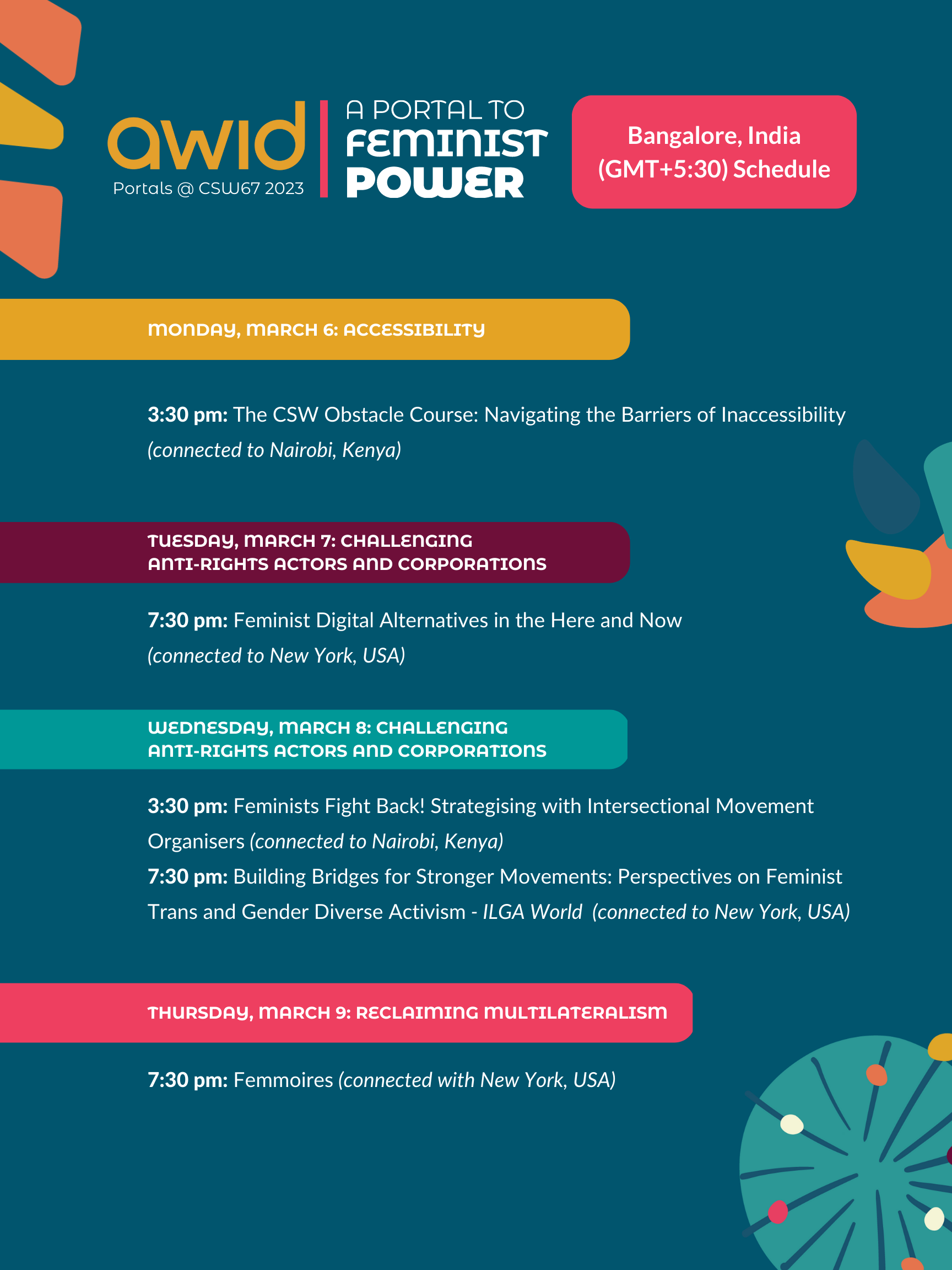
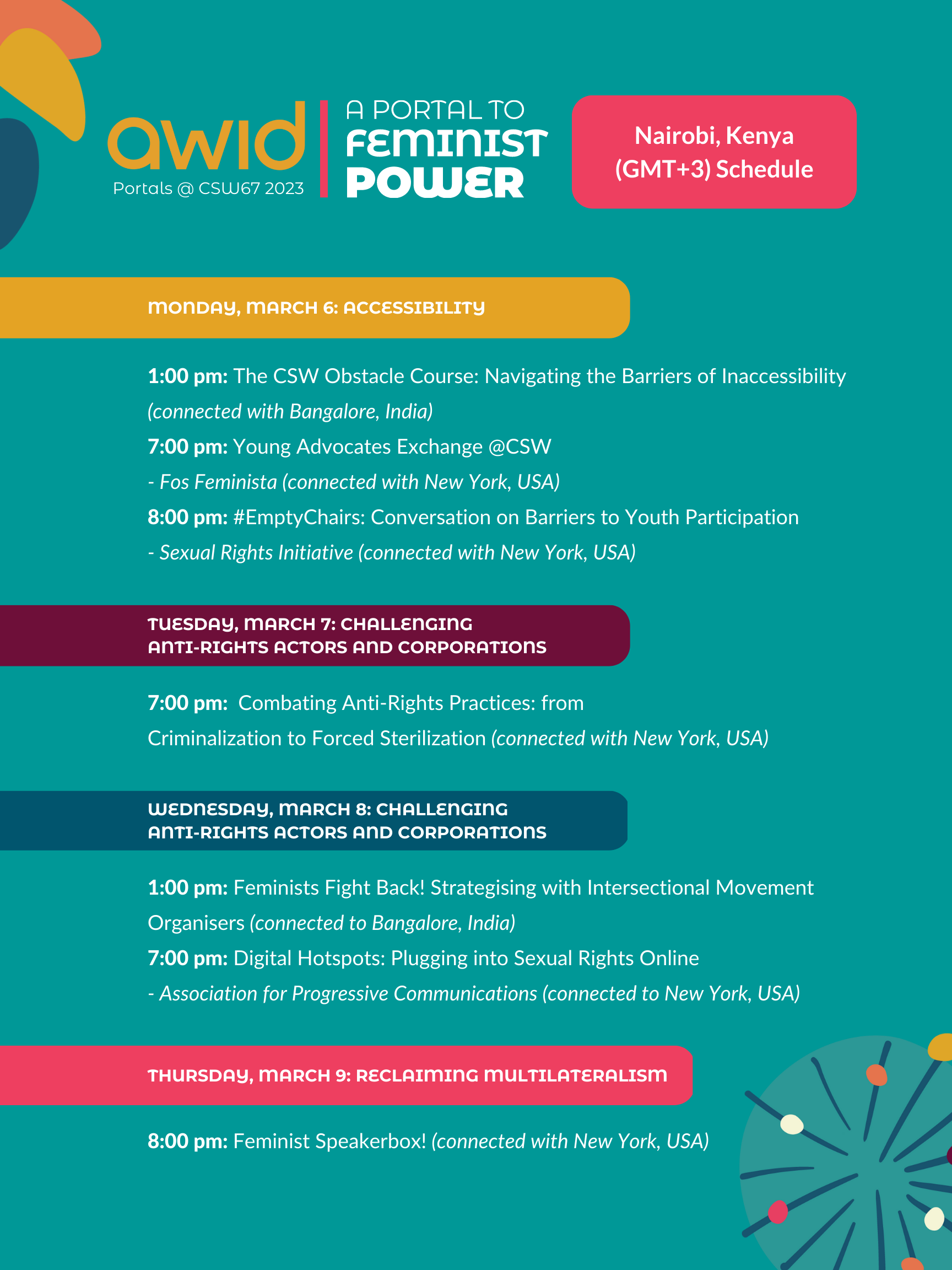
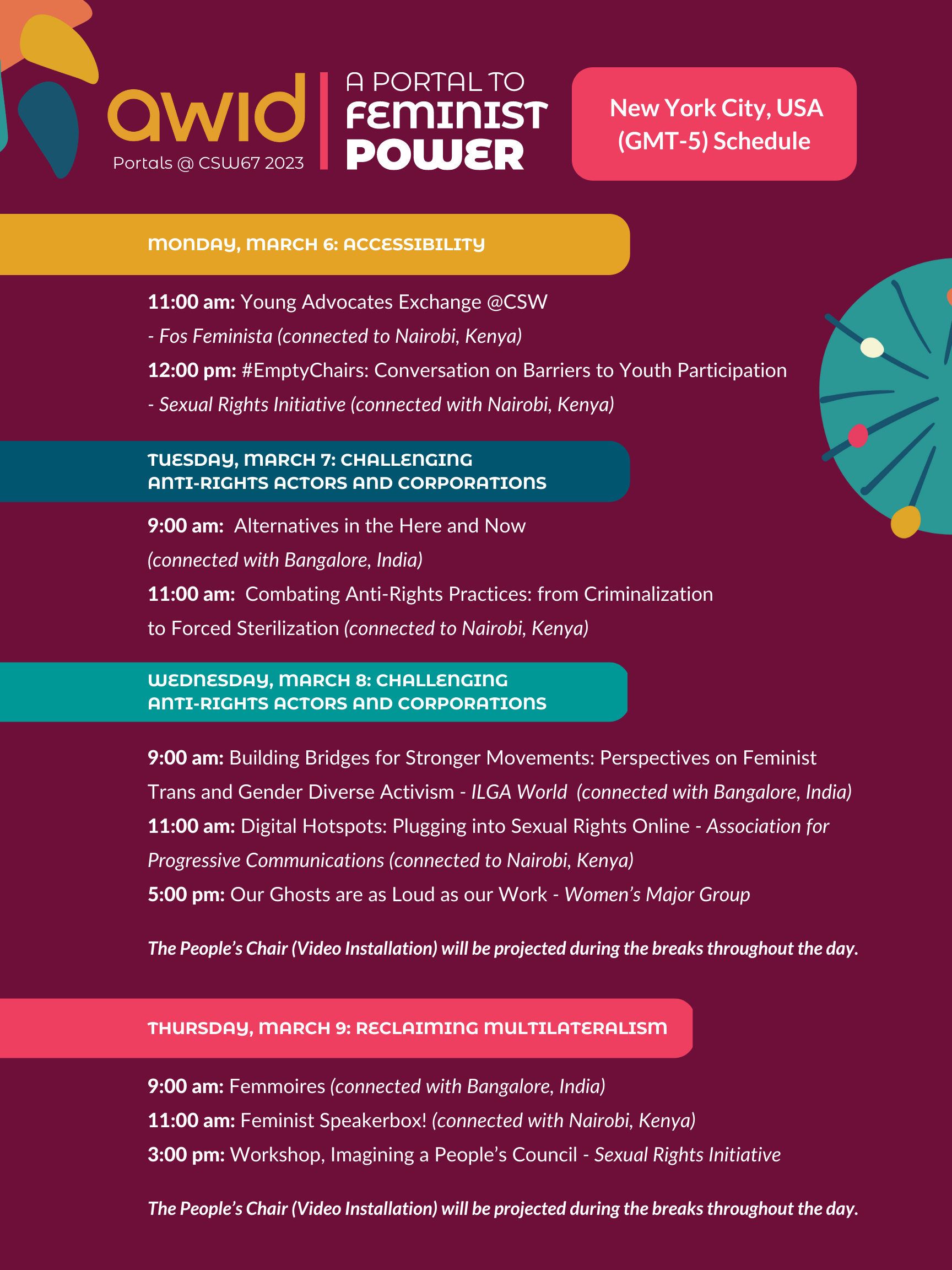
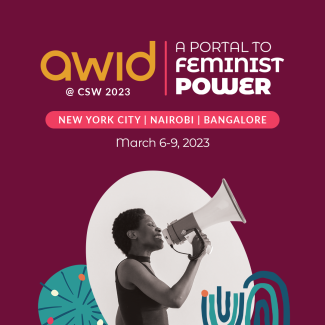
Imagine opening a door which takes you into a conversation with feminist activists in other continents. This portal will transcend the barriers of UN CSW by pushing beyond language barriers, unaffordable travel, unequal protection from COVID19, and racist visa regimes.
This week, we’re putting a virtual spin on CSW by connecting and amplifying feminist activists' voices, to challenge the discriminatory barriers that limit participation and influence. By setting up connecting “portals” in New York City, Nairobi & Bangalore, we'll host a physical-virtual hybrid space for feminists to connect their struggles and build collective power.
Day 1: March 6 - Accessibility
Day 2: March 7- Challenging Anti-Rights Actors And Corporations
Day 3: March 8 - Challenging Anti-Rights Actors And Corporations
Day 4: March 9- Reclaiming Multilateralism
Download full program here (PDF)
Bangalore Schedule (PNG) Nairobi Schedule (PNG) New York City Schedule (PNG)
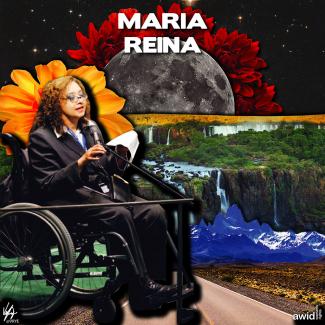
She represented the International Disability and Development Consortium during the negotiation of the United Nations Convention on the Rights of Persons with Disabilities (2001-2006).
Her work was devoted to the implementation of the goal of the Convention - realization of universal human rights by, for and with persons with disabilities for an inclusive, accessible and sustainable world.
In her words, her leadership was about “...serving the disability community, starting with small tasks that others may not wish to do”.
She passed away on October 27, 2017 in her hometown of Rosario, Argentina.
Read more about María Verónica Reina in her own words
Volveremos a ponernos en contacto con contrapartes que hayan colaborado en el pasado, para asegurarnos de que se respetan los esfuerzos realizados.Si tus datos de contacto han cambiado desde el último proceso del Foro, por favor, actualízalos para que podamos contactarte.
When our embodied labor becomes profit in the hands of the systems we seek to dismantle, it is no wonder that our sexualities and pleasures are once again relegated to the sidelines – especially when they are not profitable enough. In many instances during the production of this issue, we asked ourselves what would happen if we refused to accommodate the essential services of capitalism.
لتجسيد قوتكم/ن كخبيرات عن وضع التمويل للحركات النسوية

Esta historia es sobre la manera en que un grupo cada vez más diverso de feministas del Pacífico se organizaron a lo largo de los años para asistir a los Foros de AWID, y el modo en que ese proceso lxs transformó en forma personal, como organizaciones y como movimiento a través de lo que aprendieron, descubrieron y experimentaron. Ilustra la importancia de los Foros como espacio que permitió que una región que tiende a ser marginada o ignorada a nivel global pueda construir una presencia sólida en el movimiento feminista, que luego es replicada en otros espacios internacionales de derechos de las mujeres.
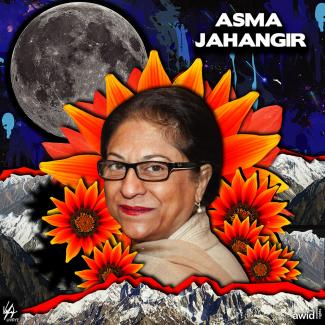
Asma fue una destacada activista pakistaní por los derechos humanos, valiente crítica de la interferencia de los militares en la política, y firme defensora del estado de derecho.
Fue la fundadora y presidenta de la Human Rights Commission of Pakistan [Comisión de Derechos Humanos de Pakistán, un grupo independiente], y una de las administradoras del International Crisis Group. Obtuvo premios internacionales, y fue Relatora Especial de Naciones Unidas sobre derechos humanos y ejecuciones extrajudiciales.
Es recordada con afecto por sus colegas y amigxs de AWID
«Con su vida, Asma reescribió la historia que a muchas nos contaron, como mujeres. Asma cambió el mundo. Lo cambió en Pakistán, y lo cambió en nuestras imaginaciones.»
Pour toute question supplémentaire, veuillez utiliser notre formulaire de contact. Nous continuerons d’actualiser ce document en fonction des questions que nous recevrons de votre part !
with Dr. Vandana Shiva, Dr. Dilar Dirik, and Nana Akosua Hanson.
Пожалуйста выберите язык, на котором вы хотите отвечать на вопросы в правом верхнем углу страницы
Если вы хотите узнать больше, присоединяйтесь к нашей встрече участников исследования «Где деньги?», которая пройдет 27 мая, понедельник, в 9:00 UTC – с синхронным переводом на французский и английский языки. 14:00 UTC – с синхронным переводом на испанский и английский языки.
Становиться участником (in English).
Thank you for your interest, but the page you're looking for no longer exists.
You can explore more content and updates at https://www.awid.org.
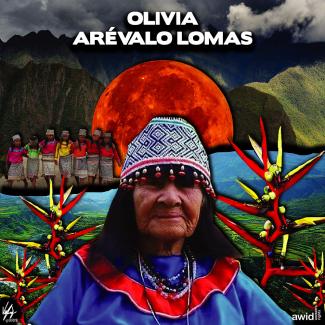
Olivia était la cheffe spirituelle des peuples autochtones Shipibo Konibo.
Sage femme et grand-mère autochtone, elle était connue pour sa préservation de la médecine traditionnelle et des chants sacrés de son peuple (les íkaros). Olivia Arévalo était une défenseure engagée en faveur des droits culturels et environnementaux de son peuple. L’assassinat d’Olivia s’est produit dans un contexte de conflit territorial entre la communauté Shipibo et les entreprises qui souhaitent s’accaparer leurs terres pour cultiver de l’huile de palme.
Les membres de sa communauté ont déclaré: « Sa mort est une agression contre toute la communauté Shipibo. Elle était la mémoire vivante de son peuple ».