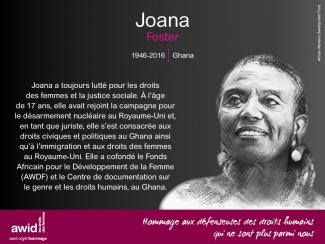
Joana Foster
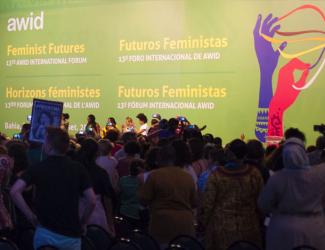
In September 2016, the 13th AWID international Forum brought together in Brazil over 1800 feminists and women’s rights advocates in a spirit of resistance and resilience.
This section highlights the gains, learnings and resources that came out of our rich conversations. We invite you to explore, share and comment!
One of the key takeaways from the 2016 Forum was the need to broaden and deepen our cross-movement work to address rising fascisms, fundamentalisms, corporate greed and climate change.
With this in mind, we have been working with multiple allies to grow these seeds of resistance:
And through our next strategic plan and Forum process, we are committed to keep developing ideas and deepen the learnings ignited at the 2016 Forum.
AWID Forums started in 1983, in Washington DC. Since then, the event has grown to become many things to many peoples: an iterative process of sharpening our analyses, vision and actions; a watershed moment that reinvigorates participants’ feminisms and energizes their organizing; and a political home for women human rights defenders to find sanctuary and solidarity.

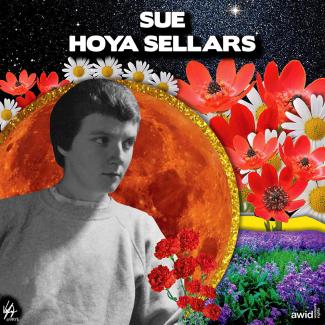
Sue fue artista, activista y maestra y nació en 1936 en Maryland, Estados Unidos.
Creó arte para mujeres y sobre mujeres. Como lesbiana feminista, y durante un tiempo también separatista, se dedicó a la creación de espacios sólo para mujeres. En 1976 compró tierras que todavía son conservadas por mujeres que van temporariamente a hacer arte. Sue mantuvo una apasionada posición en la protección de las mujeres y las niñas.
Con su innovador enfoque futurista, clásico y antropológico, llenaba cada habitación en la que entraba con su intelecto, su excentricidad auténtica, su ingenio implacable y su humor. Sus ideas acerca de la conciencia y la creatividad siguen inspirando a mucha gente.
Aujourd'hui, de nombreux systèmes de savoirs communautaires sont en danger.
Les changements qui surviennent à une vitesse effrénée sur le plan économique, politique et culturel détruisent les environnements, les pratiques et les moyens de subsistance. Diverses formes de connaissances sombrent dans l’oubli, sont marchandées et colonisées dans le cadre de la mondialisation massive, de la promesse de gains à court terme, ou encore contre des solutions de fortune.
Le Buen Vivir (le bien-vivre), un concept adapté à partir des connaissances des peuples autochtones andins, est décrit comme la réalisation collective d'une vie d'accomplissement fondée sur des relations harmonieuses et équilibrées entre les êtres humains et tous les êtres vivants, dans la réciprocité et la complémentarité. Cela implique de reconnaître que les êtres humains sont une partie intégrante de la nature, que nous dépendons de la nature et que nous sommes interdépendant-e-s entre nous.
La vision inhérente à la notion de Buen Vivir intègre la production et la reproduction comme processus indissociables de l'économie, de la production de richesse et des conditions de vie.
D’une perspective féministe, le Buen Vivir valorise les relations et les ressources mobilisées dans les cycles de production et de reproduction, favorisant l’équilibre (non seulement celui des marchés) afin de garantir la continuité et les changements, tant qu'ils sont compatibles avec la justice économique et la pérennité de la vie.
Certaines conceptions binaires liées au genre et à la complémentarité entre les hommes et les femmes ont été critiquées par les féministes puisqu’elles laissent peu de place à une discussion plus approfondie sur le patriarcat hétérocentrique et les relations de genre ‘non conformes’.
Cela dit, l'une des principales contributions de l’application du principe Buen Vivir aux cadres politiques, économiques et sociaux, consiste à ce que l'égalité ne représente plus le paradigme des droits individuels, ayant plutôt pour objet la transformation de l’ensemble de la société.


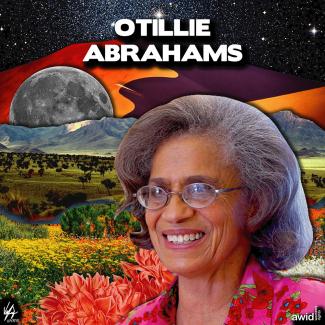
Ottilie était une militante féministe, éducatrice et politicienne namibienne.
Elle était l'une des fondatrices de l'Organisation populaire du Sud-Ouest africain (SWAPO), du Yu Chi Chan Club (groupe révolutionnaire armé) et du Front de libération nationale du Sud-Ouest africain (SWANLIF). Ottilie a également été une des fondatrices de la Namibian Women’s Association et du Girl Child Project. Tout au long de sa vie, Ottilie a plaidé en faveur du droit de discuter, de penser, de contester et de réclamer. Elle a mobilisé des femmes, organisé des assemblées d’étudiants et d’enseignants et critiqué d'autres camarades pour leur élitisme et leur corruption.
Ottilie a œuvré sans relâche pour démanteler le patriarcat et faire émerger une démocratie participative, féministe, libératrice et transformatrice.
Ottilie disait souvent : « Je me reposerai quand je serai morte. »
“Now might be a good time to rethink what a revolution can look like. Perhaps it doesn’t look like a march of angry, abled bodies in the streets. Perhaps it looks something more like the world standing still because all the bodies in it are exhausted—because care has to be prioritized before it’s too late.”
- Johanna Hedva (https://getwellsoon.labr.io/)
Hospitals are institutions, living sites of capitalism, and what gets played out when somebody is supposed to be resting is a microcosm of the larger system itself.
Institutions are set out to separate us from our care systems – we find ourselves isolated in structures that are rigidly hierarchical, and it often feels as if care is something done to us rather than given/taken as part of a conversation. Institutional care, because of its integration into capitalist demand, is silo-ed: one person is treating your leg and only your leg, another is treating your blood pressure, etc.
Photographer Mariam Mekiwi had to have surgery last month and documented the process. Her portraits of sanitized environments – neon white lights, rows after rows of repetitive structures – in a washed-out color palette reflect a place that was drained of life and movement. This was one of the ways Mariam kept her own spirit alive. It was a form of protest from within the confines of an institution she had to engage with.
The photos form a portrait of something incredibly vulnerable, because watching someone live through their own body’s breakdown is always a sacred reminder of our own fragility. It is also a reminder of the fragility of these care systems, which can be denied to us for a variety of reasons – from not having money to not being in a body that’s considered valuable enough, one that’s maybe too feminine, too queer or too brown.
Care experienced as disembodied and solitary, that is subject to revocation at any moment, doesn’t help us thrive. And it is very different from how human beings actually behave when they take care of each other. How different would our world look like if we committed to dismantling the current capitalist structures around our health? What would it look like if we radically reimagined it?
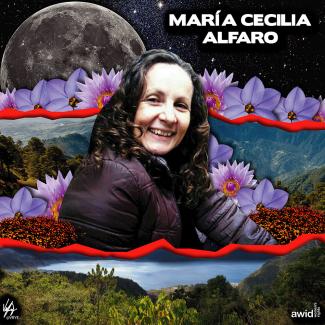
Most of María’s life was devoted to incorporating a feminist and gender perspective in institutional and organizational work, and capacity building in Latin America.
As a child, María had a strong interest in art, communication, nature, literature, and the achievement of justice, especially for women and marginalized groups.
María was committed to sexual and reproductive rights and was a member of the National Board for Integral Education in Sexuality. She is remembered by those who loved her as a “passionate and restless fighter” with a strong commitment to women’s and children’s rights.
We can have an intro here
And maybe a little bit more text here
|
Editorial Team Design and Illustration Communications Strategist
Translation Manager AWID’s Team |
Arabic Translators English to Spanish Proofreaders Proofreaders Portuguese to English Proofreader |
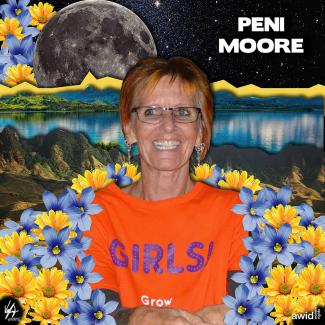
Peni fue una filósofa feminista radical, poeta, escritora, dramaturga y compositora.
Como primera coordinadora del movimiento por los derechos de las mujeres de Fiji, dejó un legado atravesado por su profundo compromiso con los derechos humanos de las mujeres, la justicia y la paz. La dedicación de Peni a la justicia social, económica y ecológica y su sobresaliente trabajo le valieron el respeto local e internacional. Fue una de las primeras participantes de los movimientos feministas hegemónicos en Fiji en trabajar junto a las personas LGBTQI como una verdadera aliada y brindó asistencia práctica durante la creación del movimiento de trabajadorxs sexuales.
Sus colegas la describen como una persona formidable y una líder con visión para el cambio. Inspiró a muchxs con su creatividad y coraje. Su trabajo significó una plataforma para que las personas sean escuchadas, adquieran nuevas habilidades y abran nuevos caminos tanto personales como comunitarios.
In a global picture of rising religious fundamentalisms, this ebook details the grave human rights violations, and violations of women’s rights in particular, caused by state-sponsored fundamentalism, as well as by fundamentalist non-state actors such as militias, religious community organizations, and individuals.
It is vital to promote intersectional feminist understandings of power and privilege, and to apply these to questions of religion and culture.

المضيفة: نحن نميل إلى الاعتقاد أنّ التعبير عن الرغبة يقتصر على العلاقة الحميمة داخل غرفة النوم وعلى علاقاتنا الشخصيّة. ولكن هل يمكننا أيضًا اعتبار هذا النوع من التعبير كبُنية، أو ممارسة أيديولوجيّة توجّه عملنا، وما نحن عليه، وكيف سنكون في هذا العالم؟
It is exactly the same process and same deadline. Please use the same form to submit your activity, whether it is in-person, online, or both (hybrid).