Special Focus

AWID is an international, feminist, membership organisation committed to achieving gender equality, sustainable development and women’s human rights

AWID Forum: Co-creating Feminist Futures

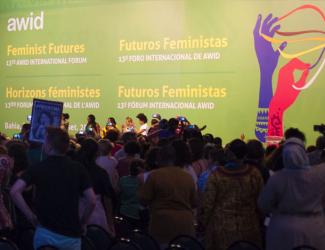
In September 2016, the 13th AWID international Forum brought together in Brazil over 1800 feminists and women’s rights advocates in a spirit of resistance and resilience.

This section highlights the gains, learnings and resources that came out of our rich conversations. We invite you to explore, share and comment!


What has happened since 2016?

One of the key takeaways from the 2016 Forum was the need to broaden and deepen our cross-movement work to address rising fascisms, fundamentalisms, corporate greed and climate change.

With this in mind, we have been working with multiple allies to grow these seeds of resistance:

And through our next strategic plan and Forum process, we are committed to keep developing ideas and deepen the learnings ignited at the 2016 Forum.

What happens now?

The world is a much different place than it was a year ago, and it will continue to change.

The next AWID Forum will take place in the Asia Pacific region (exact location and dates to be announced in 2018).

We look forward to you joining us!

About the AWID Forum

AWID Forums started in 1983, in Washington DC. Since then, the event has grown to become many things to many peoples: an iterative process of sharpening our analyses, vision and actions; a watershed moment that reinvigorates participants’ feminisms and energizes their organizing; and a political home for women human rights defenders to find sanctuary and solidarity.

Learn more about previous Forums

Related Content

2003: First High-level Dialogue is held

First High-level Dialogue on Financing for Development, 29-30 October 2003

One of the follow up mechanisms to the Monterrey conference are the UN General Assembly High-level Dialogues on Financing for Development held every two years. In total eight roundtable meetings took place following the Dialogue on various issues including agricultural subsidies, trade, debt relief and funding of the MDGs. All the discussions focused on dealing with the structural hindrances on these issues that disadvantaged ‘developing’ nations.

Other follow up mechanisms to Monterrey included:

  • The UN Economic and Social Council (ECOSOC) special high-level meeting, held annually, with the leadership of the World Bank, the International Monetary Fund, the World Trade Organization and UNCTAD on the follow-up to the Monterrey Consensus. ECOSOC also devotes up to two days to deliberate the FfD agenda item during its substantive session.
  • Committee of Experts on International Cooperation in Tax Matters, the specialized United Nations tax body, addresses the various tax policy issues identified in the Monterrey Consensus and provides a framework for dialogue with a view to enhancing and promoting international tax cooperation among national tax authorities. 

Festival Film Club: Leitis in Waiting & Latin/Central American Program

In this selection of films you will find the voices of filmmakers who are not content with simply recording the feminist realities that palpitate in every corner of this vast and diverse territory. These are works that from their very conceptualization are questioning for what, by whom, and how films and videos are made. They understand film to be an instrument of struggle, something more than images to be enjoyed on a screen. These are individual or collective filmmakers who see film and video making as an instrument to promote discussion, open a debate, and thus serve as a resource for popular and feminist pedagogies.

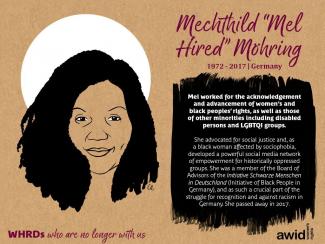
Mechthild "Mel Hired" Möhring

Read also:

We all can dance
by Mechthild Möhring (aka serialmel)

How I punt myself at the narrow hard knitting I once retrieved. I'm dancing in the kitchen when I'm alone. Gracile and powerful. When I'm in company I'm clumsy. My body scandalizes, scandalizes the laws of look I feel, scandalizes the words which banished me. "Of course she can dance, it's in her blood as a Black person." "If she is able to dance nicely she is good in bed" they whisper, they murmur, no - they say it openly into my face. They smirk and rub themselves against me and let me move back. I stumble and fall. My feet reject their duty. Bearish I get out of breath. Smiling I place myself out of events and notice how my face freezes into a mask.

Translated into English by Tsepo Bollwinkel


Original in German

Tanzen können wir alle
Von Mechthild Möhring (aka serialmel)

Wie ich mich stosse an den engen, harten Maschen, in die ich mich einst zurückgezogen habe. Ich tanze in der Küche, wenn ich allein bin. Grazil und kraftvoll. Wenn ich in Gesellschaft bin, bin ich unbeholfen. Mein Körper eckt an, an die Gesetze des Blicks, den ich spüre, an die Worte, die mich bannten. „Natürlich kann sie tanzen, als Schwarze hat sie das im Blut.“ „Wenn sie gut tanzen kann, dann ist sie auch gut im Bett“ flüstern sie, raunen sie, nein, sie sagen es mir laut ins Gesicht. Sie grinsen und reiben sich an mir und lassen mich zurückweichen. Ich stolpere und falle. Meine Füsse verweigern ihren Dienst. Tollpatschig gerate ich ausser Atem. Lächelnd setze ich mich an den Rand des Geschehens und bemerke, wie mein Gesicht zur Maske erstarrt.
CFA 2023 - breadcrumbs Menu _ FAQ-fr

2010: tiene lugar el cuarto Diálogo de Alto Nivel

  • El tema del Cuarto Diálogo de Alto Nivel sobre la Financiación para el Desarrollo, que tuvo lugar el 23 y 24 de marzo de 2010, fue El Consenso de Monterrey y la Declaración de Doha sobre la financiación para el desarrollo: estado de la aplicación y labor futura. Contó con cuatro mesas redondas sobre: la reforma de los sistemas monetario y financiero internacionales; el impacto de la crisis financiera en la inversión extranjera directa; el comercio internacional y las corrientes de capitales privados; y el rol de la cooperación financiera y técnica para el desarrollo, incluyendo las fuentes innovadoras de financiación para el desarrollo, en el impulso de la movilización de recursos financieros nacionales e internacionales para el desarrollo.
  • También tuvo lugar un diálogo interactivo oficioso con diversos actores centrado en la relación entre la financiación para el desarrollo y la realización de los Objetivos de Desarrollo del Milenio.

Do You Want To Organize Your Own Festival?

Do You Want To Organize Your Own Festival?

Check Out our Super Short Guide To Organising Global Feminist Festivals And Online Events!

Download here

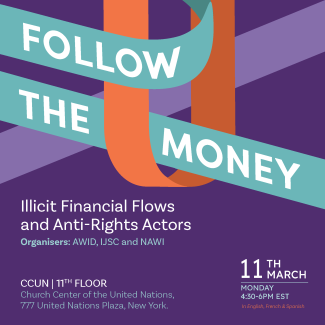
Snippet - CSW68 - Follow the Money Post - EN

Image to promote the event Follo the Money for AWID at CSW68

Mars 2015: publication de la version zéro du document final

Publication de la version zéro du document final, mars 2015

  • La version zéro du document final (en anglais – datée du 16 mars), préparée par les co-facilitateurs, a été soumise à discussion pendant la seconde session de rédaction qui s’est tenue du 13 au 17 avril 2015.
  • Pendant la session inaugurale, le WWG a insisté sur la nécessité de mentionner, dans la version zéro, les ressources qui seraient spécifiquement consacrées à l’égalité des genres et à l’autonomisation des femmes, comme cela avait été prévu dans le Consensus de Monterrey et la Déclaration de Doha.

Snippet FEA Intro (ES)

Ven a conocer las economías feministas que AMAMOS.

Cuando hablamos de economía, hablamos de cómo organizamos nuestras sociedades, nuestros hogares y lugares de trabajo. ¿Cómo vivimos juntxs? ¿Cómo producimos alimentos, organizamos los cuidados y aseguramos nuestra salud? La economía también se trata de cómo accedemos y gestionamos recursos, cómo nos relacionamos con otras personas, con nosotrxs mismxs y con la Naturaleza.

Lxs feministas han estado construyendo alternativas económicas a los sistemas capitalistas explotadores durante siglos. Estas alternativas existen en el aquí y el ahora, y son los pilares de los mundos más justos y más sostenibles que necesitamos y merecemos.

Nos emociona compartir contigo una muestra de alternativas económicas feministas, con colectivos inspiradores de todo el mundo.

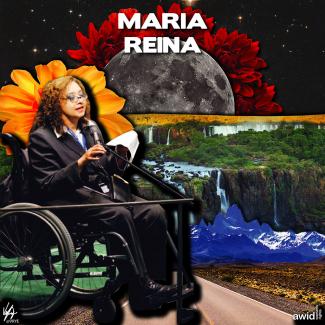
María Verónica Reina

María était reconnue au niveau mondial pour son leadership extraordinaire au sein de la communauté des personnes handicapées.

Elle a représenté l'International Disability and Development  Consortium (consortium international sur le développement et le handicap) lors de la négociation de la Convention des Nations Unies relative aux droits des personnes handicapées (2001-2006). Son travail a été consacré à la réalisation de l'objectif de la Convention, à savoir la réalisation des droits humains  universels par, pour et avec les personnes handicapées pour un monde inclusif, accessible et durable.

Selon ses propres mots, son leadership consistait à « … servir la communauté des personnes handicapées, en commençant par de petites tâches que d'autres pourraient ne pas vouloir faire».

Elle est décédée le 27 octobre 2017 dans sa ville natale de Rosario, en Argentine.

Pour en savoir plus sur María Verónica Reina, retrouvez son témoignage.


María Verónica Reina, Argentina

Snippet - CSW68 - Challenging Corporate Power - EN

Challenging Corporate Power

to Reduce Poverty & Strengthen Human Rights

📅Wednesday, March 13 🕒10.30am-12pm EST
Organisers: AWID, ESCR-Net, Franciscan International, Womankind Worldwide as part of Feminists For a Binding Treaty
🏢 Church Center of the United Nations, 777 United Nations Plaza, New York, 11th Floor

What is at stake for women’s rights?

Development financing has specific threats and opportunities for women's and all people’s human rights. Transformative development financing and policies can make an important contribution to the systemic changes that are needed to ensure the respect, protection and fulfillment of women’s human rights.

2015 is an important year for the FfD process. The Third International Conference on FfD took place from 13-16 July 2015 in Addis Ababa, Ethiopia and governments are finalising the post-2015 development agenda including agreements on how the new Sustainable Development Goals will be financed

The current stage of the FfD process is an important opportunity to establish a financing framework that will ensure effective financing for the implementation of the post 2015 agenda and the Sustainable Development Goals (SDGs). It is also an opportunity to address the structural conditions, and systemic changes needed, for the full implementation of other agendas and commitments such as Human Rights Conventions, and the Beijing Platform for Action.

Over the last 13 years, women’s rights and feminist organizations have actively engaged in the FfD process.

Snippet FEA São Paulo City Center (FR)

Centre-ville de São Paulo

Source: Censo De População de Rua, Prefeitura de São Paulo

A woman sitting on the floor on a piece of cloth and a cup for change in front of her
   

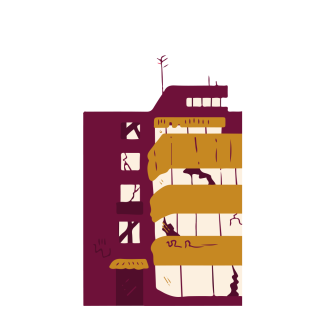
Bâtiments abandonnés/vacants

Illustration of an abandoned, run down building to depict the housing crisis

Personnes vivant dans la rue


31,000


40.000

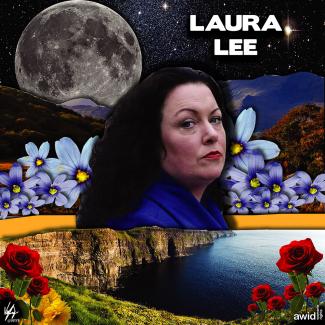
Laura Lee

Laura was a leading activist and lawyer who campaigned fearlessly for the decriminalisation of sex work in Ireland.

She is remembered as “a freedom fighter for sex workers, a feminist, a mother to a daughter and a needed friend to many.” 

Laura advocated for individuals in the sex industry to be recognised as workers deserving of rights. She advanced demands for decriminalisation, including initiating a judicial review at Belfast’s high court in respect of the provisions criminalising the purchase of sex.  Laura stated that her intention was to bring the case to the European Court of Human Rights.


Laura Lee, Ireland