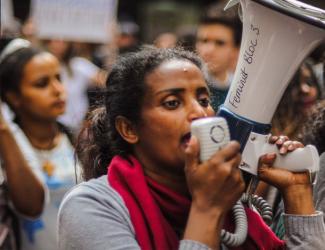
Anit-Racism Movement (ARM) / Flickr (CC BY-NC-ND 2.0)

Priority Areas

Supporting feminist, women’s rights and gender justice movements to thrive, to be a driving force in challenging systems of oppression, and to co-create feminist realities.

Resourcing Feminist Movements

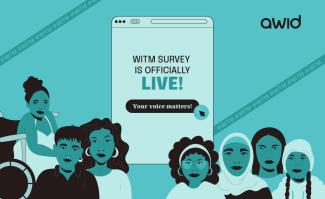
Banner image announcing that WITM Survey is live.


The “Where is the Money?” #WITM survey is now live! Dive in and share your experience with funding your organizing with feminists around the world.

Learn more and take the survey


Around the world, feminist, women’s rights, and allied movements are confronting power and reimagining a politics of liberation. The contributions that fuel this work come in many forms, from financial and political resources to daily acts of resistance and survival.


AWID’s Resourcing Feminist Movements (RFM) Initiative shines a light on the current funding ecosystem, which range from self-generated models of resourcing to more formal funding streams.

Through our research and analysis, we examine how funding practices can better serve our movements. We critically explore the contradictions in “funding” social transformation, especially in the face of increasing political repression, anti-rights agendas, and rising corporate power. Above all, we build collective strategies that support thriving, robust, and resilient movements.


Our Actions

Recognizing the richness of our movements and responding to the current moment, we:

  • Create and amplify alternatives: We amplify funding practices that center activists’ own priorities and engage a diverse range of funders and activists in crafting new, dynamic models  for resourcing feminist movements, particularly in the context of closing civil society space.

  • Build knowledge: We explore, exchange, and strengthen knowledge about how movements are attracting, organizing, and using the resources they need to accomplish meaningful change.

  • Advocate: We work in partnerships, such as the Count Me In! Consortium, to influence funding agendas and open space for feminist movements to be in direct dialogue to shift power and money.

Related Content

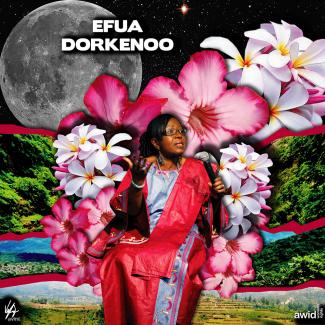
Efua Dorkenoo

Affectionately known as “Mama Efua”, her work to end Female Genital Mutilation (FGM) movement spanned three decades and helped bring international attention and action to end this harmful practice.

In 1983 Efua co-founded FORWARD (The Foundation for Women’s Health, Research and Development), which became a leading organisation in the battle to raise awareness about FGM. Her 1994 book, “Cutting the Rose: Female Genital Mutilation,” is considered the first on FGM and, featured in Columbia University’s “Africa’s 100 Best Books for the 20th Century”.

Originally from Ghana and a nurse by training, Efua joined the WHO in 1995 and successfully pushed for FGM to go on the agendas of WHO member states. She also worked closely with the Nigerian government in formulating a comprehensive National Policy that laid the groundwork for Nigeria’s anti-FGM laws, still in place today.

Her ground breaking work culminated in an Africa-led campaign, “The Girl Generation,” which is committed to ending FGM within a generation. Efua demonstrated how one person can become the unifying voice for a movement, and her wise words - “shared identity can help bring activists from different backgrounds together with a common sense of purpose” – are more relevant than ever.


Efua Dorkenoo, Ghana

CFA FAQ - Funding - Thai

การขอทุนสนับสนุนการเข้าร่วม

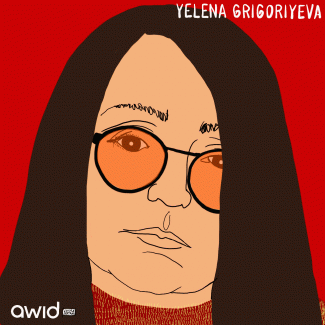
Yelena Grigoriyeva

Yelena Grigoriyeva, often called Lena by friends, was a prominent LGBT rights campaigner in Russia.

She was part of democratic, anti-war and LGBT movements. In her activism, Yelena was a fierce critic of President Vladimir Putin and his administration, expressing her opposition against Russia’s annexation of Ukraine’s Crimea peninsula and the ill-treatment of prisoners. 

Yelena came out as bisexual earlier in 2019.

"Her coming out was a surprise to me, and I didn't approve of it. I told her 'Listen, Lena, you already have a target painted on you because of your political activity. You've just pinned another to your chest."
- Olga Smirnova

Yelena did receive multiple death threats and according to some of her acquaintances, was listed on a homophobic website that called on its visitors to hunt down LGBT persons. She reported the threats to the police, however the Russian state failed to provide protection. 

But even in a society where political opposition, as well as members of the LGBT community and advocates for their rights, face continuous and increasing violence, Yelena kept campaigning for social justice and equality.

“She did not miss a single action. And they detained her so often that I already lost count,”
- Olga Smirnova (fellow opposition activist and friend).

Yelena was murdered on 21 July 2019, not far from home. A suspect was arrested but according to some sources, many friends and fellow activists believe that the suspect is a scapegoat and that this was a targeted political killing. 

For Yelena’s relatives and friends, her case remains unsolved even though the suspect confessed. 

In 2013, Russia passed legislation banning the spreading of what it described as ‘gay propaganda’. In 2014, Human Rights Watch published a report relating to this. 

هل هناك منهجية مفضلة للجلسات؟

تقترح الدعوة للتقدم بالمقترحات عددًا من التنسيقات والمنهجيات المقترحة. كن/ كوني مبدعًا/ة وتأكد/ي من قراءة قسم "ما تحتاج/ين إلى معرفته".

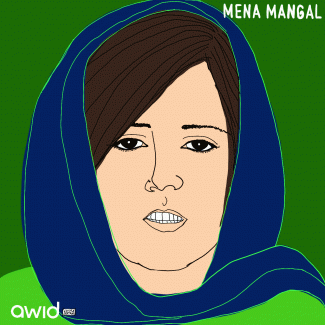
Mena Mangal

Mena Mangal was a prominent TV journalist, women’s rights advocate and cultural adviser to Wolesi Jirga, the lower house of Afghanistan's national parliament. 

For more than a decade, she worked for Ariana TV, Tolo TV's Pashto-language channel Lamar, and the private Afghan national television broadcaster Shamshad TV. As a presenter, Mena focused on women’s rights and cultural talk shows. 

"Women's rights activist Wazhma Frogh said Mangal "had a loud voice" and actively spoke out as an advocate for her people."

Off-screen, she also ran popular social media pages that advocated for the rights of Afghan girls and women to education and work. In terms of her private life, Mena wrote extensively about being forced into an arranged marriage in 2017 and the process she had to go through to finally obtain a divorce. 

In a Facebook post, Mena wrote she was receiving death threats from unknown sources but would continue to carry out her work.

On 11 May 2019, she was attacked by unknown gunmen and shot dead in broad daylight in a public space in Southeast Kabul. 

"We are concerned about the situation because it has a direct impact on women who work outside their homes...Female journalists are changing their professions due to the increasing risks they are facing." - Robina Hamdard, Kabul-based women’s rights activist.

CFA FAQ - Travelling to Bangkok - AR

السفر إلى بانكوك

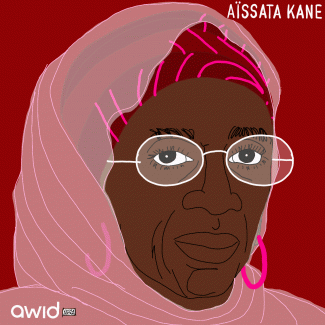
Aïssata Kane

Aïssata Kane, also fondly known as “Yaye Kadia” (Mother Kadia), was a feminist with a lifelong committment in advocating for African and especially Mauritanian women’s rights.

In her career as a politician, she was appointed Minister of Family Protection and Social Affairs in 1975, the first time a woman held such a position and in which Aïssata fervently worked to improve the status of women in her country.  

This work included advancing girls’ and women’s education, fighting against the practice of force-feeding of young women, lobbying for an inclusion of a marital rights provision, and advocating for a female representation quota to be created in the Parliament. 

“[Aïssata] realized all her passions with humility, courage and determination. She didn’t want to disturb anyone by her fight on all these fronts at the same time.” Ball Halimata Dem, Aïssata’s niece

She founded the National Union of Women of Mauritania (UNFM), co-creating and publishing Marienou for them, a magazine dedicated to the emancipation of Mauritanian women. Aïssata also directed several sub-regional and local organizations, including as the President of the International Association of Francophone Women (AIFF) and as a resolute ecologist, she was President of the Association for the Protection of the Environment in Mauritania (APEM). 

In 2018 she received the Pioneer Woman Award. It honors her work in advancing Mauritania’s women’s status and recognizes her strong leadership and sense of innovation.

Aïssata passed away on 10 August 2019. 

English title

This is an English article

- translated from the French article

Snippet - CSW68 - Feminist Community Evening - EN

🎤AWID's Feminist Community Evening

a gathering for feminist activists attending CSW68

(with special guests!)

📅Tuesday, March 12
🕒6-9.30pm EST

🏢 Blue Gallery, 222 E 46th St, New York

RSVP required

1. Gather your resources

This section highlights key resources recommended by AWID so you can conduct your own WITM research.

In this section

People needed

  • 1 or more person(s) to lead overall implementation of research methodology and ensure all key pieces are on track (Sections 2-11)
  • 1 or more person(s) to conceptualize the key research objectives and guiding questions
  • 1 or more person(s) to refine and conduct the research methodology, including collecting data
  • 1 or more person(s) to conduct relevant qualitative and quantitative analysis of collected data
  • 1 or more person(s) to document and package research findings for desired audience(s)
  • 1 or more person(s) to serve as an editor to your final products
  • 1 or more person(s) to conduct outreach to spread the word about your survey and advocacy using your research results

Back to top


Potential expenses

  1. Staff and/or consultant salaries
  2. Data analysis software if conducting analysis of large dataset in-house. Options:
    - SPSS
    - Stata
    - R (this is free)
  3. Cost of producing publications and research products
  4. If desired, incentive prize that survey participants can win if they complete the survey
  5. If desired, incentives to offer your advisors

Back to top


Estimated time

  • For research process: 6 to 18 months, depending on size of dataset(s) and staff capacity
  • For advocacy: 1-2 years, as determined by your organizational goals

Back to top


Resources needed

  • List of advisor organizations, donors and activists
  • List of online spaces and events/networks to distribute your survey and present your survey results
  • List of donors, activists, and women’s rights organizations to interview
  • Prepared interview questions
  • List of publication sources to use for desk research

Back to top


Resources available

Online tools

Once you gather these resources, you can estimate the costs for your research using our “Ready to Go? Worksheet”

Back to top


Previous step

Before you begin

Next step

2. Frame your research


Previous step

Before you begin

Next step

2. Frame your research


The Ready to Go? Worksheet helps you estimate resources, staff and budget needed for your research

Download the toolkit in PDF

Snippet - WITM To Strengthen - EN

To strengthen our collective voice and power for more and better funding for feminist, women's rights, LBTQI+ and allied organizing globally

Community knowledge to build just futures

Context

Today, many community knowledge systems are at risk.

Fast-paced economic, political, and cultural changes are bulldozing environments, practices and livelihoods. Various forms of knowledge are being erased from practice, commodified and colonized in the massive swallow of globalisation and in the promise of short-term gains or band aid solutions.

Definition

Buen Vivir, a concept adapted from Andean Indigenous peoples’ knowledges, is described as the collective achievement of a life in fulfillment, based
on harmonic and balanced relations among human beings and all living beings, in reciprocity and complementarity. It means acknowledging that human beings are a part
of nature, we depend on nature and are inter-dependent among ourselves.

Inherent in Buen Vivir is a vision that integrates production and reproduction as inseparable processes of the economy, of wealth production and living conditions.

Feminist perspective

In this sense, a broad understanding of Buen vivir from a feminist lens values relationships and resources mobilized in production and reproduction cycles—favouring equilibrium of not just the market kind—to guarantee continuity and changes as long as they are compatible with economic justice and life sustainability.

From a feminist perspective there have also been criticisms of the binary conceptions of gender and complementary of men and women. Binary conceptions leave little space for a deeper discussion on heteropatriarchy and non-conforming gender relationships.

Nevertheless, one of the main contributions of centralizing the principle of Buen Vivir to political, economic and social frameworks, is that equality is no longer the paradigm of individual rights, but the transformation of society as a whole.


Learn more about this proposition:

Part of our series of


  Feminist Propositions for a Just Economy

Why should I consider responding to the survey?

There are many reasons why your response to the WITM survey matters. The survey offers the opportunity to share your lived experience of mobilizing funding to support your organizing; claim your power as an expert on how money moves and who it reaches; and contribute to collective and consistent advocacy to funders moving more and better funding. Over the last two decades, AWID’s WITM research has proven to be a key resource for activists and funders. We wholeheartedly invite you to join us in its third iteration to highlight the actual state of resourcing, challenge false solutions, and point out how funding must change for movements to thrive and meet the complex challenges of our times.

Overview

This bibliography intends to contribute to the desire for learning and engagement identified by activists in the Middle East and North Africa region when reflecting on the aftermath of fast unfolding transitions in the region. Such transitions, while specific to the context of MENA, are not unique in their occurrences around the world. Experiences and practices of feminists from around the world engaged in similar, even if not identical, struggles towards the democratization of their countries with a gendered lens and a feminist politics constitute an important knowledge bank that activists can draw upon, learn from, and engage with. This resource mapping aims to fill the gap realized in various convenings and conversations of a lack of information sharing and knowledge bridging among feminists across the regions that experienced similar uprisings; particularly along south-south and east-south lines.

This publication represents a research mapping of key resources, publications and materials on transitions to democracy and women’s rights in different countries of the world that have undergone such processes, such as: Indonesia, Chile, South Africa, Nepal, Mexico, Argentina, Poland, Ukraine, as well as within the Middle East and North Africa (MENA). It provides bibliographic information and short summaries of resources which succinctly identify the contextual changes and challenges facing women in those particular transitional moments, as well as clearly delineates the ways in which women’s rights activists sought to confront those challenges and what lessons were learned.

We hope that this collection of ideas, research, analysis and experiences provides the kind of rich ingredients needed to create new recipes for confronting old and new challenges. By sharing these texts, our goal is to make links across borders, expand possibilities and knowledge, and invite debate, reflection, and inspiration for women’s rights organizations and activists in the MENA region. While every moment and space has its own unique flavor and history, highlighting connections to similar challenges and aspirations allows us all to bring things in conversation with one another, imagine a new vantage point into a problem, and increase our sense of belonging and purpose and thus our capacity to stay strong in the face of the seemingly impossible. It is the collective strength of a movement that gives it the power to create change. The goal with this publication is not that one specific text will necessarily help illuminate new solutions, but that the combined knowledge and analysis from a variety of sources will provide readers with an opportunity to expand their horizons and foster connections. In our small way, we hope to contribute to furthering the democratization of knowledge, and supporting women’s rights movements in the MENA to continue building an inclusive transition process that will result in advancements of social justice and gender equality.
Should I do any preparation to respond to the survey?

As the WITM survey is focused on resourcing realities for feminist organizations, most questions ask about your group’s funding between 2021–2023. You will need to have this information with you to fill out the survey (e.g., your annual budgets and key sources of funding).