Fezekile Ntsukela Kuzwayo
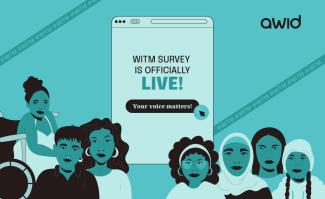
The “Where is the Money?” #WITM survey is now live! Dive in and share your experience with funding your organizing with feminists around the world.
Learn more and take the survey
Around the world, feminist, women’s rights, and allied movements are confronting power and reimagining a politics of liberation. The contributions that fuel this work come in many forms, from financial and political resources to daily acts of resistance and survival.
AWID’s Resourcing Feminist Movements (RFM) Initiative shines a light on the current funding ecosystem, which range from self-generated models of resourcing to more formal funding streams.
Through our research and analysis, we examine how funding practices can better serve our movements. We critically explore the contradictions in “funding” social transformation, especially in the face of increasing political repression, anti-rights agendas, and rising corporate power. Above all, we build collective strategies that support thriving, robust, and resilient movements.
Create and amplify alternatives: We amplify funding practices that center activists’ own priorities and engage a diverse range of funders and activists in crafting new, dynamic models for resourcing feminist movements, particularly in the context of closing civil society space.
Build knowledge: We explore, exchange, and strengthen knowledge about how movements are attracting, organizing, and using the resources they need to accomplish meaningful change.
Advocate: We work in partnerships, such as the Count Me In! Consortium, to influence funding agendas and open space for feminist movements to be in direct dialogue to shift power and money.
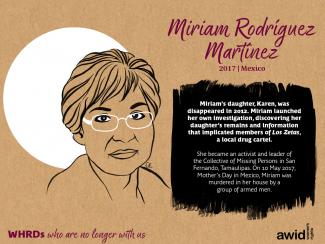
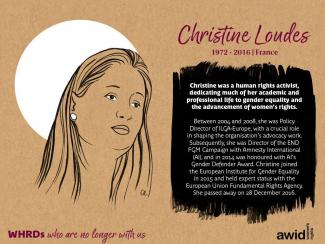
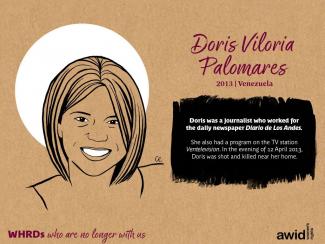
In our 2015 Online Tribute we honor five Women Human Rights Defenders murdered in the Middle East and North Africa region. These defenders worked for women and civil rights as lawyers and activists. Their death highlights the often dangerous and difficult working conditions in their respective countries. Please join AWID in honoring these women, their activism and legacy by sharing the memes below with your colleagues, networks and friends and by using the hashtags #WHRDTribute and 16Days.
Please click on each image below to see a larger version and download as a file


Desk research can be done throughout your research. It can assist you with framing, help you to choose survey questions and provide insights to your results.
In this section
- Giving context
- Building on existing knowledge
- Potential sources for desk research
1. Donors’ websites and annual reports
2. Online sources of information
Conducting desk research throughout your research process can assist you with framing, help you to choose survey questions and provide contextual clarity or interesting insights to your survey results, such as comparing similarities and differences between your survey results and information produced by civil society and donors.
Perhaps you notice trends in your survey data and want to understand them.
For example, your survey data may reveal that organization budgets are shrinking, but it cannot tell you why this is happening. Reviewing publications can give you context on potential reasons behind such trends.
Desk research also ensures you are building your research on the existing knowledge regarding your topic, confirming the validity and relevance of your findings.
They may be complimentary or contradictory to existing knowledge, but they must speak to existing data on the topic.
To ensure comprehensive research of the entire funding landscape related to your topic, look at a diverse set of funding sectors.
You can consider:
- Women’s Funds
- Private and Public Foundations
- International Non-Governmental Organizations (INGOs)
- Bilateral and Multilateral Agencies
- Private Sector Actors
- Individual Philanthropists
- Crowdfunders
Include any other relevant sectors to this research.
For example, you may decide that it is also important to research local non-governmental organizations (NGOs).
These are direct sources of information about what funders are actually doing and generally contain information on policies and budgets. Researching this before interviewing donors can result in more focused questions and a stronger interview.

• 1-2 months
• 1 or more research person(s)
7. Synthesize your research findings
Related content
The Guardian: Mexican woman who uncovered cartel murder of daughter shot dead
The Economist: Obituary: Miriam Rodríguez Martínez died on May 10th
New York Times: Gunmen Kill Mexican Activist for Parents of Missing Children
United Nations Human Rights Office of the High Commissioner: Mexico: UN rights experts strongly condemn killing of human rights defender and call for effective measures to tackle impunity
2-5 December, 2024, Bangkok, Thailand! We will gather at the Queen Sirikit National Convention Center (QSNCC) as well as virtually online.
This project is built in collaboration with:


We would also like to thank the following people for their valuable contribution:

We will reconnect with past partners, to ensure past efforts are honored. If your contact information has changed since the last Forum process, please update us so that we may reach you.
@shalinikonanur sharing a comment by her colleague debbie @salco "we can talk about shattering the glass ceiling, but we have to talk about who are sweeping those broken glasses?" challenging the #G7 to truly see who's vulnerable domestically & globally #W7Canada @kramdas @AWID pic.twitter.com/1rs0SpLYHp
— Tenzin Dolker cyclone (@T_Dolker) 25 de abril de 2018
The Forum theme––Rising Together––is an invitation to engage with our whole selves, to connect with each other in focused, caring and brave ways, so that we can feel the heartbeat of global movements and rise together to meet the challenges of these times.
Feminist, women’s rights, gender justice, LBTQI+ and allied movements around the world are at a critical juncture, facing a powerful backlash on previously-won rights and freedoms. Recent years have brought the rapid rise of authoritarianisms, the violent repression of civil society and criminalization of women and gender-diverse human rights defenders, escalating war and conflict in many parts of our world, the continued perpetuation of economic injustices, and the intersecting health, ecological and climate crises.
Our movements are reeling and, at the same time, seeking to build and maintain the strength and fortitude required for the work ahead. We can't do this work alone, in our silos. Connection and healing are essential to transforming persistent power imbalances and fault lines within our own movements. We must work and strategize in interconnected ways, so that we can thrive together. The AWID Forum fosters that vital ingredient of interconnectedness in the staying power, growth and transformative influence of feminist organizing globally.
ใหม่
ผู้เข้าร่วมประชุมออนไลน์สามารถดำเนินรายการในโปรแกรมต่างๆ เชื่อมต่อและสนทนากับผู้อื่น และสัมผัสประสบการณ์ความคิดสร้างสรรค์ ศิลปะ และการเฉลิมฉลองของเวที AWID ได้โดยตรง ผู้เข้าร่วม ที่เชื่อมต่อออนไลน์จะได้พบกับกับโปรแกรมที่เข้มข้นและหลากหลาย ตั้งแต่การประชุมเชิงปฏิบัติการ การอภิปราย ไปจนถึงโปรแกรมกิจกรรมเยียวยาและการแสดงดนตรี โดยที่กิจกรรมบางอย่างจะเน้น การเชื่อมต่อระหว่างผู้เข้าร่วมออนไลน์ด้วยกัน ในขณะที่กิจกรรมอื่นๆจะเป็นการเชื่อมต่อแบบผสมผสาน เพื่อการมีปฏิสัมพันธ์กันระหว่างผู้เข้าร่วมออนไลน์และผู้ที่อยู่กรุงเทพฯ
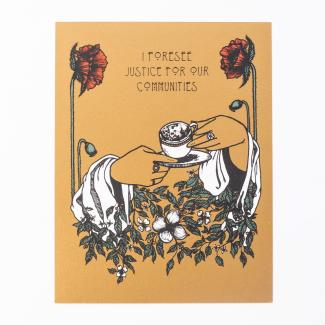
Tasseography is the study of coffee grounds and/or tea leaves for the act of divination. It is a practice that has been passed down through the women on my Armenian side of the family and was taught to me by my mother, she from her mother, and so on. As I would watch my Nana read the coffee grounds from the Armenian coffee prepared for family and friends, I would notice how often times she would see what she would want to say. These prints say some of the things I want to see in the world; I hope you do too.
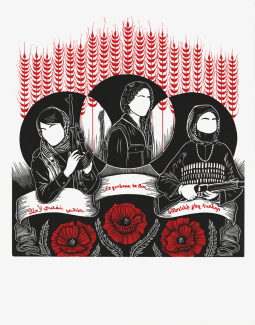
This print celebrates the resilience, sacrifice and strength of SWANA freedom fighters throughout history and the solidarity that exists. It was originally inspired by an article I read about an exhibition held in Tatvan, a district of Bitlis that was highlighting the Armenian presence in the region. My ancestors are from Bitlis, now within the borders of modern day Turkey.
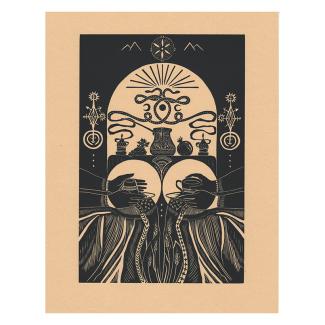
Tasseography (the study of reading coffee grounds) is a cultural practice that Armenian women have used for hundreds of years to speak among and to each other, a coded language to open up conversations, to build inter-relatedness and weave connections.
![]Ali Chavez Leeds portrait](/sites/default/files/styles/max_325x325/public/2021-10/portrait.jpeg?itok=0yU3PqLe)
Related content
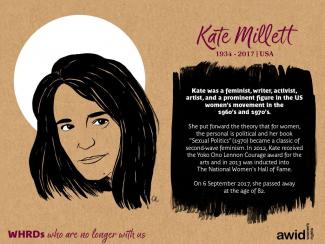
The Guardian: Kate Millett Obituary
New York Times: Kate Millett, Ground-Breaking Feminist Writer, Is Dead at 82
The New Yorker: A Last Interview with Kate Millett