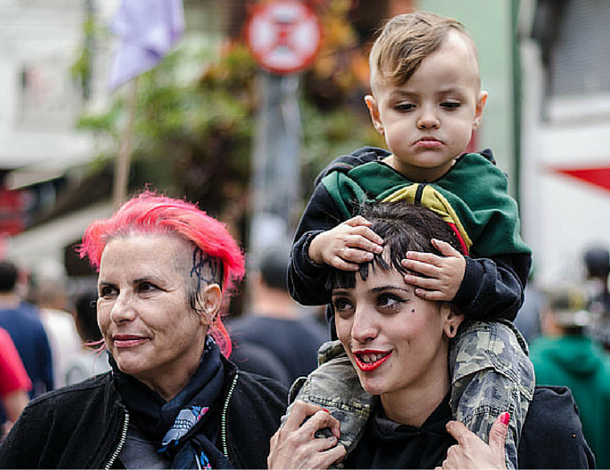
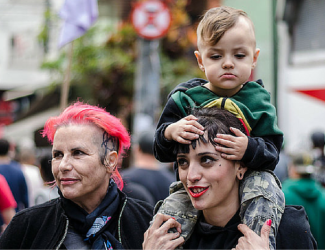
Flickr/Leonardo Veras (CC BY 2.0)

Analyses Spéciales

L´AWID est une organisation féministe mondiale qui consacre ses efforts à la justice de genre, au développement durable et aux droits humains des femmes

Protection de la famille

Contexte

Au cours des dernières années, nous avons observé une nouvelle tendance inquiétante dans les espaces internationaux consacrés aux droits humains. Les discours axés sur « la protection de la famille » sont en effet utilisés pour défendre des violations des droits de membres de la famille, pour renforcer et justifier l’impunité des auteurs de ces violations et pour restreindre l’égalité des droits au niveau de la vie familiale. 

La campagne en faveur de la « Protection de la famille » est motivée par une volonté conservatrice d’imposer des conceptions « traditionnelles » et patriarcales de la famille et de priver les membres de la famille de leurs droits pour les transférer à « l’institution familiale ».

Les initiatives visant à la « Protection de la famille » reposent sur :

  • la montée du traditionalisme,
  • la montée du conservatisme culturel, social et religieux,
  • l’existence d’une hostilité vis-à-vis des droits humains des femmes, des droits sexuels, des droits des enfants et enfin des droits des personnes dont l’identité de genre et l’orientation sexuelle ne sont pas conformes aux normes.

Depuis 2014, un groupe d’Etats travaille de front dans les espaces dédiés aux droits humains sous le nom de « Group of Friends of the Family » (Groupe des ami-e-s de la famille) ; des résolutions sur la « Protection de la famille » ont été adoptées chaque année depuis 2014.

Ce programme s’est propagé au-delà du Conseil des droits humains. Nous avons observé l’introduction d’un discours régressif autour de la « famille » à la Commission sur la condition de la femme, ainsi que des tentatives d’introduction dans les négociations sur les Objectifs de développement durable.


Notre approche

L’AWID travaille avec des partenaires et des allié-e-s pour s’opposer ensemble à la « Protection de la famille » et à d’autres programmes régressifs et défendre l’universalité des droits humains.

En réponse à l’influence croissante d’acteurs régressifs au sein des espaces dédiés aux droits humains, l’AWID a rejoint des allié-e-s afin de créer l’Observatoire sur l'Universalité des droits (OURs) (site en anglais). L’OURs est un projet de collaboration qui surveille, analyse et diffuse les informations concernant les initiatives anti-droits telles que la « Protection de la famille ».

Le premier rapport de l’OURs, Nos droits en danger, trace une cartographie des acteurs et actrices qui constituent le lobby mondial anti-droits et identifie leur réthorique et stratégies clés ainsi que leur impact sur les droits humains.  

Le rapport précise que le programme de « Protection de la famille » a développé une collaboration entre un large éventail d’acteurs régressifs aux Nations Unies, qu’il décrit comme « un cadre stratégique abritant des positions anti-droits et patriarcales multiples, où le cadre vise entre autres à légitimer et institutionnaliser ces positions. »

Contenu lié

Questions (Forum page)

Des questions ?

Vous avez des questions concernant le Forum de l’AWID ou les activités connexes ? Nous avons des réponses ! 

Trouver des réponses

Membership why page - Loyiso Lindani

J’ai l’intime conviction que des femmes puissantes peuvent donner à d’autres femmes la possibilité d’être puissantes, c’est pourquoi je suis ravie d’être membre de l’AWID. La visibilité que j’ai reçue en faisant partie de la Street Team de la communauté AWID a élargi mes connaissances et ma façon d’envisager le Féminisme et l’intersectionnalité. J’espère que davantage de femmes se joindront à nous et porteront des thématiques et des idées qui aideront d’autres femmes. .- Loyiso Lindani, Afrique du Sud.

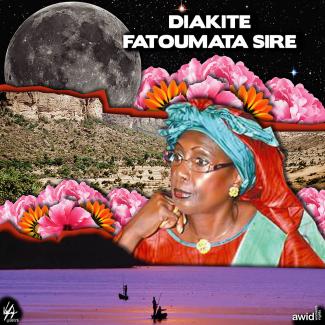
Diakite Fatoumata Sire

Diakite was actively involved in advocating for women in political and public life in Mali.

She worked to support training of women candidates in elections, and spoke out against the practice of Female Genital Mutilation (FGM). She was a strong proponent of reproductive health and rights. 


Diakite Fatoumata Sire, Mali

Colectivo Morivivi

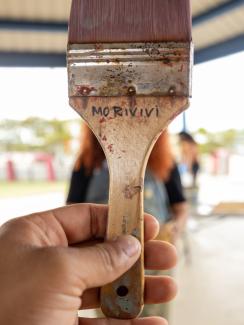
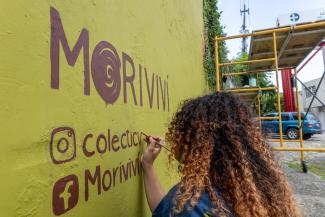
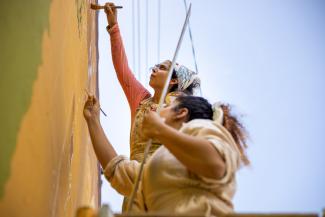
Colectivo Moriviví est un collectif artistique de femmes. Notre production artistique comprend du muralisme, du muralisme communautaire et des performances/actions de manifestation. Notre travail consiste à démocratiser l'art et à amener les récits des communautés portoricaines dans la sphère publique afin de créer des espaces où ils seront validés. Nous croyons qu’à travers l'artivisme, nous pouvons promouvoir la sensibilisation aux questions sociales et renforcer notre mémoire collective.

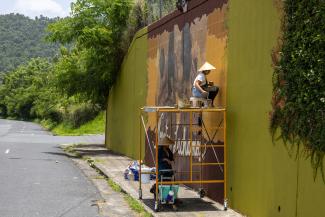
“Cacibajagua” 2017, Mural Project. Jiangxi, China
“Cacibajagua” 2017, Projet mural. Jiangxi, Chine
“Cacibajagua” 2017, Mural Project. Jiangxi, China
“Cacibajagua” 2017, Projet mural. Jiangxi, Chine
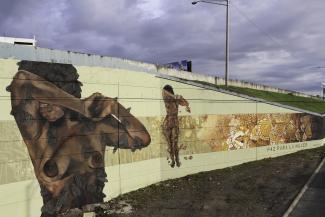
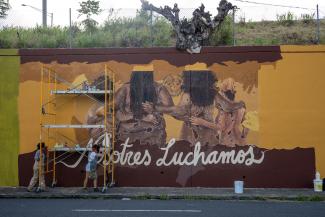
“Paz para la Mujer” 2015, collaboration with Coordinadora Paz para la Mujer Organization. Santurce,
“Paz para la Mujer” (“Paix pour la Femme”) 2015, collaboration avec l’organisation Paz para la Mujer. Santurce, Porto Rico


“Paz para la Mujer” 2015, collaboration with Coordinadora Paz para la Mujer Organization. Santurce, Puerto Rico
“Paz para la Mujer” (“Paix pour la Femme”) 2015, collaboration avec l’organisation Paz para la Mujer. Santurce, Porto Rico
Collectivo Moriri Artwork

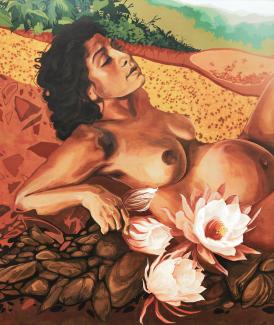
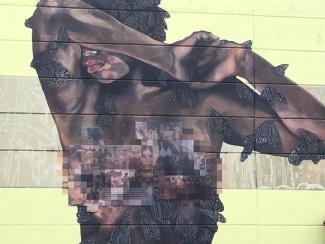
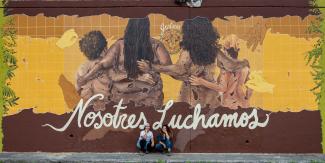
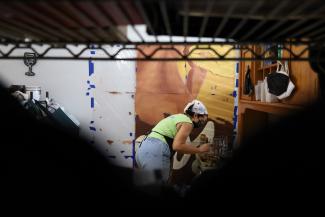
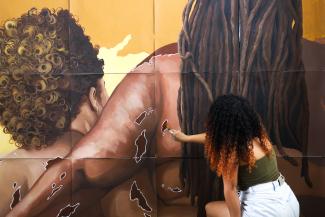
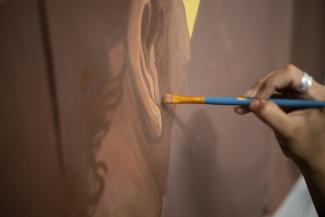
Dans le cadre de sa participation au Groupe de Travail d’Artistes d'AWID, le Colectivo Moriviví a réuni un groupe divers de membres, partenaires et personnel pour faciliter un processus collaboratif visant à imaginer, documenter et déterminer le contenu d'une fresque communautaire par le biais d'un processus de co-création en plusieurs étapes. Le projet a commencé par une conceptualisation à distance avec des féministes de différentes régions du monde réuni·e·s par l'AWID, avant d'évoluer vers sa re-contextualisation et sa réalisation à Porto Rico. Nous avons eu l'honneur de bénéficier de la contribution des artistes locaux·ales Las Nietas de Nonó(@lasnietasdenono), de la participation des femmes locales à la session de peinture communautaire, du soutien logistique de la municipalité de Caguas et du soutien supplémentaire du FRIDA | The Young Feminist Fund.
 
La fresque explore la transcendance des frontières en présentant les corps tels des cartes, dans une étreinte qui met en évidence l'intersection des différentes manifestations, pratiques et réalités féministes.
 
Nous remercions également Kelvin Rodríguez, qui a documenté et capturé les différentes étapes de ce projet à Porto Rico : 

Collectivo Moriri Artwork

À propos du Colectivo Morivivi 

Colectivo Morivivi portrait
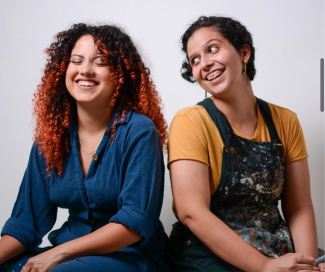
Moriviví est un collectif de jeunes femmes artistes qui travaille sur l'art public depuis Avril 2013. Basé·e·s à Porto Rico, nous sommes reconnu·e·s pour la création de fresques et d'arts dirigés par la communauté.
 
Le groupe a débuté dans les festivals d'art urbain locaux. Au fur et à mesure que notre travail devenait plus populaire, les organisations et les dirigeant.e.s communautaires ont commencé à nous contacter. Au départ, nous étions huit lycéen·ne·s qui voulaient peindre une fresque ensemble. Cependant, en huit ans de travail acharné, nous avons été confronté·e·s à de nombreux défis. Nous sommes aujourd’hui dans une période de transition. Au cours de l'année qui vient, nous souhaitons restructurer le collectif en interne. Notre objectif est d'ouvrir de nouvelles opportunités pour les collaborateurs·trices et d'étayer notre processus de prise de décisions par un nouveau système d'évaluation. À long terme, nous aspirons à devenir une école alternative de pratiques artistiques pour celles et ceux souhaitant s'immerger dans la production artistique communautaire.

Jessica Whitbread

Biography

Jessica est une artiste-activiste queer de Toronto, au Canada, mais qui vit actuellement en Bulgarie. Elle a plus de 15 ans d'expérience dans la riposte au VIH, travaillant aux intersections du genre et du VIH auprès de populations clés (travailleurs·ses du sexe, femmes consommatrices de drogues, communautés LGBTQI, personnes incarcérées et, bien sûr, personnes vivant avec le VIH). Jessica aime créer du mouvement et réfléchir/entreprendre/élaborer des stratégies sur des interventions basées sur les arts. L'un des projets amusants qu'elle a lancé en 2013 était LOVE POSITIVE WOMEN (Femmes positives à l’amour), qui implique plus de 125 groupes et organisations communautaires du monde entier, du 1er au 14 février, pour célébrer les femmes vivant avec le VIH dans leurs communautés.

Position
Responsable de l’Adhésion et de l’Engagement des Membres
Add to stories
Off

Snippet FEA No feminist economies without feminist unions (EN)

No feminist economies without feminist unions!

Through labor and union organizing, Sopo, Sabrina and Linda are not only fighting for the rights of essential workers, women workers, migrant workers and sex workers, but the rights of all workers.

The fight to end workers’ exploitation is a feminist struggle, and shows us that there are no feminist economies without feminist unions.

FRMag - The Triple

The Triple Cripples: Let’s talk about sex, baby!

by Nandini Tanya Lallmon 

Olajumoke ‘Jay’ Abdullahi and Kym Oliver are revolutionary feminists in more ways than one. (...)

Read

artwork: “Bloomed” by Titash Sen >

Snippet - Blog post Quote_ES

"Creemos que este es el momento para continuar organizándonos desde la solidaridad, la esperanza y la imaginación radical."

- Beijing+30 & CSW: La construcción de significados feministas en tiempos de policrisis

Lee el artículo aquí

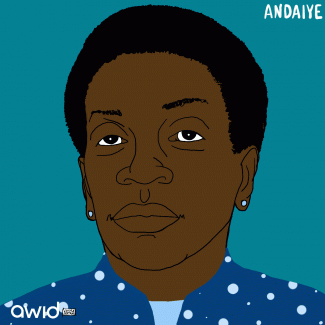
Andaiye

Andaiye in Swahili means ‘a daughter comes home’. Born Sandra Williams on 11 September 1942 in Georgetown, Guyana, she changed her name to ‘Andaiye’ in 1970 as the Black Power movements swept her country and the wider Caribbean region. 

Andaiye was seen as a transformative figure on the frontlines of the struggles for liberation and freedom. She was an early member and active in the leadership of the Working People’s Alliance (WPA), a socialist party in Guyana which fought against authoritarian rule and continued throughout her life to focus on justice for the working-class and rural women’s rights and on bridging ethnic barriers between Indo and Afro-Guyanese women. 

Andaiye was a founding member of Red Thread Women, an organization that advocated for women’s care work to be fairly remunerated, worked at the University of the West Indies and with CARICOM. Never afraid to challenge governments, she pointed out gender imbalances in state boards, laws that discriminated against sex workers, called for abortion rights in Jamaica and spoke out against trade agreements such as the Caribbean Single Market and Economy (CSME) that allowed for the free movement of women domestic migrant workers but did not give their children the same rights.  

Andaiye published several scholarly essays, wrote newspaper columns and also edited the last books of Walter Rodney, the Guyanese political activist and fellow WPA leader, who was assassinated in 1980. A cancer survivor, Andaiye was one of the founders of the Guyana Cancer Society and the Cancer Survivors’ Action Group. She also served on the executive of the Caribbean Association for Feminist Research and Action (CAFRA), as a Director of Help and Shelter and as Board Member of the Guyana National Commission on Women. She received a number of awards, including the Golden Arrow of Achievement in Guyana (the fourth highest national award).

Andaiye passed away on 31 May 2019 at the age of 77. The subsequent tributes that flowed in from activists, friends and those inspired by her life spoke eloquently to her amazing legacy and her beautiful humanity.

Here are but a few: 

“Andaiye had a profound effect on me...she was so many things, an educator, fighter, she taught me to be self-critical, to think more clearly, she taught me about survival, about incredible courage, about compassion, about going beyond external appearances and treating people as people and not being distracted by status, class, race...anything.”
- Peggy Antrobus, Feminist Activist, Author, Scholar, Barbados

“The kind of confident idealism Andaiye expressed, this willingness to confront the world and a stubborn belief that you could actually change it... That politics of hope...How else to honour her life, legacy and memory but to keep doing the work ethically and with ongoing self-critique? And to put women’s caring work at the center of it.”
- Tonya Haynes, Barbados

“I can hear her quip at our collective keening. So through the tears I can laugh. Deep bows to you beloved Andaiye, thank you for everything. Love and light for your spirit’s journey. Tell Walter and all the ancestors howdy.” - Carol Narcisse, Jamaica

Read more tributes to Andaiye
Anti-Rights Trends in Regional Human Rights Systems

Chapter 6

In the African Commission and the Inter-American System, anti-rights actors push essentialist notions of culture and gender to hamper progress on rights and undermine accountability. As we see, anti-rights actors are exerting influence in regional human rights systems, as well as international spaces. 

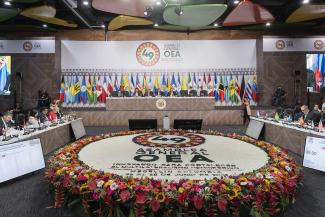
2019 JUN 27 Meeting of the Summit Implementation Review Group in Colombia
© Juan Manuel Herrera/OAS/Flickr
2019 JUN 27 Meeting of the Summit Implementation Review Group in Colombia

The African Commission on Human and Peoples' Rights has begun framing women’s and sexual rights as jeopardising its ability to deal with “real rights” and contrary to “African values”,   setting a worrying anti-rights precedent. The withdrawal of the Coalition of African Lesbians’ observer status is an example of this trend, and points to the way space for feminist, Pan-Africanist engagement is being stifled. 

In the Organization of American States (OAS) and the Inter-American Human Rights System, anti-rights strategies include the NGOization of religious groups, the use of secular discourses, and the co-optation of discrimination frameworks. Anti-rights influence has materialized in a number of ways, including the intimidation of trans activists and the blocking the introduction of progressive language in resolutions.

Table of Contents

  • Silencing Feminists in the African Human Rights System
  • Anti-rights Groups in Latin America: Organization of American States (OAS) General Assembly and the Inter-American Human Rights System
     

Read Full Chapter >

Leila Hessini

Biography

Leila is a transnational feminist leader, strategist, and advisor with over 25 years of organizing, advocacy and philanthropic experience advancing human rights, gender equality, and sexual and reproductive rights and justice.  She was born in Algeria and educated in the U.S., France, and Morocco; over her professional career, she has lived and worked in forty countries across Africa, Europe, Latin America and Asia.  Leila currently serves as a Senior International Fellow at the Asfari Institute for Civil Society and Citizenship at the American University of Beirut in Lebanon and as Senior Strategist for various feminist movements and organizations as well as the the Urgent Action Fund-Africa and Trust Africa on an initiative on Reimagining Feminist and Pan-African Philanthropies.
 
From 2017-2023, Leila held the position as Vice-President of Programs at Global Fund for Women where she oversaw its strategic grantmaking, movement-strengthening, global advocacy and philanthropic collaborations. At GFW, she doubled its grantmaking to over $17 million, launched its feminist and gender-based movements and crises work, created an adolescent girls program led by a girls’ advisory council and led its philanthropic advocacy work.  Prior to that she served on the senior leadership team of Ipas from 2002 to 2016 where she published extensively on abortion rights and justice, lead global advocacy efforts and partnered with feminist groups working on self-management, community strategies and stigma reduction around bodily integrity and sexual and reproductive rights.
 
Leila is currently researching shifts in the philanthropic sector including recognizing non-institutional practices of giving resources in the Global South and efforts to decolonize practices in the Global North.  She has written extensively on the political nature of veiling across North Africa and the Middle East, abortion practices in majority Muslim contexts and feminist approaches to sexual and reproductive health, rights and justice.
 
Leila holds an MPH in public health and a MA in Middle Eastern and North African Studies, studied Islamic law in Morocco and pursued doctoral studies in sociology in France. She studied Arabic and speaks French and English fluently.  She is a mother of two feminist young women, an avid scuba diver, mountain bike rider, skier, and outdoor enthusiast.

Position
Treasurer
Add to stories
Off

Snippet FEA We are living in a world left (ES)

Vivimos en un mundo donde la destrucción de la naturaleza alimenta nuestra economía global actual.

FRMag - Roots of Love and Resilience

Kunyit asam: Las raíces del amor y la resiliencia

por Prinka Saraswati

El ciclo menstrual habitualmente abarca entre 27 y 30 días. En ese lapso, el período en sí dura de 5 a 7 días. La fatiga, los cambios de humor y los espasmos son el resultado de la inflamación durante la menstruación. 

Leer

< arte: «Movimiento feminista», Karina Tungari

Snippet - CSW69 - OURs & friends - ES

OURs y amistades en el Espacio de Solidaridad Feminista

✉️ Solo con invitación

📅 Martes 11 de marzo de 2025
🕒 De 02:00 a 04:00 p.m., EST

🏢 Chef's Kitchen Loft with Terrace, 216 East 45th St 13th Floor New York

Organiza: Consorcio Observatorio sobre la Universalidad de los Derechos (OURS)

Paula Andrea Rosero Ordóñez

"[Ella] era una persona que se caracterizaba por su arduo trabajo a favor de la defensa de los derechos humanos y la construcción de la paz en Nariño, especialmente en el municipio de Samaniego-Nariño". - Jorge Luis Congacha Yunda para Página10.

Paula Andrea Rosero Ordóñez fue abogada de primera instancia en la oficina del Ministerio Público en Samaniego, Nariño, la principal agencia de defensa de los derechos de la ciudadanía en Colombia.

Paula se  especializó en los derechos civiles y políticos, las  problemáticas de la impunidad y la justicia, y contribuyó a descubrir abusos de poder, incluida la corrupción. Paula participó también en proyectos para la consolidación de la paz en su ciudad natal, Samaniego, a través del Consejo Municipal de Paz y la Junta Municipal de Mujeres.

Paula recibió amenazas de muerte tras exponer el manejo irregular de los recursos y de denunciar actos de corrupción en el Hospital Lorencita Villegas del municipio nariñense. Fue asesinada el 20 de mayo de 2019, cuando dos hombres se acercaron y le dispararon a corta distancia. 

Suscríbete para recibir nuestras noticias

* indica un campo requerido
                  
                         
Seleccione los temas sobre los que desea recibir información:

Fatima Qureshi

Biography

Culturellement nomade, née à Hong Kong et enracinée dans un héritage turco-pakistanais, l'amour de Fatima pour les récits - tant pour les lire que pour les cocréer - a alimenté sa passion pour l'activisme à travers la communication. Forte de sa formation en journalisme, Fatima a travaillé pendant 7 ans dans les domaines de la communication numérique et médiatique avec des ONG qui offrent des opportunités d'éducation et de l’aide juridique aux réfugié·e·s et demandeur·se·s d'asile, ainsi qu'avec le mouvement féministe musulman qui applique une perspective féministe et fondée sur les droits dans la compréhension et la quête d’égalité et de justice au sein de la tradition juridique musulmane. Elle rédige régulièrement des tribunes sur les questions féministes dans les pays du Sud.

Grâce à la narration dans cette ère ultra digitale des réseaux sociaux, Fatima continue de collaborer avec des animateur·rice·s communautaires et des activistes de terrain pour créer du contenu audiovisuel dans le but de cultiver des ponts de compréhension vers la libération collective et la décolonisation. Les jours où elle ne travaille pas, elle regarde attentivement des films féministes indépendants venant d’Iran, du Maroc et du Pakistan, et les autres jours elle interprète de la poésie orale avec ses camarades à Kuala Lumpur.

Position
Responsable des communications numériques et des partenariats de l'ICM
Add to stories
Off

Snippet - Podcast Playlist Season 1 (FR)