L´AWID est une organisation féministe mondiale qui consacre ses efforts à la justice de genre, au développement durable et aux droits humains des femmes
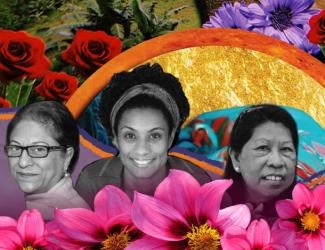
L’hommage se présente sous forme d’une exposition de portraits d’activistes du monde entier qui ne sont plus parmi nous qui ont lutté pour les droits des femmes et la justice sociale.
En 2020, nous adoptons une démarche légèrement différente
Cette année, tout en continuant à convoquer la mémoire de celleux qui ne sont plus parmi nous, nous souhaitons célébrer leur héritage et souligner les manières par lesquelles leur travail continue à avoir un impact sur nos réalités vécues aujourd’hui.
49 nouveaux portraits de féministes et de défenseur·e·s viennent compléter la gallerie. Bien que de nombreuses des personnes que nous honorons dans cet hommage sont décédé·e·s du fait de leur âge ou de la maladie, beaucoup trop d’entre iels ont été tué·e·s à cause de leur travail et de qui iels étaient.
Les histoires des activistes à l'honneur dans cet Hommage font vivre leur héritage et continuent d'inspirer le travail et l’action de nos mouvements.
Les portraits de l'édition 2020 ont été illustrés par Louisa Bertman, artiste et animatrice qui a reçu plusieurs prix.
L’AWID tient à remercier nos membres, les familles, les organisations et les partenaires qui ont contribué à cette commémoration. Nous nous engageons auprès d’elleux à poursuivre le travail remarquable de ces féministes et défenseur·e·s et nous ne ménagerons aucun effort pour que justice soit faite dans les cas qui demeurent impunis.
« Ils ont essayé de nous enterrer. Ils ne savaient pas que nous étions des graines » - Proverbe mexicain
L'Hommage a été inauguré en 2012
Le premier hommage aux défenseur-e-s des droits humains a pris la forme d’une exposition de portraits et de biographies de féministes et d’activistes disparu·e·s lors du 12e Forum international de l’AWID en Turquie. Il se présente maintenant comme une gallerie en ligne, mise à jour chaque année.
Depuis, 467 féministes et défenseur-e-s des droits humains ont été mis·es à l'honneur.
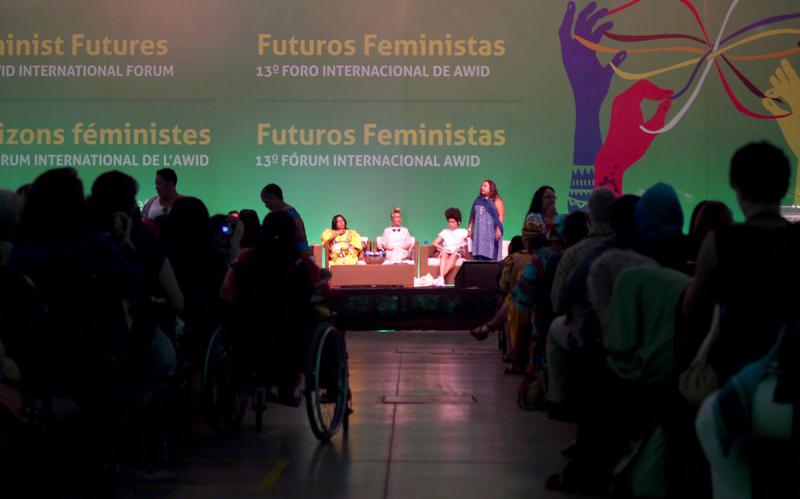
The AWID International Forum is a truly global space that gives participants an opportunity to network, build alliances, celebrate, and learn in a stimulating, emotive and safe atmosphere.
AWID International Forum in Costa de Sauipe, Brazil, 2016
More and more, we are trying to bring the Forum process outside of the convening’s borders. Engaging with partners and deepening relationships all year round, connecting with local movements to better understand problems and co-create solutions. The Forum event itself, held every three to four years in a different region of the world, is just a crystallization of all these alliances that we are building as part of our work.
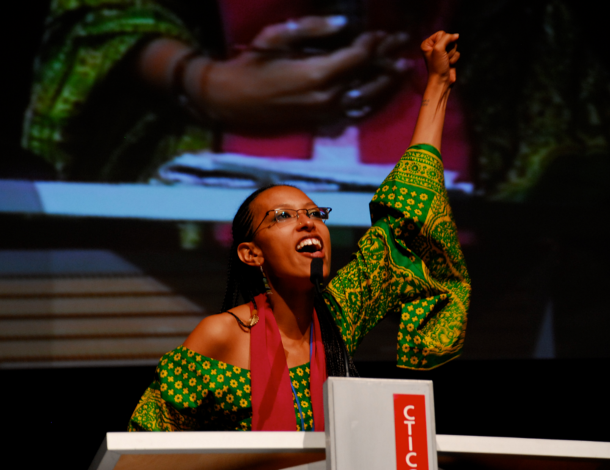
The AWID Forum dissolves our inner and external boundaries, fosters deep discussion, personal and professional growth, and strengthens our movements for gender justice and women’s rights.
As a convening, it is a response to the urgency to promote stronger and more coordinated engagement and action by feminists, women’s rights and other social justice advocates, organizations and movements. We also believe that the Forum is more than just an event – it can facilitate a process to influence thinking and set agendas for feminist movements and other related actors.
Evolving from a national conference of around 800 people, the event now brings together around 2000 feminists, community leaders, social justice activists, and donor agencies from around the world.
The 14th AWID International Forum will take place 11-14 January 2021 in Taipei, Taiwan.
2016 - Feminist Futures: Building Collective Power for Rights and Justice (Costa de Sauipe, Brazil)
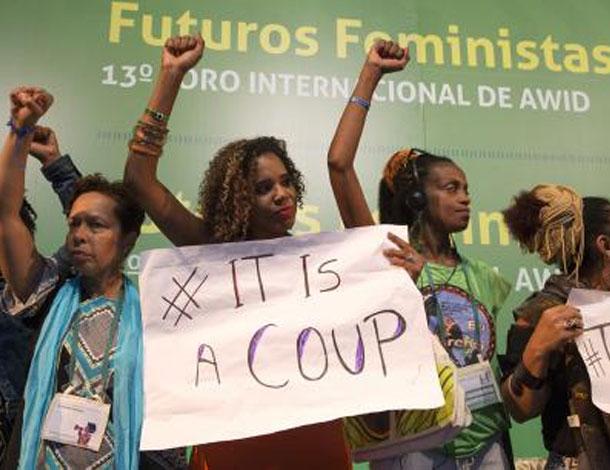
Participants at the Black Feminisms Forum in Brazil, 2016
Given the complex world that we face today, the 2016 AWID Forum did not focus on a particular “issue”, but rather on creating more effective ways of working together!
Despite the challenging contexts in which the 2016 Forum took place (the Zika epidemic, a strike by Brazilian foreign-service workers, the impeachment of President Dilma Rousseff and subsequent turmoil), it succeeded in bringing together over 1800 participants from 120 countries and territories across all regions of the world.
What happened at the 13th AWID international Forum:
For 96% of participantswho responded to the post Forum evaluation survey, the Forum was a major source of inspiration and energy.
98% of participants considered it an important convening space for feminist movements and expressed hope that AWID continues to organize forums.
59% of Forum evaluation survey respondents declared to be very satisfied with the Forum and 34% somewhat satisfied.
Over 150 sessions were delivered in different formats on a variety of topics ranging from bodily integrity and freedoms, to gender-based violence in the workplace, to strategies for building collective power.
The first-time Black Feminisms Forum (BFF), held just before the main AWID Forum, brought together 250 Black feminists from all over the world to co-create a powerful space to build and strengthen ongoing, intergenerational, transnational connections
Read more about what the 2016 AWID Forum achieved:
2012 - Transforming Economic Power to Advance Women's Rights and Justice (Istambul, Turkey)
AWID International Forum, in Cape Town, South Africa, 2008
The 12th AWID Forum was the largest and most diverse AWID Forum to date, bringing together 2239 women’s rights activists from 141 countries. Of these participants, around 65% were from the Global South and close to 15% were young women under 30, and 75% attended an AWID Forum for their first time.
The Forum program focused on transforming economic power to advance women’s rights and justice and featured over 170 different kinds of sessions including feminist economics toolbox skills-building sessions, breakout sessions representing all 10 Forum themes, in-depth sessions, and solidarity roundtables.
Building on the momentum of the 2012 Forum, we transformed the website into a resource and learning Hub, which builds on the content generated by participants by featuring multi-media resources on all Forum components.
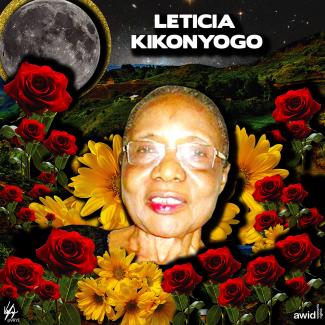
Prior to her retirement, she held many high profile positions including member of the Court of Appeal of Uganda and Deputy Chief Justice of Uganda. She was the first Ugandan woman to hold the position of Chief Magistrate between 1973 and 1986 and the first woman to be appointed High court judge in 1986.
She was one of the first ever women papal knights in the history of the Catholic Church in Africa. She died of a heart attack.
Vivimos en un mundo donde la destrucción de la naturaleza alimenta nuestra economía global actual.
Incluso en tiempos de crisis climática, los gobiernos continúan alentando el crecimiento de las industrias agrícolas a gran escala. Estas actividades envenenan la tierra, amenazan la biodiversidad y destruyen la producción de alimentos y los medios de vida locales. Mientras tanto, aunque las mujeres producen la mayoría de nuestros alimentos en el mundo, casi no poseen tierra.
¿Qué pasaría si percibiéramos la tierra y la Naturaleza no como una propiedad privada para ser explotada, sino como una totalidad con la cual aprender y coexistir en armonía? ¿Y si repararíamos nuestras relaciones con la tierra y adoptaríamos alternativas más sostenibles que nutran tanto al planeta como a sus comunidades?
Nous Sommes la Solution (Somos la Solución, NSS) es uno de los muchos movimientos liderados por mujeres que se esfuerzan por lograr este objetivo.
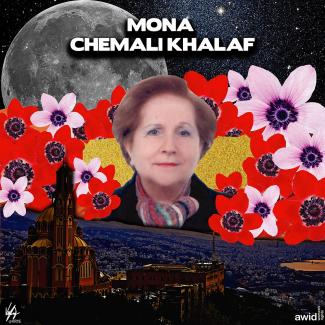
Mona fue una economista y consultora independiente sobre temas de género y desarrollo.
Fue profesora de economía y Directora del Institute for Women's Studies in the Arab World de la Lebanese American University. Falleció repentinamente el 6 de enero de 2018.
Sus amigxs y ex-colegas dicen sobre Mona: «Cuando celebramos su vida, lo mejor que podemos hacer es comprometernos a continuar con lo que ella empezó: la igualdad de género, indefectiblemente.
¿Puedo responder la encuesta por fuera de KOBO y compartir las respuestas con ustedes a través de correo electrónico?
Salvo que existan cuestiones de accesibilidad o que respondas la encuesta en otro idioma, alentamos encarecidamente a usar KOBO a los efectos de contar con una recopilación y un análisis de datos estandarizados para la investigación ¿Dónde está el dinero?
Student, Writer, Leader, Advocate. Each of the four women honored below had their own way of activism but what they had in common is that they all promoted and defended Lesbian Gay Bisexual Transgender Queer and Intersex rights. Join us in remembering and honoring these Women Human Rights Defenders, their work and legacy by sharing the memes below and tweeting by using the hashtags #WHRDTribute and #16Days.
Please click on each image below to see a larger version and download as a file
AGROECOLOGÍA Y SOBERANÍA ALIMENTARIA COMO RESISTENCIA
Hoy en día, la producción industrial de alimentos a gran escala utiliza plantaciones de monocultivo, organismos genéticamente modificados y otros pesticidas que destruyen la tierra y el conocimiento de las comunidades locales.
El papel de las mujeres, las comunidades indígenas y rurales y las personas racializadas en los países del Sur Global es fundamental para mantener los sistemas alimentarios. Lxs agroecologistxs feministas trabajan para desmantelar los roles de género opresivos y los sistemas patriarcales arraigados en la producción de alimentos. Como lo muestran las heroínas de Nous Sommes la Solution, generan una agroecología liberadora al fortalecer la resiliencia de las comunidades, empoderar a las mujeres campesinas y agricultoras mientras preservan las tradiciones locales, los territorios y los conocimientos de las comunidades productoras de alimentos.
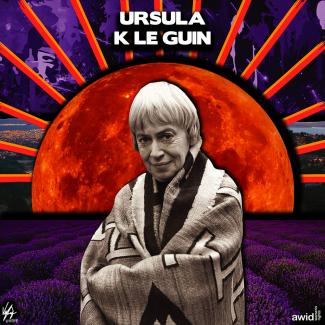
Ursula était une romancière américaine dont les genres littéraires de prédilection étaient la science-fiction et le genre fantastique.
Elle a connu le succès grâce à son roman « La main gauche de la nuit », où elle imagine une société du futur où les personnes sont ambisexuelles - leur sexe n’est pas déterminé. Parmi les premiers grands livres de science-fiction féministes, ce roman explore les influences du genre et du sexe dans la société. Ursula était une source d'inspiration pour ses écrits subversifs et originaux, ainsi que pour les thèmes du féminisme et de la liberté qui lui tenaient tellement à cœur.
En 1983, lors d'un discours au Mills College en Californie, elle a déclaré aux diplômé-e-s : « Pourquoi une femme libre ayant suivi une formation universitaire devrait-elle combattre Macho-Man ou le servir ? Pourquoi devrait-elle vivre sa vie selon son bon vouloir ? J'espère que vous vivrez sans avoir besoin de dominer et sans avoir besoin d'être dominé-e ».
Il y a 47 questions au total, dont 27 obligatoires* et 20 autres facultatives. La plupart sont des questions à choix multiple. Nous vous invitons à répondre à toutes les questions.