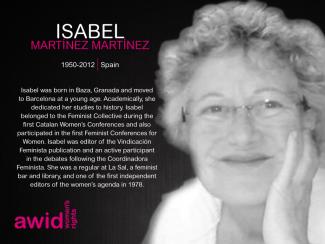
Isabel Martinez Martinez
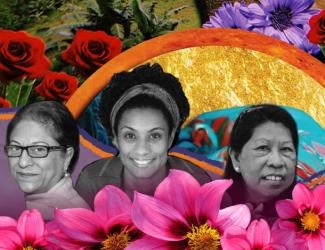
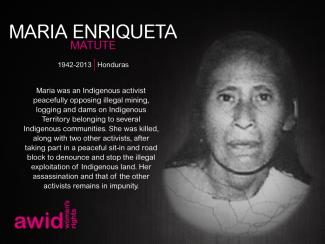
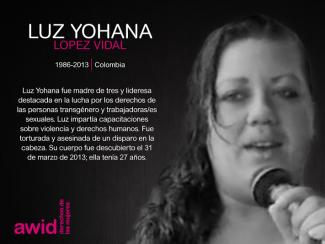
L’hommage se présente sous forme d’une exposition de portraits d’activistes du monde entier qui ne sont plus parmi nous qui ont lutté pour les droits des femmes et la justice sociale.
Cette année, tout en continuant à convoquer la mémoire de celleux qui ne sont plus parmi nous, nous souhaitons célébrer leur héritage et souligner les manières par lesquelles leur travail continue à avoir un impact sur nos réalités vécues aujourd’hui.
49 nouveaux portraits de féministes et de défenseur·e·s viennent compléter la gallerie. Bien que de nombreuses des personnes que nous honorons dans cet hommage sont décédé·e·s du fait de leur âge ou de la maladie, beaucoup trop d’entre iels ont été tué·e·s à cause de leur travail et de qui iels étaient.
Visiter notre exposition virtuelle
Les portraits de l'édition 2020 ont été illustrés par Louisa Bertman, artiste et animatrice qui a reçu plusieurs prix.
L’AWID tient à remercier nos membres, les familles, les organisations et les partenaires qui ont contribué à cette commémoration. Nous nous engageons auprès d’elleux à poursuivre le travail remarquable de ces féministes et défenseur·e·s et nous ne ménagerons aucun effort pour que justice soit faite dans les cas qui demeurent impunis.
« Ils ont essayé de nous enterrer. Ils ne savaient pas que nous étions des graines » - Proverbe mexicain
Le premier hommage aux défenseur-e-s des droits humains a pris la forme d’une exposition de portraits et de biographies de féministes et d’activistes disparu·e·s lors du 12e Forum international de l’AWID en Turquie. Il se présente maintenant comme une gallerie en ligne, mise à jour chaque année.
Depuis, 467 féministes et défenseur-e-s des droits humains ont été mis·es à l'honneur.
Tonya Haynes, CAISO
Angelique V. Nixon, CAISO

The #MeToo movement in China was ignited in January 2018, impelled by the momentum of the #MeToo movement around the globe. The movement was a response to cultural and systemic problems in relation to gender and power within China. The foundation of the movement was laid over decades, with many years of debate and advocacy for gender equality finally erupting into a tremendous force across society. #MeToo has been driven mainly by young people, among whom are countless anonymous women and their allies, and they search for opportunities to realize the ultimate “Chinese Dream”: to transform China into a country with gender equality.
The environment for #MeToo movement is extremely adverse in China: the rule of law, the fairness and transparency of government action, and freedom of speech cannot be taken for granted by the movement in China but are the very goals it fights for. From the beginning, it has been an intense struggle, with every victim or activist who comes forward running tremendous risks. From being silenced, humiliated, or retaliated against, to having their safety jeopardized, every success of the #MeToo movement has been won by those who are courageous enough to bear the costs of speaking out and defying censorship.
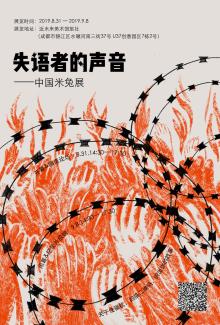
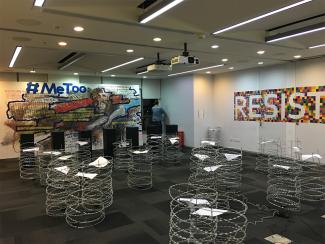
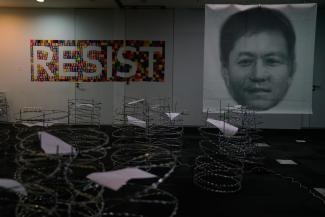
#MeToo in China Exhibition was first held in 2019 and toured in 5 cities. The aim of the exhibition is to bring the personal experiences of the victims and activists to greater prominence and, through engagement with these stories, to inspire our audience to join in the fight. The exhibition has itself become a part of the #MeToo struggle—the exhibition has been beset by challenges on its tour throughout China, on more than one occasion even facing closure.
In fact, 38% of our members are under the age of 30.
We believe that young feminists are both the present and the future of the struggle for women’s rights. We promote young leaders in the global women’s rights movement and our Young Feminist Activism program cuts across all aspects of our work.
At the same time, by defining young feminist activists as one of our Priority Areas, we contribute new analysis to current debates and ensure that young feminist activists are able to articulate their priorities and voice their concerns.
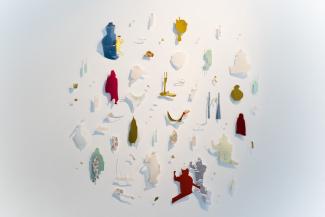
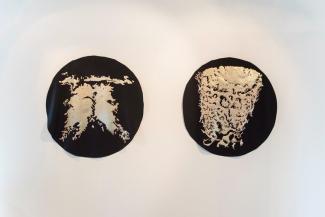
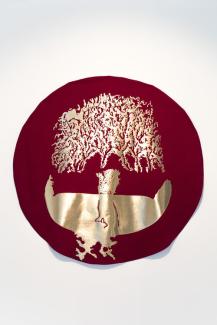
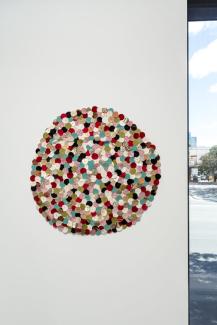
Una exposición de Nicole Barakat que encarna su reconexión con los objetos de la diáspora de sus tierras ancestrales en la región del Sudoeste Asiático y África del Norte (SWANA, por sus siglas en inglés).
Barakat presenta una colección de obras textiles como manifestaciones de su práctica de conectarse con los objetos desplazados, y a menudo robados, que son exhibidos en colecciones de museos occidentales que incluyen el Museo del Louvre de París, el Museo Británico de Londres y el Nicholson Museum de Sydney.
Para burlar a los guardianes y fisurar las vitrinas que retienen estos objetos ancestrales, Barakat recupera formas de conocimiento precoloniales, no lineales y receptivas que son, a menudo, devaluadas y desestimadas por las instituciones coloniales y patriarcales, utilizando la adivinación con la borra del café, el trabajo con los sueños, la escucha intuitiva y las conversaciones con los objetos mismos (fuente).
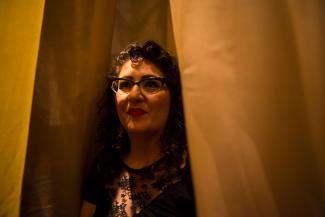
AWID proporciona una gran cantidad de recursos que pueden ayudarte en tu investigación. Te invitamos a explorar las Áreas Prioritarias y la sección «Infórmate» de nuestro sitio web, o que utilices la función de búsqueda para encontrar información sobre los temas específicos que estás investigando. .
Recomendamos especialmente que explores nuestro manual «¿Dónde está el dinero para los derechos de las mujeres» (WITM). Este manual es una demostración política y práctica de los recursos y procesos necesarios para llevar a cabo una sólida investigación-acción.
En esta selección de películas encontrarán las voces de realizadoras que no solo se contentan con plasmar las realidades feministas que palpitan en cada rincón de este vasto y diverso territorio sino también trabajos que desde su gestación misma están cuestionando el para qué, quién y cómo se hace cine o audiovisual. Realizadoras o colectivos que entienden al cine como una herramienta de lucha, como algo más que imágenes que se disfrutan en una pantalla, que ven al cine y al audiovisual como instrumentos para potenciar una discusión o abrir un debate; en fin, como un recurso para la pedagogía popular y feminista.
À la Commission africaine et au Système interaméricain, les antidroits promeuvent les notions essentialistes de culture et de genre pour miner les avancées en matière de droits et décrédibiliser la redevabilité. Les antidroits gagnent en influence dans les systèmes de protection des droits humains régionaux et internationaux.
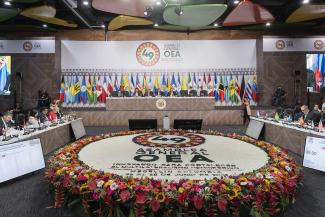
La Commission africaine des droits de l’Homme et des peuples commence à présenter les droits des femmes et droits sexuels comme mettant en danger sa capacité à adresser les « droits réels » et contraires aux « valeurs africaines », un précédent inquiétant à l’égard des droits. Le retrait de son statut d’observatrice à la Coalition des lesbiennes africaines est un exemple de cette tendance, et traduit la répression de l’engagement féministe panafricaniste.
Au sein de l’Organisation des États américains (OEA) et du Système interaméricain de protection des droits humains, les stratégies antidroits incluent l’ONGisation de groupes religieux, l’adoption d’un langage séculier et la prise de contrôle de cadres discriminatoires. L’influence antidroits a pris plusieurs formes, et notamment l’intimidation d’activistes trans et l’entrave à l’introduction d’un langage progressif dans les résolutions.
Second Dialogue de haut niveau sur le financement du développement

يمكنك أن تتوقع جميع المواد الأساسية لورش العمل والعروض التقديمية: اللوحات الورقية، والأقلام والملاحظات اللاصقة، بالإضافة إلى أجهزة العرض والمعدات السمعية والبصرية. أي مواد إضافية تقع على عاتق منظمي/ات النشاط. سيكون الفريق اللوجستي التابع لجمعية حقوق المرأة في التنمية متاحًا للإجابة على الأسئلة وتقديم المشورة.

Consulta nuestra Guía Superbreve para organizar Festivales Feministas y otros eventos globales en línea.
Lost For Words |
 |
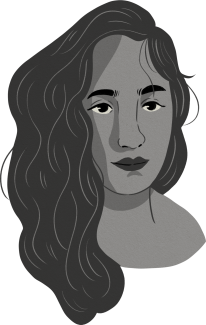 |
| Chinelo Onwualu | Ghiwa Sayegh |
When we are desperate for change, as we are both in illness and insurrection, our language drains of complexity, becomes honed to its barest essentials... As illness and revolution persist, though, the language made in them and about them deepens, lets in more nuance, absorbed in the acutely human experience of encountering one’s limits at the site of the world’s end.
Johanna Hedva
When we began scheming for such an issue with Nana Darkoa, ahead of AWID’s Crear | Résister | Transform: a festival for feminist movements!, we departed from a question that is more of an observation of the state of the world – a desire to shift ground: why do our sexualities and pleasures continue to be tamed and criminalized even as we are told, over and over again, that they bring neither value nor progress? We came to the conclusion that when they are embodied, something about our sexualities works against a world order that continues to manifest itself in border controls, vaccine apartheids, settler colonialism, ethnic cleansing, and rampant capitalism. Could we speak, then, of the disruptive potential of our sexualities? Could we still do that when, in order to be resourced, our movements are co-opted and institutionalized.
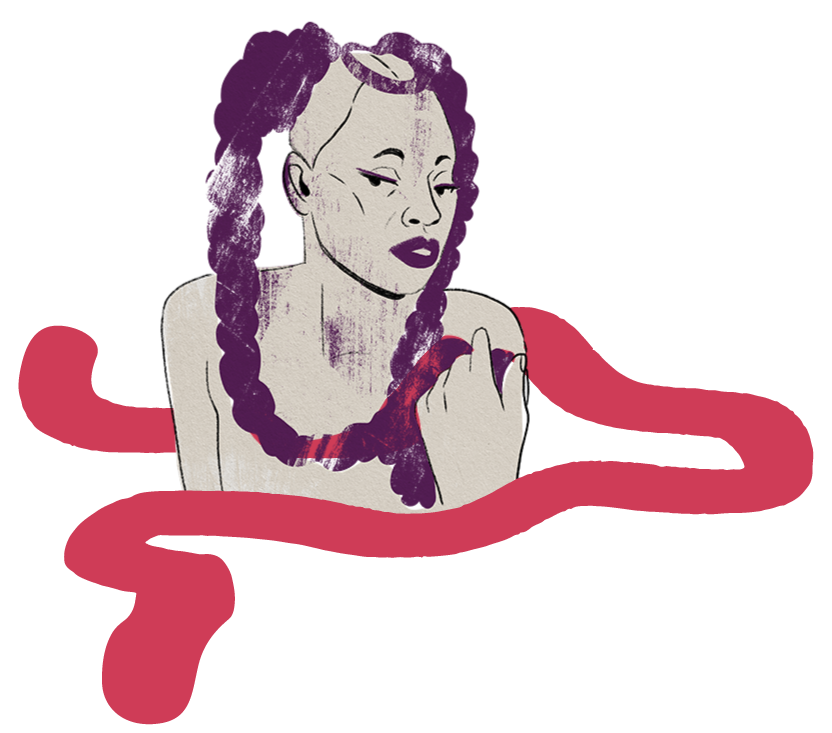
When our embodied labor becomes profit in the hands of the systems we seek to dismantle, it is no wonder that our sexualities and pleasures are once again relegated to the sidelines – especially when they are not profitable enough. In many instances during the production of this issue, we asked ourselves what would happen if we refused to accommodate the essential services of capitalism. But can we dare ask that question when we are exhausted by the world? Perhaps our sexualities are so easily dismissed because they are not seen as forms of care. Perhaps what we need is to reimagine pleasure as a form of radical care – one that is also anti-capitalist and anti-institutional.
As we enter our second full year of a global pandemic, our approach to transnational embodiments has had to focus on a single political realization: that taking care is a form of embodiment. And because right now so much of our work is being done without consideration for the borders between and within ourselves, we are all Transnationally Embodied – and we are all failing. We are failing to take care of ourselves and more critically, to take care of each other.
This failure is not of our own making.
Many of our parents thought of labor as transactional, something to be given in exchange for compensation and a guarantee of care. And while that exchange was not always honored, our parents did not expect that their work would provide them fulfillment. They had their leisure, their hobbies, and their communities for that. Today, we their children, who have been conditioned to think of our labor as intertwined with our passion, have no such expectations. We think of work and leisure as one and the same. For too many of us, work has come to embody our whole selves.
However, heteropatriarchal capitalism doesn’t value us, let alone our labor or our sexualities. This is a system that will only demand more and more until you die. And when you die, it will replace you with somebody else. Expectations to be online round the clock mean we simply can’t get away from work, even when we want to. This commercialization of labor, divorcing it from the person, has infiltrated every aspect of our lives and is being perpetuated even in the most feminist, the most radical and revolutionary circles.
Capitalist expectations have always been particularly pernicious to bodies who don’t fit its ideal. And those seeking to consolidate their powers have used the pandemic as an opportunity to target women, sexual minorities, and any others that they see as less than.
This special issue exists because of, and certainly in spite of this.
Almost every contributor and staff member was pushing themselves past their capacity. Every single piece was produced from a place of passion, but also incredible burnout. In a very real way, this issue is an embodiment of transnational labor – and in the digital world we live in, all labor has become transnational labor. As we have to contend with new borders that do not break an old order but reify it, we experienced firsthand, alongside our contributors, how capitalism drains our limits – how it becomes difficult to construct cohesive arguments, especially when these come with a deadline. We collectively became lost for words – because we are lost for worlds.
Feeling lost and alone in the world of heteropatriarchal capitalism is exactly why we need to re-evaluate and rethink our systems of care. In many ways, we turned this issue into a mission of finding pleasure in care. Because it has become more difficult to construct cohesive arguments, visual and creative mediums have come to the forefront. Many who used to write have turned to these mediums as ways to produce knowledge and cut through the mental fog that’s enveloped us all. We brought into the issue other voices, in addition to many whom you heard at the festival, as a way of opening up new conversations, and extending our horizons.

As we are robbed of our words, it is our political duty to continue to find ways to maintain and care for ourselves and each other. So much of our current realities are trying to erase and displace us, while still exploiting our labor. Our embodiment, therefore, becomes a form of resistance; it is the beginning of us finding our way out and into ourselves.
The Sixth High-level Dialogue on Financing for Development, 7-8 October 2013 focused on reviewing the progress of MDG’s, and identifying gaps to be addressed in discussions on the new development framework.
A report by the MDG’s Gap Task Force launched during the session pointed to the failure to meet MDG 8 (Global Partnership for Development) as a major factor in the challenges to meeting the MDGs. The report showed that more focus should be given to developing stronger global partnerships that would ensure binding commitments for the new development framework post 2015.