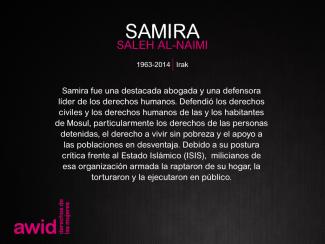
Samira Saleh Al-Naimi
Esta sección de análisis especial ofrece un análisis feminista crítico y acceso a los recursos clave relacionados con la «protección de la familia» en los espacios internacionales de derechos humanos.
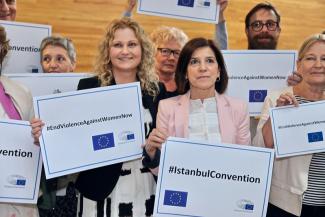
Durante los últimos años, venimos observando una nueva y preocupante tendencia en el ámbito internacional de derechos humanos, donde se están empleando discursos sobre la «protección de la familia» para defender violaciones cometidas contra miembros de la familia, de modo de reforzar y justificar la impunidad y para coartar la igualdad de derechos en el seno de la familia y la vida familiar.
La campaña para «proteger a la familia» es impulsada por proyectos conservadores que tienen como fin imponer interpretaciones «tradicionales» y patriarcales de familia; quitando los derechos de las manos de sus miembros para ponerlos en las de la institución «familia».
Desde 2014 un grupo de estados opera como bloque en espacios de derechos humanos, bajo el nombre «Group of Friends of the Family» [Grupo de amigos de la familia], y a partir de entonces se han aprobado resoluciones sobre la «Protección de la familia» todos los años.
Esta agenda se ha extendido más allá del Consejo de Derechos Humanos (HRC, por sus siglas en inglés). Hemos visto cómo el lenguaje regresivo sobre «la familia» se ha introducido en la Comisión de la Condición Jurídica y Social de las Mujeres (CSW, por sus siglas en inglés), y hemos asistido a intentos por incluir este lenguaje en las negociaciones sobre los Objetivos de Desarrollo Sostenible.
AWID trabaja con asociadxs y aliadxs para resistir conjuntamente las agendas regresivas de «Protección de la familia» y otras, y para defender la universalidad de los derechos humanos.
En respuesta a la creciente influencia de actores regresivos en los espacios de derechos humanos, AWID se ha unido con aliadxs para formar el Observatorio de la Universalidad de los Derechos (OURs, por sus siglas en inglés). OURs es un proyecto colaborativo que monitorea, analiza y comparte información sobre iniciativas anti-derechos tales como la «Protección de la familia».
Derechos en Riesgo, el primer informe de OURs, traza un mapa de los actores que conforman el cabildeo global anti-derechos e identifica sus discursos y estrategias principales, señalando los efectos que estos discursos y estrategias están teniendo sobre nuestros derechos humanos.
El informe expone a la «Protección de la familia» como una agenda que ha promovido la colaboración entre una amplia gama de actores regresivos en las Naciones Unidas. La describe como un marco estratégico que aloja «múltiples posiciones patriarcales y anti-derechos, cuyo marco, a su vez, apunta a justificar e institucionalizar estas posiciones».
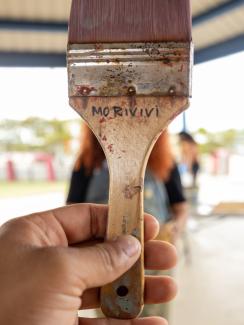
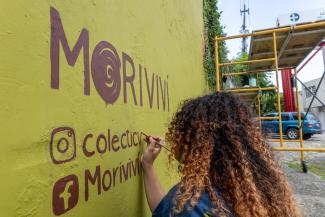
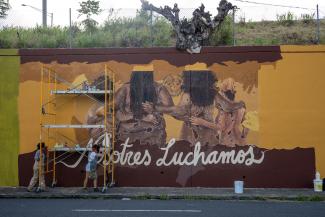
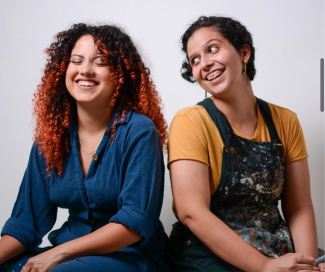
Colectivo Moriviví is an all women artistic collective. Our artistic production consists of muralism, community-led muralism, and protest performance/actions. Our work is about democratizing art and bringing the narratives of Puerto Rican communities to the public sphere to create spaces in which they are validated. We believe that through artivism we can promote consciousness on social issues and strengthen our collective memory.
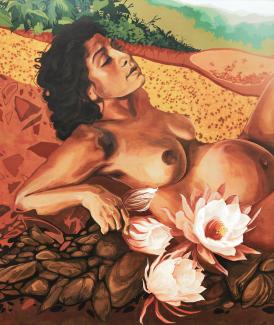
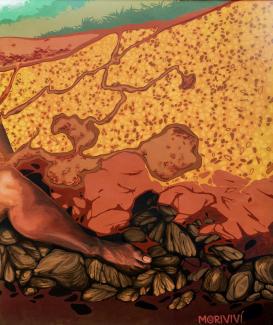
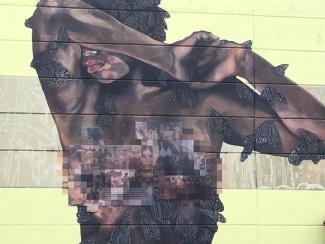
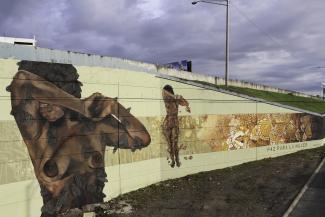
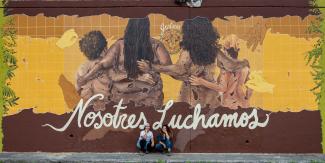
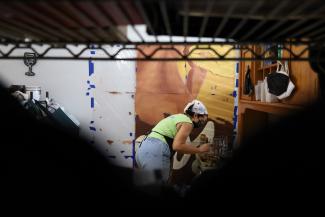
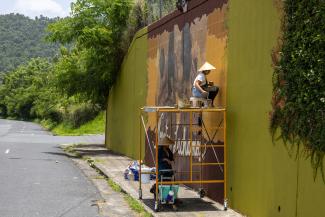
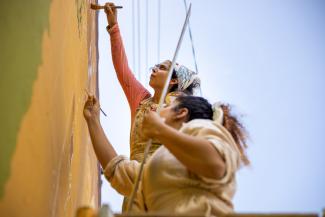
As part of their participation in AWID’s Artist Working Group, Colectivo Morivivi gathered a diverse group of members, partners and staff to facilitate a collaborative process of dreaming into, informing, and deciding on the content for a community mural through a multi-stage co-creation process. The project began with a remote conceptualization with feminists from different parts of the planet brought together by AWID, and then it evolved to its re-contextualization and realization in Puerto Rico. We were honored to have the input of local artists Las Nietas de Nonó(@lasnietasdenono), the participation of local women in the Community Painting Session, the logistics support from the Municipality of Caguas, and FRIDA Young Feminist Fund’s additional support to the collective.
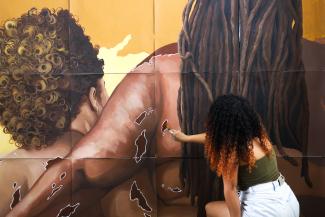
The mural explores the transcendence of borders by presenting bodies like a map, in an embrace that highlights the intersection of the different feminist manifestations, practices and realities.
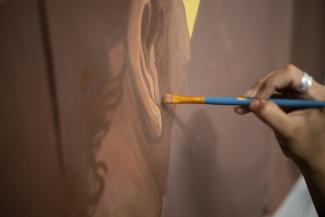
We also thank Kelvin Rodríguez, who documented and captured the different stages of this project in Puerto Rico:


Cuando la gente se reúne a escala global, como personas individuales y como movimientos, se genera una fuerza arrolladora. Únete a nosotrxs en Bangkok, Tailandia, y de manera virtual, en diciembre de 2024.
Las Realidades Feministas son una invitación cálida y afectuosa, una suerte de acto de cuidado y preservación colectivo (en oposición al autocuidado), una invitación a atesorar, a hacer inventario de toda la labor realizada para que no desaparezca. (...)
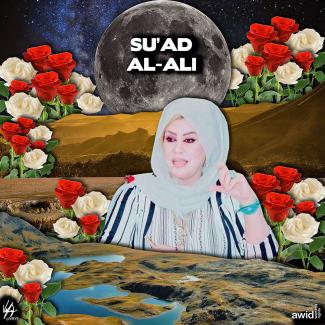
Su’ad was a strong advocate of women’s and children’s rights, and was the head of Al-Weed Al-Alaiami - an Iraqi human rights organisation.
She participated in the July 2018 demonstrations that took place in Basra and several other Iraqi cities protesting unemployment and demanding jobs and proper public services for citizens, as well as calling for the elimination of rampant corruption.
On 25 September 2018, Su’ad was assassinated in the Al-Abbasiyah district in downtown Basra. A video of the incident showed a person approaching her as she was getting into her car, firing a bullet at the back of her head and pointing another bullet at her driver Hussain Hassan, who was injured in the shoulder. Al-Ali was 46 and the mother of four children.
Los actores anti-derechos adoptan una estrategia doble. Además de atacar abiertamente al sistema multilateral, los actores anti-derechos también socavan los derechos humanos desde adentro. Se involucran con el fin de cooptar procesos, consolidar normativas regresivas, y erosionar responsabilidades.
El involucramiento de los actores anti-derechos en espacios internacionales de derechos humanos tiene un objetivo principal: socavar el sistema y su capacidad de respetar, proteger y satisfacer los derechos humanos para todas las personas, y de exigir rendición de cuentas a los Estados miembro por su violación. Algunas tácticas anti-derechos operan por fuera de la ONU, e incluyen la deslegitimación y la presión política para desfinanciar a la ONU, o para que ciertos Estados miembro se retiren de acuerdos internacionales sobre derechos humanos. En los últimos años, algunos actores antiderechos han logrado una creciente influencia dentro de la ONU. Sus tácticas internas incluyen la capacitación de representantes, la distorsión de los marcos de derechos humanos, el debilitamiento de acuerdos sobre derechos humanos, la infiltración en comités de organizaciones no gubernamentales, las solicitudes de ingreso al Consejo Económico y Social bajo nombres neutrales, la infiltración en los espacios de la juventud, y las presiones para ubicar a actores antiderechos en posiciones clave.
Apprenez-en davantage sur les prochains événements CSW69 co-organisés par l'AWID ci-dessous
par Amal Amer
Je prie en famille pour la première fois en six ans, recouvert.e d’un keffieh que j’ai déniché dans une poubelle. (...)
illustration : « Les anges aussi sortent la nuit », par Chloé Luu >
Nous vous conseillons de demander conseil à un-e avocat-e, de communiquer avec un refuge pour femmes ou un centre d’accueil près de chez vous.
Les HotPeachPages, une ressource en ligne, contiennent des liens vers les refuges pour femmes dans le monde entier. L’AWID ne peut garantir l’exactitude ou la qualité de ces listes, mais elles peuvent constituer un bon point de départ si vous ne connaissez aucune organisation près de chez vous.
“Afterwards
After love the first time,
Our naked bodies and minds
A hall of mirrors,
Wholly unarmed, utterly fragile,
We lie in one another's arms
Breathing with care,
Afraid to break
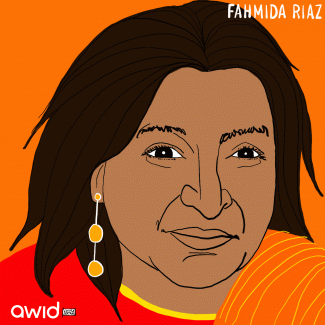
These crystal figurines.” - Fahmida Riaz
Her work faced harsh criticism from conservatives, who accused her of using erotic and “pornographic” expressions in her poetic language.
Fahimida was eventually blacklisted and charged with sedition under Section 124A of the Pakistan Penal Code) during the dictatorship of Zia Ul Haq. Forced into exile in 1981, she spent almost seven years in India before returning to Pakistan.
As part of the preface to “Badan Dareeda” ('The Torn-Bodied'), a collection of poetry published in 1974, she wrote:
The brilliance of Fahmida was in defying any singular logic or categories of gender, nation, religion or culture. She refused to be put in the role of a ‘woman poet’, breaking with traditional definitions of feminine poetry and concepts and themes (ranging from political consciousness, body, culture, desire, religion, home) and knocking down inhibitions put on her gender.
“You have to understand that culture can have no essence. Cultures move, flowing into one another, forming new cultures. Culture is born this way. There is no clash of cultures.”
Fahmida authored more than 15 books on poetry and fiction including her poem ‘Taaziyati Qaraardaaden’ (‘Condolence Resolutions’) that might serve as an appropriate tribute to her life and legacy and a collection of poems (Apna Jurm To Saabit He ‘My Crime Stands Proven’) published in 1988 during her time in exile.
Fahmida Riaz was born in Meerut, India on 28 July 1946 and passed away on 21 November 2018 in Lahore, Pakistan.
Une expérience magique de narration féministe animée par la féministe panafricaine Coumba Touré, dans la tradition séculaire des griots d’Afrique de l’Ouest
Et nous nous réunissons à nouveau
Nous avons rassemblé nos histoires, notre force
nos chansons
nos larmes
notre rage
nos rêves
nos succès
nos échecs
nous les avons rassemblés dans un grand bol pour le partage
pendant une lune de pensées
Aussi, nous restons en contact
Nous nous secouons l'esprit
nous nous caressons l'âme
Alors que nos mains sont toujours liées
Et que nos baisers et nos câlins sont interdits
Pourtant, nous nous renforcons d’heure en heure
Tissant ensemble nos voix
Franchissant les barrières sonores
comme nous parlons en langues
Nous sommes de plus en plus fortes
Nous connaissons ce qui nous différencie des autres
et les différences entre nous,
alors nous cousons nos beautés en patchwork de pensées
De nos apprentissages les plus profonds
de nos pouvoirs
Parfois, nous sommes entourées de terreur,
Par la confusion, la malhonnêteté
Mais nous nous purifions dans l'océan de l'amour
Nous sommes des tisserands de rêves
Pour vêtir un nouveau monde
Fil après fil
Aussi petites que nous soyons,
comme de petites fourmis construisant nos mouvements
comme de petites gouttes construisant nos rivières
Nous faisons des pas en avant et des pas en arrière
dansons notre chemin de retour à un mental sain
Nous soutenons le rythme de nos coeurs
Continuez à battre,
s'il vous plaît, ne vous arrêtez pas
ainsi nous sommes les transmetteurs d'une générosité oubliée
Goutte après gouttes, grandissant comme l'océan
grandissant comme la rivière qui coule de nos âmes
montrant notre force pour être l'eau qui lavera ce monde
et nous nous rassemblons à nouveau,
peux-tu nous sentir ?
Je mentirais si je disais que ça va
Que cela ne me dérange pas de ne pas vous voir.
Vos voix non filtrées et non enregistrées me manquent
Nos murmures et nos cris me manquent.
Nos cris de la révolution avortée
Nous voulonsêseulement donner naissance à de nouveaux mondes
Alors luttons pour effacer les frontières entre nous
Sil vous plait n’arrêtez pas
✉️ Sur inscription uniquement. Inscrivez-vous ici
📅 Mercredi 12 mars 2025
🕒 17.00h-19.00h EST
🏢 Chef's Kitchen Loft with Terrace, 216 East 45th St 13th Floor New York
Organisé par : Women Enabled International et AWID
by Dr. Pragati Singh
In 2019, I was invited by the BBC to speak at the 100 women conference in Delhi, India, on the subject of ‘The future of love, relationships, and families.’ The audience seated in the large hall consisted mostly of young Indians- college students, professionals, activists etc (...)
artwork: “Angels go out at night too” by Chloé Luu >
Follow-up International Conference on Financing for Development, Doha, Qatar