
Muriel Duckworth
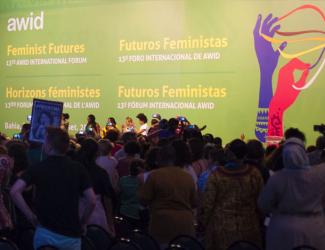
En septiembre de 2016, 1800 feministas y activistas por los derechos de las mujeres de todos los rincones de nuestros movimientos se congregaron en las costas de Bahia, en el 13º Foro Internacional de AWID.
En esta sección se destacan los logros, los aprendizajes y los recursos que surgieron de las ricas conversaciones mantenidas. Te invitamos a analizar, compartir y comentar.
Uno de los aportes más importantes del Foro fue la necesidad de ampliar y profundizar nuestro trabajo entre movimientos, frente a la confluencia de los fascismos en auge, fundamentalismos, codicia corporativa y cambio climático.
Nuestras Iniciativas Semilla han ayudado a 20 ideas que surgieron en el Foro para crecer en forma de acciones concretas
El vídeo «Defendiendo a las Personas y al Planeta» y la guía «Tejiendo la resistencia a través de la acción» estan protagonizados por defensoras de derechos humanos y presentan estrategias concretas para confrontar al poder corporativo
Con nuestras animaciones El estado de nuestros movimientos feministas y Justicia climática y ambiental, los movimientos ahora tienen herramientas creativas para apoyar su trabajo.
La compilación de las expresiones artísticas «Los Movimientos Importan», sigue inspirando una organización más fuerte y creativa en todo el mundo.
Los movimientos también pueden beneficiarse de nuevas metodologías para imaginar nuestros futuros feministas (¡pronto!)
AWID se ha comprometido, mediante su próximo plan estratégico y su proceso del Foro, a continuar y profundizar las relaciones, las lecciones y los procesos iniciados en el Foro 2016 y basándonos en el momento actual.
Los Foros de AWID comenzaron en 1983 en Washington DC. Desde entonces, el evento ha crecido hasta convertirse en muchas cosas para muchas personas: un proceso iterativo para darle forma a nuestros análisis, objetivos y acciones; un hito crucial que fortalece los feminismos de lxs participantes e infunde energías a sus procesos de organización; un hogar político donde lxs defensoras de derechos humanos encuentran un santuario y solidaridad.
Since coming into myself, I have refused to pray in jamaat with my family. Joining in the ranks of hierarchy, “women” behind “men” irks me. It grates my skin and teeth to the degree where I can’t focus, and the standing, bowing, and kneeling feels like a battle against my true being. Each second listening, a betrayal of my nature. Instead, I pray by myself in my own way.
Yet this Ramadan, I feel different. Back in my childhood home after many years, I am choosing to fast. I choose suhoor with my family, and praying together feels like a natural extension of eating together. After eating, my mother, father, brother and I line up for fajr.
I pray behind Baba, but my prayer is my own. I close my eyes, staying with my breath and my body.
My eyes closed, I open my inner sight to a wide open window on a vista of mountains, bright sun spreading over a light mist of clouds. This was the view I had while praying in jamaat at a queer Muslim wedding I attended in the mountains of the South of France last September.
I lined up with the wedding guests, queer and trans folks of North and West African, Arab, and European descent. Folks of all faiths joined while some chose to stand in respect at the sides or behind. The groups did not fall along fault lines of “Muslim” or “non-Muslim,” “religious” or “non religious.” The two lovers marrying each led us in prayer, and so did the Muslim woman officiating the nikkah. Each of the three led us in two rounds of prayers, two raqat.
I showed up as I was, my body uncovered. I had not washed. I only passed my camera to a friend who chose to stand at the side.
In the first sujood, I broke down crying. I wore a jean dress that loves my body, one found at a thrift store my ex-girlfriend pointed me to.
The sobs come through my whole body during the prayer, and I put my head to the earth with my community like a homecoming. A return to the embrace of love both intensely personal and communal, and I am held.
It feels like swimming in the sea with multiple people: joyful togetherness. But when you go beneath the water, it’s just you and the current.
Like a dozen people buried in the same graveyard. Separate, but sharing the same soil. Becoming one with the growing earth.
That was how it felt to pray in communion at a queer Muslim wedding.
I welcomed the light of acceptance while showing up as myself that day, with a group of people who had also chosen to claim all the parts of themselves in love. That light made a home in me, and it illuminates my heart in the dark living room at fajr this Ramadan morning. Though I pray with my birth family who do not accept all of me, I see myself praying in jamaat at that glorious wedding with all of my queer Muslim ancestors, my queer angels, my lineage, my soul family, my queer Muslim family, all standing in prayer. Bowing as one.
My family’s home does not always feel like my own, though I am here now. I take the bukhoor from room to room, barefoot. Smolder from the censer, an incense that says, “Here I am.” Baraka, blessings from the source of all, Allah and the Goddess to each room in the house, bidding good and dispersing the unbidden.
As I write this the sky turns the same royal blue I am familiar with from exiting the club and pulling all-nighters. It is the gradient of morning I step into as I go to sleep.
Ramadan: the Muslim holy month, traditionally observed with 29 days of fasting without food or water during daylight hours
Keffiyah: a patterned scarf common in the SWANA region. The black and white version referred to here is associated with the Palestinian liberation movement
Pray in jamaat: Islamic ritual prayer in a group. Participants follow one person, traditionally male, who calls the prayer aloud.
Suhoor: the meal before the fast starts at dawn
Fajr: the dawn prayer
Baba: father
Raqat: one round of prayer consisting of standing, bowing, kneeling, and pressing the head to the ground
Sujood:the prayer position when one presses one’s head to the earth
Nikkah: the religious marriage ceremony
Bukhoor: an Arabic incense, woodchips soaked in resin
Baraka: blessing
Pictures of angels in my life, just some women and non-binary people of color hanging out, taking care of themselves and expressing love to each other. It's these simplest moments that are the most empowering.


< Freeing the Church, Decolonizing the Bible for West Papuan Women

حالياً سيتواجد الاستطلاع على منصة KOBO باللغات العربية، الإنجليزية، الفرنسية، البرتغالية، الروسية والاسبانية. ستكون لديكم/ن الفرصة لاختيار اللغة التي تريدون تعبئة الاستطلاع بها في بداية الاستطلاع.
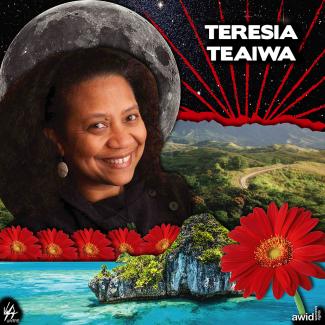
Considérée par le Guardian comme l'une des icônes nationales de Kiribati, Teresia était une avocate téméraire.
Elle travaillait en étroite collaboration avec des groupes féministes aux îles Fidji. Ses travaux de recherche ont servi à aborder les problèmes du féminisme et de l'égalité de genre dans le Pacifique. Elle était également corédactrice de l’International Feminist Journal of Politics. En Océanie, son influence a traversé les frontières académiques, ainsi que les mouvements pour la justice sociale.
Bienvenue à Crear | Résister | Transform : un festival dédié aux mouvements féministes !
L'AWID s'engage à créer un espace en ligne qui nous invite et nous pousse tou·te·s à faire preuve de courage, de curiosité, de générosité et de responsabilité partagée.
Nous vous invitons à créer à nos côtés des espaces sans harcèlement ni violence, où chacun·e est respecté·e dans son identité et son expression de genre, sa race, ses capacités, sa classe, sa religion, sa langue, son ethnicité, son âge, sa profession, son type d'éducation, sa sexualité, sa taille et son apparence physique. Des espaces où nous reconnaissons les inégalités de notre monde et où nous nous efforçons de les transformer au gré de nos propres interactions avec les autres.
Soyez là les un·e·s pour les autres en étant activement à l’écoute. Essayons de nous sentir proches, même si tout est virtuel. Pour cela, vous aurez accès à l’interprétation de la discussion et à des moyens de communications ouverts (comme la boîte de dialogue et autres outils) pour réagir et échanger. Nous vous recommandons de porter des écouteurs ou un casque pendant la séance pour mieux entendre les autres et vous faire entendre. Dans la mesure du possible, essayez de fermer votre messagerie électronique ou toute autre distraction pendant que vous prenez part à la discussion.
Célébrons les multiples façons dont le savoir se manifeste dans nos vies. Nous vous invitons à aborder la conversation avec curiosité et ouverture d’esprit pour apprendre des autres, en se permettant de désapprendre et de réapprendre à travers ces échanges, comme une manièrede commencer à construire collectivement des connaissances.
Nous nous engageons à adopter une approche holistique de l'accessibilité en tenant compte des différents besoins physiques, linguistiques, mentaux et de sécurité. Nous voulons un espace qui accueille des personnes d'origines, de croyances, de capacités et d'expériences différentes. Nous anticiperons au mieux mais vous demanderons également de nous communiquer vos besoins, et nous ferons de notre mieux pour y répondre.
Nous nous engageons tou·te·s individuellement et collectivement à respecter la vie privée de chacun·e· et à demander le consentement des autres avant de partager des images ou du contenu qui les concerne, générés au cours de la conversation.
Créer un environnement sécurisé, respectueux et agréable durant ces conversations est la responsabilité de tou·te·s .
Si vous remarquez qu'une personne a un comportement discriminatoire ou offensant, veuillez contacter la personne de référence qui vous sera indiquée en début de session.
Tout·e participant·e qui utilisera un langage ou des images abusives sera exclu·e de la conversation et ne sera pas réadmis·e. Nous n’aurons plus de relations avec cette personne de quelque manière que ce soit.

Trouvez et créez des connexions. L’AWID compte plus de 9 000 membres, qui s’efforcent tou·te·s de résoudre des questions complémentaires et interconnectées. Cette diversité favorise la pérennité des mouvements et acteures féministes.
Да, мы хотим получить ваш ответ, независимо от того, сколько раз (один, два или три) вы получали финансирование в период между 2021 и 2023 годами.
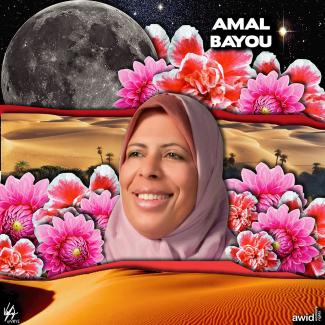
Amal was a prominent politician and parliamentarian in Libya. She was a faculty member at Benghazi University from 1995 until her death in 2017.
Amal was a civil society activist and a member of various social and political initiatives. She assisted the families of martyrs and the disappeared, and was a founding member of a youth initiative called ‘’Youth of Benghazi Libya”. In the 2014 parliamentary elections, Amal was elected to the House of Representatives with more than 14,000 votes (the highest number of votes anyone received in the 2014 elections).
Amal will remain in the memories of many as a woman politician working to ensure a better future in one the most difficult and conflict-ridden contexts in the region.
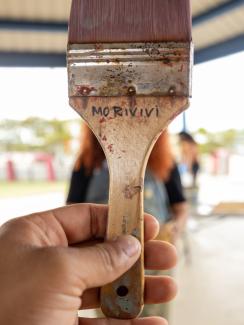
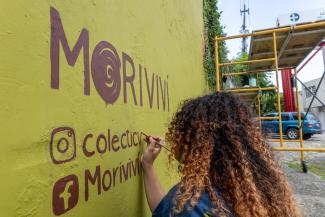
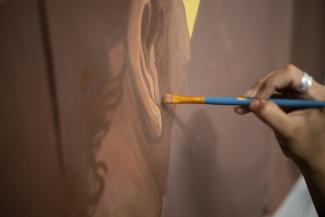
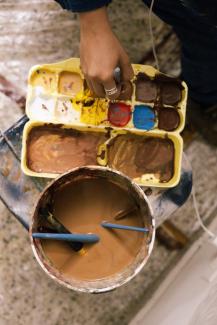
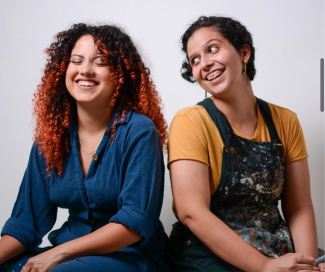
Colectivo Moriviví is an all women artistic collective. Our artistic production consists of muralism, community-led muralism, and protest performance/actions. Our work is about democratizing art and bringing the narratives of Puerto Rican communities to the public sphere to create spaces in which they are validated. We believe that through artivism we can promote consciousness on social issues and strengthen our collective memory.
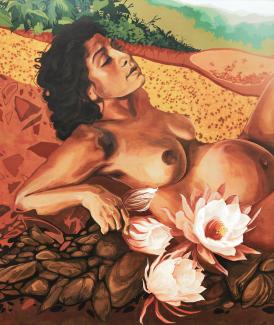
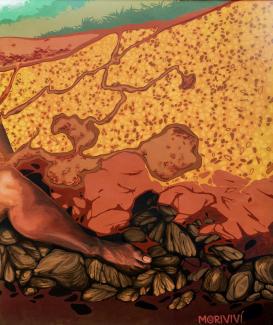
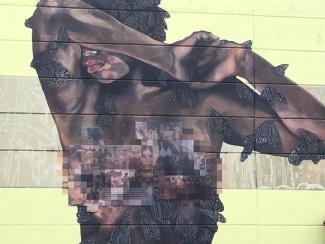
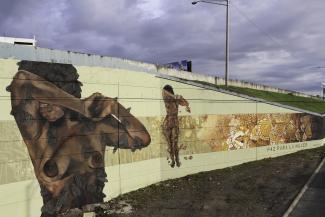
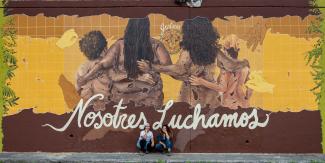
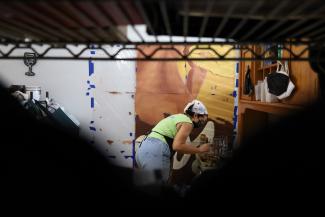
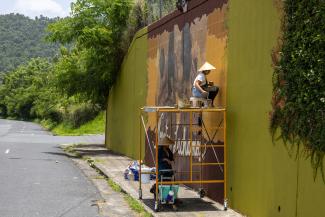
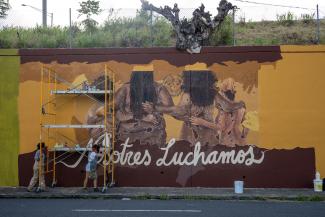
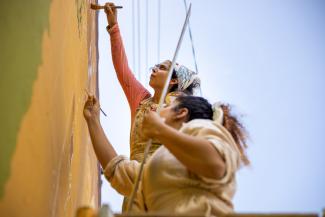
As part of their participation in AWID’s Artist Working Group, Colectivo Morivivi gathered a diverse group of members, partners and staff to facilitate a collaborative process of dreaming into, informing, and deciding on the content for a community mural through a multi-stage co-creation process. The project began with a remote conceptualization with feminists from different parts of the planet brought together by AWID, and then it evolved to its re-contextualization and realization in Puerto Rico. We were honored to have the input of local artists Las Nietas de Nonó(@lasnietasdenono), the participation of local women in the Community Painting Session, the logistics support from the Municipality of Caguas, and FRIDA Young Feminist Fund’s additional support to the collective.
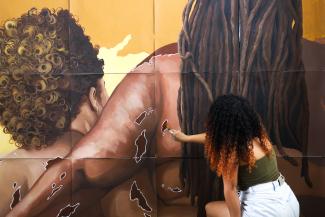
The mural explores the transcendence of borders by presenting bodies like a map, in an embrace that highlights the intersection of the different feminist manifestations, practices and realities.
We also thank Kelvin Rodríguez, who documented and captured the different stages of this project in Puerto Rico:
Sindicato OTRAS
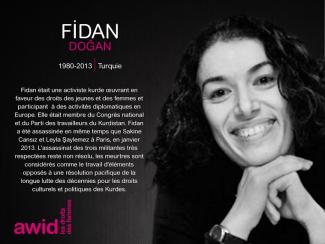
We believe that for feminist movements to be transformative and strong we must continue to work across our similarities and differences. We also must interrogate power and privilege both within and outside our movements.
Pedimos estes dados para facilitar a revisão das respostas, para evitar respostas duplicadas e para poder entrar em contacto com o seu grupo caso não tenha conseguido completar o inquérito e/ou tenha dúvidas ou perguntas adicionais. Para mais informações sobre como utilizamos as informações pessoais que recolhemos através do nosso trabalho, clique aqui.
Rocky mostró un liderazgo y una dirección inspiradoras en su trabajo con jóvenes lesbianas, gays, bisexuales, transgénero, intersex, queer, y personas transgénero indígenas de Australia (LGBTIQBBSG) en riesgo.
Rocky comenzó su carrera con el Servicio de Policía de Queensland como Oficial de Policía de Enlace. Para ella, hacer una diferencia era algo importante. Desarrolló una carrera impresionante trabajando con jóvenes LGBTIQBBSG como Gerente del Servicio Juvenil de Puertas Abiertas.
Rocky trabajó con lxs beneficiarixs en situaciones complejas, específicamente relacionadas con la identidad sexual y de género. Esta línea de trabajo le resultaba propia: era una líder comunitaria fuerte, una triunfadora discreta, una amiga leal, una persona que apoyaba compasivamente a lxs demás, alguien que producía el cambio. Rocky fue una de lxs fundadorxs de IndigiLez Leadership y de Support Groes.
En 2016, en la Corte Suprema de Brisbane, Michael Kirby, ex juez del Tribunal Supremo de Apelaciones, mencionó por su nombre a Rocky al elogiar el trabajo que el Servicio Legal LGBTI había desarrollado a lo largo de los años. Rocky luchó de forma extraordinariamente tenaz por los derechos humanos de la comunidad LGBTIQBBSG, corrió los límites y produjo cambios de una forma respetuosa y amorosa.

Los actores anti-derechos adoptan una estrategia doble. Además de atacar abiertamente al sistema multilateral, los actores anti-derechos también socavan los derechos humanos desde adentro. Se involucran con el fin de cooptar procesos, consolidar normativas regresivas, y erosionar responsabilidades.
El involucramiento de los actores anti-derechos en espacios internacionales de derechos humanos tiene un objetivo principal: socavar el sistema y su capacidad de respetar, proteger y satisfacer los derechos humanos para todas las personas, y de exigir rendición de cuentas a los Estados miembro por su violación. Algunas tácticas anti-derechos operan por fuera de la ONU, e incluyen la deslegitimación y la presión política para desfinanciar a la ONU, o para que ciertos Estados miembro se retiren de acuerdos internacionales sobre derechos humanos. En los últimos años, algunos actores antiderechos han logrado una creciente influencia dentro de la ONU. Sus tácticas internas incluyen la capacitación de representantes, la distorsión de los marcos de derechos humanos, el debilitamiento de acuerdos sobre derechos humanos, la infiltración en comités de organizaciones no gubernamentales, las solicitudes de ingreso al Consejo Económico y Social bajo nombres neutrales, la infiltración en los espacios de la juventud, y las presiones para ubicar a actores antiderechos en posiciones clave.