AWID es un organización feminista internacional de membresía, que brinda apoyo a los movimientos que trabajan para lograr la justicia de género y los derechos de las mujeres en todo el mundo.
Lxs defensorxs se identifican a sí mismas como mujeres y personas lesbianas, bisexuales, transgénero, queer e intersex (LBTQI) y otrxs que defienden derechos y que debido a su trabajo en derechos humanos están bajo riesgos y amenazas específicos por su género y/o como consecuencia directa de su identidad de género u orientación sexual.
Lxs defensorxs son objeto de violencia y discriminación sistemáticas debido a sus identidades y su inclaudicable lucha por derechos, igualdad y justicia.
El Programa Defensorxs colabora con contrapartes internacionales y regionales así como con lxs afiliadxs de AWID para crear conciencia acerca de estos riesgos y amenazas, abogar por medidas de protección y de seguridad que sean feministas e integrales, y promover activamente una cultura del autocuidado y el bienestar colectivo en nuestros movimientos.
Riesgos y amenazas dirigidos específicamente contra lxs defensorxs
lxs defensorxs enfrentan los mismos tipos de riesgos que todxs lxs demás defensorxs de derechos humanos, de comunidades y del medio ambiente. Sin embargo, también están expuestas a violencia y a riesgos específicos por su género porque desafían las normas de género de sus comunidades y sociedades.
Por defender derechos, lxs defensorxs están en riesgo de:
Ataques físicos y muerte
Intimidación y acoso, incluso en los espacios virtuales
Acoso judicial y criminalización
Agotamiento
Un enfoque integral y colaborativo de la seguridad
Trabajamos de manera colaborativa con redes internacionales y regionales y con nuestrxs afiliadxs
para crear conciencia de las violaciones de derechos humanos contra lxs defensorxs y de la violencia y discriminación sistemáticas que enfrentan
para fortalecer los mecanismos de protección y asegurar respuestas más oportunas y efectivas para lxs defensorxs que están en riesgo
Trabajamos para promover un enfoque integral de la protección que incluya:
remarcar la importancia del autocuidado y el bienestar colectivo, y reconocer que el significado de cuidado y bienestar puede variar entre las diferentes culturas;
documentar las violaciones dirigidas contra lxs defensorxs usando una perspectiva feminista interseccional;
promover el reconocimiento y celebración social del trabajo y la resiliencia de lxs defensorxs; y
construir espacios ciudadanos que conduzcan al desmantelamiento de las desigualdades estructurales sin restricciones ni obstáculos.
Nuestras acciones
Nos proponemos contribuir a un mundo más seguro para lxs defensorxs, sus familias y comunidades. Creemos que actuar por los derechos y la justicia no debe poner en riesgo a lxs defensorxs, sino que debe ser valorado y celebrado.
Promoviendo la colaboración y coordinación entre organizaciones de derechos humanos y organizaciones de derechos de las mujeres en el plano internacional para fortalecer la capacidad de respuesta en relación a la seguridad y el bienestar de lxs defensorxs.
Apoyando a las redes regionales de defensorxs y de sus organizaciones, tales como la Iniciativa Mesoamericana de Mujeres Defensorxs de Derechos Humanos y la WHRD Middle East and North Africa Coalition [Coalición de Defensorxs de Derechos Humanos de Medio Oriente y África del Norte], promoviendo y fortaleciendo la acción colectiva para la protección, poniendo el énfasis en establecer redes de solidaridad y protección, promover el autocuidado y la incidencia y movilización por la seguridad de lxs defensorxs.
Aumentando la visibilidad y el reconocimiento de lxs defensorxs y sus luchas, así como de los riesgos que enfrentan, a través de la documentación de los ataques que sufren, e investigando, produciendo y difundiendo información sobre sus luchas, estrategias y desafíos.
Movilizando respuestas urgentes de solidaridad internacional para lxs defensorxs que están en riesgo a través de nuestras redes internacionales y regionales y de nuestrxs afiliadxs activxs.
Contenido relacionado
Snippet - WITM Our objectives - PT
Os nossos objetivos da pesquisa WITM:
1
Fornecer a membres da AWID, parceires do movimento e financiadores uma análise atualizada, robusta, baseada em fatos e orientada para a ação das realidades do financiamento de movimentos feministas e do estado atual do ecossistema do financiamento feminista.
2
Identificar e demonstrar oportunidades para transferir mais recursos de maior qualidade para a organização feminista, expor soluções falsas e interromper tendências que fazem com que o financiamento não seja bem-sucedido e/ou se mova contra a justiça de género e objetivos feministas interseccionais.
3
Articular visões, propostas e objetivos feministas para a justiça no financiamento.
Anti-rights actors adopt a double strategy. As well as launching outright attacks on the multilateral system, anti-rights actors also undermine human rights from within. Anti-rights actors engage with the aim of co-opting processes, entrenching regressive norms, and undermining accountability.
Anti-rights actors’ engagement in international human rights spaces has a principal purpose: to undermine the system and its ability to respect, protect and fulfill human rights for all people, and to hold member states accountable for violations. Some anti-rights tactics operate from outside the UN and include delegitimization and political pressure to defund the UN, or to withdraw from international human rights agreements. In recent years, anti-rights actors have also gained increasing influence inside the UN. Their inside tactics include training of delegates, distortion of human rights frameworks, watering down human rights agreements, infiltrating NGO committees, applying for ECOSOC status under neutral names, infiltrating youth spaces, and lobbying to place anti-rights actors in key positions.
Table of Contents
Institutionalization of Anti-rights Actors in UN Mechanisms
Lisez nos recherches sur le financement, sur les défenseuses des droits humains, sur la création de mouvements, sur les fondamentalismes, la justice économique et beaucoup plus
« Mais quand le maître
s’est-il laissé éloigner du pouvoir?
Quand un système a-t-il jamais été brisé
par l’acceptation?
Quand le CHEF te remettra-t-il le pouvoir avec amour?
À Jobourg, à Cancun, à l’ONU? », Molara Ogundipe.
Dans un entretien à la Foire internationale du livre du Ghana en 2010, Molara Ogundipe s’est présentée avec ces mots : « ... Je suis une Nigériane. J’ai vécu absolument partout, sauf en Union soviétique et en Chine ».
À travers les continents et les pays, la professeure Ogundipe a enseigné la littérature comparée, l’écriture, le genre et les études anglaises, se servant de la littérature comme outil de transformation sociale, de même que pour revisiter les relations de genre.
Penseuse, écrivaine, rédactrice, critique sociale, poète et activiste féministe, Molara Ogundipe est parvenue à allier le travail théorique et l’action créative et la créativité. Elle est considérée comme l’une des principales voix critiques du(des) féminisme(s) africain(s), des études de genre et de la théorie littéraire.
Molara est connue pour avoir créé le concept de « stiwanisme », à partir de l’acronyme STIWA, pour Social Transformations in Africa Including Women (transformations sociales en Afrique incluant les femmes), reconnaissant la nécessité de « s’éloigner de la définition du ou des féminismes en lien avec l’Euro-Amérique ou avec toute autre région, et de la déclamation de loyautés ou déloyautés ».
Avec son ouvrage fondateur « Re-creating Ourselves » de 1994 (publié sous le nom de Molara Ogundipe-Leslie), Molara Ogundipe a laissé derrière elle un immense éventail de connaissances qui ont décolonisé le discours féministe et « recentré les femmes africaines sur leurs récits entiers et complexes... menées par une exploration de la libération économique, politique et sociale des femmes africaines et la restauration de la capacité d’agir féminine dans plusieurs cultures en Afrique ».
À propos des difficultés rencontrées en tant que jeune universitaire :
« Lorsque j’ai commencé à parler et à écrire sur le féminisme à la fin des années soixante et soixante-dix, on me considérait comme une bonne et admirable fille qui s’était égarée, une femme dont l’esprit avait été gâté par trop d’apprentissages ».
Molara Ogundipe s’est démarquée grâce à son leadership alliant activisme et université. En 1977, elle comptait parmi les fondatrices de l’AAWORD (Association of African Women for Research and Development). En 1982, elle fonde WIN (Women in Nigeria) pour défendre des « droits économiques, sociaux et politiques » entiers pour les Nigérianes. Elle crée et dirige ensuite la Foundation for International Education and Monitoring, et passe plusieurs années à oeuvrer au comité de rédaction de The Guardian.
Ayant grandi avec les Yoruba, leurs traditions, leur culture et leur langue, elle a un jour déclaré :
« Je pense que célébrer la vie, célébrer les personnes qui décèdent après une vie bien remplie est l’un des plus beaux aspects de la culture yoruba ».
Le nom de fête « oiki » de Molara en yoruba était Ayike. Née le 27 décembre 1940, Molara est décédée à l’âge de 78 ans, le 18 juin 2019 à Ijebu Igbo, dans l’État d’Ogun au Nigeria.
Êtes-vous à la recherche d'un emploi? L'un des avantages de rejoindre la Communauté de l'AWID est d'avoir accès à notre tableau d'offres d'emploi organisé par la communauté. Vous aurez l'occasion d'explorer de nouvelles opportunités et vous aurez également la possibilité de partager des postes vacants et des appels à propositions avec tous les membres.
Snippet FEA Title Main (EN)
The Feminist Economies
WE LOVE
La historia de Crear, Résister, Transform por Coumba Toure
Una experiencia mágica de narración feminista conducida por la feminista panafricana Coumba Toure, quien actuará en la antigua tradición de lxs griots de África Occidental.
Y nos reunimos nuevamente
Juntamos nuestras historias, nuestra fuerza
nuestras canciones
nuestras lágrimas
nuestra ira
nuestros sueños
nuestro éxito
nuestros fracasos
Y lo colocamos todo junto
en un gran cuenco para compartir
durante una luna de pensamientos
Y nos mantenemos en contacto
nos sacudimos las mentes unas a otras
nos acariciamos las almas
mientras nuestras manos siguen atadas
y nuestros besos y abrazos están prohibidos
Sin embargo, nos hacemos más fuertes cada hora
entretejiendo juntas nuestras voces
cruzando las barreras del sonido
mientras hablamos en lenguas
Nuestras voces son cada vez más altas
Sabemos lo que nos diferencia de otras personas
y entre nosotras, de modo que
estamos bordando nuestras bellezas en un mosaico de pensamientos
desde nuestros aprendizajes más profundos, desde nuestros poderes
A veces nos rodea el terror
la confusión, la deshonestidad
pero nos lavamos en el océano de amor
Somos tejedoras de sueños
para vestir nuestro nuevo mundo
hilo por hilo
tan pequeñas como somos
como pequeñas hormigas construyendo nuestro movimiento
comopequeñas gotas construyendo nuestros ríos
Damos pasos hacia adelante y pasos hacia atrás
bailando nuestro camino de vuelta a la cordura
Sostenemos el ritmo de nuestros corazones: sigan
latiendo, por favor, no se detengan
Y aquí estamos, transmisoras de generosidad olvidada
gota tras gota creciendo como el océano
creciendo como el río que fluye de nuestras almas
mostrando nuestra fuerza para ser el agua
que limpiará este mundo
y nos estamos reuniendo nuevamente ¿pueden sentirnos?
Mentiría si dijera que para mí
está bien no verlas, extraño a mi gente
Extraño su contacto y
sus voces sin filtro y sin registro
Extraño nuestros susurros y nuestros alaridos
nuestros gritos de la revolución abortada
Solo queremos parir nuevos mundos
Entonces luchemos para borrar las fronteras entre nosotras
Por favor, no se detengan
FRMag - Freeing the Church
Freeing the Church, Decolonizing the Bible for West Papuan Women
by Rode Wanimbo
I was born and grew up in Agamua, the Central Highlands of West Papua. My father belongs to the Lani tribe and my mother comes from Walak. (...)
Mereani Naisua Senibici, also called ‘Sua’, was a longstanding member of the Fiji Young Women’s Christian Association (YWCA) movement.
She worked with diverse groups of women in multi-racial, rural and urban settings and was committed to supporting and promoting women’s and young women’s rights.
In the Lautoka YWCA, she worked with women of Indian descent, and was a leading figure in the sports development and participation of women and of trans athletes in Lautoka.
“Sua is greatly loved by Fiji YWCA members for her dedication and long-time support towards all that the organisation endeavoured to do.” - Tupou Vere
Mereani was part of the House of Sarah (HoS), an initiative of the Association of Anglican Women (AAW), launched in 2009 and aimed at raising awareness of the issues around gender-based violence, as well as providing support to women who face violence. She started as a dedicated volunteer and offered support to women throughout the Pacific.
“A people’s person and an all-rounder in women's empowerment and movement work at community level. Rest in Peace, Sua.” - Tupou Vere
Estamos encantadxs de anunciar el lanzamiento del nuevo podcast de AWID: ESE FUEGO FEMINISTA. Esta serie narrativa revela más de 40 años de movimientos feministas e imagina nuevos caminos a seguir.
En nuestra temporada piloto, escucharán cinco historias cautivadoras que forman parte de la actual constelación de activismo feminista. Presentado por nuestra Gopika Bashi, subdirectora de programas de AWID, cada episodio explora realidades feministas únicas pero interconectadas que están logrando una mayor justicia de género y asegurando derechos humanos.
ESE FUEGO FEMINISTA es producido en asociación con lxs ganadorxs de Webby, Hueman Group Media. Puedes suscribirte al podcast y escuchar nuestro primer episodio aquí.
Encuéntranos en Apple Podcasts, Spotify o donde sea que obtengas tus podcasts. ¡Comparte con tu red! Ayúdanos a difundir historias que enciendan nuestro fuego feminista y nos muevan a la acción.
Jurema Araújo is a teacher-poet from Rio de Janeiro. She contributed to the magazine Urbana, edited by the poets Brasil Barreto and Samaral (RIP) and to the book Amor e outras revoluções (Love and Other Revolutions) with several other writers. In collaboration with Angélica Ferrarez and Fabiana Pereira, she co-edited O livro negro dos sentidos (The Black Book of Senses), a creative anthology on black women’s sexuality in Brazil. Jurema is 54-years-old; she has a daughter, three dogs, a cat, and many friends.
Suck it with me?
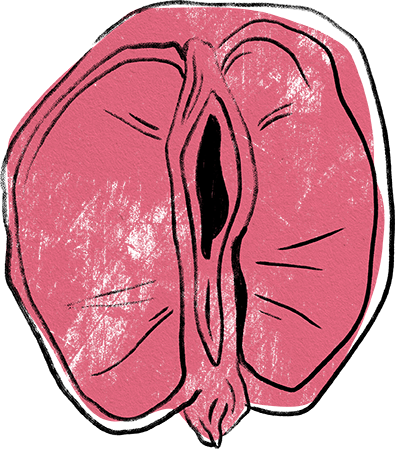
Mango is my favorite fruit.
I open my mouth
and suck it all,
Its flesh caught between my teeth
that turn soft not to hurt it
and I press it between my tongue and the roof of my mouth,
then I take it out to suck on every part of it
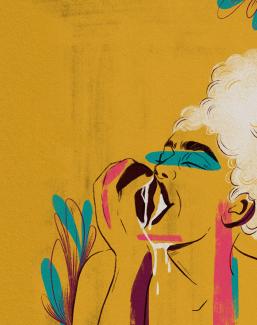
with the juice running down my mouth
drenching myself in this tasty nectar
and putting it all in my mouth again
because mango is seed and honey;
it is fiber and flavor.
And when it is over, I am entranced,
honeydewed, sweetened,
my lips all wet.
Ohhh, what is mango for if not for smearing.
Chupa Comigo?
A fruta que eu mais gosto é manga!
Porque eu abro a boca
E meto toda pra chupar!
Se os dentes a prendem
Fazem macio para não machucar
E eu pressiono entre minha língua e meu céu
Depois tiro pra sugar cada parte
Sentindo o caldo escorrer boca afora
Me molhando com esse néctar gostoso
E metendo toda na boca de novo
Pois manga é caroço e é mel,
É fiapo e sabor
E quando acaba, estou extasiada
Melada, docinha
Com os lábios molhados!
Aaahhh, manga é pra se lambuzar!
Introducing The Black Book of Senses
I’ll admit it: when Angélica and Fabi invited me to curate a collection of erotic texts by black women, I didn’t know what curatorship was. I understood the erotic well, but curatorship... I smiled, feeling shy and flattered. I think I thanked them – at least I hope I did – and thought to myself: what the fuck is it?! This fancy word I’ll have to learn the meaning of while doing it, what is it?
Now at this point, I know what it is to be a curator: it is making love with someone else’s texts, with someone else’s art, with the intention of putting a book together. And that is exactly what I did. I undressed each text of every author of this book with a literary lasciviousness. And I got involved in the words and senses of others. I was penetrated by poems I didn’t write; tales I didn’t even dare to imagine turned me upside down, messing with my feelings, with my libido. And it was a wonderful and unusual orgasm: ethereal, corporeal, sublime, at once intellectual and sensitive.
These texts pulsated like a clit hardened by desire, drenched, dripping joy in every reading. Words that swallowed me with their naughty significance, making me dive deeper into this wet universe.
These black women went to the bottom of their arousals and turned their deepest erotic fantasies into art. These works are impregnated with each writer’s own way of experiencing sexuality: freely, blackly, for ourselves, in our own way, empowered.
I chose to spread the texts throughout different parts of the book, each one organized according to the most delicate, explosive, evident, or implicit content they presented.
To open the door to this “invulved blackessence,” we have our Preliminaries section, with texts that introduce readers to this world of delights. It is a more general, delicate caress to acknowledge the subjects addressed by the texts in the rest of the book.
Then comes the heat of Touch, addressing what the skin can feel. That energy which burns or freezes our bodies, makes our hormones explode and starts to awaken the other senses. And although there are many of us who are voyeurs, the contact of skin with a wet and warm mouth is exciting, like wandering through the softness of whomever is with you. We are seduced by the firm or gentle touch that gives us goosebumps and that lovely discomfort that runs from the neck down to the back and only stops the next day. And the warmth of the lips, the mouth, the wet tongue on the skin – oh, the tongue in the ear, hmmm – or skin on skin, clothes moving over the body, almost like an extension of the other’s hand. If there is no urgency, that wildest arousal of the pressure of a tight grab, a bit of pain – or a lot, who knows?
The Sound – or melody? – section shows us that attraction also happens through hearing: the voice, the whispers, the music that enables the connection between the bodies and can become the theme of desire. For some of us, someone with a beautiful voice would only need their vocal cords, because that harsh or heavy or melodious sound would be auditory sex. Their loud swearing or sweet words whispered in the ear would be enough to give us hair-raising shivers from neck to coccyx.
In Flavor, we know the tongue does a good job tasting the most hidden places and wandering through the body to delight itself. Sometimes this organ is used, boldly, to taste the other’s nectar. The idea of someone sharing their strawberry or a delicious, juicy mango through bites and licks – or licks and bites – melts us. But nothing is more delicious than tasting the caves and hills of the person you are with. Stick your tongue deep inside to taste a piece of fruit... or spend hours tasting the head of a cock in your mouth, or suck on a delicious breast to taste the nipples. This is all about memorizing someone by their Flavor.
There are texts in which the nose is what triggers desire. The Smell, my dear readers, can awaken us to the delights of desire. Sometimes we meet a person who smells so good, we want to swallow them right through our nose. When you run through the other person’s body with your nose, starting with the neck – wow, that delightfully uncomfortable shiver that runs down the spine and undresses the soul! The shameless nose then moves to the back of the neck and captures the scent of the other in such a way that in the absence of that person, smelling their same scent evokes, or conversely, invades in us olfactory memories that bring the arousing smell of that person back.
We then get to Look – for me, the betrayer of senses – in which we perceive desire from a point of “view.” It is through sight that the texts present desire and arousal, through which the other senses are brought about. Sometimes a smile is all it takes to drive us crazy. The exchange of glances? That look that says “I want you now.” That look of possession that comes to an end when you stop fucking, or not. That one is very particular; it draws the other who won’t be able to look away for long. Or the sidelong glance – when one looks away when the other turns their head, like a cat-and-mouse game? Once we are caught red-handed, there’s nothing else to do besides breaking into a wide smile.
Finally, the explosion. Wandering through All senses, the texts mix feelings that seem like an alert, so there is the greatest pleasure, that orgasm.
Of course, there is nothing explicitly separating these poems and tales. Some are subtle. Arousal engages all our senses and, most importantly, our heads. That’s where it happens, and it connects our whole body. I organized the poems according to how they came to me in each reading. Feel free to disagree! But to me, there is a sense through which desire goes and then explodes. Realizing which one it is, is delightful.
Being able to turn arousal into art means freeing ourselves from all the prejudice, prisons, and stigma this white-centric society has trapped us in.
Every time a black writer transforms the erotic into art, she breaks these harmful racist chains that cripple her body, repress her sexuality, and turn us into the object of another’s greed. Writing erotic poetry is taking back the power over her own body and roaming fearlessly through the delights of desire for herself, for others, for life.
The literary erotic is who we are when turned into art. Here we show the best of us, our views of love drenched by pleasure, seasoned by the erogenous, spread through our bodies, and translated by our artistic consciousness. We are multiple and we share this multiplicity of sensations in words dripping with arousal. Yes, even our words drip with our sexual desire, drenching our verses, turning our sexual urges into paragraphs. To come, for us, is a breakthrough.
It is necessary to make our minds, bodies, and sexuality black, to reestablish our pleasure, and take back our orgasms. Only then will we be free. This whole process is a breakthrough, and it happens painfully. But there is happiness in finding ourselves to be very different from where we had been placed.
I feel like I am yours, I am ours. Taste, delight yourselves, feast on these beautiful words with us.
This text is adapted from the introductions to “O Livro Negro Dos Sentidos” [The Black Book of Senses], an erotic collection of poems by 23 black female writers.
ExploreTransnational Embodiments
This journal edition in partnership with Kohl: a Journal for Body and Gender Research, will explore feminist solutions, proposals and realities for transforming our current world, our bodies and our sexualities.
نصدر النسخة هذه من المجلة بالشراكة مع «كحل: مجلة لأبحاث الجسد والجندر»، وسنستكشف عبرها الحلول والاقتراحات وأنواع الواقع النسوية لتغيير عالمنا الحالي وكذلك أجسادنا وجنسانياتنا.
"La vida se trata ... de vivir en alegría – despertarse con objetivos, sentir tu propia energía creativa, responder a tu llamada." - Sylvia Robinson
Sylvia Robinson, una incansable organizadora y líder comunitaria, fue la fundadora y directora ejecutiva de Emergence Community Arts Collective [Colectivo de Artes Comunitarias de Emergencia] (ECAC, por sus siglas en inglés ), en Washington DC.
Este centro y espacio de performance combina la educación, el compromiso cívico, las artes, los servicios sociales y espirituales y las prácticas ambientales sostenibles. Sylvia lo concibió como un hogar donde " hubiera equilibrio y sinergia con las actividades que la gente necesitaba para sostener la vida".
También fue una de lxs co-fundadorxs del Georgia Avenue Community Development Taskforce [Grupo de Trabajo de Desarrollo Comunitario de la Avenida Georgia], un grupo vecinal que trabaja por la justicia social y la organización de la comunidad en el noroeste de DC, para asegurarse de que esta tenga una voz en la reurbanización y gentrificación del área.
"Estamos pidiendo viviendas asequibles. Estamos pidiendo que los pequeños negocios que han estado aquí desde siempre no sean aniquilados por nuevos comercios. Estamos pidiendo espacios verdes y espacios para que la gente se pueda reunir y socializar. Estamos pidiendo mejoras en el paisaje urbano – mejores calles y mejor iluminación en los tramos de carretera." - Sylvia Robinson sobre el Grupo de Trabajo
Antes de convertirse en organizadora y después de recibir un título en informática, Sylvia trabajó en sistemas de control de tráfico aéreo por más de una década. Después se dedicó al asesoramiento en materia de drogas y alcohol, a través de lo cual se involucró cada vez más en el trabajo comunitario.
"Involucrarme con la comunidad era mi vocación". - Sylvia Robinson
Sylvia nació en Washington D.C. el 14 de agosto de 1961, y falleció el 18 de septiembre de 2017, después de una batalla contra el cáncer.
"El espíritu y el legado de Sylvia seguirán inspirando a esta comunidad durante muchos años." - ECAC