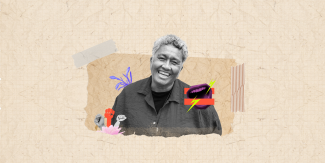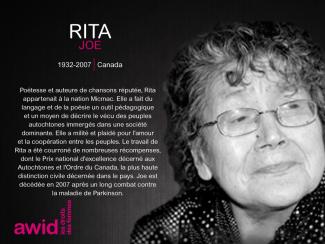
Rita Joe
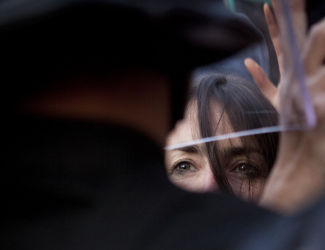
Lxs defensorxs se identifican a sí mismas como mujeres y personas lesbianas, bisexuales, transgénero, queer e intersex (LBTQI) y otrxs que defienden derechos y que debido a su trabajo en derechos humanos están bajo riesgos y amenazas específicos por su género y/o como consecuencia directa de su identidad de género u orientación sexual.
Lxs defensorxs son objeto de violencia y discriminación sistemáticas debido a sus identidades y su inclaudicable lucha por derechos, igualdad y justicia.
El Programa Defensorxs colabora con contrapartes internacionales y regionales así como con lxs afiliadxs de AWID para crear conciencia acerca de estos riesgos y amenazas, abogar por medidas de protección y de seguridad que sean feministas e integrales, y promover activamente una cultura del autocuidado y el bienestar colectivo en nuestros movimientos.
lxs defensorxs enfrentan los mismos tipos de riesgos que todxs lxs demás defensorxs de derechos humanos, de comunidades y del medio ambiente. Sin embargo, también están expuestas a violencia y a riesgos específicos por su género porque desafían las normas de género de sus comunidades y sociedades.
Nos proponemos contribuir a un mundo más seguro para lxs defensorxs, sus familias y comunidades. Creemos que actuar por los derechos y la justicia no debe poner en riesgo a lxs defensorxs, sino que debe ser valorado y celebrado.
Promoviendo la colaboración y coordinación entre organizaciones de derechos humanos y organizaciones de derechos de las mujeres en el plano internacional para fortalecer la capacidad de respuesta en relación a la seguridad y el bienestar de lxs defensorxs.
Apoyando a las redes regionales de defensorxs y de sus organizaciones, tales como la Iniciativa Mesoamericana de Mujeres Defensorxs de Derechos Humanos y la WHRD Middle East and North Africa Coalition [Coalición de Defensorxs de Derechos Humanos de Medio Oriente y África del Norte], promoviendo y fortaleciendo la acción colectiva para la protección, poniendo el énfasis en establecer redes de solidaridad y protección, promover el autocuidado y la incidencia y movilización por la seguridad de lxs defensorxs.
Aumentando la visibilidad y el reconocimiento de lxs defensorxs y sus luchas, así como de los riesgos que enfrentan, a través de la documentación de los ataques que sufren, e investigando, produciendo y difundiendo información sobre sus luchas, estrategias y desafíos.
Movilizando respuestas urgentes de solidaridad internacional para lxs defensorxs que están en riesgo a través de nuestras redes internacionales y regionales y de nuestrxs afiliadxs activxs.
The AWID Forum registration fees for all forum participants cover:
Mobilizing working-class transgender hairdressers and beauty queens, the dynamic leaders of the world’s only LGBT political party wage a historic quest to elect a trans woman to the Philippine Congress.

Search for funders based on their requirements for groups to be registered.
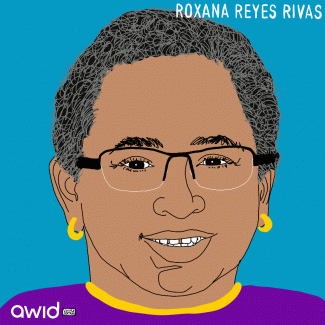
Roxana Reyes Rivas, philosopher, feminist, lesbian, poet, politician and LGBT and women’s rights activist from Costa Rica. Owner of a sharp pen and incisive humour, a laugh a minute. She was born in 1960 and raised in San Ramón of Alajuela, when it was a rural town, and her whole life she would break away from the mandates of what it meant to be a woman.
With El Reguero (Costa Rican lesbian group) she organized lesbian festivals for over a decade, fun-filled formative spaces to come together at a time when the Costa Rican government and society persecuted and criminalized the lesbian existence. For hundreds of women the lesbian festivals where the only place they could be themselves and come together with others like them.
Roxana would often say founding political parties was one of her hobbies. “It’s important for people to understand there are other ways to do politics, that many issues need to be solved collectively”. She was one of the founders of the New Feminist League and VAMOS, a human rights focused political party.
“The philosophical trade is meant to jab, to help people ask themselves questions. A philosopher who doesn’t irritate anyone is not doing her job”. For 30 years Roxana taught philosophy at several Costa Rican public universities. Through her guidance, generations of students reflected about the ethical dilemmas in science and technology.
Roxana’s favourite tool was humour, she created the Glowing Pumpkin award, an acknowledgement to ignorance that she would bestow upon public figures, through her social media channels, mocking their anti-rights expressions and statements.
An aggressive cancer took Roxana at the end of 2019, before she could publish a compilation of her poems, a departing gift from the creative mind of a feminist who always raised her voice against injustice.
Every year, AWID seeks to renew and enrich the perspectives and experience reflected in our Board of Directors by bringing in new members.
Currently, we are looking for individuals to serve 3-year terms on AWID’s Board, starting in early 2023. This is an opportunity to contribute to our organisation’s governance and to be part of an amazing group of feminists from around the world.
Please help us to identify thoughtful and bold feminists to nominate for election by July 29, 2022.
Please also share this invitation to nominate with your networks!
First and foremost, we are looking for candidates who are committed to AWID’s mission, who can make connections between local and global struggles, and who can help us to be thoughtful about how to best leverage AWID's positioning and strengths in a constantly evolving context. Candidates must be willing to uphold the legal duties and responsibilities of the AWID Board in the best interests of the organization.
This is a voluntary role that requires commitment and engagement throughout the year. Board members are expected to commit a minimum of 10-15 days per year to attend in-person and virtual meetings, and contribute to other communications.
We aspire for our Board to reflect diversity in all its forms, particularly in terms of gender identity, sexual orientation, age, geography and background. Additionally, we seek Board members with experience relevant to AWID’s priority areas of work.
While we will consider all candidates, in light of the current composition of the board, priority consideration will be given to:
Candidates with experience working at the intersections of women’s rights/gender justice and :
Candidates from the following regions:
The Board of Directors is key to inform AWID’s strategic direction and support our organisation to fulfill its mission in coherence with the world we live in and the needs of our movements.
Board members contribute to the organization in many ways: bringing governance experience from other spaces, perspectives from diverse sectors of feminist movements, and substantive expertise in areas relevant to AWID’s strategy.
The candidates who are ultimately elected will be joining the AWID Board in 2023, accompanying us for the launch of our new strategic plan led by AWID’s new Co-Executive Directors, and the planning of our next international Forum.
(You can nominate yourself or someone you know - with their consent)
Please also share this invitation to nominate with your networks!
Thank you, in advance, for helping us find our next wonderful Board members to support AWID in its journey ahead!
2-5 December, 2024, Bangkok, Thailand! We will gather at the Queen Sirikit National Convention Center (QSNCC) as well as virtually online.
More than just an event, the AWID Forum is part of our Feminist Realities Journey, with many spaces to come together, online and offline, for sharing, discussing, strategizing and co-creating feminist realities.
Learn more about the Feminist Realities Journey and everything that will happen before the Forum. Join our mailing list to stay tuned for Post-Forum announcements!
We are exploring options to participate virtually at the Forum and we will share information when we know what we can offer.
Conoce el programa del Club de Cine Feminista de AWID «Holding up the Skies» [«Sosteniendo los cielos»], una serie de películas sobre realidades feministas de África y la Diáspora Africana, curada por Gabrielle Tesfaye.

«Yo no planeaba ser una cantante, el canto planeó estar en mí.» - Dorothy Masuka (entrevista de Mail & Guardian)
Una de estas canciones, titulada «Dr. Malan» (por el político pro-apartheid D.F. Malan) fue prohibida. Luego, en 1961, grabó «Lumumba», una canción sobre el asesinato del líder anticolonial Patrice Lumumba. El trabajo y el activismo de Dorothy atrajeron la atención de la División Especial de la policía sudafricana, y fue forzada a un exilio político que se prolongaría durante tres décadas. Durante ese tiempo, trabajó con grupos independentistas, incluido el Congreso Nacional Africano. En 1992, cuando el apartheid comenzó a desmoronarse y Nelson Mandela fue liberado de prisión, Dorothy regresó a Sudáfrica.
Su trabajo incluye la primera canción que grabó, en 1953, titulada «Hamba Notsokolo», que fue un éxito durante la década de 1950, y hoy es un clásico muy valorado. También escribió «El Yow Phata Phata», una canción que fue adaptada por Miriam Makeba, quien hizo de «Pata, Pata» un hit internacional.
Arraigados en la resistencia, la música y el activismo de Dorothy (popularmente conocida como «Auntie Dot» [«Tía Dot»]) estaban entretejidos, y dejaron un legado magnífico e inspirador.
Dorothy falleció en Johannesburgo el 23 de febrero de 2019 a la edad de 83 años, por problemas de salud.
Entrevista a Dorothy Masuka de Mail & Guardian (en inglés)
Escucha su música:
Las dos amigas se llaman a sí mismas las «Triple Cripples» [«Triples Inválidas»] porque, como mujeres discapacitadas negras, se ven sometidas a tres niveles de discriminación. Jay, actualmente de 31 años, contrajo polio cuando era bebé y utiliza una férula y unas muletas como sostén, mientras que Kym, de 25 años, tiene esclerosis múltiple y se moviliza en silla de ruedas. El nombre del dúo surge de un esfuerzo por redefinir la palabra «inválida» que, según ellas, «ha sido un término habitualmente usado contra las personas discapacitadas como injuria, como una forma infalible de recordarnos que estábamos “falladas” y que siempre íbamos a ser “menos que”.»
Como mujeres negras, Kym y Jay han sido víctimas del estereotipo racial globalizado que hipersexualiza la piel oscura. En su libro Heart of the Race: Black Women’s Lives in Britain [Corazón de la raza: las vidas de las mujeres negras en Gran Bretaña], Beverley Bryan, Stella Dadzie y Suzanne Scafe describen cómo las mujeres negras han sido históricamente definidas como un «riesgo de alta promiscuidad» por los doctores, debido a su libido y su fertilidad. Jay explica que «la gente piensa que estoy siempre dispuesta a hacer de todo y cualquier cosa todo el tiempo porque soy una mujer negra». Aunque ambas mujeres han sido sometidas a una intensa fetichización debido a su color de piel, sus discapacidades han confundido a muchas personas. Kym describe así su experiencia como mujer con curvas: «Tengo el tipo de cuerpo que la gente quiere manosear, y les parece que yo debería poder aceptarlo, pero, al mismo tiempo, existe esta idea de que yo no debería tener pretensiones, por mi discapacidad.»
En las plataformas de citas en línea, a Jay le han preguntado si puede realizar ciertas posiciones sexuales, dado que ciertas potenciales parejas «han decidido que quieren estar contigo de este modo y quieren saber si tu corporalidad puede facilitarlo.» Durante una consulta de control, Kym hizo disculparse a unx profesional médicx que, mientras completaba un formulario de admisión, le preguntó cuántas parejas sexuales ha tenido con un tono que implicaba «yo sé que estas preguntas no son aplicables en tu caso, pero tenemos que seguir el proceso estándar del cuestionario.»
El error de pensar que la falta de autonomía física equivale a una falta de deseo sexual es generalizado.
En la escuela, Jay era excluida de las clases de educación sexual, porque se presuponía que estaba incapacitada para tener sexo. Ella explica que incluso las organizaciones bien intencionadas que promueven el acceso a los servicios de salud sexual y reproductiva a menudo no tienen en cuenta las necesidades específicas de las mujeres discapacitadas. Por ejemplo, las píldoras son consideradas con frecuencia un método anticonceptivo efectivo, sin ninguna mención de que pueden agravar los riesgos de coágulos de las mujeres que usan sillas de ruedas.
Con sede en Londres, las Triple Cripples esperaban ansiosamente participar, junto con el equipo Decolonising Contraception [descolonizar la contracepción], en el SexFest2020, un festival de un día organizado para personas de color y dedicado a la salud y el bienestar sexuales. Desafortunadamente, el evento fue cancelado debido a la pandemia del COVID-19. A pesar de ello, sin desanimarse, Jay y Kim se volcaron a sus plataformas de activismo en línea, para oponerse a la forma en que la sexualidad es vista desde una perspectiva estrictamente heteronormativa y para desafiar la idea de que la femineidad está definida por la capacidad de procrear. El dúo inauguró un canal de YouTube y un podcast (también llamado «The Triple Cripples») para promover la representación de las personas discriminadas de múltiples formas como seres humanos holísticos. Sus planes a futuro incluyen un documental creativo y una muestra fotográfica dedicada a luchar contra la discriminación y a difundir las voces de personas de color discapacitadas.
La experiencia de discriminación basada en la raza, el género y la discapacidad es más que acumulativa.
Si bien las mujeres discapacitadas de color comparten experiencias de discriminación por motivos de discapacidad con otras personas discapacitadas, experiencias de sexismo con otras mujeres, y experiencias de racismo con otras personas de color, estas experiencias interactúan y no pueden ser separadas: las mujeres discapacitadas de color experimentan una discriminación singular como mujeres discapacitadas de color.
Si bien las Triple Cripples reconocen que las ideas anticuadas y superficiales sobre la diversidad no se transformarán, como por arte de magia, en espacios inclusivos de un día para otro, siguen confiando en que sus pequeños hachazos finalmente lograrán derribar los grandes robles que las prácticas discriminatorias representan para ellas.
La alegría de aceptarse y crecer al calor de esa luz.

La mujeridad obligatoria es un dispositivo colonial heterocispatriarcal de violencia hacia cuerpos asignados femeninos al nacer. Los cuerpos trans seguimos resistiendo a pesar de la invisibilización y apagamiento histórico. No soy mujer, me asignaron un género a partir de mis genitales.
![“Asignado Nderentendei Al Nacer” [Assigned Nderentendei at Birth] by Bastión Moral](https://web.archive.org/web/20210928161447/https://www.awid.org/sites/default/files/thumbnails/image/web_bastion-nderentendei.png "“Asignado Nderentendei Al Nacer” [Assigned Nderentendei at Birth] by Bastión Moral")
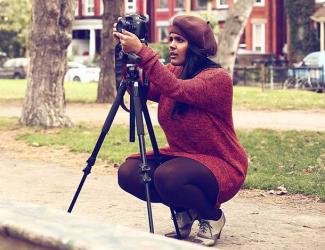
Las inscripciones comenzarán a principios de 2024. Pronto anunciaremos la fecha exacta de inscripción y el valor correspondiente. La inscripción incluirá la participación en el Foro, así como almuerzo y refrigerios (el desayuno se proporcionará en los hoteles) y una cena en el lugar.
AWID is closely monitoring the global COVID 19 situation and for now anticipates continuing with the Forum as planned.
If at any moment the situation demands something different, we will let you know right away.
The 14th AWID International Forum is scheduled to take place 20-23 September 2021 in Taipei,.
A complex and evolving network of anti-rights actors is exerting increasing influence in international spaces as well as domestic politics. Often backed by obscure funding, these actors build tactic alliances across issues, regions, and faiths to increase their impact.
Feminist and women’s rights organizations don’t just rely on institutional funding, we resource ourselves. Our organizing is powered by passion, political commitment, solidarity and collective care.
These resources are self- generated and autonomous, and often invisible in our budgets, but they are the backbone of our organizing.
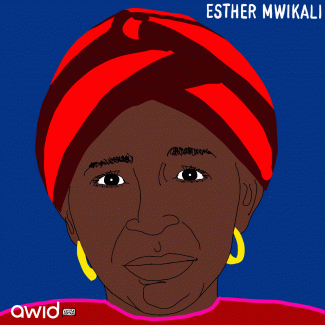
Esther Mwikali habitait dans le village de Mithini, dans le comté de Murang’a au Kenya. Activiste des droits fonciers, importante et appréciée, elle travaillait sur les abus à l’égard de squatters vivant sur des terres revendiquées par des magnats. Esther a participé à une enquête qui comprenait également des violations de droits fonciers à Makaya par de puissants individus.
Suite à l’absence d’Esther lors d’une réunion de village, une équipe de patrouille est partie à sa recherche. Le 27 août 2019, deux jours après sa disparition, on retrouva son corps dans une ferme proche de sa propriété, montrant des signes de torture. Elle fut sauvagement assassinée.
« Esther était reconnue pour son travail auprès des membres de la communauté, empêchant les évictions de terres revendiquées des magnats. Les activistes du coin n’ont aucun doute sur le lien entre son meurtre et les luttes constantes pour les terres dans la région. C’est un tragique rappel de la fréquence alarmante d’assassinats extrajudiciaires régulièrement menés au Kenya » - Global Wittness Report, juillet 2020
« Nous associons la mort de Mwikali aux luttes pour les terres par ici. Nous demandons au gouvernement de mener une enquête sur ce sujet au plus tôt. » - James Mburu, porte-parole des squatters
« Des mesures devraient être prises à l’égard des individus suspectés d’avoir menacé les squatters, et notamment la famille Mwikali. » - Alice Karanja, National Coalition of Human Rights Defenders (coalition nationale des défenseur·e·s des droits humains)
« L’impact de son travail et sa ténacité demeureront encore en vie pour les prochaines décennies au Kenya. CJGEA console avec les personnes endeuillées et appelle à la justice. » - Center for Justice and Governmental Action (Centre pour la justice et l’action gouvernementale, CJGEA) communiqué de presse, 13 septembre 2019
Dear feminist movements,
Love is what keeps our feminist fire burning. Along with care for our communities, anger and rage in the face of injustice, and the courage to take action.
In September 2022, we stepped with great excitement into our leadership roles at AWID, as Co-Executive Directors. We felt the warmth and embrace of the feminist sisterhood as you welcomed us.
Reflecting on our most precious memories as feminists, we recall powerful moments of togetherness at street protests, sharp analysis, and brave voices shaking the status quo at gatherings. We held those intimate conversations into the night, laughed for hours, and danced at parties together.
Feminist fires need to be fed, especially in difficult times when there is no lack of external challenges, from the climate crisis and the rise of right-wing forces to exploitative economies and persisting patterns of oppression within our own social movements. It's these fires, burning ablaze everywhere, that light our ways and keep us warm, but we can’t disregard the exhausting effects of political violence and repression directed against many of our struggles, movements, and communities.
We understand the desire to change the world as an essential ingredient of feminist organizing. We can never forget that we are the ones we have been waiting for, in building alternatives and shaping our future. Yet, vibrant feminist energy cannot be taken for granted and must be safeguarded in many ways. In this, we will continue to be vigilant. Greater and equal access to care and wellbeing, to healing and pleasure, are not only instruments to prevent burnout and sustain our movements, though that is an important function; first and foremost, they are the way in which we hope to live our lives.
We are thrilled to roll up our sleeves and work with you. AWID’s new strategic plan “Fierce Feminisms: Together We Rise” reflects our conviction that now is the time for us to be fierce and unapologetic in our agendas while making an effort to connect across movements and truly get to know each other’s realities, so that we may rise together - because, for us, this is the only way.
Our plans include the long-awaited AWID Forum! We look forward to meeting you all in person and online in 2024. We are hearing from you the need to connect and recharge, to rest and heal, to be challenged and inspired, to share good food, and to laugh and dance together. Few things in this world are as powerful and transformative, as feminists from all parts of the world coming together, and we truly hold our breath for this moment, because we know the magic that we can create together.
Our membership engagement has taken on a life of its own through the AWID Community (our online platform for members), and our focus on building connection and solidarity resonates with many of you. Please join and connect with us and others in feminist movements around the world. We know the importance of connection in a time and space where the rules are not made for us, and we hold close our community, where each of us matters.
Together with our fantastic AWID colleagues, we promise to do our best to support feminist movements, as is the mission and purpose of AWID. Please hold us to account.
For the past 40 years, you - feminist movements - have shaped AWID’s history, and pushed us to be braver, creative, and radical. 40 is a fabulous age, and we look forward to another 40 years with you all. We are looking forward to the partnerships, calls to justice, collaboration, policy influencing, and badass feminist power that you all bring in navigating the ever-increasing backlash on gender, racial and environmental justice. We have so much to learn from you and from each other, as we collectively build the worlds we believe in.
Cindy Clark and Hakima Abbas, thank you for paving the way for us and preparing us to fill your enormous shoes. We always appreciate all those on whose shoulders we stood and continue to stand. We understand ourselves to be part of a broader movement landscape, feminist histories, presents, and daring futures.
AWID’s Board of Directors, we are grateful to you for the support and feminist love you show us, and for your commitment to Global South leadership and the co-leadership model. We send our love and respect to each and every AWID colleague, we feel honoured to be working with such an exceptional feminist team of dedicated professionals.
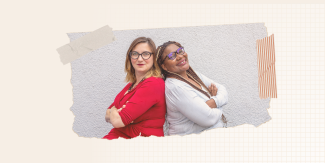
This is our first time writing a love letter together, how could we conclude it without expressing love, care, and respect for each other? It’s a pretty intense relationship we’ve stepped into! We both bring our different and diverse perspectives and skills to our work, and as individuals, we also bring our lived experiences and authentic selves.
Together with you all, we are a story in the making, a part of a beautiful woven - and often beautifully challenging - tapestry that continues into the future. We had fun starting this journey together with each other and with you, and we very much hope to keep the romance alive.
In solidarity, with love and care
Inna and Faye
21 February 2023, Member Mixer 5 on Feminist Politics with Faye and Inna.
Not a member yet? Find out more about AWID Membership.