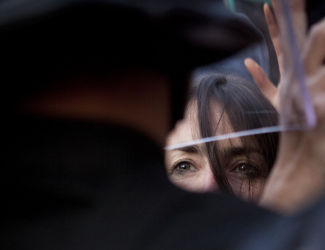
Philippe Leroyer | Flickr (CC BY-NC-ND 2.0)

Women Human Rights Defenders

WHRDs are self-identified women and lesbian, bisexual, transgender, queer and intersex (LBTQI) people and others who defend rights and are subject to gender-specific risks and threats due to their human rights work and/or as a direct consequence of their gender identity or sexual orientation.

WHRDs are subject to systematic violence and discrimination due to their identities and unyielding struggles for rights, equality and justice.

The WHRD Program collaborates with international and regional partners as well as the AWID membership to raise awareness about these risks and threats, advocate for feminist and holistic measures of protection and safety, and actively promote a culture of self-care and collective well being in our movements.


Risks and threats targeting WHRDs  

WHRDs are exposed to the same types of risks that all other defenders who defend human rights, communities, and the environment face. However, they are also exposed to gender-based violence and gender-specific risks because they challenge existing gender norms within their communities and societies.

By defending rights, WHRDs are at risk of:

  • Physical assault and death
  • Intimidation and harassment, including in online spaces
  • Judicial harassment and criminalization
  • Burnout

A collaborative, holistic approach to safety

We work collaboratively with international and regional networks and our membership

  • to raise awareness about human rights abuses and violations against WHRDs and the systemic violence and discrimination they experience
  • to strengthen protection mechanisms and ensure more effective and timely responses to WHRDs at risk

We work to promote a holistic approach to protection which includes:

  • emphasizing the importance of self-care and collective well being, and recognizing that what care and wellbeing mean may differ across cultures
  • documenting the violations targeting WHRDs using a feminist intersectional perspective;
  • promoting the social recognition and celebration of the work and resilience of WHRDs ; and
  • building civic spaces that are conducive to dismantling structural inequalities without restrictions or obstacles

Our Actions

We aim to contribute to a safer world for WHRDs, their families and communities. We believe that action for rights and justice should not put WHRDs at risk; it should be appreciated and celebrated.

  • Promoting collaboration and coordination among human rights and women’s rights organizations at the international level to  strengthen  responses concerning safety and wellbeing of WHRDs.

  • Supporting regional networks of WHRDs and their organizations, such as the Mesoamerican Initiative for WHRDs and the WHRD Middle East and North Africa  Coalition, in promoting and strengthening collective action for protection - emphasizing the establishment of solidarity and protection networks, the promotion of self-care, and advocacy and mobilization for the safety of WHRDs;

  • Increasing the visibility and recognition of  WHRDs and their struggles, as well as the risks that they encounter by documenting the attacks that they face, and researching, producing, and disseminating information on their struggles, strategies, and challenges:

  • Mobilizing urgent responses of international solidarity for WHRDs at risk through our international and regional networks, and our active membership.

Related Content

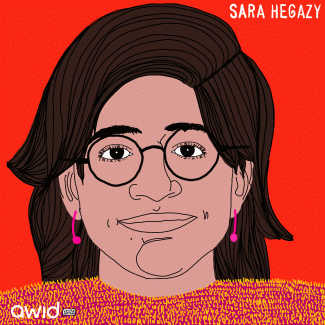
Sara Hegazy

Sarah Hegazy, una audaz activista egipcia por los derechos LGBTQI+, vivía en una sociedad en la que lxs integrantes de su comunidad, sus cuerpos y sus vidas, enfrentan prejuicios letales a menudo. La resistencia de Sarah estaba arraigada en la deconstrucción del sistema dominante, opresor y patriarcal, y de sus actores antiderechos.

«[En Egipto], toda persona que no sea varón, musulmán, suní, heterosexual y partidario del sistema, es rechazada, reprimida, estigmatizada, arrestada, exiliada o asesinada. Este problema se relaciona con el sistema patriarcal en su conjunto, ya que el Estado no podría ejercer su represión contra lxs ciudadanxs, si no hubiera una opresión preexistente desde la infancia», escribió Sarah Hegazy el 6 de marzo de 2020

La supresión de la voz de Sarah por parte del gobierno egipcio alcanzó su pico más violento en 2017, cuando fue arrestada por alzar una bandera arcoíris en el recital de Mashrou’ Leila (una banda libanesa cuyo cantante principal es abiertamente gay) en El Cairo. Fue acusada de pertenecer a un grupo ilegal, y de «promover la desviación sexual y el libertinaje».

«Fue un acto de apoyo y solidaridad, no solamente con el cantante [de Mashrou’ Leila] sino con todas las personas oprimidas... Nos enorgulleció alzar la bandera. Nunca nos imaginamos la reacción de la sociedad y del Estado egipcio. Para ellos, yo era una criminal: alguien que buscaba destruir la estructura moral de la sociedad.» - Sarah Hegazy

Sarah estuvo encarcelada por tres meses, durante los cuales fue torturada y agredida sexualmente. En enero de 2018, después de ser liberada bajo fianza, pidió asilo en Canadá, donde estaba segura, pero seguía prisionera de los recuerdos del abuso y la violencia que su cuerpo y su alma habían sufrido.

«Salí de esta experiencia después de tres meses con un caso muy intenso y serio de TEPT [trastorno por estrés postraumático]. La prisión me mató. Me destruyó», dijo Sarah Hegazy a NPR.

Sarah se quitó la vida el 14 de junio de 2020, luego de dejar una nota escrita a mano en árabe:

«A mis hermanxs: traté de encontrar redención y fallé, perdónenme.
A mis amigxs: la experiencia [el viaje] fue muy dura y soy demasiado débil como para resistir, perdónenme.
Al mundo: has sido tremendamente cruel, pero perdono.»

Su legado y su coraje continuarán, llevados adelante por quienes la aman y creen en aquello por lo que Sarah luchó.

Tributos:

«A Sarah: Descansa, solo descansa, libre de esta violencia implacable, de este patriarcado letal impulsado por el Estado. Con rabia, con dolor, con extenuación, resistimos.» - Rasha Younes, investigadora sobre derechos LGBT de Human Rights Watch. Lee el texto completo

El vocalista de Mashrou’ Leila canta un tributo a Sarah Hegazy
Tributos en Twitter

Documental sobre la vida de Sarah Hegazy

Sitio web dedicado a Sarah Hegazy y a quienes (en especial voces LGBTQI) no pueden hacer su duelo en público

Una estrategia, un mercado y nuevas voces: Las mujeres indígenas y los Foros AWID

Portada para Una estrategia, un mercado y nuevas voces: Las mujeres indígenas y los Foros AWID Historias


Esta historia es sobre la manera en que un grupo cada vez más diverso de feministas del Pacífico se organizaron a lo largo de los años para asistir a los Foros de AWID, y el modo en que ese proceso lxs transformó en forma personal, como organizaciones y como movimiento a través de lo que aprendieron, descubrieron y experimentaron. Ilustra la importancia de los Foros como espacio que permitió que una región que tiende a ser marginada o ignorada a nivel global pueda construir una presencia sólida en el movimiento feminista, que luego es replicada en otros espacios internacionales de derechos de las mujeres.

Descarga esta historia


En sus propias voces: mira la entrevista con María Manuela Sequeira & Mónica Alemán


Conoce todas las historias Descarga el reporte completo

CFA 2023 - Hybrid like never before: in person - EN

Hybrid like never before

For the first time, the AWID Forum offers three modes of participation

In-person

Participants will come together in Bangkok, Thailand. We can’t wait!

Crear | Résister | Transform: A Walkthrough of the Festival! - smaller snippet EN

Crear | Résister | Transform: 
A Walkthrough of the Festival!

As heteropatriarchal capitalism continues to force us into consumerism and compliance, we are finding that our struggles are being siloed and separated by physical as well as virtual borders.

Read more

Snippet - COP30 - Resistance Hubs Section Column 1 - EN

As world leaders gather in Brazil, it’s vital that feminist movements especially from the Global Majority have autonomous spaces to gather, strategize, and disrupt.

These Hubs challenge the elitism of climate talks, center lived experiences, and aim to build collective power across borders. They offer a critical counterbalance to top-down, often exclusionary international negotiations. The Hubs aim to foster community-driven solutions, amplify feminist demands, and ensure that feminist principles of care and solidarity shape the climate agenda. It’s not just about being present at COP30, it’s about reshaping the conversation on climate justice on feminist terms.

Thank you

Thank you for your interest, but the page you're looking for no longer exists.

You can explore more content and updates at https://www.awid.org.

CFA 2023 - Call for Activities is live- EN

The Call for Activities is Live!

The Deadline to submit activities has been extended to February 1st, 2024


In the spirit of the Forum’s theme, we invite a diversity of activity topics and formats that:

  • Facilitate genuine connection and interaction among participants
  • Foster healing and regeneration in various forms, as individuals, as communities and as movements
  • Inspire and challenge us to thrive together as communities and movements

#1 - Sexting like a feminist Tweets Snippet EN

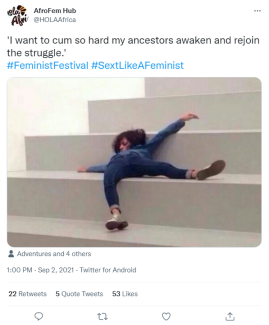
and my number 1... Because you know it’s gotten real when higher powers are invoked.

Image of a tweet with a woman fainted on a set of stairs. Text says: I want to cum so hard my ancestors awaken and rejoin the struggle.

Snippet - COP30 - Feminist Economic Alternatives Brief - EN

📖 Feminist Economic Alternatives Brief

A tool for feminist activists at COP30 fighting for transformative, equitable and community-centred solutions to address the climate crisis.

Download the Brief

Também disponível em português

Financiamiento de los movimientos feministas

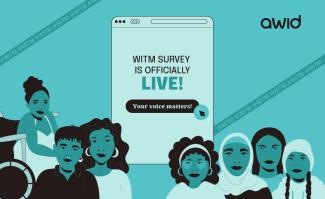
Imagen promocional para la encuesta ¿Dónde está el dinero?

La encuesta "¿Dónde está el dinero?" #WITM ya está disponible. Participa y comparte tu experiencia en la financiación de tu organización con feministas de todo el mundo.

Obtén más información y participa de la encuesta


En todo el mundo, los movimientos feministas, de derechos de las mujeres y aliados están enfrentando al poder y reimaginando políticas de liberación. Las contribuciones que sostienen este trabajo llegan de muchas formas, desde recursos financieros y políticos a actos diarios de resistencia y supervivencia.


La iniciativa de AWID Financiando a los Movimientos Feministas (FMF) echa luz sobre el actual ecosistema de financiamiento, el cual abarca desde modelos autogenerados a corrientes de financiamiento más formales.

Mediante nuestra investigación y análisis, indagamos cómo las prácticas de financiamiento pueden servir mejor a nuestros movimientos. Analizamos críticamente las contradicciones de «financiar» la transformación social, especialmente en vistas de la creciente represión política, las agendas anti-derechos y el creciente poder corporativo. Sobre todo, construimos estrategias colectivas para apoyar  movimientos prósperos, fuertes y resilientes.


Nuestras acciones

Reconociendo la riqueza de nuestros movimientos y respondiendo al momento actual, nosotrxs:

  • Creamos y difundimos alternativas: Difundimos prácticas de financiamiento que ponen en el centro las prioridades de lxs propixs activistas e involucramos a un amplio espectro de financiadoras y activistas para que desarrollen nuevos y dinámicos modelos para financiar los movimientos feministas, especialmente en un contexto en el que se reducen los espacios para la sociedad civil.

  • Construimos conocimiento: Analizamos, intercambiamos y fortalecemos el conocimiento sobre cómo los movimientos atraen, organizan y utilizan los recursos que necesitan para lograr cambios significativos.

  • Hacemos incidencia: Trabajamos de manera colaborativa, como  en el Consorcio Count Me In, para influir sobre las agendas de financiamiento y abrimos espacios para el diálogo directo entre/con los movimientos feministas para redistribuir poderes y dineros..

Related Content

CFA 2023 - Submit Button - EN

Intro to tweets snippet ES

Como lo demuestran estos tuits, resulta que sextear como feminista es sexy, divertido – y caliente – todo eso sin perder de vista el compromiso con la equidad y la justicia.

Snippet - COP30 - Mutual Aid and Community Care - FR

Exclusivité membres d’AWID : atelier créatif sur l’entraide et le soin de la communauté

Les membres de l’AWID exploreront et feront une évaluation critique du rôle que l’entraide peut jouer pour financer et apporter des ressources aux mouvements, en se livrant à un collage collectif.

📅 Mercredi 12 novembre 2025
📍 Espace COP Populaire

Plus d'infos ici

Site web en anglais, espagnol et portugais

2023 - Hybrid like never before: in person - ar

هجين (hybrid) كما لم يحدث من قبل

لأول مرة، يعرض منتدى جمعية حقوق المرأة في التنمية ثلاثة طرق للمشاركة

الحضور الشخصي

سيجتمع المشاركون/ات في بانكوك، تايلاند. ننتظر بفارغ الصبر!

#3 - Sexting like a feminist Tweets Snippet FR

Tout le monde apprécie les intentions clairement exprimées.

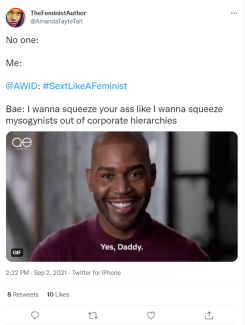
Image of a tweet with a gif of a man saying "Yes daddy". Text says: No one: (blank). Me: Bae I wanna squeeze your ass like I wanna squeeze misogynists out of corporate hierarchies.

Personne :
 
Moi :
 
@AWID : #SextLikeAFeminist
 
Bae : Je veux te presser le cul aussi fort que je voudrais éjecter les misogynes hors des hiérarchies des entreprises.

Snippet 2 - What's happening at HRC61 Intro

With avenues for civil society (especially those not based in Geneva) to participate in the Human Rights Council becoming more limited because of the financial crisis, spaces to put pressure and hold governments accountable for rights violations are increasingly closed. These measures include charges for hybrid participation and interpretation for side events, visa obstacles, and the limited availability of hybrid informal negotiations on draft resolutions. 

Below are resolutions, key resolutions, panels and taking place in these sessions, related to gender and sexuality: