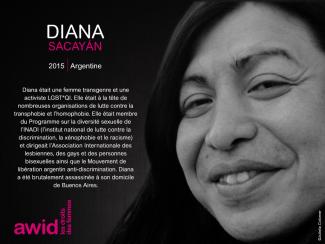
Diana Sacayan
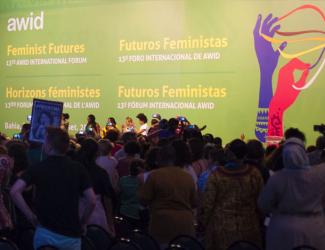
In September 2016, the 13th AWID international Forum brought together in Brazil over 1800 feminists and women’s rights advocates in a spirit of resistance and resilience.
This section highlights the gains, learnings and resources that came out of our rich conversations. We invite you to explore, share and comment!
One of the key takeaways from the 2016 Forum was the need to broaden and deepen our cross-movement work to address rising fascisms, fundamentalisms, corporate greed and climate change.
With this in mind, we have been working with multiple allies to grow these seeds of resistance:
And through our next strategic plan and Forum process, we are committed to keep developing ideas and deepen the learnings ignited at the 2016 Forum.
AWID Forums started in 1983, in Washington DC. Since then, the event has grown to become many things to many peoples: an iterative process of sharpening our analyses, vision and actions; a watershed moment that reinvigorates participants’ feminisms and energizes their organizing; and a political home for women human rights defenders to find sanctuary and solidarity.
with Nazik Abylgaziva, Amaranta Gomez Regalado, Cindy Weisner, and Lucineia Freitas.
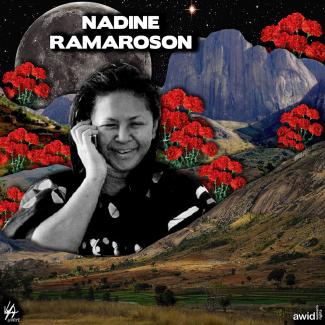
Nadine was a role model to many for her work supporting women and the most vulnerable in her community. She was committed to helping the poor and homeless in particular.
Though her death was reported as an accident, the Ramaroson family, led by her father, André Ramaroson led an investigation that pointed to evidence that she had been murdered. She is reported to have died in a fatal accident occurred between Soanierano - Ivongo and Ste Marie - a story that has been refuted by her family.
She received numerous death threats for her bold political positions. Her case remains in court in Antananarivo (the capital of Madagascar).
Follow Updates on Social Media
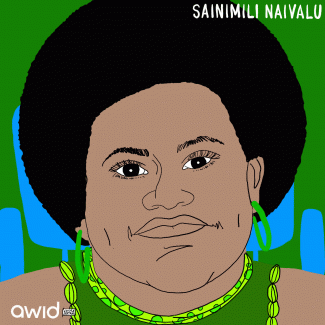
“I’ve witnessed discrimination on the streets, being teased on the streets and verbally abused on the streets. I have also made numerous friends and have met a lot of people. There may be dangers out there but I am a survivor and this is where I will be for now.”
- Sainimili Naivalu
She demanded policy makers and stakeholders provide disability friendly policies and services such as the construction of ramps in towns and cities to increase accessibility. Physical barriers were not the only ones she strived to change. From her own experience, she knew that more difficult changes need to take place in social and economic spheres. Many of the challenges disabled people face are rooted in attitudes that carry discrimination and stigma.
A survivor and a fighter, Sainimili contributed to co-creating feminist realities that foster inclusion and shift attitudes towards disabled people. As a member of the Spinal Injury Association of Fiji (SIA) and through Pacific Disability Forum’s Pacific Enable project she attended the International Labour Organisation “Start Your Business” training in Suva, enabling her to transform her ideas into her own business. She was an entrepreneur at the Suva Market Stall 7, offering manicure services, as well as running SIA’s women’s market stall selling handicrafts, sulus and artifacts. Sainimili’s plan was to expand her business and become a major employer of disabled people.
In addition to her activism, she was also a table tennis medalist and youth champion.
A vivacious personality, Sainimili was one of a kind. You would always know that Sainimili is in a room because her laughter and her stories would be the first thing that you would notice.
- Michelle Reddy
Sainmili passed away in 2019.
This collaborative zine originated from a series of sharing circles that brought together feminists from around the world throughout 2022. The purpose was to exchange ideas and mutually learn how communities are responding to the climate crisis in various local contexts.
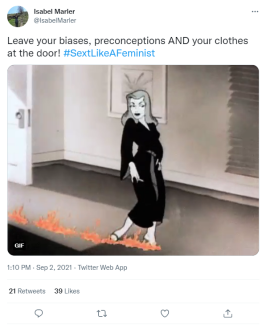
¡Deja tus prejuicios, tus preconceptos Y tu ropa de la puerta para afuera!

Con el propósito de cumplir su misión, AWID trabaja a través de programas multianuales interconectados.
Cada programa comprende diversas estrategias que abarcan desde la generación y difusión de conocimientos, investigación aplicada, incidencia política y formación de alianzas, hasta convocatorias a diálogos estratégicos.
En nuestro Informe Anual 2011 encontrarán una síntesis de los principales logros alcanzados en cada una de los programas de AWID durante el año.

Conocida como la Drag Queen de color de Nueva York, Sylvia fue feroz e incansable en su voluntad por cambiar las cosas, y en su defensa de quienes quedaron marginadxs y excluidxs cuando el movimiento por los "derechos de la comunidad gay" se volvió predominante en los Estados Unidos, a principios de los 70.
En 1973, durante un conocido discurso por el día de Christopher Street, Sylvia gritó en medio de la multitud de integrantes de la comunidad LGBT:
"Todos ustedes me dicen, anda y esconde la cola entre las patas.
No voy a seguir aguantando esta mierda.
Me han golpeado.
Me han roto la nariz.
Me han metido en la cárcel.
He perdido mi trabajo.
He perdido mi departamento
por la liberación gay, ¿y todos ustedes me tratan así?
¿Qué carajo les pasa a todos ustedes?
¡Piensen en eso!"
En 1969, a la edad de 17 años, Sylvia participó en los emblemáticos disturbios de Stonewall, al lanzar, presuntamente, el segundo cóctel molotov para protestar por la redada policial en este bar gay de Manhattan. Siguió siendo una figura central en los levantamientos posteriores, organizando mítines y luchando contra la brutalidad policial.
En 1970, Sylvia trabajó junto con Marsha P. Johnson para establecer Street Transvestite Action Revolutionaries [Acción Travesti Callejera Revolucionaria] (S.T.A.R., por sus siglas en inglés), un colectivo político y una organización que establecería proyectos de apoyo mutuo para las personas trans que vivían en la calle, aquellxs que luchaban contra la drogadicción, las que estaban encarceladas y, en particular, para las personas trans de color que vivían en la pobreza.
Desafiante de las etiquetas, Silvia vivió la vida de una manera que retaba a las personas del movimiento de liberación gay a pensar de manera diferente. Ella dijo:
"Me fui de casa a los 10 años, en 1961. Hice la calle en la 42. El inicio de los años 60 no era un buen momento para lxs drag queens, los chicos afeminados o los chicos que usaban maquillaje como nosotrxs. En ese entonces nos golpeaba la policía, y todo el mundo. Yo no salí realmente como drag queen hasta finales de los 60, cuando se arrestaba a lxs drag queens, qué degradación había. Recuerdo que la primera vez que me arrestaron, ni siquiera estaba vestida totalmente en drag. Estaba caminando y los policías me arrebataron de la calle. La gente ahora quiere llamarme lesbiana porque estoy con Julia, y yo digo: "No. Soy sólo yo. No soy lesbiana". Estoy cansada de que me etiqueten. Ni siquiera me gusta la etiqueta transgénero. Estoy cansada de vivir con etiquetas. Sólo quiero ser quien soy. Soy Sylvia Rivera.
A través de su activismo y su coraje, Sylvia ofreció un espejo que reflejaba todo lo que estaba mal en la sociedad, pero también la posibilidad de transformación. Sylvia nació en 1951 y falleció en 2002.
Thanks to our global feminist community! From May to August 2024, nearly 1,200 organizations working for Women's rights, gender justice, and LBTQI+ equality shared their experiences in the WITM survey. The results offer a unique picture of how feminist movements are resourced and where gaps remain.
Apreciaremos propuestas de actividades referidas a todo el rango de áreas temáticas e intersecciones que son importantes para los movimientos feministas y por la justicia de género.
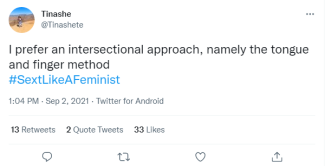
Moi je préfère l’approche intersectionnelle, soit la méthode langue et doigt.

Nous avons redoublé d’efforts pour préparer le 13e Forum de l’AWID ; nous avons consacré une grande partie de notre énergie au Programme de développement pour l’après-2015 et aux processus des Nations Unies relatifs au financement du développement. Nous avons poursuivi le travail de fond que nous menons dans nos domaines de prédilection.
En réaction, nous avons choisi de sortir de nos cloisonnements.
De plus en plus, et dans le monde entier, les mouvements de défense des droits des femmes s’allient avec d’autres mouvements pour exprimer la nature systémique et intersectionnelle des problèmes précédemment évoqués et d’autres problématiques.
